
New here? This is lesson 71 of a free 240-lesson English course.
Free time in English
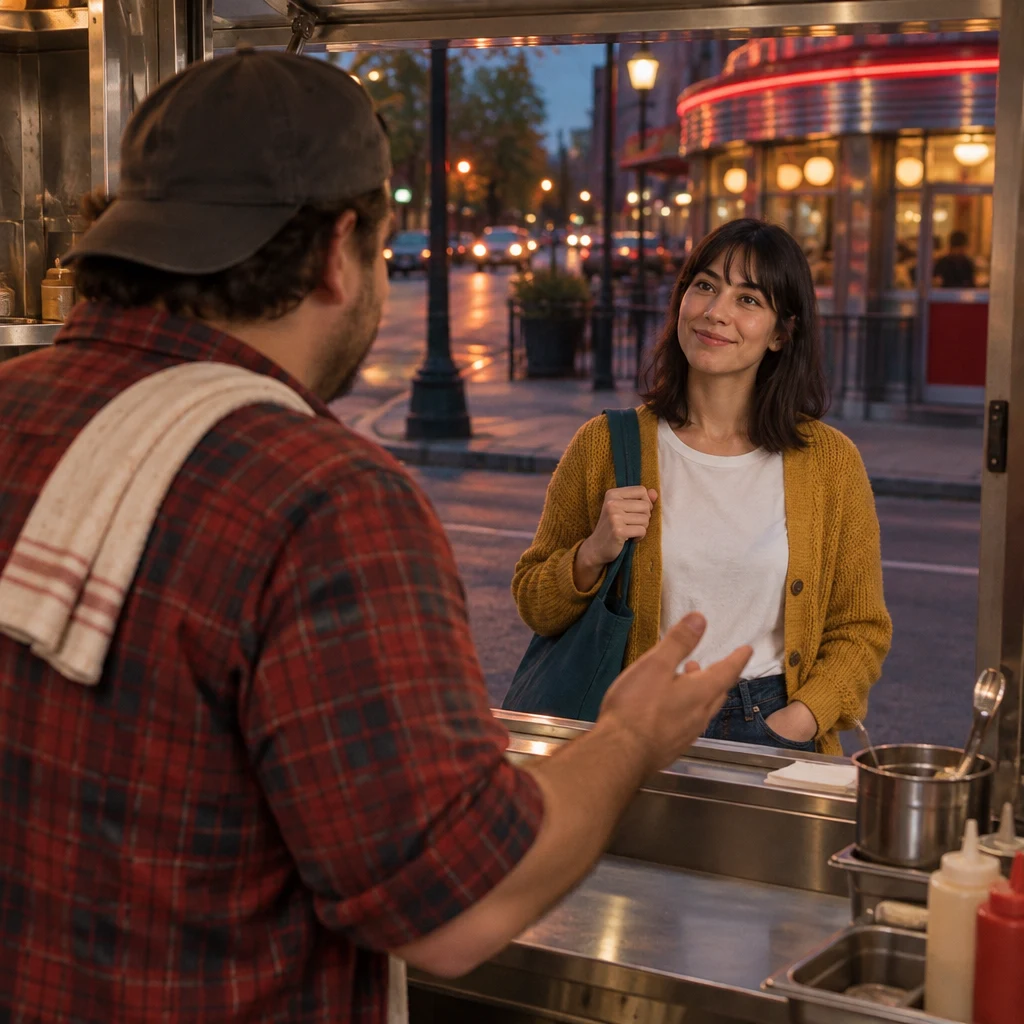
After the food truck closes, Danny asks Ana what she does for fun. She says she studies English.
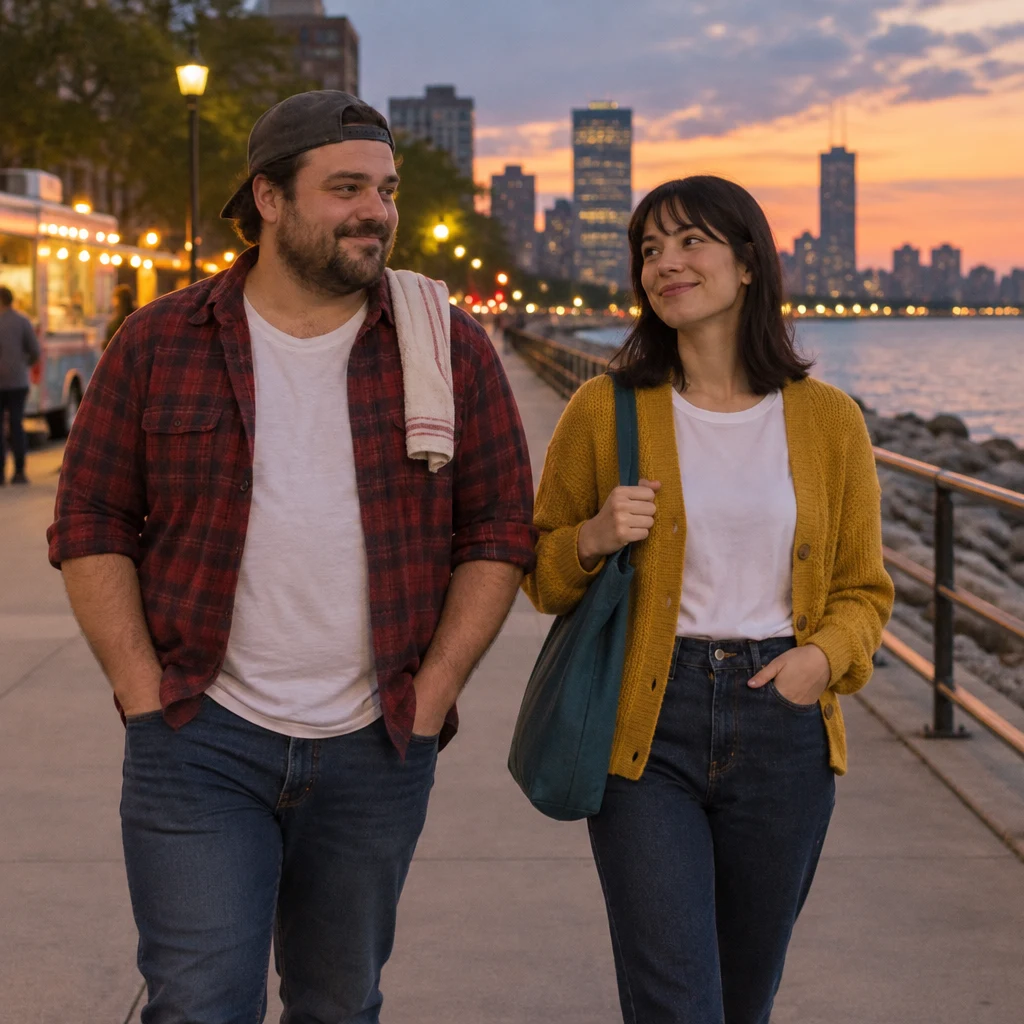
He laughs and points at the lakefront path. Walking is his idea of free time.
By the end, you'll ask what people do for fun, name a hobby, and invite someone to come along.
You'll also say why a hobby helps you relax.
By the end of this lesson
Say what you do in your free time and ask what others do.
- What do you do for fun?What do you like to do in your free time?
- What are your hobbies?What activities do you do for fun?
- I like to ___ in my free time.This is what I do when I am not working.
- My favorite hobby is ___.This is the free-time activity I like most.
- Do you want to come with me?Would you like to come too?
- It helps me relax.This activity makes me feel calm.
Scene — the truck is closed
The food truck sits on the boulevard. The window is down. Danny wipes the steel shelf with his dish towel.
Ana stands on the sidewalk with her teal tote. The lakefront path is a short walk away.
Night is coming. The diner lights glow on the corner. The jukebox stays quiet.

Learn — free time and hobbies
Six lines help you talk about free time. You'll ask, answer, invite, and say why it feels good.
Put a real activity in the blank when you name what you like.

What do you do for fun?
What do you like to do in your free time?
When to use it: Ask this when you want to know someone's free-time activity.
Learn 'for fun' as one piece. It means for enjoyment.
Say it: Do can sound weak next to you.
What are your hobbies?
What activities do you do for fun?
When to use it: Ask this to hear the activities they enjoy.
A hobby is a thing you do for pleasure, not work.
Say it: The stress is on the first part.

I like to ___ in my free time.
This is what I do when I am not working.
When to use it: Say this to name an activity you enjoy after work.
After like to, put a simple action, like walk or read.

My favorite hobby is ___.
This is the free-time activity I like most.
When to use it: Use this to name the activity you like most.
The blank can be an -ing form, like walking.
Say it: The stress is on the first part.

Do you want to come with me?
Would you like to come too?
When to use it: Say this to invite someone to join you.
This is a friendly invite, not an order.
It helps me relax.
This activity makes me feel calm.
When to use it: Say this when an activity makes you feel calm.
Relax means you feel calm, not sleepy or bored.
Say it: The stress is on the last part.
Story — he points at the path
Watch Danny close the truck and ask Ana about free time. She names class. He points at the path.
The highlighted words are the lines you just learned.
- The window is down. Danny folds the dish towel over his shoulder.
 DannySo, what do you do for fun?What do you like to do in your free time?
 AnaHave fun.She answers with a wish, not a hobby.
- DannyThat's a wish. I mean a hobby.He tells her that is a wish, not a hobby.
- AnaI like to study English in my free time.She names class as her free-time activity.
- DannyThat's class, not fun, Ana.He says class is work, not free time.
- AnaWhat are your hobbies?What activities do you do for fun?
- DannyMy favorite hobby is walking.Walking is the free-time activity he likes most.
- He laughs and points at the lakefront path.
- DannyDo you want to come with me?Would you like to come too?
- AnaSure!a clear yes to the invite
- He closes the window. They walk toward the path together.
- DannyIt helps me relax.This activity makes me feel calm.
- AnaOkay. I get it.She understands walking is for calm.
Practice — fun or class
Eleven short exercises wait here. You'll listen, pick, match, fill a gap, and build a line.
They stay small, so the round moves fast.
0 of 11 done
What did you hear?
What did you hear?
Match the pairs
English
What do you do for fun?Drop the Simple English hereI like to ___ in my free time.Drop the Simple English hereMy favorite hobby is ___.Drop the Simple English hereDo you want to come with me?Drop the Simple English hereIt helps me relax.Drop the Simple English hereSimple English
What do you say?
What do you say?
Danny just closed the truck. You want the names of activities he does for pleasure.
What does it mean?
What does it mean?
It helps me relax.
Fill the gap
Fill the gap
This activity makes me feel calm.
It ____ me relax.
Build the line
Build the line
Would you like to come too?
?
Tap the words in order.
Pick the reply
Danny says:
Pick the reply
I like to walk in my free time.
This is what he does when he is not working.
And you reply with:
Swap the word
Swap the word
You ask Danny about free time, not about his job.
What do you do for ____?
What do you say?
What do you say?
You tell Danny the free-time activity you like most.
True or false?
True or false?
This line asks about a job.
Which one doesn’t belong?
Which one doesn’t belong?
Say it — say it back
Now you're Ana on the sidewalk by the truck. When it's your turn, tap the microphone and speak the line.
Tap play first if you want to hear the line. Your recording stays on your device.
- DannySo, the truck is closed.He says the food truck is done for the day.
- Ana (you)Ask what he likes to do in free time.
Ask what he likes to do in free time.
What do you do for fun?
What do you like to do in your free time?
0 of 5 said
Recap — what you can say now
| English | Simple English | Play |
|---|---|---|
| What do you do for fun? | What do you like to do in your free time? | |
| What are your hobbies? | What activities do you do for fun? | |
| I like to ___ in my free time. | This is what I do when I am not working. | |
| My favorite hobby is ___. | This is the free-time activity I like most. | |
| Do you want to come with me? | Would you like to come too? | |
| It helps me relax. | This activity makes me feel calm. |
Save your progress — it’s free
Keep your place in the course and see which lines you’ve learned.
Want the next lesson in your inbox?
Get the next lesson by email, one a day.
Join the newsletterDaily lesson emails are coming soon. Newsletter subscribers get them first.
Keep practicing with Yak Cards
Want to keep these free-time lines handy? Grab the Yak Cards for this lesson and review them anywhere.
A quick round with the Yak Cards each day keeps your hobby lines ready.
Open Yak Cards