English - Simple Problems

Lesson 24 of 139

A traveler looks at a clock and a payment machine while learning English phrases for simple problems.

Goal: Say what’s wrong in a clear, calm way.

Free English lessons with audio, guided practice, and speaking support.

Uh-oh moments happen: late bus, card problem, hot room. Today you’ll learn three short English phrases that help you explain a problem fast.

Level A1: In this lesson, you’ll practice saying “I’m late,” “I can’t pay,” and “It’s too ___.” These phrases are small but mighty—use them when something is not going well and you need simple help. Yak Yacker says: problems sound smaller when your English is ready.

After this lesson you'll be able to:
  • Say a simple timing problem: “I’m late.”
  • Explain a payment problem: “I can’t pay.”
  • Use “It’s too ___” with easy words like hot, cold, expensive, or far.
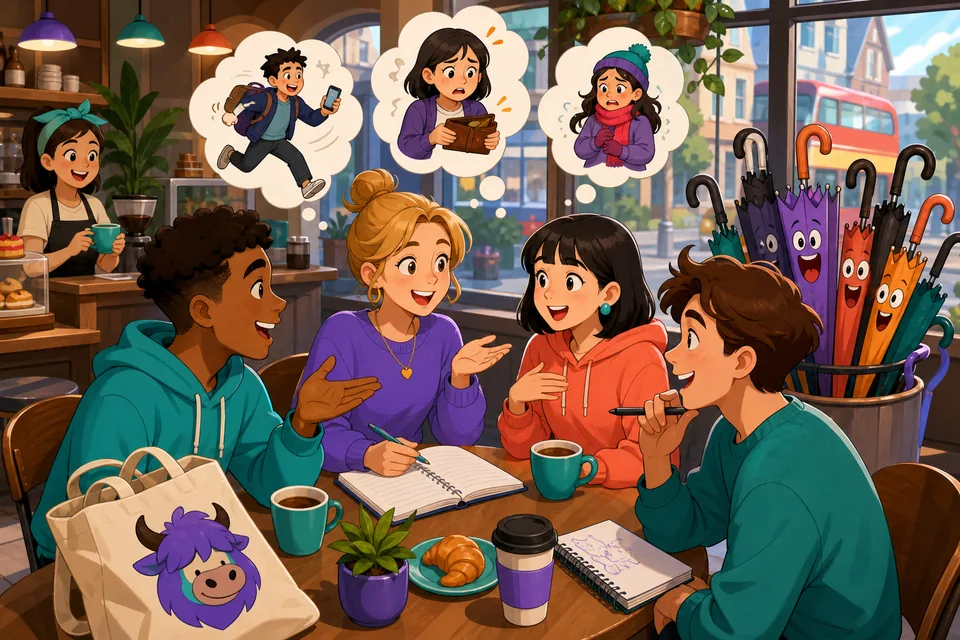
A busy street scene with a late bus and a person checking their wallet, showing English learning for basic problem statements.

Ready? Let's go!

When you tap play on phrases, we track your progress through this lesson.

1. Reading + Listening Practice

Hear core phrases, repeat aloud.

I'm late.

State a simple problem with timing.

Meaning: I have a problem with time. I am not on time. Examples: “I’m late for class.” “I’m late for the bus.”

When to use: Use it when you arrive after the expected time, or you think you will arrive after the expected time.

Tip: Use “I’m late,” not “I late.” In English, say “I’m” before the adjective.

I’m late for work.
I have a timing problem for work.
Oh no, I’m late for the bus.
I am not on time for the bus.

I can't pay.

State a basic problem with paying.

Meaning: I have a problem with paying. Examples: “I can’t pay by card.” “I can’t pay now.”

When to use: Use it in shops, taxis, cafés, stations, or online when payment is not possible.

Tip: Use “can’t” for a real problem. “I don’t pay” sounds like you choose not to pay.

Sorry, I can’t pay by card.
My card payment is not possible.
I can’t pay now. My wallet is at home.
Payment is not possible now.

It's too ___.

State that a condition is a problem or difficulty.

Meaning: A condition is a problem or difficulty. Examples: “It’s too hot.” “It’s too expensive.”

When to use: Use it with one simple word after “too”: hot, cold, far, loud, slow, expensive.

Tip: Add a word after “too.” Say “It’s too hot,” not only “It’s too.”

It’s too cold in here.
The place is very cold, and it is a problem.
It’s too expensive for me.
The price is very high, and it is a problem.

2. Conversational Listening Practice

Hear phrases in a real mini-conversation.

Anna and David are at a train station ticket machine.
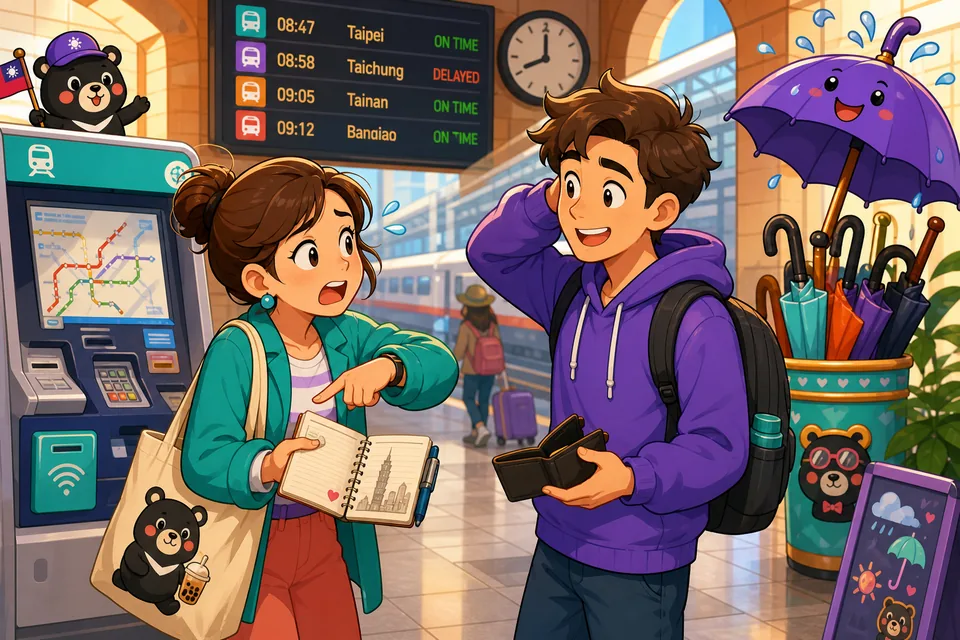
Anna and David stand near a ticket machine, using simple English phrases to explain small problems.

What kind of problems do Anna and David have?

Portrait of Anna in a English lesson dialogue

Anna

Oh no, I’m late.

Anna has a timing problem.

Portrait of David in a English lesson dialogue

David

The train leaves soon. Can you buy the ticket?

David asks about buying a ticket.

Portrait of Anna in a English lesson dialogue

Anna

I can’t pay. My card isn’t working.

Anna has a payment problem.

Portrait of David in a English lesson dialogue

David

Let’s try this machine.

David suggests another machine.

Portrait of Anna in a English lesson dialogue

Anna

It’s too slow.

The machine is very slow, and it is a problem.

Portrait of David in a English lesson dialogue

David

Okay, let’s ask for help.

David suggests asking someone.

3. Guided Practice

Quizzes and matching to lock in meaning.

You are not on time for class. What do you say?

Your card does not work in a shop. What do you say?

The room is very cold, and it is a problem. What do you say?

Which phrase uses the frame “It’s too ___” correctly?

Anna looks at the clock and says, “Oh no, I’m late. The meeting starts now.”

Anna looks at the clock and says, “Oh no, ___. The meeting starts now.”

At the café, David’s card does not work. He says, “Sorry, I can’t pay. Do you take cash?”

At the café, David’s card does not work. He says, “Sorry, ___. Do you take cash?”

Anna tries to carry the bag, but it is very heavy. She says, “It’s too heavy. Can you help me?”

Anna tries to carry the bag, but it is very heavy. She says, “___. Can you help me?”

Match the core phrases

Match the extra phrases

4. Speaking Practice

Say phrases yourself (mic/recording).

Recording stays on your device only. Check speech uses your browser's speech tools when available.

Say this phrase out loud:

I'm late.

State a simple problem with timing.

Say this phrase out loud:

I can't pay.

State a basic problem with paying.

Say this phrase out loud:

It's too ___.

State that a condition is a problem or difficulty.