
New here? This is lesson 41 of a free 240-lesson English course.
Straight, left, right in English
Ana is at the Blue Plate. She wants the L, the train near Larch Street. Murray starts to give her a long path with many turns.
Dee cuts in. She says the station is just out the door and left.
By the end, you'll say go straight, turn left, and turn right. You'll also say where a place is, and you'll say cross the street.
Go straight means you do not turn. Left and right are the two sides.
By the end of this lesson
Follow a path: go straight, turn, and say where a place is.
- Go straight.Keep walking forward
- Turn left.Go toward the left side
- Turn right.Go toward the right side
- It's on the left.The place is on the left side
- It's on the right.The place is on the right side
- Cross the street.Walk to the other side of the road
Scene — the diner door
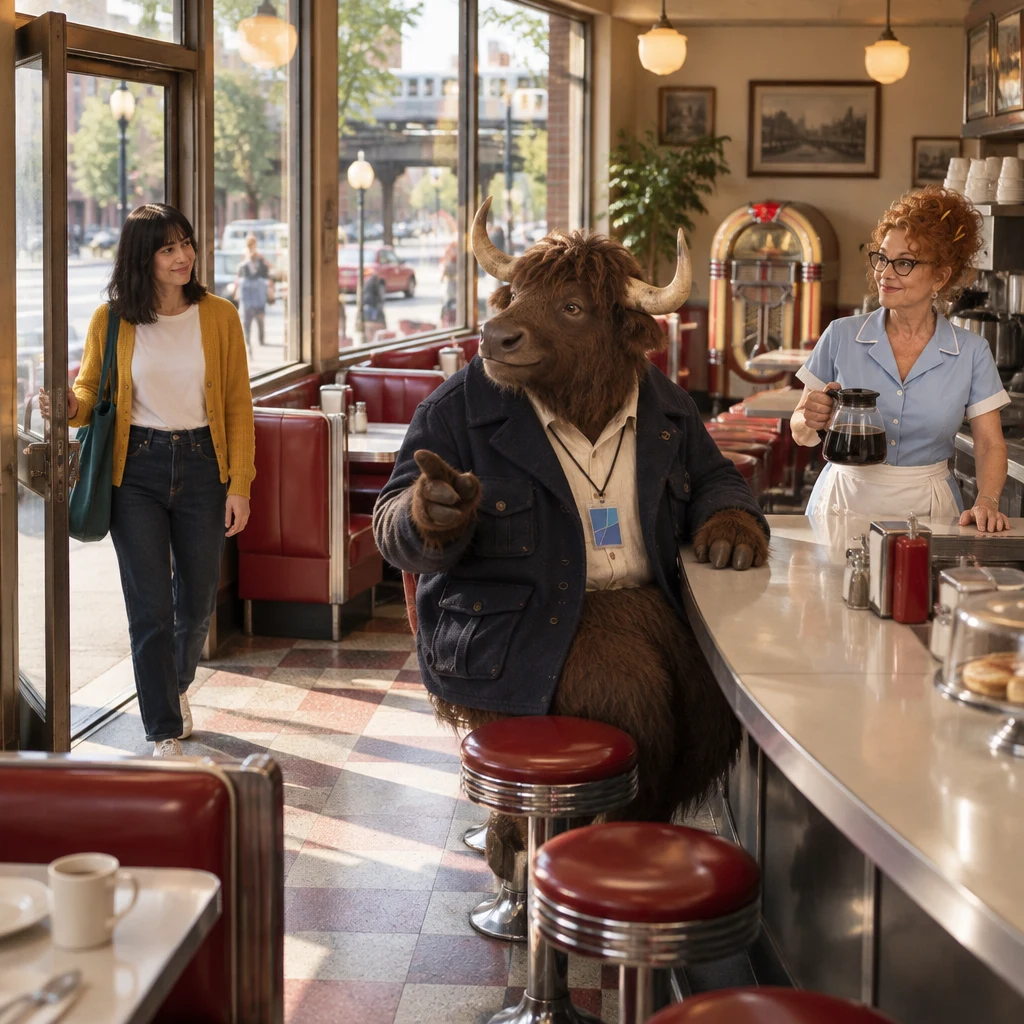
Ana stands by the diner door with her teal tote. She needs the Blue Line L.
Murray turns on his stool and starts a careful path. He points left, then right.
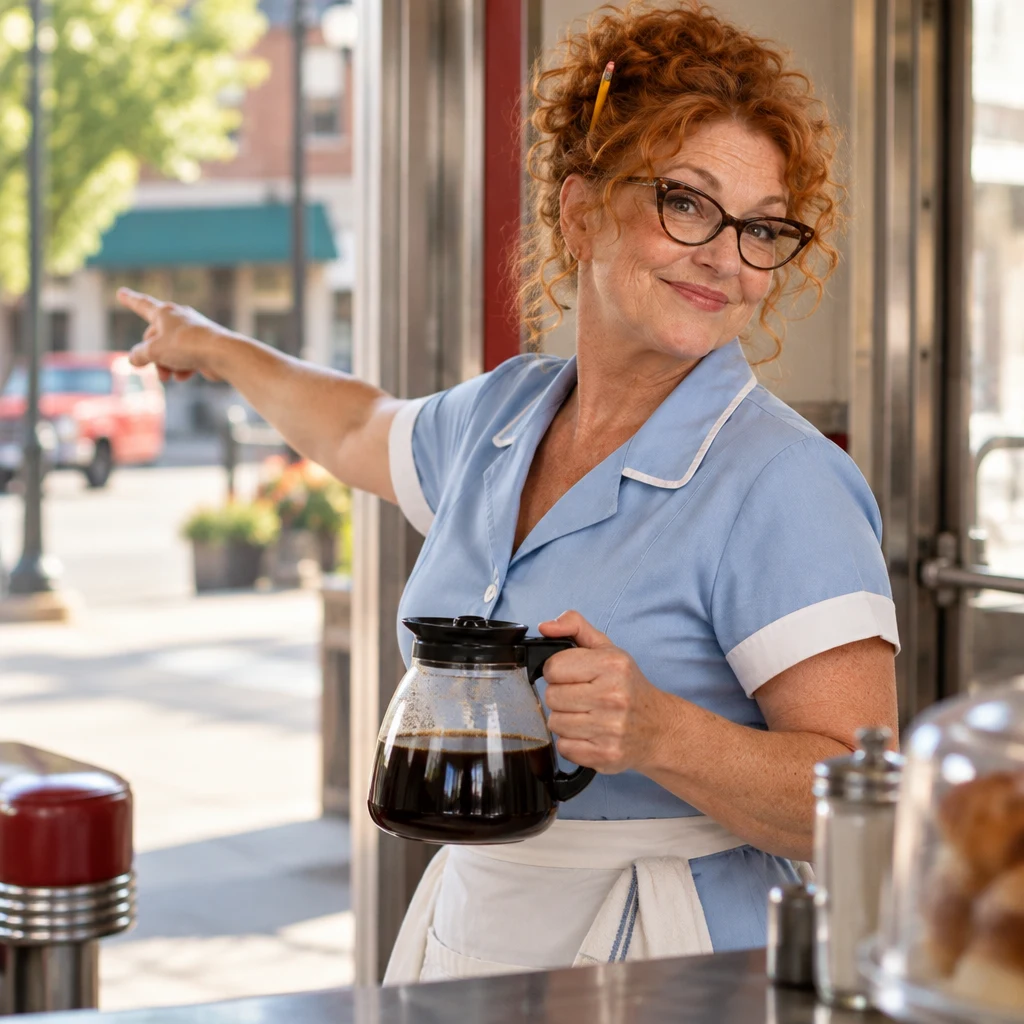
Dee holds the coffee pot and looks at the door. The jukebox stays quiet.
Learn — straight, left, and right
Six short lines cover go straight, turn left, and turn right.
You'll also say where a place is, and how to cross the street.
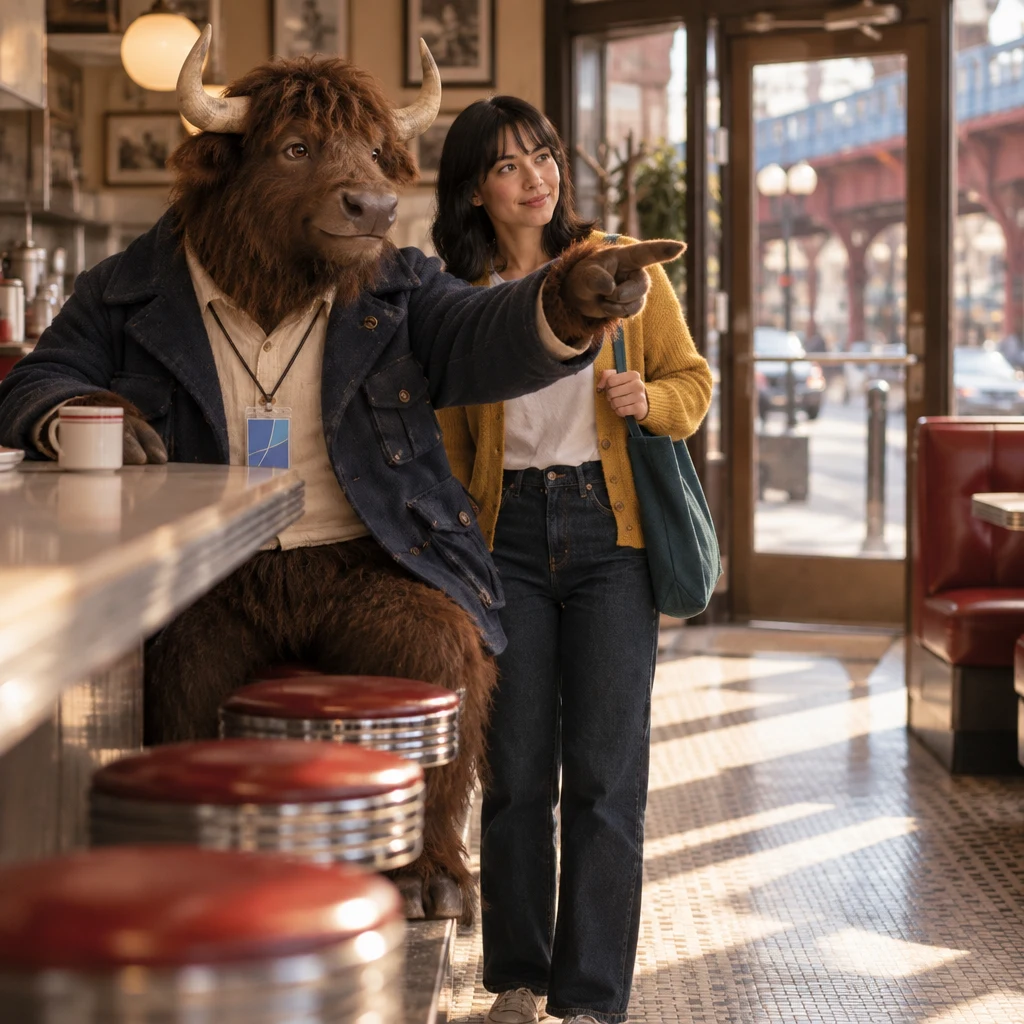
Go straight.
Keep walking forward
When to use it: Say this to keep a person walking forward.
Learn it as one piece for a path with no turn.
Say it: The stress is on straight.

Turn left.
Go toward the left side
When to use it: Say this when the path goes to the left.
Learn it as one piece for a left turn.
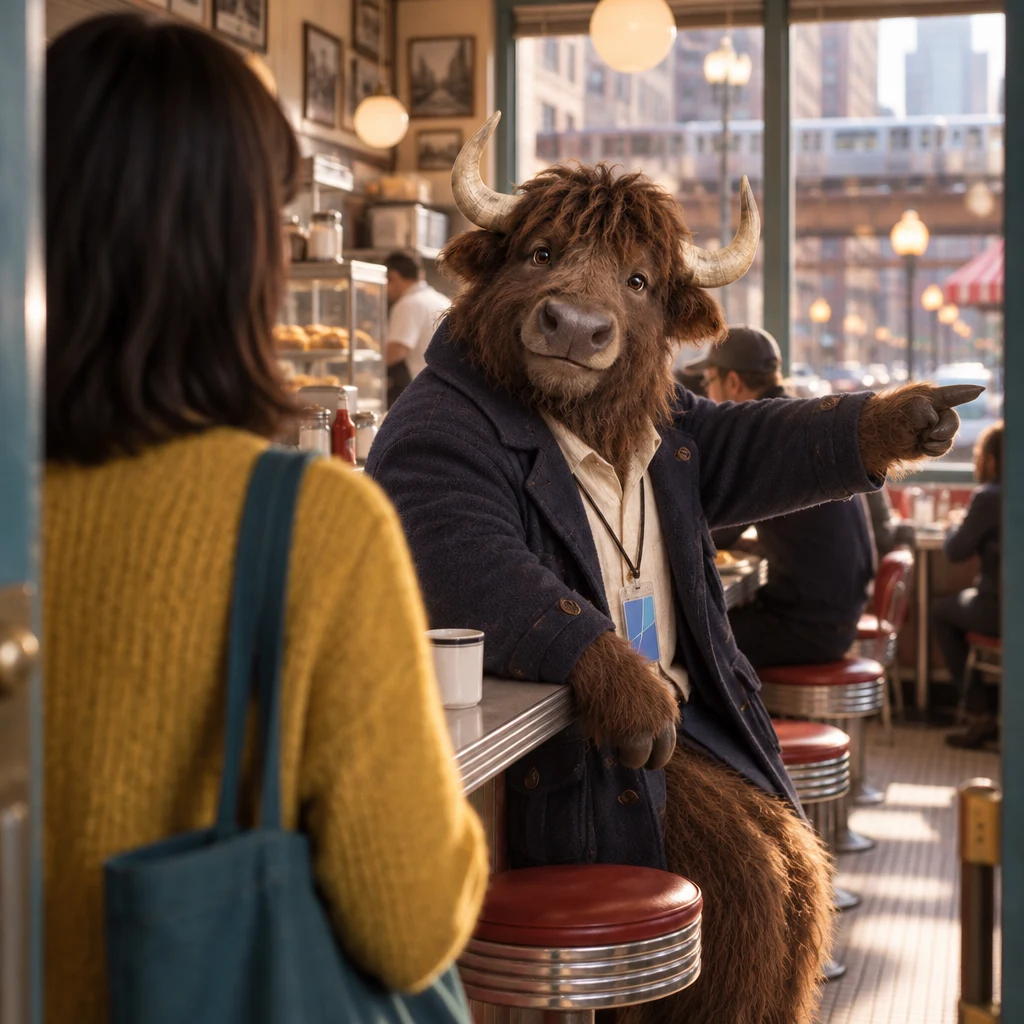
Turn right.
Go toward the right side
When to use it: Say this when the path goes to the right.
Learn it as one piece for a right turn.
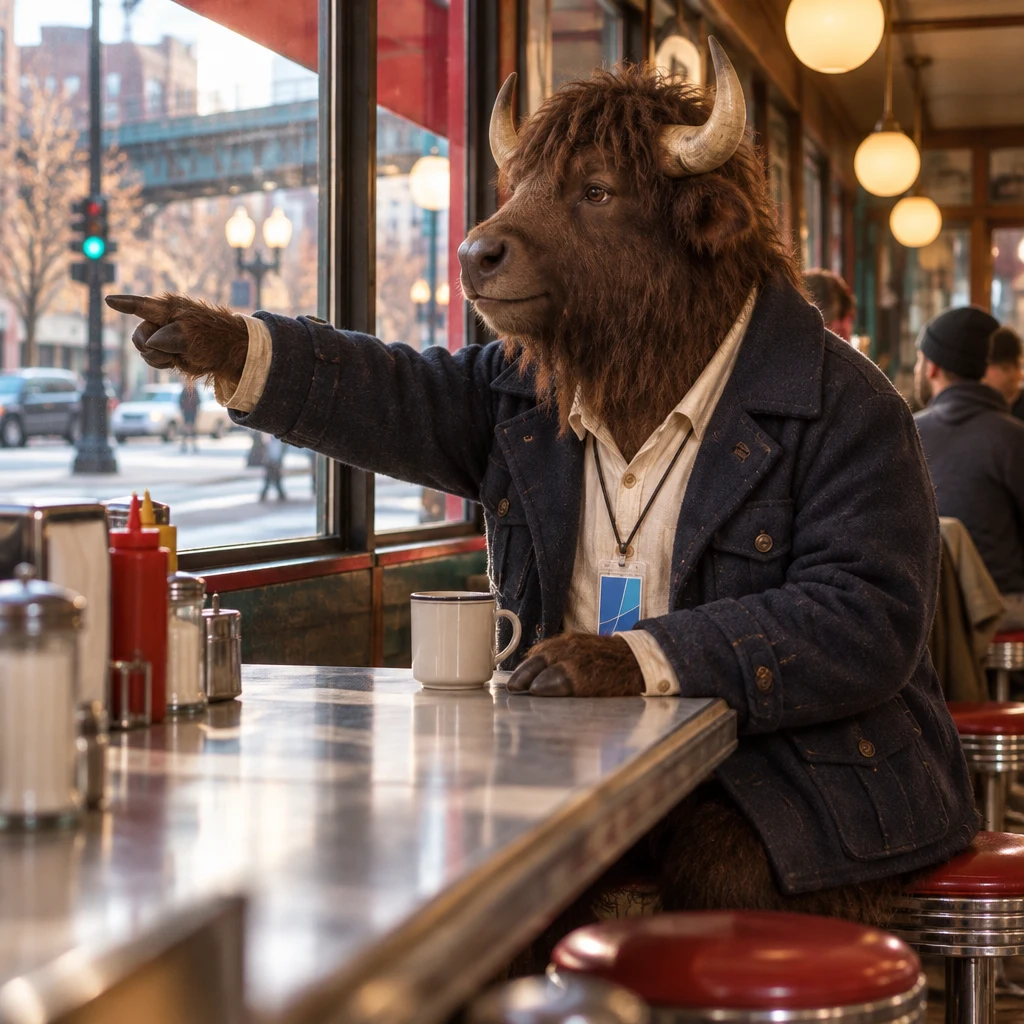
It's on the left.
The place is on the left side
When to use it: Say this when the place is on the left.
Learn it as one piece to name the left side.
Say it: The words 'on the' can link.
It's on the right.
The place is on the right side
When to use it: Say this when the place is on the right.
Learn it as one piece to name the right side.

Cross the street.
Walk to the other side of the road
When to use it: Say this when they must walk to the other side.
Learn it as one piece for walking across a road.
Say it: The th in the is a light sound.
Story — murray's long way
Watch Murray try to send Ana to the L. Dee has a shorter way.
The highlighted words are the lines you just learned.
- Ana has one hand on the diner door.
 AnaExcuse me. Where is the L?She wants Dee or Murray to look, then she asks where the train is.
- Murray turns on two stools and points.
 MurrayWell, go straight.Keep walking forward
- AnaI walk with no turn at all.She takes the words in a very exact way.
- MurrayThen turn left. Then turn right.Go toward the left side, then toward the right side.
- He points the other way, then back again.
- MurrayThen turn left. It's on the right.One more left turn. Then the place is on the right side.
- Dee looks at the door and shakes her head.
 DeeHon, cross the street. It's on the left.Walk to the other side of the road. The place is on the left side.
- AnaOn my left hand, Dee?She checks if left means the side of her hand.
- DeeYes, hon. Just out and left.The station is close. Go out and use the left side.
- AnaThank you.you say this when someone helps you
Practice — which way
Ten quick exercises wait here. You'll listen, pick, match, fill a gap, and build a line.
They stay tiny, so the round moves fast.
0 of 10 done
What did you hear?
What did you hear?
Match the pairs
English
Turn left.Drop the Simple English hereTurn right.Drop the Simple English hereIt's on the left.Drop the Simple English hereIt's on the right.Drop the Simple English hereSimple English
What do you say?
What do you say?
You want Dee to look at you before you ask the way.
What does it mean?
What does it mean?
Cross the street.
Fill the gap
Fill the gap
The place is on the left side
It's ____ the left.
Build the line
Build the line
Go toward the left side
.
Tap the words in order.
Pick the reply
Dee says:
Pick the reply
Cross the street. It's on the left.
Walk to the other side of the road. The place is on the left side.
And you reply with:
Swap the word
Swap the word
The path goes to the right side. Tell them to turn that way.
Turn ____.
True or false?
True or false?
This line says the place is on the left side.
What do you say?
What do you say?
You do not know where the L is. You ask Dee.
Say it — say the way
Now you're Ana at the diner door. Dee already told you the way. Murray asks you. When it's your turn, tap the microphone and speak the line.
Tap play first if you want to hear the line. Your recording stays on your device.
- DeeI told you the way, hon.Ana already knows the path to the L.
- MurraySo how do I get to the L?He asks Ana for the path to the train.
- Ana (you)Tell him to keep walking forward.
Tell him to keep walking forward.
Go straight.
Keep walking forward
0 of 5 said
Recap — what you can say now
| English | Simple English | Play |
|---|---|---|
| Go straight. | Keep walking forward | |
| Turn left. | Go toward the left side | |
| Turn right. | Go toward the right side | |
| It's on the left. | The place is on the left side | |
| It's on the right. | The place is on the right side | |
| Cross the street. | Walk to the other side of the road |
Save your progress — it’s free
Keep your place in the course and see which lines you’ve learned.
Want the next lesson in your inbox?
Get the next lesson by email, one a day.
Join the newsletterDaily lesson emails are coming soon. Newsletter subscribers get them first.
Keep practicing with Yak Cards
Want to keep these directions handy? Grab the Yak Cards for this lesson and review them anywhere.
A quick round with the Yak Cards each day keeps left and right ready for the street.
Open Yak Cards