
New here? This is lesson 64 of a free 240-lesson English course.
How my family is in English
Dee asks how Ana's family is. Ana hears a question about ages, cities, and jobs.
She answers with care, like a report. Dee meant are they well, not a family list.
By the end, you'll say where family lives, how old they are, and what they do.
You'll also say you get along well, and that you do not see them a lot.
By the end of this lesson
Say how old family members are, where they live, and what they do.
- My parents live abroad.My mom and dad live in another country.
- My brother is twenty this year.He is twenty years old this year.
- What do your parents do?What work do your mom and dad do?
- We get along well.We have a good relationship.
- I don't see them very often.We do not meet a lot.
- My mom is a nurse.Her job is taking care of sick people.
Scene — dee pours more coffee
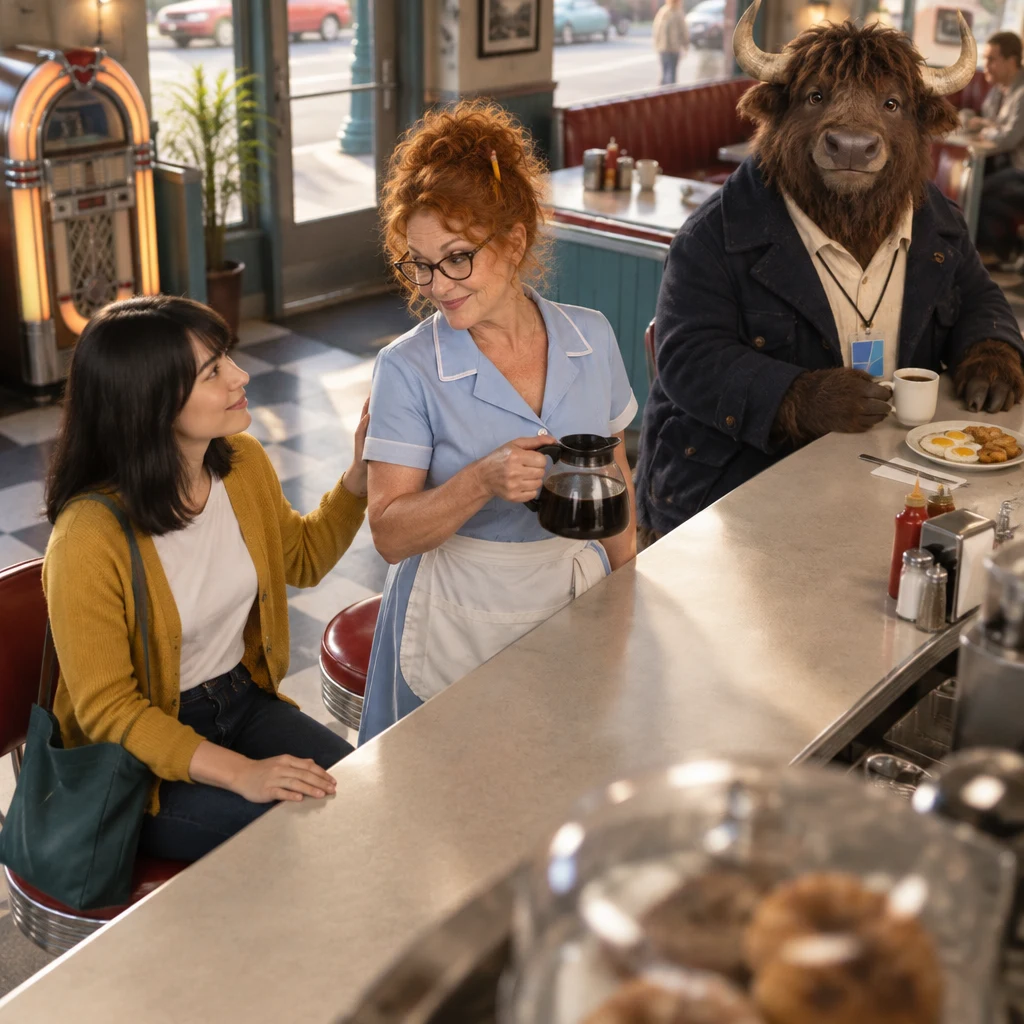
Same counter at the Blue Plate. Dee has the coffee pot. Ana sits on a red stool with her tote bag.
Murray is on two stools at the end, with eggs and a black coffee he has not finished. The jukebox by the door stays quiet.

Learn — ages, cities, and jobs
Six lines help you talk about family: where they live, how old they are, and what they do.
You'll also say you get along, and that visits are not often.

My parents live abroad.
My mom and dad live in another country.
When to use it: Say this when mom and dad live in another country.
Use abroad for a different country.
Say it: The stress is on the second part.

My brother is twenty this year.
He is twenty years old this year.
When to use it: Say this to give your brother's age for this year.
Twenty this year is a way to give his age.
Say it: Touch your teeth for th in brother.

What do your parents do?
What work do your mom and dad do?
When to use it: Ask this to learn what work mom and dad do.
Do here means their work, not today's plans.
Say it: The last do has the stress.

We get along well.
We have a good relationship.
When to use it: Say this when you and family are friendly.
Get along well is one piece for a friendly family.
Say it: Get and along can link.

I don't see them very often.
We do not meet a lot.
When to use it: Say this when you do not visit family a lot.
Don't is do not said as one piece.
Say it: Don't ends with a t sound.
My mom is a nurse.
Her job is taking care of sick people.
When to use it: Say this to name your mom's job.
Put a before the job word.
Story — dee meant well
Watch Ana answer Dee about her family. Dee wanted a short they are well, not a full report.
The highlighted words are the lines you just learned.
- Dee pours coffee and leans on the counter.
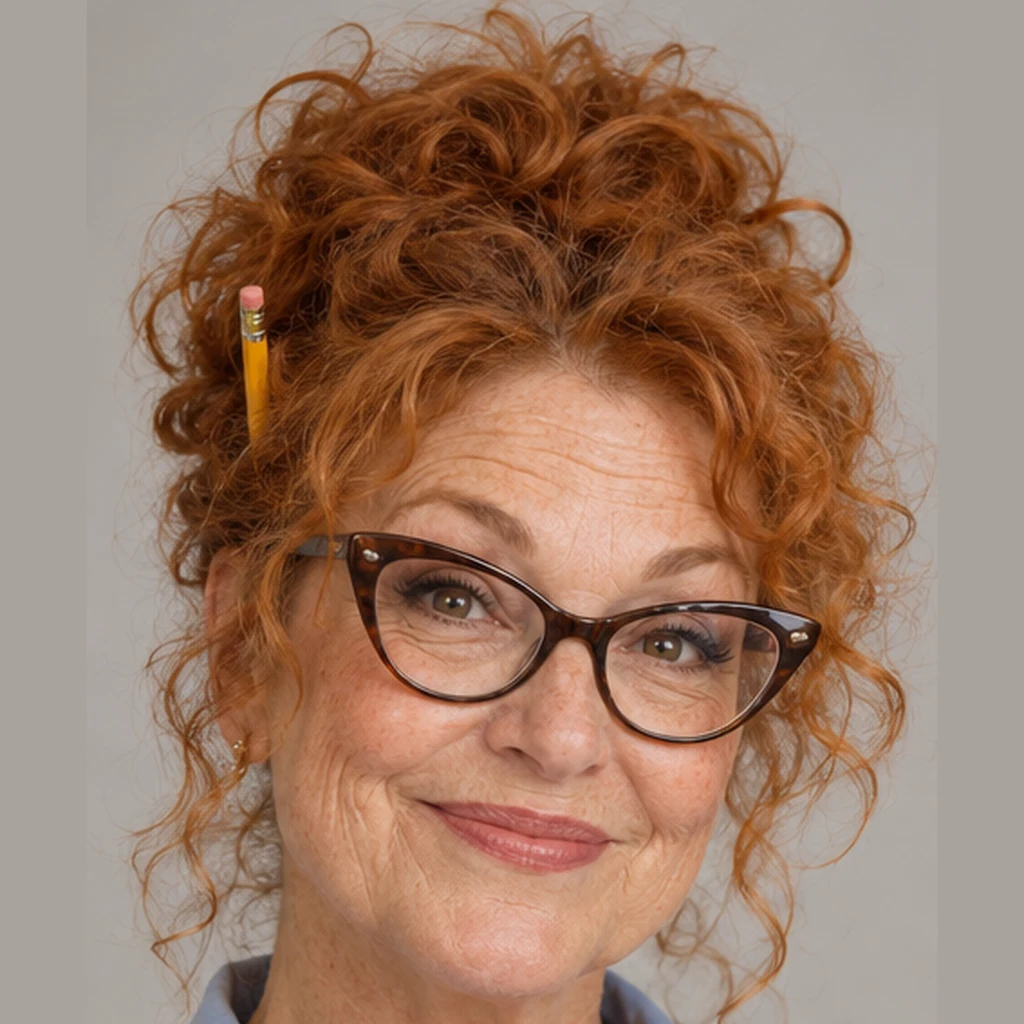 DeeHow are you, hon?you ask this when you greet someone
 AnaI'm good, thanks.a short, happy answer to How are you?
- DeeSo, how's the family, hon?She asks if Ana's family is well.
- AnaMy parents live abroad.My mom and dad live in another country.
- Dee waits. Ana sits up like this is a test.
- AnaMy brother is twenty this year.He is twenty years old this year.
 MurrayWhat do your parents do?What work do your mom and dad do?
- AnaThey cook dinner.She names a daily act, not the job.
- DeeThe job, hon.Dee wants the work, not a daily act.
- AnaMy mom is a nurse.Her job is taking care of sick people.
- DeeYou get along?She asks if they are friendly.
- AnaWe get along well.We have a good relationship.
- DeeYou see them a lot?She asks if Ana visits them a lot.
- AnaI don't see them very often.We do not meet a lot.
- Dee lifts the pot again. Murray's cup is still full.
- DeeHon, I meant are they well.Dee wanted to know if they are fine.
- AnaOh. Yes, they are.Ana finally says they are fine.
Practice — family facts
Ten quick exercises wait here. You'll listen, pick, match, fill a gap, and build a line.
They stay tiny, so the round moves fast.
0 of 10 done
What did you hear?
What did you hear?
Match the pairs
English
My parents live abroad.Drop the Simple English hereMy brother is twenty this year.Drop the Simple English hereWe get along well.Drop the Simple English hereMy mom is a nurse.Drop the Simple English hereSimple English
What do you say?
What do you say?
You sit with a friend. You want to know their mom and dad's jobs.
What does it mean?
What does it mean?
We get along well.
Fill the gap
Fill the gap
We do not meet a lot.
I don't see them very ____.
What do you say?
What do you say?
A friend asks how old your brother is this year.
Pick the reply
Murray says:
Pick the reply
What do your parents do?
What work do your mom and dad do?
And you reply with:
Swap the word
Swap the word
You tell Dee that mom and dad are not in this country.
My parents live ____.
True or false?
True or false?
This line asks you to list ages and jobs.
Pick the reply
Dee says:
Pick the reply
How are you?
you ask this when you greet someone
And you reply with:
Say it — tell her about them
Now you're Ana at the counter. When it's your turn, tap the microphone and speak the line.
Tap play first if you want to hear the line. Your recording stays on your device.
- DeeHow's the family, hon?She asks if your family is well.
- Ana (you)Tell her where your mom and dad live.
Tell her where your mom and dad live.
My parents live abroad.
My mom and dad live in another country.
0 of 6 said
Recap — what you can say now
| English | Simple English | Play |
|---|---|---|
| My parents live abroad. | My mom and dad live in another country. | |
| My brother is twenty this year. | He is twenty years old this year. | |
| What do your parents do? | What work do your mom and dad do? | |
| We get along well. | We have a good relationship. | |
| I don't see them very often. | We do not meet a lot. | |
| My mom is a nurse. | Her job is taking care of sick people. |
Save your progress — it’s free
Keep your place in the course and see which lines you’ve learned.
Want the next lesson in your inbox?
Get the next lesson by email, one a day.
Join the newsletterDaily lesson emails are coming soon. Newsletter subscribers get them first.
Keep practicing with Yak Cards
Want to keep these family lines handy? Grab the Yak Cards for this lesson and review them anywhere.
A quick round with the Yak Cards each day keeps your family lines ready at the counter.
Open Yak Cards