
New here? This is lesson 192 of a free 240-lesson English course.
Being unsure in English
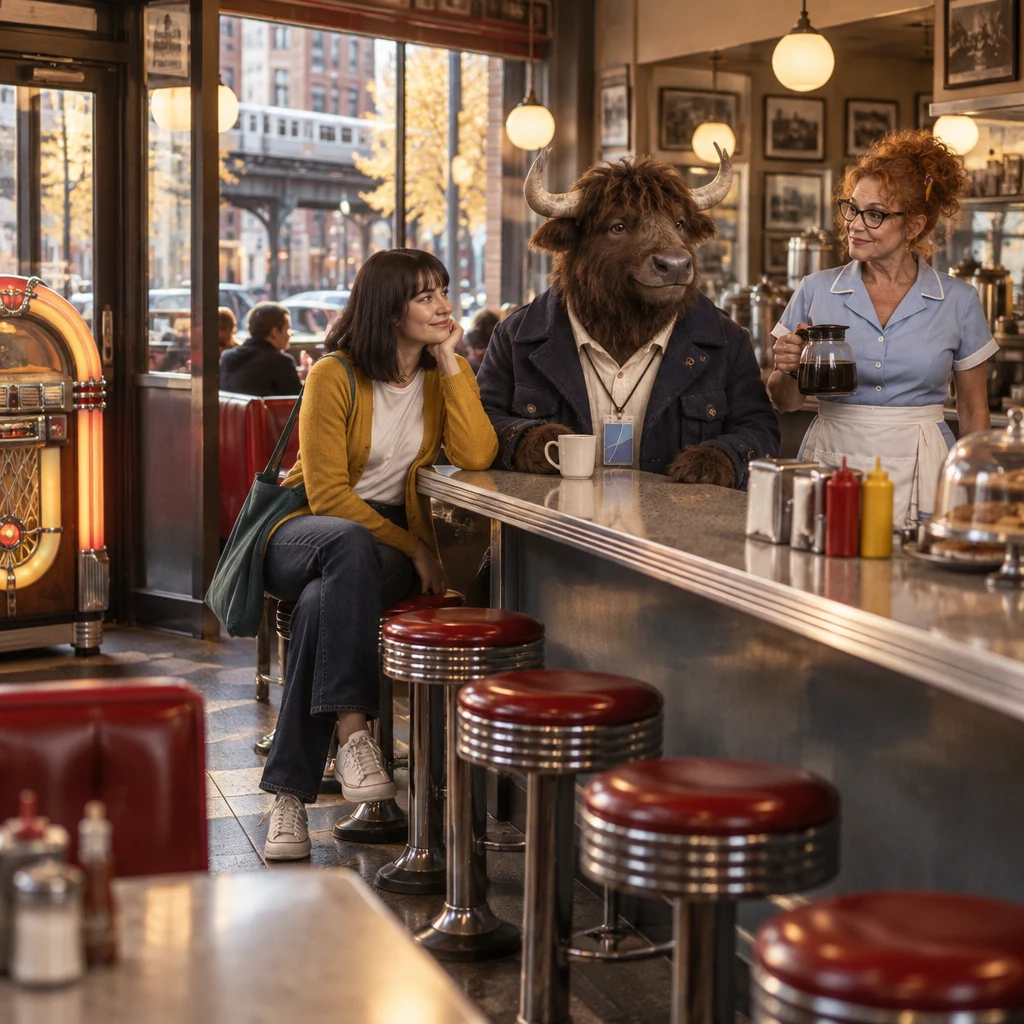
Murray is hunting for a word at the Blue Plate. Ana used to panic at a pause. Now she waits.
His coffee sits unfinished, as always. Dee refills it without asking.
By the end, you'll buy time when you are not sure. You'll ask for a moment, hunt for a word, and give a guess.
Well, I'm not sure is the honest start. Give me a moment asks people to wait.
By the end of this lesson
Buy time when you are not sure, and give a guess.
- Well, I'm not sure.I don't know yet; I need a second.
- Give me a moment.Please wait a little while I think.
- What's the word?I can't find the right word right now.
- I think maybe ___.This is my best guess, not a sure answer.
- It's kind of ___.It's something like this, not exactly.
- I'm trying to remember.The answer is in my head, but I can't reach it yet.
Scene — a pause at the counter
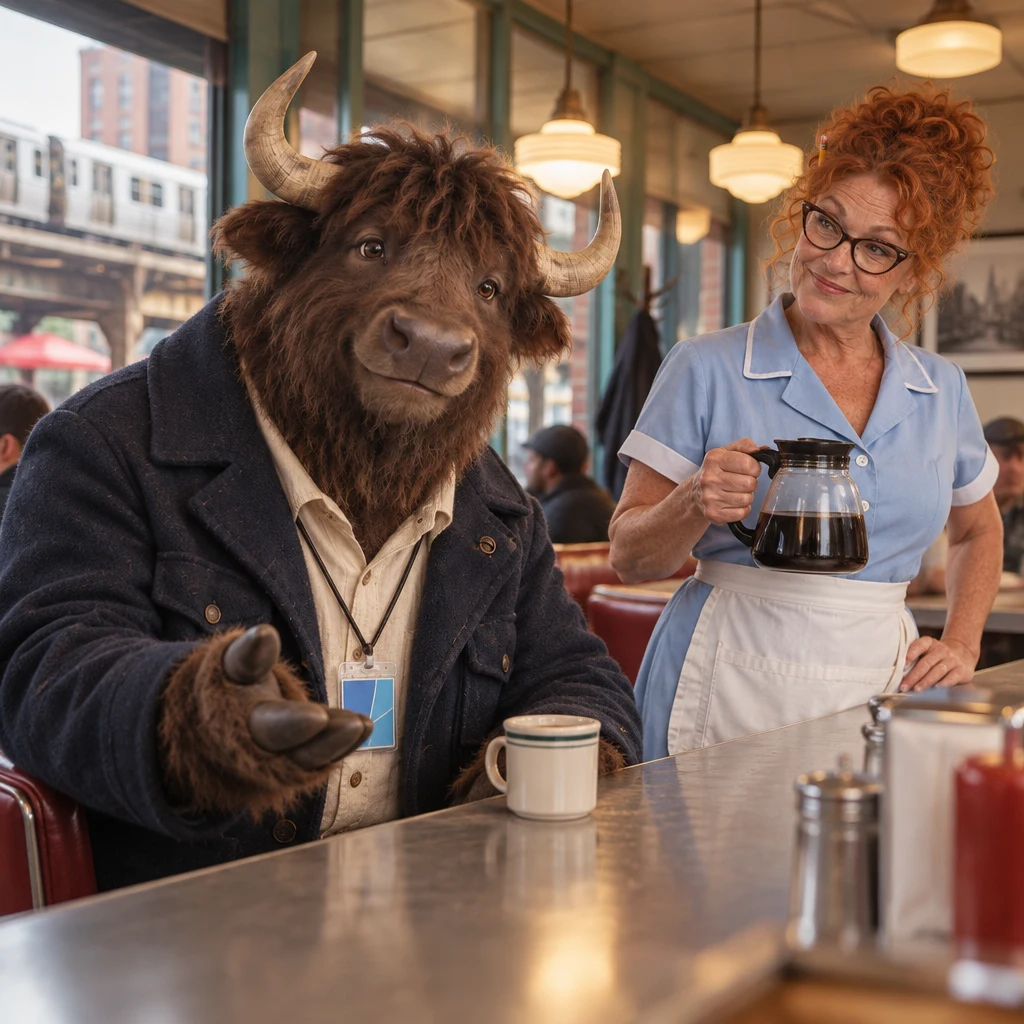
Late afternoon at the Blue Plate. Ana sits at the counter with Murray. His black coffee sits unfinished, and Dee keeps the pot nearby.
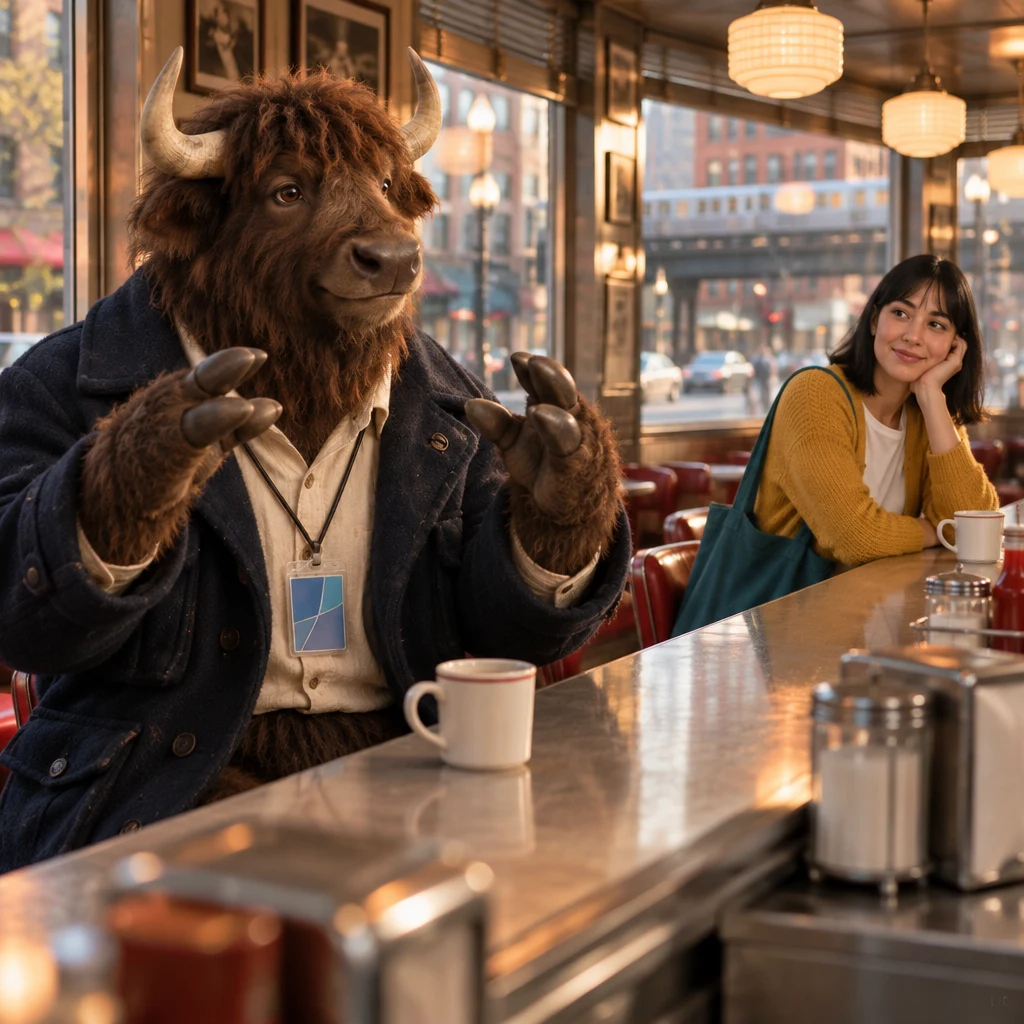
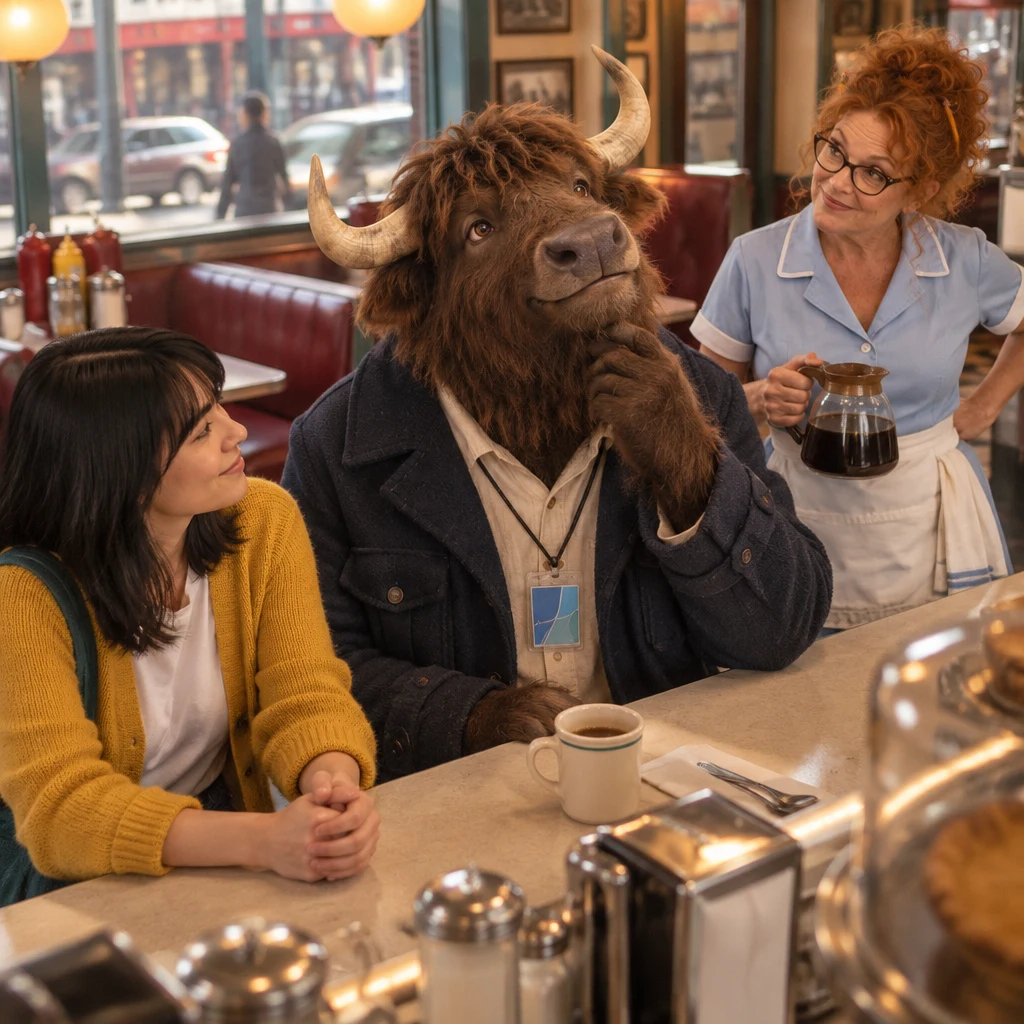
Murray starts a story, then stops. He is hunting for a word. Ana used to rush in. Today she waits.
Learn — buy a little time
Six lines help you buy time when you do not know yet.
You'll pause, hunt for a word, and give a guess that is not sure.
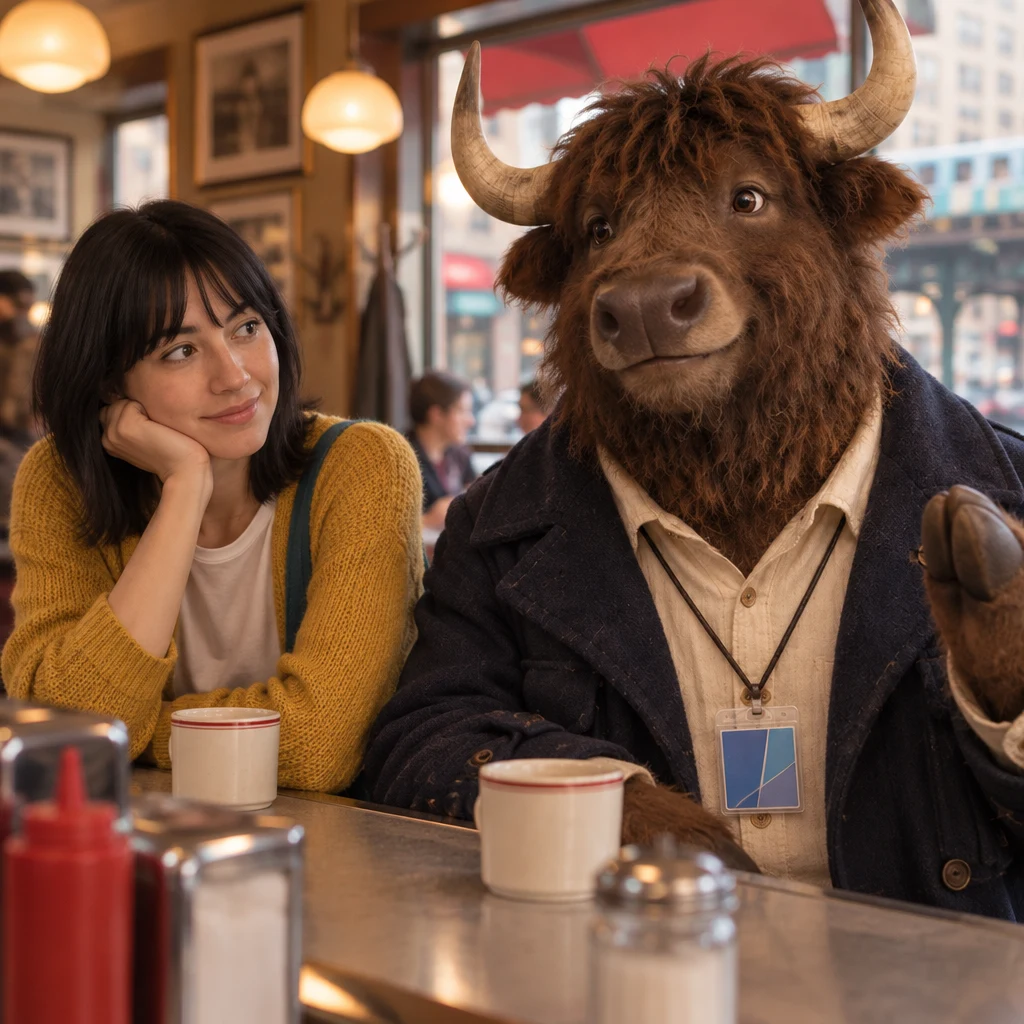
Well, I'm not sure.
I don't know yet; I need a second.
When to use it: Say this when you do not have the answer yet.
Well buys a second, and I'm is one piece.
Say it: Well is light; sure has the stress.
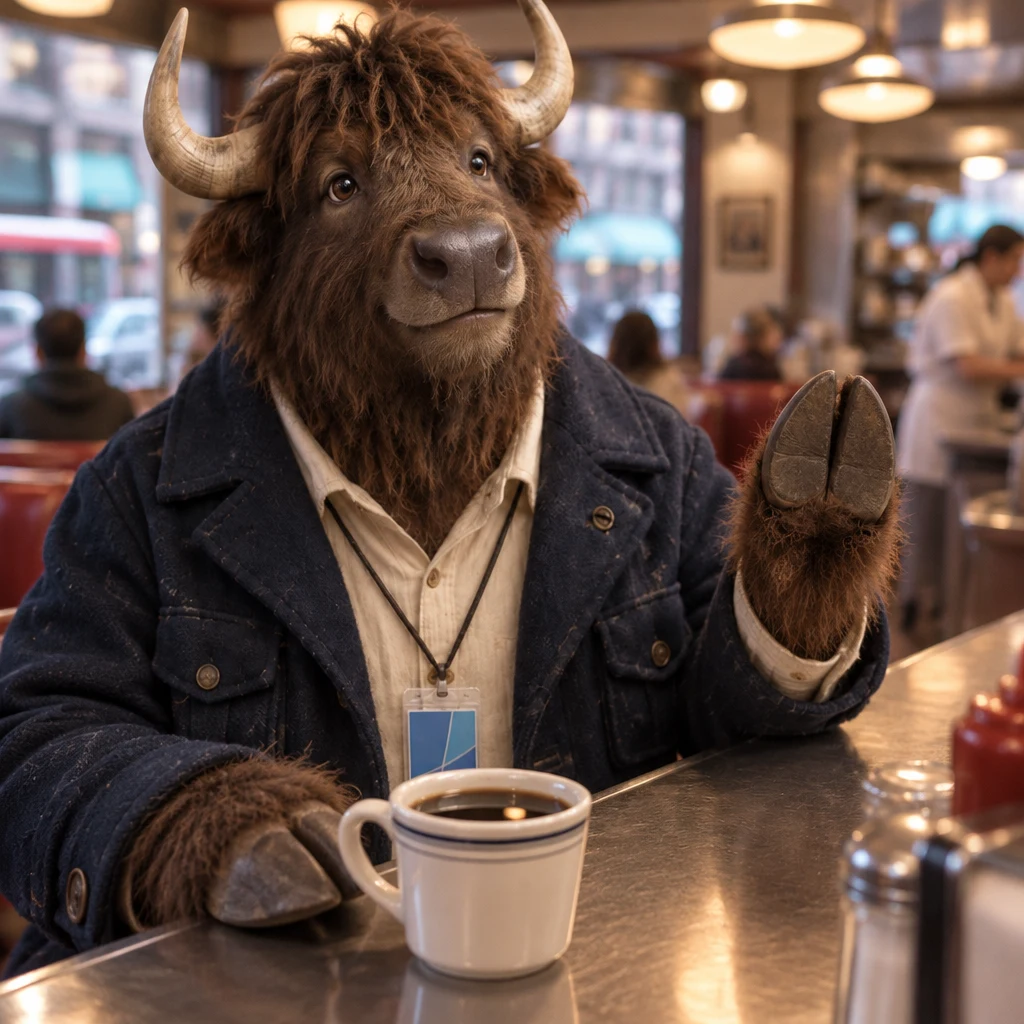
Give me a moment.
Please wait a little while I think.
When to use it: Say this when you need a little time to think.
A moment is a short wait, not a long one.
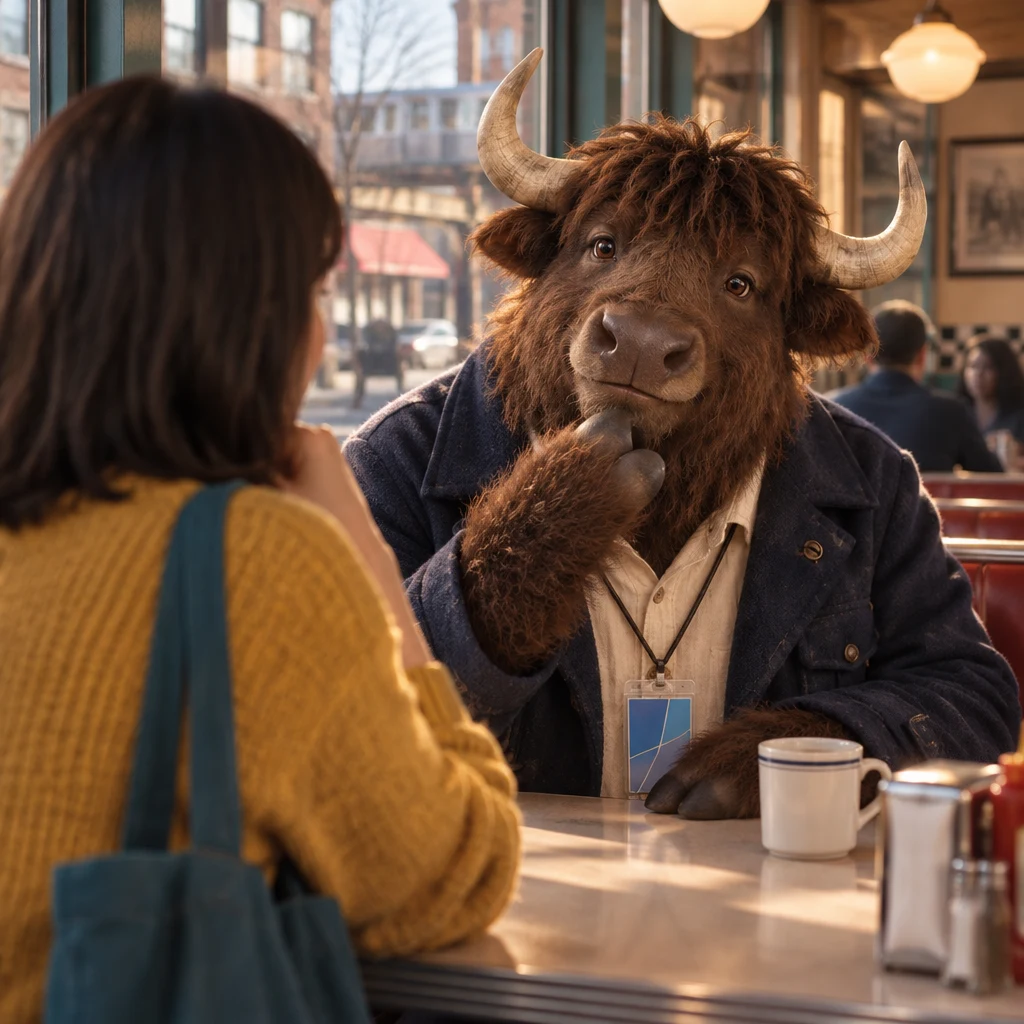
What's the word?
I can't find the right word right now.
When to use it: Say this when you cannot find the right word.
What's is one piece for hunting a word.
Say it: What's and the can link.
I think maybe ___.
This is my best guess, not a sure answer.
When to use it: Use this when your answer is only a guess.
Maybe shows you are not sure of the guess.
It's kind of ___.
It's something like this, not exactly.
When to use it: Use this to say something has a quality to some degree.
You will hear kinda, but write kind of.
Say it: Kind of often sounds like kinda.
I'm trying to remember.
The answer is in my head, but I can't reach it yet.
When to use it: Say this when the answer is in your head, but not ready.
Trying is the -ing form for still working on it.
Say it: To often sounds like tuh.
Story — hunting for a word
Watch Murray hunt for a word at the counter. Ana gives him a moment instead of rushing in. The highlighted words are the lines you just learned.
- The lamps are on. Murray's coffee sits unfinished.
 DeeSo, hon. You were in the middle of something.She wants him to finish what he started.
 MurrayWell, I'm not sure.I don't know yet; I need a second.
 AnaTake your time.You can go slowly. There is no rush.
- MurrayGive me a moment.Please wait a little while I think.
- Ana waits. A year ago a pause like this would have made her rush.
- MurrayWhat's the word?I can't find the right word right now.
- DeeFor the pie, sweetie?She asks if he is talking about pie.
- MurrayI'm trying to remember.The answer is in my head, but I can't reach it yet.
- AnaI think maybe cherry.This is my best guess, not a sure answer.
- MurrayIt's kind of tart.It's something like this, not exactly.
- AnaI'm not sure about that.I have doubts about that idea.
- MurrayWell, I'm not sure. I think maybe cherry.He still does not know, but cherry is his best guess.
- DeeLet me double-check.I will look again to be sure.
- Dee looks in the pie case. The jukebox by the door stays quiet.
- DeeCherry, hon. It's kind of tart, like Murray said.She says it is cherry, and it is a little tart, as Murray said.
- MurrayI'm trying to remember why I wanted it.The reason is in his head, but he cannot reach it yet.
- AnaGive me a moment. I'll get us a slice.She asks him to wait while she gets pie.
Practice — not sure yet
Eleven quick exercises wait here. You'll listen, pick, match, fill a gap, and build a line.
They stay short, so the round moves fast.
0 of 11 done
What did you hear?
What did you hear?
What does it mean?
What does it mean?
Give me a moment.
What do you say?
What do you say?
You are talking at the counter. The English word is stuck in your head.
Match the pairs
English
Well, I'm not sure.Drop the Simple English hereGive me a moment.Drop the Simple English hereWhat's the word?Drop the Simple English hereI'm trying to remember.Drop the Simple English hereSimple English
What do you say?
What do you say?
Someone asks what kind of pie it was. You have a guess, not a sure answer.
Build the line
Build the line
I don't know yet; I need a second.
, .
Tap the words in order.
Pick the reply
Murray says:
Pick the reply
Give me a moment.
Please wait a little while I think.
And you reply with:
Swap the word
Swap the word
The answer is in your head, but you cannot reach it yet.
I'm trying to ____.
What do you say?
What do you say?
You want to say the pie is tart, but only a little.
True or false?
True or false?
This line means you fully agree.
What do you say?
What do you say?
You want to look again before you answer.
Say it — say you need a second
Now you're Ana at the counter. Murray is hunting for a word. When it's your turn, tap the microphone and speak.
Tap play first if you want to hear the line. Your recording stays on your device.
- MurraySo, the pie. What kind was it?He asks what kind of pie it was.
- Ana (you)Ask him to wait while you think.
Ask him to wait while you think.
Give me a moment.
Please wait a little while I think.
0 of 6 said
Recap — what you can say now
| English | Simple English | Play |
|---|---|---|
| Well, I'm not sure. | I don't know yet; I need a second. | |
| Give me a moment. | Please wait a little while I think. | |
| What's the word? | I can't find the right word right now. | |
| I think maybe ___. | This is my best guess, not a sure answer. | |
| It's kind of ___. | It's something like this, not exactly. | |
| I'm trying to remember. | The answer is in my head, but I can't reach it yet. |
Save your progress — it’s free
Keep your place in the course and see which lines you’ve learned.
Want the next lesson in your inbox?
Get the next lesson by email, one a day.
Join the newsletterDaily lesson emails are coming soon. Newsletter subscribers get them first.
Keep practicing with Yak Cards
Want to keep these lines handy? Grab the Yak Cards for this lesson and review them anywhere.
A quick round with the Yak Cards each day keeps these lines ready when you need a second.
Open Yak Cards