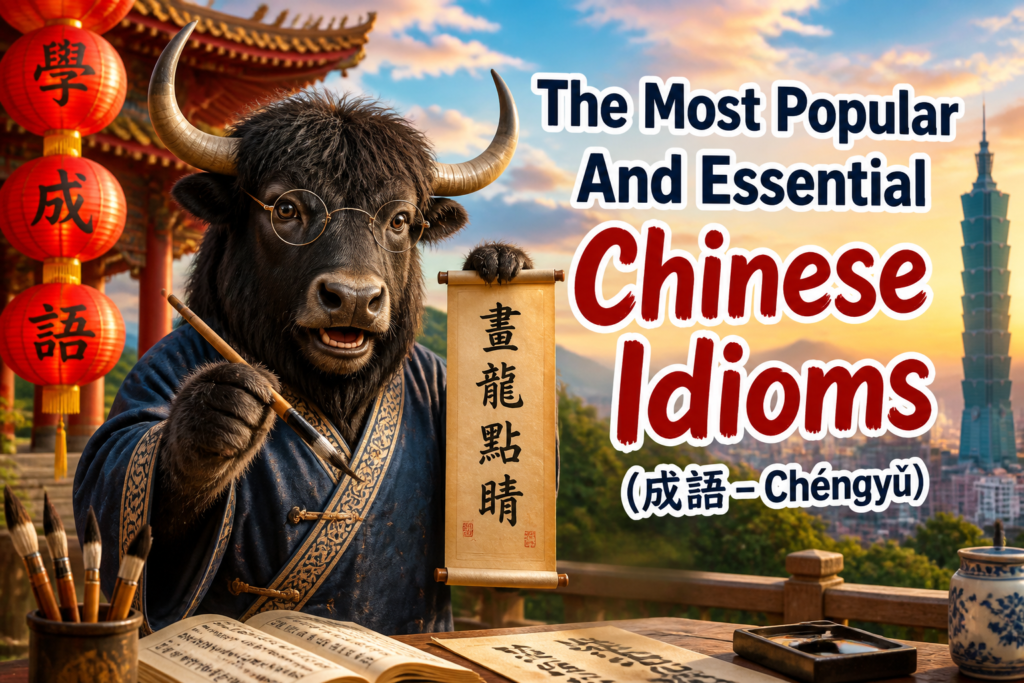
Popular and Essential Chinese Idioms (成語) is built for learners who want useful Traditional Chinese vocabulary in a clean reference format instead of a long, fluffy article.
Ready for a little language treasure hunt? As you explore these classic expressions, scroll to the bottom of the article for the free printable Popular Traditional Chinese Idioms vocabulary list PDF and the free downloadable printable Popular Traditional Chinese Idioms flashcards—your study buddies for turning tricky 成語 into something delightfully manageable.
Use this list as a starting point, then keep going in the Yak Yacker Traditional Chinese section for more words, phrases, and study-friendly reference pages.
Quick Quiz
Think you can pair a 成語 with its real meaning? The quick quiz below gives you a no-pressure nudge toward the ones that could use a second look.
Keep building your Traditional Chinese
Choose a practical next step when you are ready.
Browse the Full List
| Chengyu | Pinyin | Meaning | Example |
|---|---|---|---|
| 阿党比周 | ē dǎng bǐ zhōu | 指相互勾结,相互偏袒,结党营私。 | 《论语·卫灵公》众恶之,必察焉;众好之,必察焉”何晏集解引三国魏王肃曰或众~,或其人特立不群,故好恶不可不察也。” |
| 阿党相为 | ē dǎng xiāng wéi | 阿党偏袒、偏私一方。为了谋求私利相互偏袒、包庇。 | 无 |
| 阿其所好 | ē qí suǒ hào | 阿曲从;其他的;好爱好。指为取得某人的好感而迎合他的爱好。 | 吾何能~为? |
| 阿姑阿翁 | ā gū ā wēng | 阿名词的前缀。姑丈夫的母亲。翁丈夫的父亲。指公公婆婆。 | 既然如此,你我两个,便学个不痴不聋的~。 |
| 阿娇金屋 | ā jiāo jīn wū | 阿娇指汉武帝刘彻的姑母(长公主刘娇)的女儿。原指汉武帝刘彻要用金屋接纳阿娇为妇。这里泛指美丽高贵的女子。 | ~原相配,太其玉镜宁无时? |
| 阿家阿翁 | ā gū ā wēng | 阿名词的前缀。家通姑”,丈夫的母亲。翁丈夫的父亲。指公公婆婆。 | 无 |
| 阿平绝倒 | ā píng jué dǎo | 以之比喻对对方的言论极为佩服。亦用为讥讽言论极为乖谬,常贻笑大方。 | 无 |
| 阿弥陀佛 | ē mí tuó fó | 佛教语,信佛的人用作口头诵颂的佛号,表示祈祷祝福或感谢神灵的意思。 | 和尚念经,~。 |
| 阿意取容 | ē yì qǔ róng | 指曲从其意,以取悦于人。 | 当英景之间,国势初更,人心观望,执政任事之臣多~。 |
| 阿时趋俗 | ē shí qū sú | 阿迎合。迎合时尚和世俗。 | 无 |
| 阿毗地狱 | ā pí dì yù | 阿毗梵语的译音,意译为无间”,即痛苦无有间断之意。常用来比喻黑暗的社会和严酷的牢狱。又比喻无法摆脱的极其痛苦的境地。 | 生前不曾修福,死堕~。 |
| 阿狗阿猫 | ā gǒu ā māo | 旧时人们常用的小名。引申为任何轻贱的,不值得重视的人或著作。 | 无 |
| 阿猫阿狗 | ā māo ā gǒu | 旧时人们常用的小名。引申为任何轻贱的,不值得重视的人或著作。 | 在德国无论~见面,一律互相举手高喊希特勒万岁”。 |
| 阿谀取容 | ē yú qǔ róng | 阿谀曲意逢迎;取容取悦于人。谄媚他人,以取得其喜悦。 | 且王髈等~,蔽贤窃位。 |
| 阿谀奉承 | ē yú fèng chéng | 阿谀用言语恭维别人;奉承恭维,讨好。曲从拍马,迎合别人,竭力向人讨好。 | 无 |
| 阿谀谄媚 | ē yú chǎn mèi | 阿谀迎合别人的意思,向人讨好;谄媚巴结,奉承。说话做事迎合别人的心意,竭力向人讨好。 | 无 |
| 阿谀逢迎 | ē yú féng yíng | a | 其时京师有一流棍,名叫李光,专一~,谄事令孜。 |
| 阿鼻地狱 | ā bí dì yù | 阿鼻梵语的译音,意译为无间”,即痛苦无有间断之意。常用来比喻黑暗的社会和严酷的牢狱。又比喻无法摆脱的极其痛苦的境地。 | 但也有少数意志薄弱的……逐步上当,终至堕入~。 |
| 雪中送炭 | xuě zhōng sòng tàn | My friend helped when I was busiest. That was timely help. | 朋友在我最忙的時候幫忙,真是雪中送炭。 |
| 鞍前马后 | ān qián mǎ hòu | 马前马后。指追随左右。 | 无 |
| 鞍马之劳 | ān mǎ zhī láo | 鞍马鞍子和马,指长途跋涉或打仗。形容旅途或战斗的劳苦。 | 唐铉说此话以后再说。请到那边入座,少饮几杯水酒,以解二位~。” |
| 鞍马劳倦 | ān mǎ láo juàn | 指长途跋涉或战斗中备尝困乏。 | 无 |
| 鞍马劳困 | ān mǎ láo kùn | 指长途跋涉或战斗中备尝困乏。 | 无 |
| 鞍马劳神 | ān mǎ láo shén | 形容旅途劳累。同鞍马劳顿”。 | 祝龙答道也未见胜败。众位尊兄~不易。” |
| 鞍马劳顿 | ān mǎ láo dùn | 顿困顿。骑马赶路过久,劳累疲困。形容旅途劳累。 | 恐王侄一路远来,~,故令王侄回营安歇。 |