


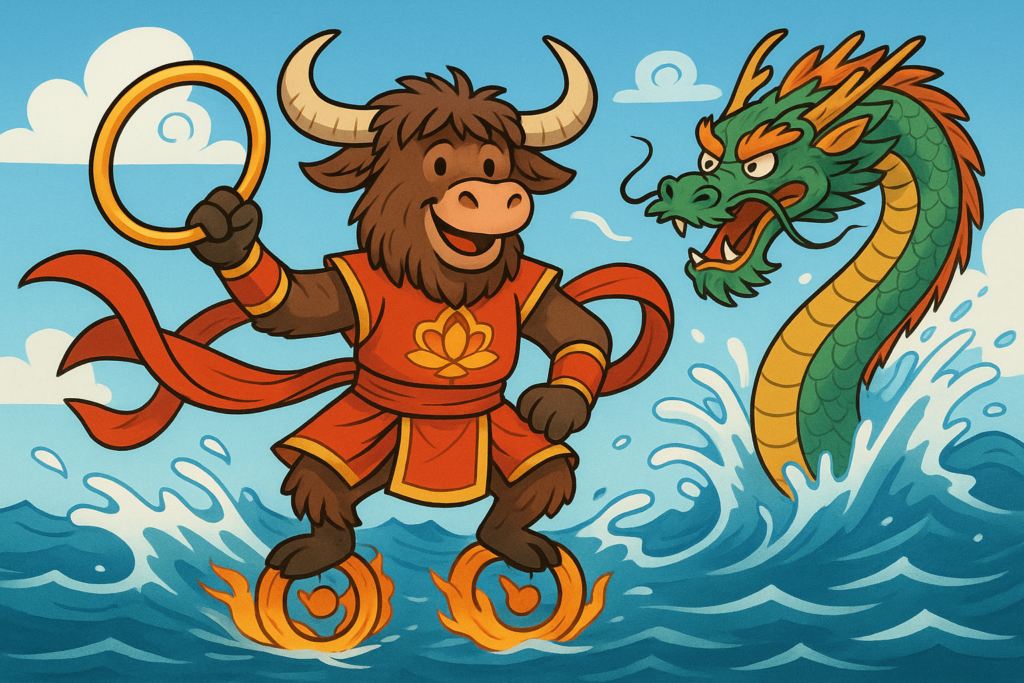
This A2 Elementary retelling of 哪吒收服龍王 keeps the plot clear for learners while still giving the story some atmosphere and momentum.
This version teaches Traditional Chinese through English and includes clickable word help inside the story, full story audio, and lesson notes after the reading. It is free to use on Yak Yacker and is designed to feel natural, readable, and manageable for learners.
從前,有個男孩叫哪吒。他有神奇的力量,腳踏風火輪,手拿乾坤圈。
有一天,哪吒在海邊玩。他揮動混天綾,海裏的龍宮一直搖晃。
龍王很生氣,叫去問他。蝦將說:「你是誰?為什麼我們的海?」
哪吒笑說:「我是哪吒!我你們!」他用蝦兵蟹將。
龍王氣得,從海裏。他大聲說:「我要你這個小孩!」
哪吒龍王的頭,用把他。龍王,很害怕。
龍王說:「對不起,我再也不欺負人了。」哪吒放了他,大海立刻平靜了。
從此,人們過著的生活,哪吒成了大家心中的。
Long ago, there was a boy named Nezha. He had magical powers, riding on wind-fire wheels and holding the Universe Ring.
One day, Nezha was playing by the sea. He waved the Red Armillary Sash, making the dragon palace under the sea shake.
The Dragon King got angry and sent shrimp soldiers and crab generals to question him. A shrimp general asked, "Who are you? Why are you disturbing our sea?"
Nezha laughed and said, "I am Nezha! I'm not afraid of you!" He used the Universe Ring to defeat them.
Furious, the Dragon King grew huge and emerged from the sea. He roared, "I will teach you a lesson, child!"
Nezha jumped onto the Dragon King's head and bound him with the Red Armillary Sash. The Dragon King couldn't move and was terrified.
The Dragon King said, "Sorry, I will never bully others again." Nezha released him, and the sea immediately calmed down.
From then on, people lived in peace, and Nezha became a little hero in everyone's heart.
Meet the heroes, villains, and magical tools from the adventure. These words bring the legend to life and are great additions to your Chinese vocabulary.
- 哪吒 (Nézhā) - a legendary hero boy with amazing powers
- 龍王 (Lóngwáng) - the Dragon King who rules the sea
- 乾坤圈 (Qiánkūnquān) - a golden ring weapon that can defeat enemies
- 混天綾 (Hùntiānlíng) - a red silk sash that can bind and shake things
- 蝦兵蟹將 (xiābīng xièjiàng) - "shrimp soldiers and crab generals," the Dragon King's army
The "把" sentence is a handy way to say what someone does to something. Pattern: Subject + 把 + Object + Verb + Complement. It shifts focus to the result or how the action is done.
From the story: 哪吒用混天綾把龍王綁起來 (Nezha used the sash to tie up the Dragon King). Here, 把龙王 places the Dragon King before the verb 绑起来, emphasizing what happened to him.
- Story example: 「用混天綾把他綁起來」- used the sash to tie him up
- Everyday practice: 我把書放在桌上 (I put the book on the table)
- Try more: 請把門打開 (Please open the door)
The story is packed with everyday phrases that you can use right away. Here are a few brave and practical gems.
- 對不起 (duìbuqǐ) - "Sorry," just like the Dragon King said to Nezha
- 我不怕你 (wǒ bù pà nǐ) - "I'm not afraid of you!" - Nezha's bold reply
- 再也不 (zài yě bù) - "never again," as in 再也不欺負人 (never bully people again)
- 立刻 (lìkè) - "immediately"; the sea became calm 立刻 after Nezha freed the Dragon King
Now it's your turn! Using the words and patterns you've learned, try retelling the adventure or acting it out. It's a fun way to make the language stick.
- Narrate the story in your own words-use 把 when you describe actions!
- Act out a scene: "我是哪吒!我不怕你!"
- Challenge: Write a sentence with 再也不 about something you'll never do.
哪吒收服龍王 comes from the Chinese / legend tradition and is best known as a myth/classic episode. This Yak Yacker article is an original learner retelling based on Investiture of the Gods / folk tradition; public domain, so the wording here is simplified for modern learners rather than copied from one old edition.
Older printings, translations, and retellings of this story can vary quite a bit. The original audience was usually kids/general, but this version is adapted for A2 Elementary learners studying Traditional Chinese. Avoid modern movie/anime designs and dialogue.
If you want to look into the source tradition, start with Wikipedia.
If you want to keep going, browse more in our Traditional Chinese section. After that, try 1,000 Traditional Chinese Phrases and Expressions for another useful next step.