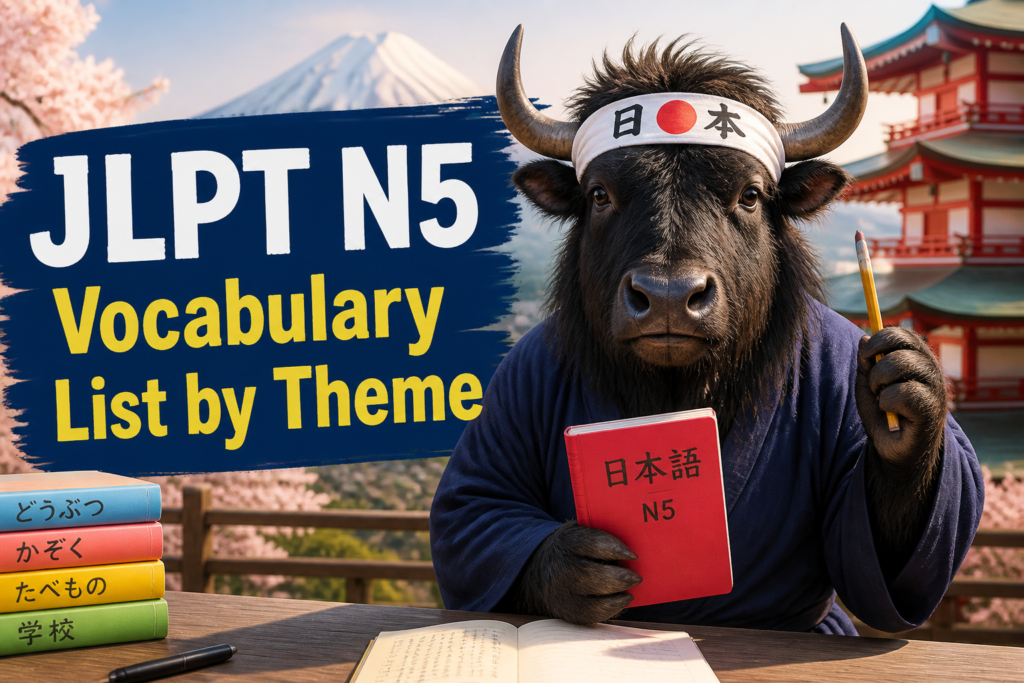
JLPT N5 vocabulary can feel tiny at first, which is rude, because your brain still has to do the heavy lifting. The good news? Theme-based learning makes the words stick faster. Instead of memorizing random items like a lost shopping receipt, you group words by real-life situations: family, time, food, school, daily actions, and so on.
For the broader learning path, visit our parent guide.
If you want a bigger picture of the exam, the JLPT itself is explained in the Japanese placement test guide here: JLPT Placement Test Guide. This page is your theme-packed vocabulary shortcut, and yes, that is much friendlier than trying to brute-force your way through a mountain of flashcards.
Need a place to start after this list? Try the JLPT N5 Japanese Study Guide, then check the JLPT N5 Japanese Kanji list. If you want to test yourself, the Japanese Vocabulary Test is waiting politely in the background.
Theme learning works because the brain loves patterns. “Breakfast” sits near “eat,” “morning,” and “go to school,” so the words stop feeling like strangers at a party.
Core N5 Vocabulary Themes
| Kanji | Rōmaji | English Meaning |
|---|---|---|
| 私 | watashi | I; me |
| あなた | anata | you |
| 人 | hito | person |
| 友達 | tomodachi | friend |
| 家族 | kazoku | family |
| 学校 | gakkō | school |
| 先生 | sensei | teacher |
| 学生 | gakusei | student |
| 本 | hon | book |
| 字典 | jiten | dictionary |
私は学生です。 Watashi wa gakusei desu. I am a student.
先生はやさしいです。 Sensei wa yasashii desu. The teacher is kind.
| Kanji | Rōmaji | English Meaning |
|---|---|---|
| 日 | hi / nichi | day; sun |
| 月 | tsuki / getsu | moon; month |
| 火 | hi / ka | fire; Tuesday |
| 水 | mizu / sui | water; Wednesday |
| 木 | ki / moku | tree; Thursday |
| 金 | kane / kin | gold; Friday |
| 土 | tsuchi / do | earth; Saturday |
| 今日 | kyō | today |
| 明日 | ashita | tomorrow |
| 昨日 | kinō | yesterday |
今日は月曜日です。 Kyō wa getsuyōbi desu. Today is Monday.
明日、学校へ行きます。 Ashita, gakkō e ikimasu. Tomorrow, I go to school.
| Kanji | Rōmaji | English Meaning |
|---|---|---|
| 朝 | asa | morning |
| 昼 | hiru | noon; daytime |
| 夜 | yoru | night |
| 今 | ima | now |
| 時間 | jikan | time; hour |
| 分 | fun / bun | minute; part |
| 半 | han | half |
| 早い | hayai | early; fast |
| 遅い | osoi | late; slow |
| 毎日 | mainichi | every day |
今は八時半です。 Ima wa hachiji han desu. It is 8:30 now.
毎日、早く起きます。 Mainichi, hayaku okimasu. I wake up early every day.
| Kanji | Rōmaji | English Meaning |
|---|---|---|
| 行く | iku | to go |
| 来る | kuru | to come |
| 帰る | kaeru | to return; go home |
| 食べる | taberu | to eat |
| 飲む | nomu | to drink |
| 見る | miru | to see; watch |
| 聞く | kiku | to hear; listen; ask |
| 読む | yomu | to read |
| 書く | kaku | to write |
| 話す | hanasu | to speak |
本を読みます。 Hon o yomimasu. I read a book.
水を飲みます。 Mizu o nomimasu. I drink water.
| Kanji | Rōmaji | English Meaning |
|---|---|---|
| 大きい | ōkii | big |
| 小さい | chiisai | small |
| 新しい | atarashii | new |
| 古い | furui | old |
| 高い | takai | expensive; tall |
| 安い | yasui | cheap |
| 多い | ōi | many; much |
| 少ない | sukunai | few; little |
| 長い | nagai | long |
| 短い | mijikai | short |
この本は高いです。 Kono hon wa takai desu. This book is expensive.
この道は長いです。 Kono michi wa nagai desu. This road is long.
| Kanji | Rōmaji | English Meaning |
|---|---|---|
| 家 | ie | house; home |
| 部屋 | heya | room |
| 町 | machi | town |
| 店 | mise | store; shop |
| 駅 | eki | station |
| 道 | michi | road; way |
| 前 | mae | front; before |
| 後ろ | ushiro | behind |
| 中 | naka | inside |
| 外 | soto | outside |
駅の前です。 Eki no mae desu. It is in front of the station.
家の中にいます。 Ie no naka ni imasu. I am inside the house.
| Kanji | Rōmaji | English Meaning |
|---|---|---|
| 食べ物 | tabemono | food |
| 飲み物 | nomimono | drink |
| ご飯 | gohan | rice; meal |
| 水 | mizu | water |
| お茶 | ocha | tea |
| 肉 | niku | meat |
| 魚 | sakana | fish |
| 野菜 | yasai | vegetables |
| 果物 | kudamono | fruit |
| 卵 | tamago | egg |
ご飯を食べます。 Gohan o tabemasu. I eat a meal / rice.
お茶を飲みます。 Ocha o nomimasu. I drink tea.
| Kanji | Rōmaji | English Meaning |
|---|---|---|
| 赤い | akai | red |
| 青い | aoi | blue |
| 白い | shiroi | white |
| 黒い | kuroi | black |
| 緑 | midori | green |
| 黄色 | kiiro | yellow |
| 多分 | tabun | maybe; probably |
| よく | yoku | often; well |
| たくさん | takusan | a lot |
| 少し | sukoshi | a little |
赤い車です。 Akai kuruma desu. It is a red car.
たくさん勉強します。 Takusan benkyō shimasu. I study a lot.
Useful N5 Phrases For Daily Life
| Kanji | Rōmaji | English Meaning |
|---|---|---|
| おはようございます | ohayō gozaimasu | good morning |
| こんにちは | konnichiwa | hello; good afternoon |
| こんばんは | konbanwa | good evening |
| さようなら | sayōnara | goodbye |
| ありがとうございます | arigatō gozaimasu | thank you |
| すみません | sumimasen | excuse me; sorry |
| 大丈夫です | daijōbu desu | It’s okay; I’m fine |
| お願いします | onegaishimasu | please |
| わかりません | wakarimasen | I don’t understand |
| もう一度 | mō ichido | one more time |
もう一度お願いします。 Mō ichido onegaishimasu. One more time, please.
わかりません。 Wakarimasen. I don’t understand.
Quick Theme Notes
When N5 words are grouped by topic, your memory stops acting like a rusty drawer and starts acting like a filing cabinet. Fancy.
Here are a few small but useful things to notice:
- 行く iku means “to go,” but it often appears in simple daily sentences with places like 学校 gakkō and 店 mise.
- 見る miru can mean “to see” or “to watch.” Context does the heavy lifting here.
- 高い takai can mean “expensive” or “tall.” Japanese enjoys keeping learners humble.
- ご飯 gohan can mean “cooked rice” or a full meal.
- 大丈夫です daijōbu desu is useful in many situations: okay, fine, no problem, all good.
Practice The Theme Groups
Try to answer these without looking up every word. A little struggle is healthy. Excessive comfort is overrated.
- Say “I study every day.” Use 毎日 mainichi and 勉強します benkyō shimasu.
- Say “The room is big.” Use 部屋 heya and 大きい ōkii.
- Say “I drink water.” Use 水 mizu and 飲みます nomimasu.
- Say “Tomorrow I go to school.” Use 明日 ashita and 学校へ行きます gakkō e ikimasu.
- Say “Please one more time.” Use もう一度お願いします mō ichido onegaishimasu.
Common Mistakes To Avoid
- Mixing 今 ima and 今日 kyō. One means “now,” the other means “today.” Tiny words, big consequences.
- Using 高い takai only for height. It can also mean expensive.
- Forgetting that ご飯 gohan is often used for “meal,” not just plain rice.
- Thinking 聞く kiku only means “to listen.” It can also mean “to ask.”
- Trying to memorize every word in one day. Bold strategy. Usually not a wise one.
Quick Reference Summary
| Theme | Example Words |
|---|---|
| People | 私 watashi, 友達 tomodachi, 家族 kazoku, 先生 sensei |
| Time | 今日 kyō, 明日 ashita, 昨日 kinō, 今 ima |
| Actions | 行く iku, 食べる taberu, 見る miru, 書く kaku |
| Places | 学校 gakkō, 家 ie, 駅 eki, 店 mise |
| Food | ご飯 gohan, 水 mizu, お茶 ocha, 魚 sakana |
If you want to keep going, the next clean step is the JLPT N4 Japanese Vocabulary list. For a bigger study plan, revisit the JLPT N5 Japanese Study Guide and the JLPT N5 Japanese Kanji page. And if you want a test-style check, the Japanese Vocabulary Test gives your memory a proper nudge.
The smartest way to learn JLPT N5 vocabulary is not to chase every word alone. Group them, reuse them, and say them out loud in short sentences. That is how the vocabulary stops looking like a list and starts behaving like Japanese.
Reference List
Browse the full Yak Yacker reference list below. If a PDF is available for this page, the download button will appear under the table.
The original guide stays below, and now you can review the topic more actively with a quiz, the full reference table, and a free PDF download under the list.
Want more than one list? Browse our Japanese section for more Yak Yacker study pages, printable lists, and quiz-friendly review material.
Quick Quiz
Think you’ve already memorised a few N5 words? Give the quiz a quick spin-it’s a low‑stress way to spot which ones still need a second look.
Browse the Full List
The Yak Yacker reference table below gives you meanings, examples, audio playback where available for this list, and a free PDF download button below the table.
| Word | Reading | Type | Meaning | Example | Translation | Audio |
|---|---|---|---|---|---|---|
| 早い | はやい | adjective | early | 今日は早いです。 | Today is early. | |
| 明い | あかるい | adjective | bright | この部屋は明るいです。 | This room is bright. | |
| 明かす | あかす | verb | to spend the night | 友だちの家で夜を明かしました。 | I spent the night at a friend's house. | |
| 明くる | あくる | adjective | next; following | 明くる朝、雨がやんだ。 | The next morning, the rain stopped. | |
| 明るい | あかるい | adjective | bright | 部屋が明るいです。 | The room is bright. | |
| 明後日 | あさって | noun | day after tomorrow | 明後日、会いましょう。 | Let's meet the day after tomorrow. | |
| 明日 | あした | noun | tomorrow | 明日学校へ行きます。 | I will go to school tomorrow. | |
| 明白 | あからさま | adjective | obvious; blatant | それはあからさまです。 | That is obvious. | |
| 易しい | やさしい | adjective | easy | この漢字は易しいです。 | This kanji is easy. | |
| 映画 | えいが | noun | movie | 映画を見ました。 | I watched a movie. | |
| 映画館 | えいがかん | noun | movie theater | 映画館へ行きます。 | I go to the movie theater. | |
| 春 | はる | noun | spring | 春はあたたかいです。 | Spring is warm. | |
| 昨夜 | ゆうべ | noun | last night | 昨夜はよく眠りました。 | I slept well last night. | |
| 昨日 | きのう | noun | yesterday | 昨日は雨でした。 | It was rainy yesterday. | |
| 昼 | ひる | noun | daytime; noon | 昼に食べます。 | I eat at noon. | |
| 昼御飯 | ひるごはん | noun | lunch | 昼御飯を作ります。 | I make lunch. | |
| 時々 | ときどき | adverb | sometimes | 時々公園へ行きます。 | I sometimes go to the park. | |
| 時計 | とけい | noun | clock; watch | 時計を見ます。 | I look at the clock. | |
| 時間 | じかん | noun | time; hour | 時間がありません。 | I don't have time. | |
| 晩 | ばん | noun | evening; night | 晩にテレビを見ます。 | I watch TV at night. | |
| 晩御飯 | ばんごはん | noun | dinner | 晩御飯を食べます。 | I eat dinner. | |
| 晴れ | はれ | noun | clear weather | 今日は晴れです。 | It is sunny today. | |
| 晴れる | はれる | verb | to clear up; to become sunny | 午後は晴れます。 | It will clear up in the afternoon. | |
| 暇 | ひま | noun | free time | 今は暇です。 | I am free now. | |
| 暑い | あつい | adjective | hot; warm | 今日は暑いです。 | Today is hot. |