This A1 Beginner retelling of ももたろう keeps the plot clear for learners while still giving the story some atmosphere and momentum.
This version teaches Japanese through English and includes clickable word help inside the story, full story audio, and lesson notes after the reading. It is free to use on Yak Yacker and is designed to feel natural, readable, and manageable for learners.
むかしむかし、とがいました。おじいさんは、おばあさんは行きました。
おばあさんが川でをしていると、が流れてきました。「まあ、」
おばあさんはが出てきました。
「かわいい!は『』だ。」おじいさんとおばあさんはで、
ももたろうは、「ぼく、に」とおばあさんはを作りました。
旅ので、「きびだんごをあげるから、」みんなはになりました。
みんなでへ行って、をもらって家に帰り、みんなで
Once upon a time, there lived an old man and an old woman. The old man went to the mountain, and the old woman went to the river.
While the old woman was washing clothes at the river, a big peach came floating down. "Oh, what a big peach!"
The old woman brought the peach home. When she and the old man tried to cut it open, a baby came out from inside.
"How cute! This child is 'Momotaro'." The old man and old woman were overjoyed and raised Momotaro.
Momotaro grew up and said, "I'm going to go defeat the ogres." The old woman made millet dumplings.
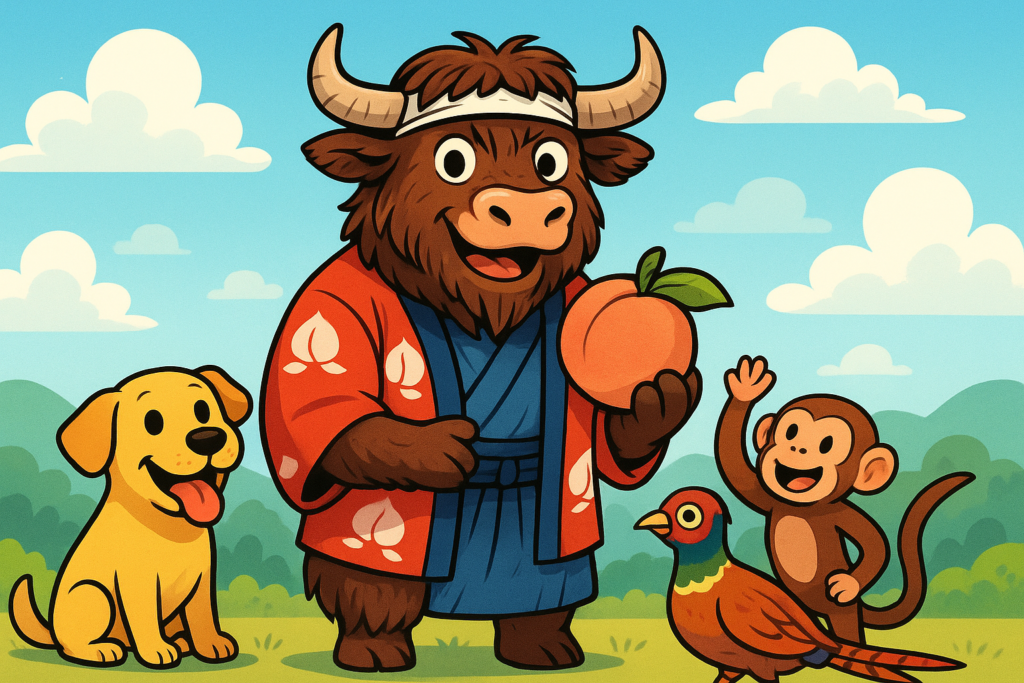
Along the way, he met a dog, a monkey, and a pheasant. "I'll give you millet dumplings, so come with me." They all became companions.
They all went to Ogre Island and defeated the ogres. They received treasure and returned home, and everyone lived happily ever after.
These words appear again and again in the tale. Learning them will help you tell the story yourself!
Don't worry about perfect pronunciation yet-just get used to the sounds and meanings.
- もも (momo) - peach
- おじいさん (ojiisan) - old man / grandpa
- おばあさん (obaasan) - old woman / grandma
- 赤ちゃん (akachan) - baby
- いぬ (inu) - dog
- さる (saru) - monkey
- きじ (kiji) - pheasant
- おに (oni) - ogre / demon
In the story, you saw both へ (e) and に (ni) to show where someone is going. They work the same way here!
Think of them like little arrows pointing to a destination. You can usually use either one.
- おじいさんは山へ行きました。 (Grandpa went to the mountains.)
- おばあさんは川へ行きました。 (Grandma went to the river.)
- みんなでおにが島へ行きました。 (Everyone went to Ogre Island.)
- 家に帰りました。 (They returned home.)
You just read and understood a classic Japanese folktale-all in Japanese! That's a big step.
Try telling the story out loud, or listen to a spoken version online. The rhythm of the words will soon feel natural.
ももたろう comes from the Japanese / folk tale tradition and is best known as a folk tale. This Yak Yacker article is an original learner retelling based on Traditional Japanese folk tale; public-domain versions, so the wording here is simplified for modern learners rather than copied from one old edition.
Older printings, translations, and retellings of this story can vary quite a bit. The original audience was usually kids, but this version is adapted for A1 Beginner learners studying Japanese. Use generic folk version; avoid modern anime/mascot designs.
If you want to look into the source tradition, start with Project Gutenberg.
If you want to keep going, browse more in our Japanese section and review the Geography Vocabulary in Japanese. After that, try Japanese Question Words for another useful next step.