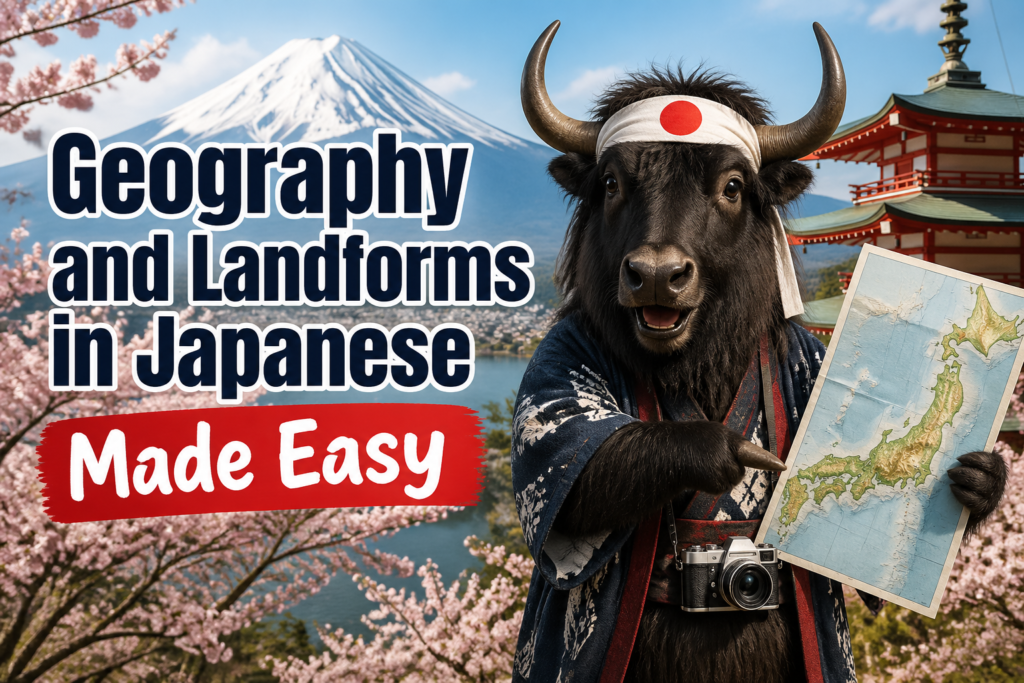
Japanese geography words show up everywhere: weather reports, travel guides, anime maps, train announcements, school textbooks, and the occasional dramatic “we must cross the mountain at dawn” moment. If you know the big landform words, a lot of Japanese suddenly stops looking like a wall of mysterious squiggles and starts looking like an actual place.
And honestly, geography vocabulary is sneaky-useful. You may not talk about volcanoes every day, but you will absolutely run into words like river, island, coast, forest, and valley. Japan is a country of islands, mountains, and coastlines, so these words pull a lot of weight. If you want a broader starter guide after this one, have a peek at more Japanese lessons.
Let’s make the map less scary.
Useful Geography And Landform Words
| Kanji | Rōmaji | Meaning | Example (JP) | Example (Rōmaji) | Translation (EN) |
|---|---|---|---|---|---|
| 地理 | chiri | geography | 私は学校で地理を勉強しています。 | Watashi wa gakkō de chiri o benkyō shite imasu. | I study geography at school. |
| 地形 | chikei | landform; terrain | この地域の地形はとても複雑です。 | Kono chiiki no chikei wa totemo fukuzatsu desu. | The landforms in this area are very complex. |
| 地図 | chizu | map | 地図で山と川を確認してください。 | Chizu de yama to kawa o kakunin shite kudasai. | Please check the mountains and rivers on the map. |
| 地域 | chiiki | area; region | この地域は雪が多いです。 | Kono chiiki wa yuki ga ōi desu. | This region gets a lot of snow. |
| 地方 | chihō | district; region | 日本の北の地方は冬が長いです。 | Nihon no kita no chihō wa fuyu ga nagai desu. | The northern regions of Japan have long winters. |
Mountains, Hills, And High Ground
Japan and mountains are basically inseparable. So these words are not optional. They are VIP vocabulary.
| Kanji | Rōmaji | Meaning | Example (JP) | Example (Rōmaji) | Translation (EN) |
|---|---|---|---|---|---|
| 山 | yama | mountain | あの山は冬に白くなります。 | Ano yama wa fuyu ni shiroku narimasu. | That mountain turns white in winter. |
| 火山 | kazan | volcano | 日本には活火山が多いです。 | Nihon ni wa kakkazan ga ōi desu. | Japan has many active volcanoes. |
| 丘 | oka | hill | 小さな丘の上に公園があります。 | Chiisana oka no ue ni kōen ga arimasu. | There is a park on top of the small hill. |
| 高地 | kōchi | highland | この高地は夏でも涼しいです。 | Kono kōchi wa natsu demo suzushii desu. | This highland is cool even in summer. |
| 山脈 | sanmyaku | mountain range | 山脈が町の西に広がっています。 | Sanmyaku ga machi no nishi ni hirogatte imasu. | A mountain range stretches west of the town. |
| 山頂 | sanchō | mountaintop; summit | 山頂からの景色はすばらしいです。 | Sanchō kara no keshiki wa subarashii desu. | The view from the summit is wonderful. |
Rivers, Lakes, And Water Features
If a place has people, it usually has water nearby. Civilizations are funny like that.
| Kanji | Rōmaji | Meaning | Example (JP) | Example (Rōmaji) | Translation (EN) |
|---|---|---|---|---|---|
| 川 | kawa | river | その川は町の中心を流れています。 | Sono kawa wa machi no chūshin o nagarete imasu. | That river flows through the center of town. |
| 河川 | kasen | river; waterway | この河川は春によく増水します。 | Kono kasen wa haru ni yoku zōsui shimasu. | This river often rises in spring. |
| 湖 | mizuumi | lake | 大きな湖の近くにホテルがあります。 | Ōkina mizuumi no chikaku ni hoteru ga arimasu. | There is a hotel near the large lake. |
| 池 | ike | pond | 公園の池に鳥がいます。 | Kōen no ike ni tori ga imasu. | There are birds at the pond in the park. |
| 滝 | taki | waterfall | あの滝はとても有名です。 | Ano taki wa totemo yūmei desu. | That waterfall is very famous. |
| 泉 | izumi | spring | この村はきれいな泉で知られています。 | Kono mura wa kirei na izumi de shirarete imasu. | This village is known for its clear spring. |
Sea, Coast, And Island Vocabulary
This section matters a lot because Japan is an island country. So yes, sea words are doing overtime.
| Kanji | Rōmaji | Meaning | Example (JP) | Example (Rōmaji) | Translation (EN) |
|---|---|---|---|---|---|
| 海 | umi | sea; ocean | 夏に海へ行きたいです。 | Natsu ni umi e ikitai desu. | I want to go to the sea in summer. |
| 海岸 | kaigan | coast; seashore | 海岸を散歩するのが好きです。 | Kaigan o sanpo suru no ga suki desu. | I like walking along the coast. |
| 浜 | hama | beach; shore | 子どもたちは浜で遊んでいます。 | Kodomo-tachi wa hama de asonde imasu. | The children are playing on the beach. |
| 島 | shima | island | この島は自然が豊かです。 | Kono shima wa shizen ga yutaka desu. | This island has abundant nature. |
| 半島 | hantō | peninsula | その半島には古い灯台があります。 | Sono hantō ni wa furui tōdai ga arimasu. | There is an old lighthouse on that peninsula. |
| 湾 | wan | bay | この湾は波が静かです。 | Kono wan wa nami ga shizuka desu. | The waves are calm in this bay. |
| 岬 | misaki | cape | 岬から海を一望できます。 | Misaki kara umi o ichibō dekimasu. | You can overlook the sea from the cape. |
| 海峡 | kaikyō | strait | この海峡は船の交通が多いです。 | Kono kaikyō wa fune no kōtsū ga ōi desu. | This strait has heavy ship traffic. |
Plains, Valleys, And Flat Land
Not every part of the world is trying to be dramatic. Some places are flat, practical, and quietly useful. Respect the plain.
| Kanji | Rōmaji | Meaning | Example (JP) | Example (Rōmaji) | Translation (EN) |
|---|---|---|---|---|---|
| 平野 | heiya | plain | この平野では米が作られています。 | Kono heiya de wa kome ga tsukurarete imasu. | Rice is grown on this plain. |
| 盆地 | bonchi | basin | その町は盆地にあります。 | Sono machi wa bonchi ni arimasu. | That town is in a basin. |
| 谷 | tani | valley | 谷には小さな川が流れています。 | Tani ni wa chiisana kawa ga nagarete imasu. | A small river runs through the valley. |
| 低地 | teichi | lowland | 低地では洪水に注意が必要です。 | Teichi de wa kōzui ni chūi ga hitsuyō desu. | In lowlands, caution about flooding is necessary. |
| 湿地 | shitchi | wetland | その湿地には珍しい鳥がいます。 | Sono shitchi ni wa mezurashii tori ga imasu. | There are rare birds in that wetland. |
| 砂漠 | sabaku | desert | その国の南には広い砂漠があります。 | Sono kuni no minami ni wa hiroi sabaku ga arimasu. | There is a wide desert in the south of that country. |
Forests, Fields, And Natural Areas
| Kanji | Rōmaji | Meaning | Example (JP) | Example (Rōmaji) | Translation (EN) |
|---|---|---|---|---|---|
| 森 | mori | forest | その森は朝とても静かです。 | Sono mori wa asa totemo shizuka desu. | That forest is very quiet in the morning. |
| 林 | hayashi | woods; grove | 林の中に小道があります。 | Hayashi no naka ni komichi ga arimasu. | There is a path in the woods. |
| 草原 | sōgen | grassland; prairie | 草原で馬が走っています。 | Sōgen de uma ga hashitte imasu. | Horses are running on the grassland. |
| 畑 | hatake | field; farm plot | 畑の向こうに山が見えます。 | Hatake no mukō ni yama ga miemasu. | You can see mountains beyond the field. |
| 田んぼ | tanbo | rice field | 夏の田んぼは鮮やかな緑です。 | Natsu no tanbo wa azayaka na midori desu. | Rice fields are a vivid green in summer. |
| 自然 | shizen | nature | この町は自然が豊かです。 | Kono machi wa shizen ga yutaka desu. | This town is rich in nature. |
Useful Direction And Location Phrases
Geography words become much more useful when you can place them somewhere. “A mountain” is nice. “A mountain north of the city” is actual information. Fancy that.
| Kanji | Rōmaji | Meaning | Example (JP) | Example (Rōmaji) | Translation (EN) |
|---|---|---|---|---|---|
| 北 | kita | north | 山は町の北にあります。 | Yama wa machi no kita ni arimasu. | The mountain is north of the town. |
| 南 | minami | south | 南の海は暖かいです。 | Minami no umi wa atatakai desu. | The southern sea is warm. |
| 東 | higashi | east | 東に大きな湖があります。 | Higashi ni ōkina mizuumi ga arimasu. | There is a large lake in the east. |
| 西 | nishi | west | 西の地域は山が多いです。 | Nishi no chiiki wa yama ga ōi desu. | The western region has many mountains. |
| 中央 | chūō | center; middle | 川は市の中央を流れています。 | Kawa wa shi no chūō o nagarete imasu. | The river flows through the center of the city. |
| 周辺 | shūhen | surrounding area | 湖の周辺にはホテルが多いです。 | Mizuumi no shūhen ni wa hoteru ga ōi desu. | There are many hotels around the lake. |
Real-Life Sentences You Can Actually Use
Here are some ready-made lines for travel, reading maps, classwork, or sounding suspiciously competent.
| Japanese | Rōmaji | English |
|---|---|---|
| この地域には高い山が多いです。 | Kono chiiki ni wa takai yama ga ōi desu. | This area has many tall mountains. |
| あの川は海に流れています。 | Ano kawa wa umi ni nagarete imasu. | That river flows into the sea. |
| この島は本土から遠いです。 | Kono shima wa hondo kara tōi desu. | This island is far from the mainland. |
| 平野には農地が広がっています。 | Heiya ni wa nōchi ga hirogatte imasu. | Farmland spreads across the plain. |
| 山頂はまだ雪でおおわれています。 | Sanchō wa mada yuki de ōwarete imasu. | The summit is still covered with snow. |
| 谷の中は朝とても寒いです。 | Tani no naka wa asa totemo samui desu. | Inside the valley, mornings are very cold. |
| 海岸の近くに小さな町があります。 | Kaigan no chikaku ni chiisana machi ga arimasu. | There is a small town near the coast. |
| この地図には湖と森が書かれています。 | Kono chizu ni wa mizuumi to mori ga kakarete imasu. | This map shows a lake and a forest. |
| その火山は今も活動しています。 | Sono kazan wa ima mo katsudō shite imasu. | That volcano is still active. |
| 半島の先に岬があります。 | Hantō no saki ni misaki ga arimasu. | There is a cape at the tip of the peninsula. |
| 湿地では特別な植物が育ちます。 | Shitchi de wa tokubetsu na shokubutsu ga sodachimasu. | Special plants grow in wetlands. |
| 北の地方は冬の風が強いです。 | Kita no chihō wa fuyu no kaze ga tsuyoi desu. | The northern region has strong winter winds. |
Commonly Confused Words
Some geography words are close cousins, and like many cousins, they enjoy causing trouble.
| Word | Rōmaji | Meaning | Quick Note |
|---|---|---|---|
| 山 | yama | mountain | The everyday word for mountain. |
| 山脈 | sanmyaku | mountain range | Use this for a chain of mountains, not just one. |
| 川 | kawa | river | Casual, common everyday word. |
| 河川 | kasen | river; waterway | More formal, often used in reports or geography contexts. |
| 森 | mori | forest | Usually denser and larger than 林. |
| 林 | hayashi | woods; grove | Often smaller or lighter than a forest. |
| 海 | umi | sea | General word for sea or ocean in everyday speech. |
| 海岸 | kaigan | coast | The coastal area, not the water itself. |
| 島 | shima | island | The standard reading in most general vocab study. |
| 半島 | hantō | peninsula | Land almost surrounded by water, but still attached. |
When a Japanese word feels abstract, put it on a map. Suddenly it behaves much better.
Mini Pattern Guide For Geography Sentences
You do not need fancy grammar to say useful things. These simple patterns carry a lot.
| Pattern | Meaning | Example (JP) | Rōmaji | English |
|---|---|---|---|---|
| AはBにあります | A is in/at B | 湖は町の東にあります。 | Mizuumi wa machi no higashi ni arimasu. | The lake is east of the town. |
| AにはBが多いです | A has many B | この地域には山が多いです。 | Kono chiiki ni wa yama ga ōi desu. | This area has many mountains. |
| Aを流れています | flows through A | 川は谷を流れています。 | Kawa wa tani o nagarete imasu. | The river flows through the valley. |
| Aに囲まれています | is surrounded by A | その村は山に囲まれています。 | Sono mura wa yama ni kakomarete imasu. | The village is surrounded by mountains. |
| Aから見えます | can be seen from A | 岬から島が見えます。 | Misaki kara shima ga miemasu. | You can see the island from the cape. |
Practice: Match The Place To The Sentence
- 山 — yama — mountain
- 湖 — mizuumi — lake
- 海岸 — kaigan — coast
- 谷 — tani — valley
- 火山 — kazan — volcano
- 1. 水がたくさんあって、魚や船が見える場所。
Rōmaji: Mizu ga takusan atte, sakana ya fune ga mieru basho.
English: A place with lots of water where you can see fish and boats. - 2. 山と山の間の低い場所。
Rōmaji: Yama to yama no aida no hikui basho.
English: A low place between mountains. - 3. 頂上まで登る人が多い高い場所。
Rōmaji: Chōjō made noboru hito ga ōi takai basho.
English: A high place that many people climb to the top of. - 4. ときどき噴火する山。
Rōmaji: Tokidoki funka suru yama.
English: A mountain that sometimes erupts. - 5. 海の近くの陸地。
Rōmaji: Umi no chikaku no rikuchi.
English: Land near the sea.
Answers: 1 = 湖 or sometimes a water feature more generally depending on context, 2 = 谷, 3 = 山, 4 = 火山, 5 = 海岸. Number 1 is slightly sneaky, because geography likes nuance and occasionally chooses chaos.
Extra Words For Maps And Travel Talk
| Kanji | Rōmaji | Meaning | Example (JP) | Example (Rōmaji) | Translation (EN) |
|---|---|---|---|---|---|
| 陸地 | rikuchi | land | 船がやっと陸地に着きました。 | Fune ga yatto rikuchi ni tsukimashita. | The boat finally reached land. |
| 本土 | hondo | mainland | この島から本土へ船で行けます。 | Kono shima kara hondo e fune de ikemasu. | You can go from this island to the mainland by boat. |
| 農地 | nōchi | farmland | この平野には農地が多いです。 | Kono heiya ni wa nōchi ga ōi desu. | There is a lot of farmland on this plain. |
| 観光地 | kankōchi | tourist spot | その湖は人気の観光地です。 | Sono mizuumi wa ninki no kankōchi desu. | That lake is a popular tourist destination. |
| 景色 | keshiki | scenery; view | 山からの景色は最高です。 | Yama kara no keshiki wa saikō desu. | The view from the mountain is amazing. |
Yak Takeaway
Geography and landform words in Japanese are worth learning early because they connect to travel, weather, culture, school vocab, and everyday description. Start with the core words like 山 (yama, mountain), 川 (kawa, river), 海 (umi, sea), 島 (shima, island), and 平野 (heiya, plain), then build outward into words like 半島 (hantō, peninsula), 盆地 (bonchi, basin), and 湿地 (shitchi, wetland). Once these are familiar, maps, travel writing, and nature descriptions become way less intimidating and a lot more fun.
If you want to keep expanding your vocab in a more imaginative direction, try fantasy and adventure vocabulary in Japanese. And if you want another helpful lesson with practical Japanese, this guide is also worth a look: learn more useful Japanese vocabulary here.