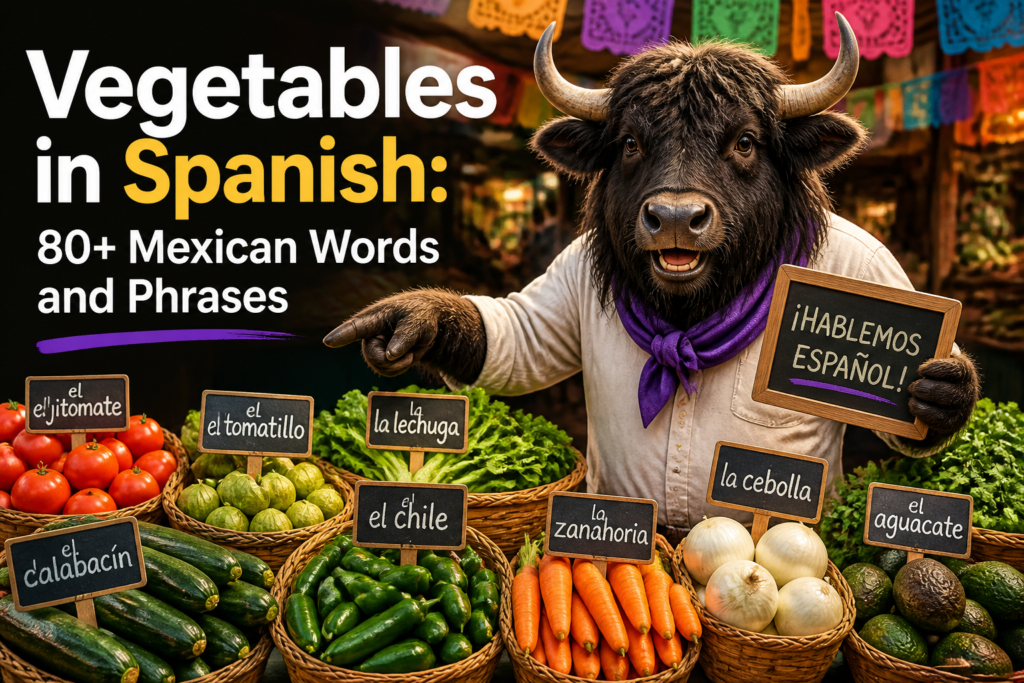
If you have ever stood in a Mexican market staring at a pile of greens and thinking, “Surely one of these is spinach… right?”, this guide is for you. Vegetables are one of the fastest ways to make Spanish useful in real life, because food shows up everywhere: markets, restaurants, home cooking, family chats, and that one person who insists you “just try it.”
This article focuses on natural Mexican Spanish, with a few notes where Latin America and Spain differ. By the end, you will know how to ask for vegetables, recognize common ones, and say what you want without accidentally buying a mystery root that looks like it escaped from a science fair.
Vegetable names can be regional, and yes, Spanish sometimes enjoys making one food have three names. Charming. Confusing. Very Spanish.
For extra practice with related everyday vocabulary, you may also want colors in Spanish, useful commands in Spanish, indigenous and other loanwords in Spanish, and weather in Spanish.
And if you want the broad overview, the main hub is Learn Spanish.
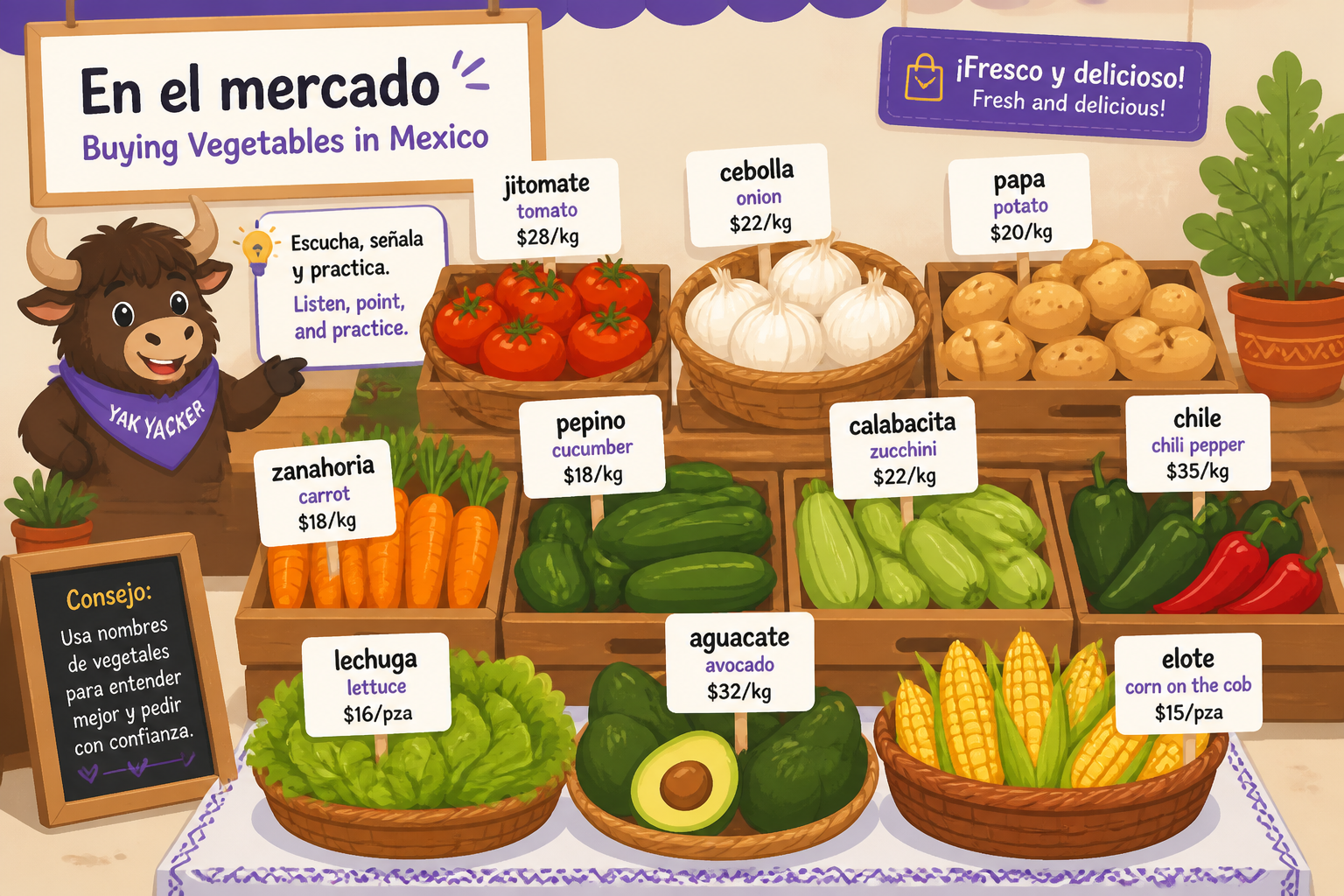
How To Ask For Vegetables In Mexico
Before the vocabulary dump begins, here are the basics you will actually use in a market or grocery store. These are polite, natural, and much better than waving at a zucchini and hoping for the best.
| Spanish | Pronunciation | Meaning | Example Sentence | Translation | Learner Note |
|---|---|---|---|---|---|
| ¿Cuánto cuesta? | KWAN-toh KWESS-tah | How much does it cost? | ¿Cuánto cuesta el kilo de jitomate? | How much does a kilo of tomatoes cost? | Very useful at markets. |
| Quiero medio kilo de… | KYEH-roh MEH-dee-oh KEE-loh deh | I want half a kilo of… | Quiero medio kilo de zanahorias. | I want half a kilo of carrots. | Common at markets in Mexico and much of Latin America. |
| ¿Me da…? | meh DAH | Can you give me…? | ¿Me da dos aguacates, por favor? | Can you give me two avocados, please? | Polite and very natural. |
| ¿Tiene…? | TYEH-neh | Do you have…? | ¿Tiene calabacitas? | Do you have zucchini? | Works well in shops and markets. |
| Eso, por favor. | EH-soh por fah-VOR | That one, please. | Eso, por favor. Gracias. | That one, please. Thanks. | Good when pointing at produce. |
Quick pronunciation note: Spanish vowels are steady and clear. a is always “ah,” e is “eh,” i is “ee,” o is “oh,” and u is “oo.” No dramatic vowel gymnastics required.
Essential Mexican Vegetable Words
These are the vegetables you will see constantly in Mexico. A few are standard across the Spanish-speaking world, and a few are especially Mexican in everyday speech.
| Spanish | Pronunciation | Meaning | Example Sentence | Translation | Learner Note |
|---|---|---|---|---|---|
| jitomate | hee-toh-MAH-teh | tomato | Necesito jitomates para la salsa. | I need tomatoes for the salsa. | In Mexico, jitomate usually means tomato. Tomate can also be used, but jitomate is very common in Mexico. |
| tomate | toh-MAH-teh | tomato / green tomato | Voy a comprar tomates verdes. | I’m going to buy green tomatoes. | In much of Latin America, tomate can mean tomato in general. In Mexico, people often say jitomate for red tomato. |
| cebolla | seh-BOY-yah | onion | La cebolla me hace llorar. | Onions make me cry. | Sadly, universally true. |
| ajo | AH-hoh | garlic | Agrega un poco de ajo. | Add a little garlic. | The j sound is like a strong throat “h.” |
| papa | PAH-pah | potato | Quiero papas para la sopa. | I want potatoes for the soup. | In most of Latin America, papa is potato. In Spain, that is also common. |
| patata | pah-TAH-tah | potato | Las patatas están caras. | The potatoes are expensive. | More common in Spain than Mexico. |
| zanahoria | sah-nah-OH-ree-ah | carrot | Mi hija come zanahorias crudas. | My daughter eats raw carrots. | The h is silent. |
| pepino | peh-PEE-noh | cucumber | Me gusta el pepino con limón. | I like cucumber with lime. | Very common in Mexico with chili and lime. |
| calabacita | kah-lah-bah-SEE-tah | zucchini | Compré calabacitas para el caldo. | I bought zucchini for the broth. | In Mexico, calabacita(s) is the usual everyday word. |
| chayote | chah-YOH-teh | chayote | Vamos a cocinar chayote con pollo. | We’re going to cook chayote with chicken. | Very common in Mexico and Central America. |
| lechuga | leh-CHOO-gah | lettuce | La ensalada lleva lechuga fresca. | The salad has fresh lettuce. | Remember the soft g in gue/gi patterns does not appear here. |
| espinaca | ehs-pee-NAH-kah | spinach | La espinaca se cocina rápido. | Spinach cooks quickly. | Often used in soups, tacos, and omelets. |
| acelga | ah-SEL-gah | Swiss chard | La acelga va bien en sopa. | Swiss chard works well in soup. | Common in home cooking, less famous than spinach. |
| col | kohl | cabbage | La col rallada va en la ensalada. | Shredded cabbage goes in the salad. | Short and useful. |
| coliflor | koh-lee-FLOR | cauliflower | La coliflor está en la nevera. | The cauliflower is in the fridge. | “Nevera” is common in Latin America; “frigorífico” is more Spain. |
| brócoli | BROH-koh-lee | broccoli | Mi hermano no come brócoli. | My brother doesn’t eat broccoli. | Very normal across the Spanish-speaking world. |
| ejote | eh-HOH-teh | green bean | Los ejotes van salteados. | The green beans are sautéed. | Very Mexican. In other countries you may hear other names. |
| vainita | bye-NEE-tah | green bean | Las vainitas están frescas. | The green beans are fresh. | Common in parts of Latin America; regional variation. |
| frijol | free-HOL | bean | Los frijoles negros son muy comunes en México. | Black beans are very common in Mexico. | Important word in Mexican food. Often plural in real life: frijoles. |
| haba | AH-bah | fava bean | Las habas se comen en sopa o guisadas. | Fava beans are eaten in soup or stewed. | Not the same as green beans. |
| nopal | noh-PAHL | prickly pear cactus pad | Comimos nopales con huevo. | We ate cactus pads with eggs. | Very Mexican, very common, very not-mystery once you know it. |
| nopalito | noh-pah-LEE-toh | small cactus pad / tender nopal | Los nopalitos están cocidos. | The tender cactus pieces are cooked. | Often used in salads and stews. |
| camote | kah-MOH-teh | sweet potato | Quiero camote al horno. | I want baked sweet potato. | Common in Mexico; in some places it can mean different sweet root foods. |
| betabel | beh-tah-BEHL | beet | El betabel tiñe todo de rojo. | Beet stains everything red. | Absolutely true and annoyingly enthusiastic. |
| rábano | RAH-bah-noh | radish | Los rábanos quedan bien en la ensalada. | Radishes work well in salad. | Good in tacos too. |
| apio | AH-pyoh | celery | Agrega apio al caldo. | Add celery to the broth. | Often used for soups and stock. |
One tiny but important note: in Mexico, jitomate is the normal word for the red tomato. If you say tomate, people will usually understand you, but jitomate sounds more local and natural in Mexican Spanish.
More Useful Vegetable Words And Food-Shop Phrases
Here are more terms you will see in markets, recipes, and grocery lists. Some are vegetables by strict definition; some are cooking staples that behave like vegetables in real-life Spanish. Language is messy. Markets are messier.
| Spanish | Pronunciation | Meaning | Example Sentence | Translation | Learner Note |
|---|---|---|---|---|---|
| calabaza | kah-lah-BAH-sah | squash / pumpkin | La calabaza se usa en sopa y guiso. | Squash is used in soup and stew. | Can refer to different squash varieties. |
| calabaza italiana | kah-lah-BAH-sah ee-tah-LYAH-nah | zucchini | En algunas tiendas dicen calabaza italiana. | In some stores they say zucchini. | Another regional way to say zucchini. |
| chícharo | CHEE-chah-roh | pea | Los chícharos son dulces. | Peas are sweet. | Very common in Mexico. |
| guisante | gee-SAHN-teh | pea | En España dicen guisantes. | In Spain they say peas. | More common in Spain than Mexico. |
| berenjena | beh-ren-HEH-nah | eggplant | La berenjena está asada. | The eggplant is roasted. | The j sound is strong and breathy. |
| jícama | HEE-kah-mah | jicama | Me gusta la jícama con limón. | I like jicama with lime. | Very Mexican. Crunchy, fresh, and dangerously snackable. |
| hongos | ON-gohs | mushrooms | Quiero hongos para los tacos. | I want mushrooms for the tacos. | h is silent. |
| setas | SEH-tahs | mushrooms | Las setas están salteadas. | The mushrooms are sautéed. | Also common in some countries; hongos is very normal in Mexico. |
| verdura | behr-DOO-rah | vegetable / greens | Voy al mercado por verdura. | I’m going to the market for vegetables. | Great general word. |
| verduras | behr-DOO-rahs | vegetables | Las verduras están frescas hoy. | The vegetables are fresh today. | Very common plural. |
| hortalizas | or-tah-LEE-sahs | vegetables / garden produce | Las hortalizas se venden en el mercado. | Vegetables are sold in the market. | More formal, useful in writing. |
| ensalada | ehn-sah-LAH-dah | salad | Quiero una ensalada con lechuga y pepino. | I want a salad with lettuce and cucumber. | Handy restaurant word. |
| caldo | KAL-doh | broth / soup | La verdura va bien en el caldo. | Vegetables go well in broth. | Often used for homemade soups. |
| guiso | GEE-soh | stew / cooked dish | El guiso lleva papa y zanahoria. | The stew has potato and carrot. | Very common in home cooking. |
| crudo | KROO-doh | raw | Me gusta el pepino crudo. | I like cucumber raw. | Useful when ordering or describing food. |
| cocido | koh-SEE-doh | cooked / boiled | Los nopales ya están cocidos. | The cactus pads are already cooked. | Common cooking adjective. |
| asado | ah-SAH-doh | roasted / grilled | Prefiero el brócoli asado. | I prefer roasted broccoli. | Very useful in restaurant menus. |
| salteado | sahl-teh-AH-doh | sautéed / stir-fried | Las verduras salteadas saben mejor con ajo. | Sautéed vegetables taste better with garlic. | Great cooking word. |
| picado | pee-KAH-doh | chopped | Necesito cebolla picada. | I need chopped onion. | Very common in recipes. |
| rebanado | reh-bah-NAH-doh | sliced | Quiero pepino rebanado. | I want sliced cucumber. | Useful when ordering food. |
| rallado | rah-YAH-doh | grated / shredded | La ensalada lleva col rallada. | The salad has shredded cabbage. | Great for cheese, carrot, and cabbage. |
| fresco | FRES-koh | fresh | Quiero verdura fresca. | I want fresh vegetables. | Very common adjective. Match gender and number: fresca, frescos, frescas. |
| orgánico | or-GAH-nee-koh | organic | ¿Tiene verduras orgánicas? | Do you have organic vegetables? | Useful at markets and supermarkets. |
| de temporada | deh tem-poh-RAH-dah | in season | Las verduras de temporada suelen estar más baratas. | Seasonal vegetables are usually cheaper. | Practical money-saving phrase. |
| barato | bah-RAH-toh | cheap | Hoy los jitomates están baratos. | Today the tomatoes are cheap. | Adjective agrees: barata, baratos, baratas. |
For pronunciation, the most useful thing to remember is that Spanish words are usually pronounced the way they are spelled. That alone saves a lot of panic.