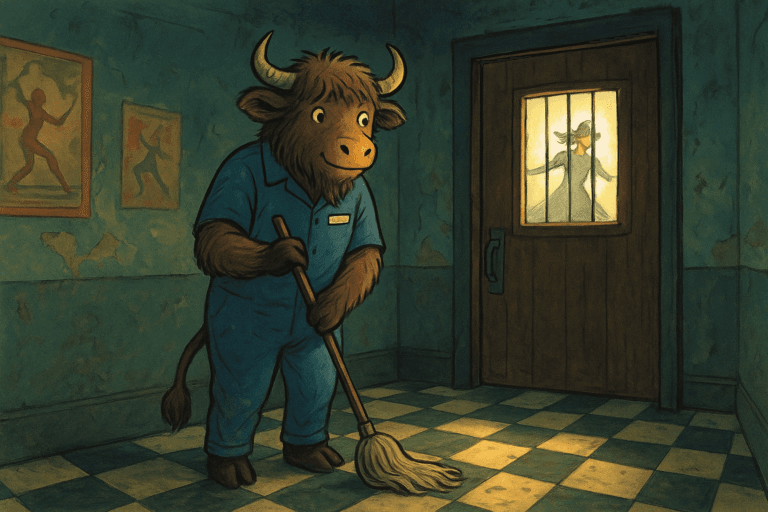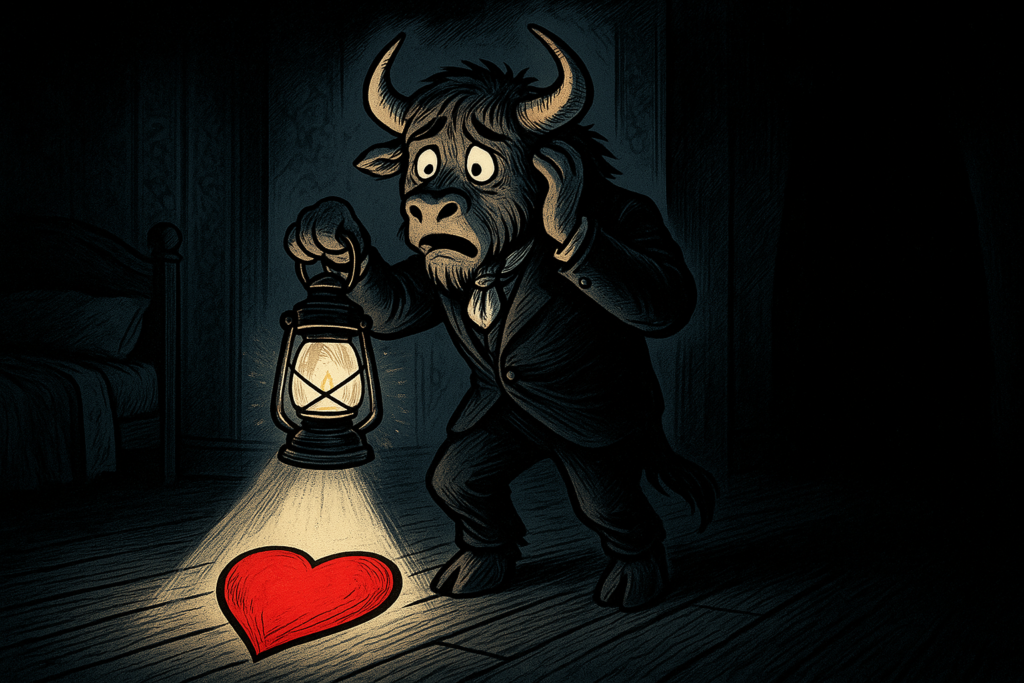
This B1 Intermediate retelling of The Tell-Tale Heart keeps the plot clear for learners while still giving the story some atmosphere and momentum. But he had one terrible thing: his eye. It was pale blue, like a vulture's eye.
This version is written for English-speaking learners and includes clickable word help inside the story, full story audio, and lesson notes after the reading. It is free to use on Yak Yacker and is designed to feel natural, readable, and manageable in English.
You think I am mad? No, no. Listen to me. I loved the old man. He was kind to me. But he had one terrible thing: his eye. It was pale blue, like a vulture's eye. Every time I saw it, my blood ran cold.
I decided to the old man, only to that eye forever. During the day, I was very kind to him. But every night at midnight, I slowly his door.
It took me a whole hour to the door just a little. Then I put my head inside. I held a lantern, but I it so only a tiny fell on his eye. But his eye was always closed. So I could not do the work.
On the eighth night, I was even more . But suddenly, the old man .
'' he cried.
I stood perfectly . I didn't move for a whole hour.
Then I heard a . It was the old man's heart beating. Fear made his heart beat fast. The sound grew . I was afraid a neighbor might hear it.
I knew it was time. With a loud , I jumped into the room. I the old man to the floor. I the heavy bed over him. In a moment, he was dead. The heart stopped.
After that, I worked quickly. I the body under the wooden floor. I cleaned everything carefully. There was no blood, no of the crime.
At four in the morning, three policemen arrived. A neighbor had heard a cry. I smiled and welcomed them.
'Please come in,' I said. 'I was making a in my sleep.'
They the house and found nothing. I even brought chairs into the old man's room. We sat right over the .
But soon, I began to hear a sound. It was a low, quick sound, like a watch ticking under cloth. It grew louder and louder. I thought everyone could hear it. My face went pale. I talked faster and louder.
The policemen did not seem to hear it. But the sound continued. It was the of the old man's heart, coming from under the floor! I couldn't it anymore.
Finally, I jumped up. 'Stop!' I screamed. 'I it! the floor! Here, here! It is the beating of his terrible heart!'
And I told them everything. And so they found the body, and I was taken away. But some say, it was only my own heart I heard.
Do you think I'm crazy? No, listen. I loved the old man; he was kind. But his eye was awful: pale blue like a vulture's eye. When I saw it, I felt chilled.
I planned to kill him just to remove that eye. By day I was nice, but each midnight I quietly opened his door.
It took an hour to open the door a crack. I peeked in with a covered lantern, letting only a thin beam onto his eye. But the eye was always shut, so I couldn't act.
On the eighth night, I was extra cautious. But he suddenly woke.
He shouted, "Who's there?"
I stood completely still for an hour, not moving.
Then I heard his heart pounding from fear. It got louder; I worried a neighbor would hear.
It was time. I yelled, rushed in, pulled him down, dragged the bed over him. He died quickly; his heart stopped.
Then I quickly hid the body under the floor and cleaned up. No blood, no evidence.
At 4 a.m., three police came because a neighbor heard a shout. I smiled and let them in.
"Come in," I said. "I made noise while sleeping."
They searched, found nothing. I brought chairs to the old man's room; we sat over the hidden body.
Soon I heard a strange noise-like a muffled ticking watch. It grew louder; I was sure they heard it. I turned pale, talked faster and louder.
The police seemed not to hear, but the noise kept on-the dead man's heartbeat from below! I couldn't stand it.
I jumped up, screaming: "Stop! I confess! Tear up the floor-here! It's the beating of his hideous heart!"
I told all, they found the body, took me away. But some say I only heard my own guilty heart.
Let's look at some useful vocabulary from "The Tell-Tale Heart." These words and phrases will help you talk about feelings, crime, and mystery.
The story is full of images that stay in your mind. Learning them will make your own English richer and more expressive.
- "vulture eye" - a scary, bird-like eye that makes you shiver
- "my blood ran cold" - an expression meaning to suddenly feel very frightened
- "a ray of light" - a thin line of light, like from a covered lantern
- "guilty heart" - the feeling inside when you know you did something wrong
English uses the past perfect (had + past participle) to show that one action happened before another in the past. You'll often see it in stories to give background information.
Look at these examples from the story, then try making your own sentence about something that had already happened before a main event.
- "A neighbor had heard a cry." - The cry happened before the police knocked on the door.
- "I had cleaned everything carefully." - The cleaning was already finished when the police searched the room.
- Practice: Tell a partner what you had eaten before you came to class today - it's a handy way to set the background.
Poe creates a creepy atmosphere with strong comparisons (similes) and sensory details. These images stay with you long after you finish reading.
Noticing how a writer plays with sound, sight, and feeling can help you become a better storyteller yourself.
- Simile: "like a vulture's eye" - makes the eye seem hungry and dangerous
- Sound imagery: "a watch ticking under cloth" - you can almost hear the muffled beat
- Emotional description: "the sound grew louder and louder" - repetition builds tension
- Try it: Describe a creepy sound using "like…" or "as if…"
You've explored a classic tale of guilt and madness. Sometimes what's inside our own mind is scarier than any monster.
Take a moment to play with the story. There's no single right answer here-just a chance to be creative.
- Rewrite the ending: What if the heart sound was real? What if a policeman finally heard it too?
- Read aloud: Practice the rhythm-slow and careful during the planning, fast and panicked at the climax.
- Discuss: Is the narrator mad, or just eaten up by guilt? Your opinion matters.
The Tell-Tale Heart comes from the American / Edgar Allan Poe tradition and is best known as a horror short story. This Yak Yacker article is an original learner retelling based on Edgar Allan Poe, 1843; public domain, so the wording here is simplified for modern learners rather than copied from one old edition.
Older printings, translations, and retellings of this story can vary quite a bit. The original audience was usually general/adult, but this version is adapted for B1 Intermediate learners studying English. Short, famous, intense.
If you want to look into the source tradition, start with Project Gutenberg.
If you want to keep going, browse more in our English section and review the B1 Vocabulary List. After that, try 1000 English Phrases & Expressions for another useful next step.