


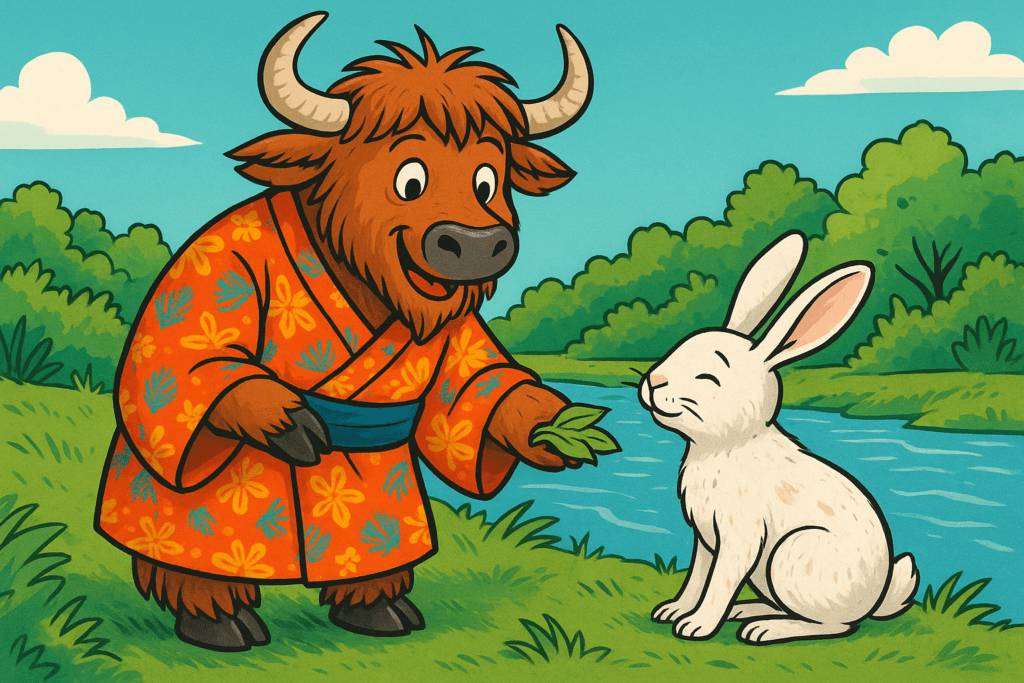
Welcome to the lesson notes for The White Hare of Inaba, an A2 elementary graded reader. In this Japanese folk tale, a clever but lonely hare tricks some sharks, gets hurt, and learns about kindness and good advice.
As you read, click on highlighted words to see their meanings, and use the audio to listen to the story. Then explore the lesson notes below to build your vocabulary, practice past tense verbs, and think and talk about the story.
There was once a who lived on . He was and quick, but he was also very . Every day, he looked across the sea and dreamed of the mainland.
One morning, the hare saw a group of swimming near the shore. 'Hello, sharks!' he called. 'How many of you are there? I wonder if there are more sharks than hares in the world.' The sharks looked at each other. 'We don't know,' one said. 'Can you us?'
'Of course!' said the hare with a smile. 'But you must , one after another, all the way to the mainland. Then I can count you easily.' The sharks thought this was a great idea. They quickly a long, bridge from the island to the shore.
The hare hopped happily from shark to shark, as he went. 'One, two, three…' His little feet pattered on their backs. When he was almost at the end, he couldn't help but laugh. 'Foolish sharks! I don't care how many you are-I just wanted to the sea!'
The last shark heard this and became . He snapped at the hare with his sharp teeth and pulled off all his soft white fur. 'Now you will remember not to us!' the shark growled. The hare lay on the beach, shivering and in terrible .
Soon, the hare saw some walking by. 'Please help me!' he cried. 'What should I do?' The travelers, who were not very kind, laughed and said, 'Go and swim in the sea, then roll in the sand. That will make you feel better.' The hare tried their advice, but it only made his skin more.
Later, a young man came along and saw the hare in tears. 'What happened?' he asked. The hare told him everything. 'Oh, you poor thing,' said the man. 'Wash yourself in the river water, then roll on soft green leaves. That will you.' The hare did as he was told, and soon his fur began to grow back, soft and white as before. He was never so lonely again.
A lonely white hare from Oki Island looked across the sea and dreamed of visiting the mainland.
The hare asked a group of sharks if they could line up so he could count them, secretly wanting to use them as a bridge.
The sharks agreed, forming a wobbly bridge to the mainland for the hare to cross.
As the hare hopped along the sharks, counting, he laughed and revealed his trick just before reaching the shore.
The last shark, furious, bit off the hare's fur, leaving him in pain on the beach.
Unkind travelers told the hare to swim in saltwater and roll in sand, which only made his pain worse.
A kind young man advised the hare to wash in fresh water and roll on soft leaves, healing him and ending his loneliness.
These words will help you understand the hare's journey. Read each meaning and try to find the word in the story. Then say a sentence with each word to practice.
For example: 'The hare lived on an island and felt lonely, so he wanted to cross the sea to the mainland.'
- hare — an animal like a large rabbit
- lonely — sad because you are alone
- mainland — the big land across the water from an island
- shore — the land at the edge of the sea
- trick — to fool someone in a dishonest way
- furious — very, very angry
- advice — a suggestion about what to do
- heal — to become healthy again after being hurt
The story happens in the past, so it uses the simple past tense. Regular verbs add -ed, like lived, called, and formed. Some verbs are irregular and change differently: see becomes saw, think becomes thought, and go becomes went.
Look at these sentences from the story: 'The hare saw a group of sharks.' 'The sharks formed a bridge.' 'The man came along and saw the hare in tears.' All of these actions happened before now, so we use the past tense.
- Regular past verbs add -ed: looked, called, walked
- Irregular past verbs change: saw, thought, went, came
- Use the past tense for actions that already happened
- Negative in the past: he didn't care; he could not help but laugh
This story teaches two big lessons. First, the hare tricks the sharks to get what he wants, but his dishonesty brings him pain. Second, the travelers give bad advice, but the gentle young man gives kind, helpful advice that heals the hare.
Think about the characters. Who was clever but not honest? Who was unkind? Who was truly kind? The story shows that words can hurt, like the travelers' bad advice, or heal, like the young man's good advice.
- Tricking others can bring bad results
- Kind words can heal; careless words can hurt
- Compare the travelers' bad advice with the young man's good advice
- The hare changes: at the end, he is 'never so lonely again'
Retell the story in three short parts: the trick, the injury, and the healing. Use the past tense and short, simple sentences. First say it out loud, then write three to five sentences for each part.
For example, you could begin: 'One day, a lonely hare wanted to cross the sea. He saw some sharks and asked them to line up...' When you finish, read your story aloud to a friend or record yourself and listen.
- Part 1: the trick — how did the hare cross the sea?
- Part 2: the injury — what did the last shark do?
- Part 3: the healing — who helped the hare, and how?
- Use past tense verbs: saw, asked, jumped, snapped, washed, healed
- Then discuss: Is it ever okay to trick someone? Why or why not?
The White Hare of Inaba comes from the Japanese / Kojiki myth tradition and is best known as a myth/fable. This Yak Yacker article is an original learner retelling based on Ancient Japanese myth; public domain, so the wording here is simplified for modern learners rather than copied from one old edition.
Older printings, translations, and retellings of this story can vary quite a bit. The original audience was usually kids/general, but this version is adapted for A2 Elementary learners studying English. Good animal/moral story.
If you want to look into the source tradition, start with Wikipedia.
If you want to keep going, browse more in our English section and review the A2 English Vocabulary List. After that, try Best Graded Readers for English for another useful next step.