
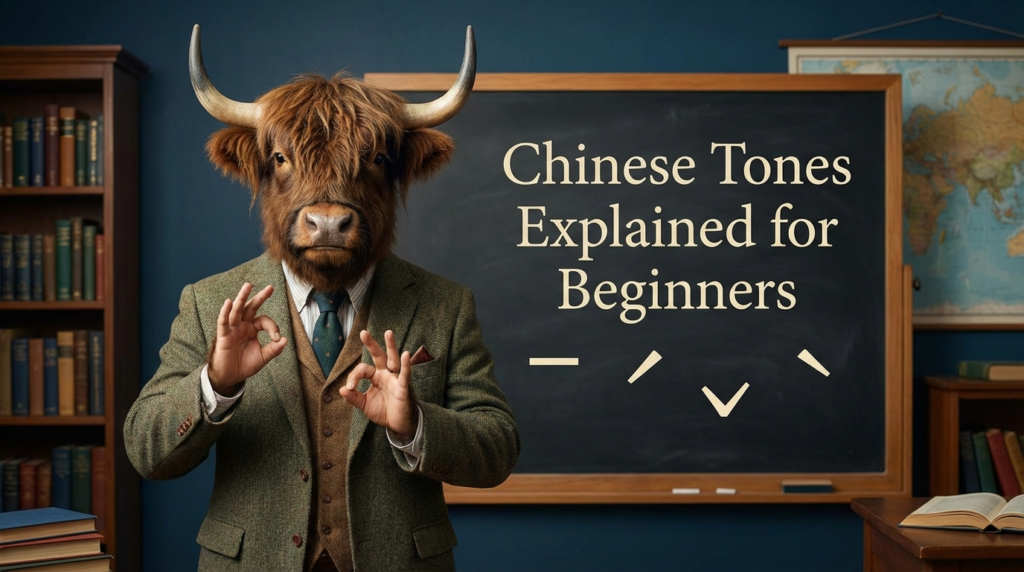
Tones can make or break your meaning in Chinese-literally. Say mā and you’re talking about mother; say mǎ and you’re on a horse. If you’ve ever mixed up a purchase because your tone was off, you know exactly why this list exists.
We’ve rounded up around 160 practical tone patterns, neutral tone words, and tone change rules so you can stop guessing and start sounding like you mean it. No dusty theory, just the differences that show up in real conversations-whether you’re chatting about your day or reading a sign in Traditional Chinese.
Don’t worry—tones get friendlier with a little practice, and your ears will catch on faster than you think. Scroll to the bottom of this article for the free printable Chinese tones vocabulary list PDF and the free downloadable printable Chinese tones flashcards.
Use this list as a starting point, then keep going in the Yak Yacker Traditional Chinese section for more words, phrases, and study-friendly reference pages.
Quick Quiz
Think you’ve got the tones down? The quick quiz below will let you know which ones might still be playing tricks on you.
Keep building your Traditional Chinese
Choose a practical next step when you are ready.
Browse the Full List
| Word | Pinyin | Type | Meaning | Example |
|---|---|---|---|---|
| Tone 1 | mā | tone | high level tone | 妈 |
| 一點兒 | yì diǎnr | quantifier | a little bit | 我會說一點兒中文。 |
| 上 | shàng | noun / verb | up, on, above; to go up | 書在桌子上。 |
| 下 | xià | noun / verb | down, under, below; to go down | 貓在桌子下。 |
| 不 | bù | adverb | not, no | 我不吃牛肉。 |
| 不 | bù | adverb | not, no | 我不去。 |
| 不客氣 | bú kè qì | phrase | You're welcome | 謝謝你!不客氣。 |
| 中 | zhōng | noun / adjective | middle, center; in, among | 他在房間中。 |
| 也 | yě | adverb | also, too | 也 |
| 了 | le | particle | completed action marker | 我吃了。 |
| 人 | rén | noun | person, people | 他是好人。 |
| 人 | rén | noun | person, people | 他是好人。 |
| 什麼 | shénme | pronoun | what | 這是什麼? |
| 什麼 | shénme | question word | what | 什麼 |
| 今天 | jīntiān | time noun | today | 今天天氣很好。 |
| 他 | tā | pronoun | he, him | 他是老師。 |
| 他 | tā | pronoun | he, him | 他是我的同學。 |
| 你 | nǐ | pronoun | you (singular) | 你好嗎? |
| 你 | nǐ | pronoun | you (singular) | 你好嗎? |
| 來 | lái | verb | to come | 請進來! |
| 來 | lái | verb | to come | 你來這裡。 |
| 個 | gè | measure word | general measure word | 個 |
| 們 | men | suffix | plural marker for people | 們 |
| 做 | zuò | verb | to do, make | 我做飯。 |
| 再見 | zài jiàn | expression | Goodbye; see you again. | 明天再見! |