


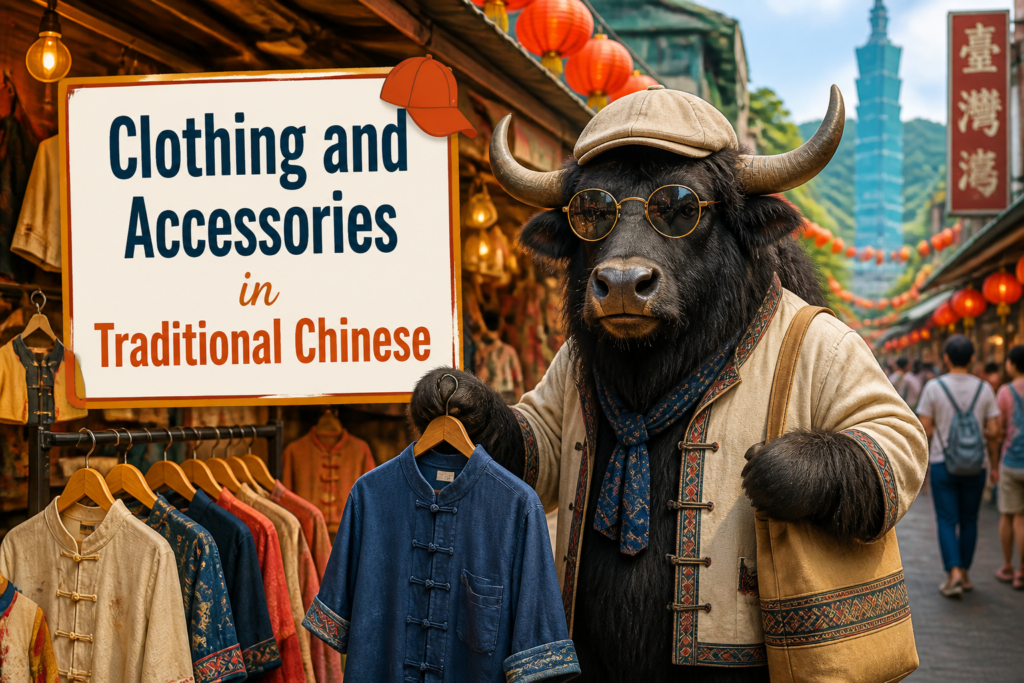
Clothing and Accessories in Traditional Chinese: 80+ Everyday Words is one of those topics that looks easy until you actually need to describe what someone is wearing. Then suddenly your brain is standing in front of a wardrobe going, “Uh… that thing… with the sleeves?” Relax. This guide gives you the words, the pinyin, the meanings, and real examples you can actually use in Taiwan-style Mandarin.
For the broader learning path, visit our parent guide.
If you already know basic clothing words, great. If not, you can also check the related guide on clothes vocabulary in Traditional Chinese for the bigger picture. This article focuses on accessories, details, and the stuff people forget until it becomes annoying: belts, hats, scarves, gloves, earrings, and all the little extras that make a sentence sound natural.
One small warning: Mandarin loves grouping things by function, so a word like 配件 (pèijiàn) can mean “accessories” in a broad sense, while more specific words are used for actual items. In other words, the language is tidy; humans, as usual, are not.
Quick Starter Words
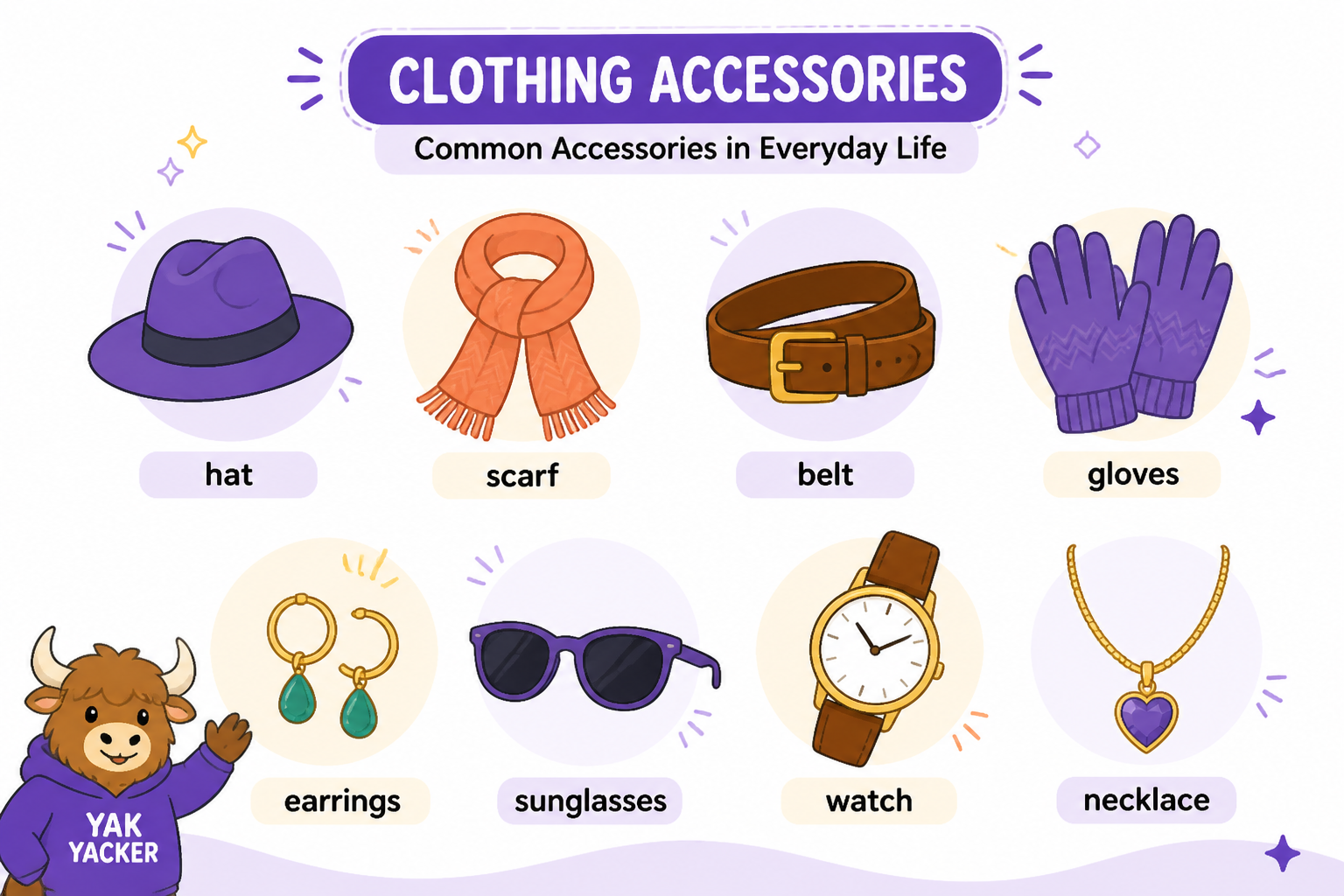
These are the most useful words to know first. They show up in shops, fashion talk, weather talk, and everyday descriptions.
| Traditional Chinese | Pinyin | English Meaning | Example (ZH) | Example (Pinyin) | Translation (EN) |
|---|---|---|---|---|---|
| 配件 | pèijiàn | accessories, parts | 這些配件很實用。 | Zhèxiē pèijiàn hěn shíyòng. | These accessories are very practical. |
| 飾品 | shìpǐn | jewelry, decorative accessories | 她很喜歡買飾品。 | Tā hěn xǐhuān mǎi shìpǐn. | She likes buying accessories/jewelry. |
| 帽子 | màozi | hat | 今天太陽很大,我戴帽子。 | Jīntiān tàiyáng hěn dà, wǒ dài màozi. | The sun is strong today, so I wear a hat. |
| 圍巾 | wéijīn | scarf | 冬天我常戴圍巾。 | Dōngtiān wǒ cháng dài wéijīn. | In winter I often wear a scarf. |
| 手套 | shǒutào | gloves | 這雙手套很保暖。 | Zhè shuāng shǒutào hěn bǎonuǎn. | These gloves are very warm. |
| 皮帶 | pídài | belt | 他的褲子需要皮帶。 | Tā de kùzi xūyào pídài. | His pants need a belt. |
| 項鍊 | xiàngliàn | necklace | 這條項鍊很漂亮。 | Zhè tiáo xiàngliàn hěn piàoliang. | This necklace is beautiful. |
| 耳環 | ěrhuán | earrings | 她戴了一對耳環。 | Tā dài le yí duì ěrhuán. | She wore a pair of earrings. |
| 手錶 | shǒubiǎo | wristwatch | 我看手錶確認時間。 | Wǒ kàn shǒubiǎo quèrèn shíjiān. | I check my watch to confirm the time. |
| 眼鏡 | yǎnjìng | glasses | 他戴眼鏡看起來很斯文。 | Tā dài yǎnjìng kàn qǐlái hěn sīwén. | He looks quite scholarly with glasses. |
Useful Phrases You’ll Actually Hear
Here are practical phrases for shopping, describing outfits, or asking about accessories. Not glamorous, but very alive. Like the MRT at rush hour.
| Traditional Chinese | Pinyin | English Meaning | Example (ZH) | Example (Pinyin) | Translation (EN) |
|---|---|---|---|---|---|
| 這頂帽子 | zhè dǐng màozi | this hat | 這頂帽子很適合你。 | Zhè dǐng màozi hěn shìhé nǐ. | This hat suits you well. |
| 這條圍巾 | zhè tiáo wéijīn | this scarf | 這條圍巾摸起來很柔軟。 | Zhè tiáo wéijīn mō qǐlái hěn róuruǎn. | This scarf feels very soft. |
| 這副眼鏡 | zhè fù yǎnjìng | this pair of glasses | 這副眼鏡很貴嗎? | Zhè fù yǎnjìng hěn guì ma? | Are these glasses expensive? |
| 戴上 | dài shàng | put on, wear | 你可以先戴上手套。 | Nǐ kěyǐ xiān dài shàng shǒutào. | You can put on the gloves first. |
| 脫下 | tuō xià | take off | 進屋前請脫下帽子。 | Jìn wū qián qǐng tuō xià màozi. | Please take off your hat before going inside. |
| 搭配 | dāpèi | match, coordinate | 這條項鍊很適合搭配這件衣服。 | Zhè tiáo xiàngliàn hěn shìhé dāpèi zhè jiàn yīfú. | This necklace matches this piece of clothing well. |
| 好看 | hǎokàn | looks good, pretty | 你戴這個很好看。 | Nǐ dài zhège hěn hǎokàn. | You look good wearing this. |
| 流行 | liúxíng | fashionable, trendy | 這種耳環現在很流行。 | Zhè zhǒng ěrhuán xiànzài hěn liúxíng. | This kind of earrings is trendy now. |
| 過時 | guòshí | out of style | 這款帽子會不會太過時? | Zhè kuǎn màozi huì bú huì tài guòshí? | Is this style of hat too outdated? |
| 便宜一點 | piányi yìdiǎn | a little cheaper | 可以便宜一點嗎? | Kěyǐ piányi yìdiǎn ma? | Can it be a little cheaper? |
| 有質感 | yǒu zhígǎn | good quality, feels premium | 這個包包看起來很有質感。 | Zhège bāobao kàn qǐlái hěn yǒu zhígǎn. | This bag looks very high quality. |
| 不太搭 | bù tài dā | doesn’t really match | 這雙鞋跟那個包包不太搭。 | Zhè shuāng xié gēn nà ge bāobao bù tài dā. | Those shoes don’t really match that bag. |
In Taiwan, people often say 搭配 (dāpèi) for matching clothing or accessories. It sounds natural in shops, fashion advice, and normal conversation. It is a very useful word if you want to sound less like a textbook and more like a human being who has seen a mirror.
Core Accessories Vocabulary
Below is a bigger word list with common accessories and related items. The examples stay practical: commuting, shopping, weather, school, work, and everyday life in Taiwan.
| Traditional Chinese | Pinyin | Meaning | Example (ZH) | Example (Pinyin) | Translation (EN) |
|---|---|---|---|---|---|
| 包包 | bāobao | bag, purse | 我把手機放在包包裡。 | Wǒ bǎ shǒujī fàng zài bāobao lǐ. | I put my phone in the bag. |
| 背包 | bèibāo | backpack | 學生常背背包上學。 | Xuéshēng cháng bèi bèibāo shàngxué. | Students often carry a backpack to school. |
| 手提包 | shǒutíbāo | handbag | 她拿著手提包出門。 | Tā názhe shǒutíbāo chūmén. | She leaves the house carrying a handbag. |
| 錢包 | qiánbāo | wallet | 我的錢包在這裡。 | Wǒ de qiánbāo zài zhèlǐ. | My wallet is here. |
| 零錢包 | língqiánbāo | coin purse | 她把零錢放進零錢包。 | Tā bǎ língqián fàng jìn língqiánbāo. | She puts the coins into the coin purse. |
| 皮夾 | píjiā | wallet | 他的皮夾很舊了。 | Tā de píjiā hěn jiù le. | His wallet is very old. |
| 卡夾 | kǎjiá | card holder | 悠遊卡放在卡夾裡很方便。 | Yōuyóukǎ fàng zài kǎjiá lǐ hěn fāngbiàn. | Putting the EasyCard in a card holder is convenient. |
| 皮帶 | pídài | belt | 這條皮帶是黑色的。 | Zhè tiáo pídài shì hēisè de. | This belt is black. |
| 吊帶 | diàodài | suspenders, straps | 這件褲子的吊帶可以拆下來。 | Zhè jiàn kùzi de diàodài kěyǐ chāi xiàlái. | The suspenders on these pants can be removed. |
| 領帶 | lǐngdài | tie | 他每天都要打領帶上班。 | Tā měitiān dōu yào dǎ lǐngdài shàngbān. | He has to wear a tie to work every day. |
| 領結 | lǐngjié | bow tie | 小孩穿西裝打領結很可愛。 | Xiǎohái chuān xīzhuāng dǎ lǐngjié hěn kě’ài. | A child in a suit with a bow tie looks adorable. |
| 袖套 | xiùtào | sleeve cover, arm cover | 騎機車的人常戴袖套防曬。 | Qí jīchē de rén cháng dài xiùtào fángshài. | People who ride scooters often wear arm covers for sun protection. |
| 護腕 | hùwàn | wrist support | 打球時他會戴護腕。 | Dǎqiú shí tā huì dài hùwàn. | He wears a wrist support when playing sports. |
| 髮圈 | fàquān | hair tie | 我找不到髮圈了。 | Wǒ zhǎo bù dào fàquān le. | I can’t find my hair tie. |
| 髮夾 | fàjiá | hair clip | 她用髮夾把瀏海夾起來。 | Tā yòng fàjiá bǎ liúhǎi jiá qǐlái. | She uses a hair clip to pin up her bangs. |
| 髮箍 | fàgū | headband | 運動時髮箍很實用。 | Yùndòng shí fàgū hěn shíyòng. | A headband is useful during sports. |
| 髮帶 | fàdài | hairband | 她戴了一條白色髮帶。 | Tā dài le yì tiáo báisè fàdài. | She wore a white hairband. |
| 耳環 | ěrhuán | earrings | 這對耳環是禮物。 | Zhè duì ěrhuán shì lǐwù. | These earrings are a gift. |
| 耳針 | ěrzhēn | ear stud | 我比較喜歡小耳針。 | Wǒ bǐjiào xǐhuān xiǎo ěrzhēn. | I prefer small stud earrings. |
| 戒指 | jièzhǐ | ring | 這枚戒指很特別。 | Zhè méi jièzhǐ hěn tèbié. | This ring is special. |
| 手鍊 | shǒuliàn | bracelet | 她手上戴著一條手鍊。 | Tā shǒu shàng dàizhe yì tiáo shǒuliàn. | She is wearing a bracelet. |
| 項鍊 | xiàngliàn | necklace | 我妹妹喜歡細項鍊。 | Wǒ mèimei xǐhuān xì xiàngliàn. | My younger sister likes thin necklaces. |
| 胸針 | xiōngzhēn | brooch | 她在外套上別了胸針。 | Tā zài wàitào shàng bié le xiōngzhēn. | She pinned a brooch on her coat. |
| 墨鏡 | mòjìng | sunglasses | 海邊很亮,我帶墨鏡。 | Hǎibiān hěn liàng, wǒ dài mòjìng. | It’s bright at the beach, so I wear sunglasses. |
| 眼鏡 | yǎnjìng | glasses | 她的眼鏡掉在桌上了。 | Tā de yǎnjìng diào zài zhuō shàng le. | Her glasses fell onto the table. |
| 太陽眼鏡 | tàiyáng yǎnjìng | sunglasses | 夏天很多人戴太陽眼鏡。 | Xiàtiān hěn duō rén dài tàiyáng yǎnjìng. | Many people wear sunglasses in summer. |
| 帽子 | màozi | hat | 這頂帽子很可愛。 | Zhè dǐng màozi hěn kě’ài. | This hat is cute. |
| 棒球帽 | bàngqiúmào | baseball cap | 他很常戴棒球帽。 | Tā hěn cháng dài bàngqiúmào. | He often wears a baseball cap. |
| 漁夫帽 | yúfūmào | bucket hat | 最近漁夫帽很流行。 | Zuìjìn yúfūmào hěn liúxíng. | Bucket hats are trendy lately. |
| 毛帽 | máomào | wool hat, knit hat | 冬天我會戴毛帽。 | Dōngtiān wǒ huì dài máomào. | I wear a knit hat in winter. |
| 圍巾 | wéijīn | scarf | 圍巾可以保暖。 | Wéijīn kěyǐ bǎonuǎn. | A scarf can keep you warm. |
| 披肩 | pījiān | shawl, wrap | 她帶了一條披肩去餐廳。 | Tā dài le yì tiáo pījiān qù cāntīng. | She brought a shawl to the restaurant. |
| 手套 | shǒutào | gloves | 騎車時手套很重要。 | Qíchē shí shǒutào hěn zhòngyào. | Gloves are important when riding a scooter. |
| 襪子 | wàzi | socks | 這雙襪子很厚。 | Zhè shuāng wàzi hěn hòu. | These socks are thick. |
| 絲襪 | sīwà | stockings, tights | 她今天穿絲襪。 | Tā jīntiān chuān sīwà. | She is wearing stockings today. |
| 雨傘 | yǔsǎn | umbrella | 出門前記得帶雨傘。 | Chūmén qián jìde dài yǔsǎn.More Traditional Chinese to explore How to Type Traditional Chinese Best graded readers for Traditional Chinese Sima Guang Breaks the Vat: A Beginner Chinese Story with Audio – A1 Level Nezha Conquers the Dragon King: A2 Elementary Traditional Chinese Story with Audio |