
If you can talk about your phone, laptop, Wi‑Fi, and battery life in Chinese, suddenly daily life gets a lot less awkward. No more pointing at your screen like a confused tourist in a cartoon.
This guide gives you easy Traditional Chinese words and phrases for technology and devices, with pinyin and clear English meanings. The examples are Taiwan-friendly, so you’ll see real-life words you’d actually hear in a café, on the MRT, or while complaining about a dying phone battery.
For a helpful reference on characters and vocabulary, you can also peek at the boring-but-useful Taiwan Ministry of Education dictionary. Yes, it is exactly as delightfully unexciting as it sounds.
Useful Technology Words And Phrases
| Traditional Chinese | Pinyin | Meaning | Example (ZH) | Example (Pinyin) | Translation (EN) |
|---|---|---|---|---|---|
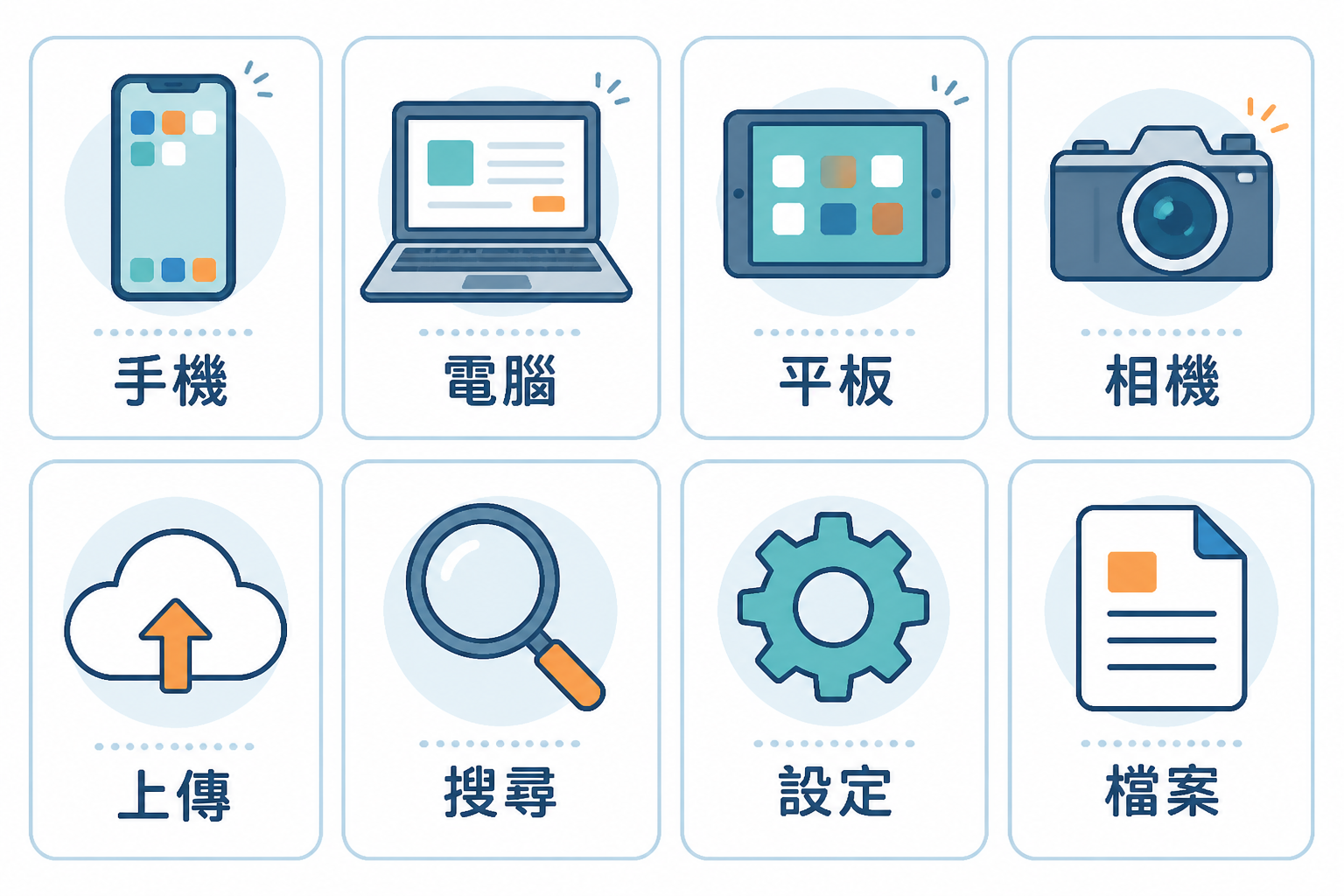
| 手機 | shǒujī | mobile phone | 我的手機快沒電了。 | Wǒ de shǒujī kuài méi diàn le. | My phone is about to die. |
| 電腦 | diànnǎo | computer | 我每天都用電腦工作。 | Wǒ měitiān dōu yòng diànnǎo gōngzuò. | I use a computer for work every day. |
| 筆電 | bidiàn | laptop | 我的筆電很輕,帶出門很方便。 | Wǒ de bidiàn hěn qīng, dài chūmén hěn fāngbiàn. | My laptop is light, so it is easy to carry out. |
| 平板 | píngbǎn | tablet | 小朋友常常用平板看影片。 | Xiǎopéngyǒu chángcháng yòng píngbǎn kàn yǐngpiàn. | Kids often use tablets to watch videos. |
| 充電器 | chōngdiànqì | charger | 你有帶充電器嗎? | Nǐ yǒu dài chōngdiànqì ma? | Did you bring a charger? |
| 電池 | diànchí | battery | 這個遙控器的電池沒電了。 | Zhège yáokòngqì de diànchí méi diàn le. | This remote’s battery is dead. |
| 耳機 | ěrjī | headphones / earphones | 我在捷運上戴耳機聽音樂。 | Wǒ zài jiéyùn shàng dài ěrjī tīng yīnyuè. | I wear headphones and listen to music on the MRT. |
| 喇叭 | lǎbā | speaker | 請把喇叭的音量調低一點。 | Qǐng bǎ lǎbā de yīnlàng tiáo dī yīdiǎn. | Please turn the speaker volume down a little. |
| 螢幕 | yíngmù | screen / monitor | 這個螢幕太亮了。 | Zhège yíngmù tài liàng le. | This screen is too bright. |
| 鍵盤 | jiànpán | keyboard | 我的鍵盤壞了,一個按鍵不靈。 | Wǒ de jiànpán huài le, yí gè ànjiàn bù líng. | My keyboard is broken; one key does not work. |
| 滑鼠 | huáshǔ | mouse | 我需要一個新的滑鼠。 | Wǒ xūyào yí gè xīn de huáshǔ. | I need a new mouse. |
| 網路 | wǎnglù | internet | 這家咖啡店的網路很穩。 | Zhè jiā kāfēidiàn de wǎnglù hěn wěn. | This café’s internet is very stable. |
| Wi‑Fi | Wi‑Fi / wǎifǎi | Wi‑Fi | 這裡有免費Wi‑Fi嗎? | Zhèlǐ yǒu miǎnfèi Wi‑Fi ma? | Is there free Wi‑Fi here? |
| 密碼 | mìmǎ | password | 我的手機密碼很長。 | Wǒ de shǒujī mìmǎ hěn cháng. | My phone password is long. |
| 藍牙 | lányá | Bluetooth | 我的耳機用藍牙連線。 | Wǒ de ěrjī yòng lányá liánxiàn. | My headphones connect with Bluetooth. |
| 下載 | xiàzǎi | download | 你可以先下載這個 app。 | Nǐ kěyǐ xiān xiàzǎi zhège app. | You can download this app first. |
| 上傳 | shàngchuán | upload | 我把照片上傳到雲端了。 | Wǒ bǎ zhàopiàn shàngchuán dào yúnduān le. | I uploaded the photos to the cloud. |
| 更新 | gēngxīn | update | 這個 app 要先更新。 | Zhège app yào xiān gēngxīn. | This app needs to be updated first. |
| 搜尋 | sōuxún | search | 我在網路上搜尋資料。 | Wǒ zài wǎnglù shàng sōuxún zīliào. | I search for information online. |
| 設定 | shèdìng | settings / set up | 你可以去設定裡面改語言。 | Nǐ kěyǐ qù shèdìng lǐmiàn gǎi yǔyán. | You can change the language in Settings. |
More Handy Tech Words
| Traditional Chinese | Pinyin | Meaning | Example (ZH) | Example (Pinyin) | Translation (EN) |
|---|---|---|---|---|---|
| 相機 | xiàngjī | camera | 我用相機拍照。 | Wǒ yòng xiàngjī pāizhào. | I use a camera to take photos. |
| 影片 | yǐngpiàn | video | 這個影片很好笑。 | Zhège yǐngpiàn hěn hǎoxiào. | This video is very funny. |
| 照片 | zhàopiàn | photo | 請傳給我這張照片。 | Qǐng chuán gěi wǒ zhè zhāng zhàopiàn. | Please send me this photo. |
| 檔案 | dǎng’àn | file | 這個檔案太大了。 | Zhège dǎng’àn tài dà le. | This file is too big. |
| 資料 | zīliào | information / data | 我還在整理這些資料。 | Wǒ hái zài zhěnglǐ zhèxiē zīliào. | I am still organizing this information. |
| 雲端 | yúnduān | cloud storage | 我把文件存到雲端。 | Wǒ bǎ wénjiàn cún dào yúnduān. | I saved the documents to the cloud. |
| 應用程式 | yìngyòng chéngshì | app / application | 這個應用程式很好用。 | Zhège yìngyòng chéngshì hěn hǎo yòng. | This app is very useful. |
| 網站 | wǎngzhàn | website | 我在網站上看到了公告。 | Wǒ zài wǎngzhàn shàng kàn dào le gōnggào. | I saw the announcement on the website. |
| 帳號 | zhànghào | account | 我忘記登入帳號了。 | Wǒ wàngjì dēngrù zhànghào le. | I forgot to log in to my account. |
| 登入 | dēngrù | log in | 請先登入再使用。 | Qǐng xiān dēngrù zài shǐyòng. | Please log in before using it. |
| 登出 | dēngchū | log out | 用完記得登出。 | Yòng wán jìde dēngchū. | Remember to log out after use. |
| 通知 | tōngzhī | notification | 我手機一直跳通知。 | Wǒ shǒujī yìzhí tiào tōngzhī. | My phone keeps popping up notifications. |
| 簡訊 | jiǎnxùn | text message / SMS | 我收到一封簡訊。 | Wǒ shōudào yì fēng jiǎnxùn. | I received a text message. |
| 通話 | tōnghuà | call / phone call | 我們等一下再通話。 | Wǒmen děng yīxià zài tōnghuà. | Let’s call each other later. |
| 耳麥 | ěrmài | headset | 上線會議時,我都戴耳麥。 | Shàngxiàn huìyì shí, wǒ dōu dài ěrmài. | During online meetings, I wear a headset. |
| 遙控器 | yáokòngqì | remote control | 電視的遙控器不見了。 | Diànshì de yáokòngqì bújiàn le. | The TV remote is missing. |
| 電視 | diànshì | television | 我們晚上一起看電視。 | Wǒmen wǎnshàng yìqǐ kàn diànshì. | We watch TV together at night. |
| 印表機 | yìnbiǎojī | printer | 公司的印表機壞了。 | Gōngsī de yìnbiǎojī huài le. | The office printer is broken. |
| 充電 | chōngdiàn | to charge | 我先幫手機充電。 | Wǒ xiān bāng shǒujī chōngdiàn. | I’ll charge my phone first. |
| 省電 | shěngdiàn | save battery / power | 我把螢幕亮度調低,這樣比較省電。 | Wǒ bǎ yíngmù liàngdù tiáo dī, zhèyàng bǐjiào shěngdiàn. | I lower the screen brightness so it saves battery. |
Common Phrases You Will Actually Use
| Traditional Chinese | Pinyin | Meaning | Example (ZH) | Example (Pinyin) | Translation (EN) |
|---|---|---|---|---|---|
| 我手機沒電了。 | Wǒ shǒujī méi diàn le. | My phone is dead. | 我手機沒電了,可以借我充電器嗎? | Wǒ shǒujī méi diàn le, kěyǐ jiè wǒ chōngdiànqì ma? | My phone is dead. Can I borrow a charger? |
| 你有 Wi‑Fi 嗎? | Nǐ yǒu Wi‑Fi ma? | Do you have Wi‑Fi? | 你有 Wi‑Fi 嗎?我想上網查資料。 | Nǐ yǒu Wi‑Fi ma? Wǒ xiǎng shàngwǎng chá zīliào. | Do you have Wi‑Fi? I want to look up some information online. |
| 密碼是什麼? | Mìmǎ shì shénme? | What is the password? | 請問,Wi‑Fi 密碼是什麼? | Qǐngwèn, Wi‑Fi mìmǎ shì shénme? | Excuse me, what is the Wi‑Fi password? |
| 可以幫我一下嗎? | Kěyǐ bāng wǒ yíxià ma? | Can you help me? | 我的電腦打不開,可以幫我一下嗎? | Wǒ de diànnǎo dǎ bù kāi, kěyǐ bāng wǒ yíxià ma? | My computer won’t turn on. Can you help me? |
| 我想下載這個 app。 | Wǒ xiǎng xiàzǎi zhège app. | I want to download this app. | 我想下載這個 app,因為很多人都在用。 | Wǒ xiǎng xiàzǎi zhège app, yīnwèi hěn duō rén dōu zài yòng. | I want to download this app because many people use it. |
| 請幫我更新一下。 | Qǐng bāng wǒ gēngxīn yíxià. | Please help me update it. | 這個系統太舊了,請幫我更新一下。 | Zhège xìtǒng tài jiù le, qǐng bāng wǒ gēngxīn yíxià. | This system is too old, please help me update it. |
| 我找不到檔案。 | Wǒ zhǎo bù dào dǎng’àn. | I can’t find the file. | 我找不到檔案,可能存錯資料夾了。 | Wǒ zhǎo bù dào dǎng’àn, kěnéng cún cuò zīliàojiá le. | I can’t find the file. I may have saved it in the wrong folder. |
| 可以傳給我嗎? | Kěyǐ chuán gěi wǒ ma? | Can you send it to me? | 照片好了,可以傳給我嗎? | Zhàopiàn hǎo le, kěyǐ chuán gěi wǒ ma? | The photos are ready. Can you send them to me? |
| 我在用電腦。 | Wǒ zài yòng diànnǎo. | I am using the computer. | 我現在在用電腦,等一下再回你。 | Wǒ xiànzài zài yòng diànnǎo, děng yíxià zài huí nǐ. | I’m using the computer right now; I’ll reply later. |
| 這個太慢了。 | Zhège tài màn le. | This is too slow. | 網路太慢了,影片一直卡住。 | Wǎnglù tài màn le, yǐngpiàn yìzhí kǎ zhù. | The internet is too slow; the video keeps freezing. |
| 請調大一點音量。 | Qǐng tiáo dà yīdiǎn yīnliàng. | Please turn the volume up a little. | 我聽不清楚,請調大一點音量。 | Wǒ tīng bù qīngchǔ, qǐng tiáo dà yīdiǎn yīnliàng. | I can’t hear clearly. Please turn the volume up a little. |
| 我已經登入了。 | Wǒ yǐjīng dēngrù le. | I’m already logged in. | 我已經登入了,現在可以開始用了。 | Wǒ yǐjīng dēngrù le, xiànzài kěyǐ kāishǐ yòng le. | I’m already logged in. I can start using it now. |
Quick note: in Taiwan, people often say 手機 for phone, 筆電 for laptop, and 網路 for internet. These are very normal everyday words. The language is not trying to be mysterious. Refreshing, honestly.More Traditional Chinese to explore