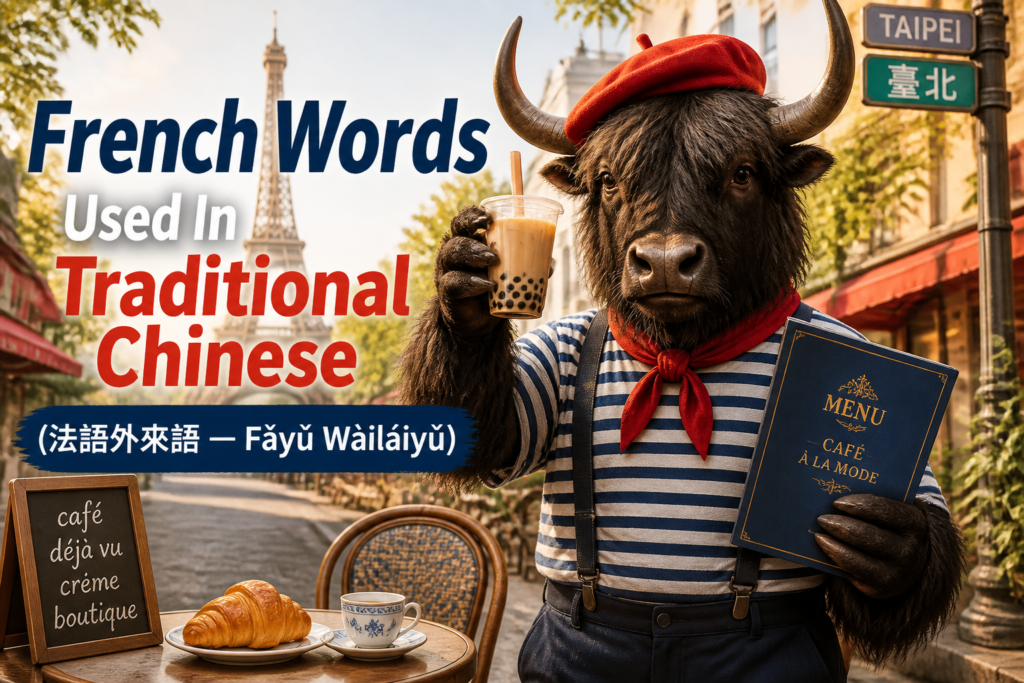
法語外來語 Fǎyǔ Wàiláiyǔ means French loanwords that have entered Traditional Chinese. Some are fancy, some are everyday, and some are the kind of words that make language feel a little extra, like a café order that somehow became a personality. In Taiwan, these words often show up in food, fashion, art, and hotel talk — because French likes to sneak in wearing nice shoes.
For the broader learning path, visit our parent guide.
By the end of this guide, you will understand common French-origin words in Traditional Chinese, how they are written, how they sound, and how to use them in real sentences. You will also see which words are more standard, which are more Taiwan-friendly, and which ones are basically French wearing a Chinese name tag.
Need a broader contrast after this? You can compare this topic with English Words Used In Traditional Chinese, Regional Words Used In Traditional Chinese, and Spanish Words Used In Traditional Chinese. If you want to see how this kind of vocabulary is tested, check the TOCFL placement test or the Traditional Chinese vocabulary test.
French loanwords in Chinese often keep a feeling of elegance, even when the thing itself is just a dessert, a sauce, or a very expensive problem.
Why French Words Appear In Traditional Chinese
French has been a big language of cuisine, fashion, diplomacy, and the arts for a long time. So when Chinese borrowed French terms, they usually came through one of these areas. In Taiwan, you will often see them in menus, bakery signs, magazines, department stores, and hotel language.
Some words are direct borrowings in sound. Others are translated ideas that came through French influence. A few are now so normal that people do not even think of them as “foreign” anymore. That is how loanwords behave: first they arrive, then they settle in, then they act like they have always lived there.
If you are curious about the dictionary side of things, a boring but useful place to peek is the 教育部重編國語辭典修訂本 Jiàoyùbù Chóngbiān Guóyǔ Cídiǎn Xiūdìng Běn, which is exactly as delightfully official as it sounds.
Core French-Origin Words You Will See In Traditional Chinese
Below are common French-related loanwords and French-influenced terms that show up in Traditional Chinese. The examples are practical and Taiwan-friendly, because nobody wants to learn words they will never see outside a museum gift shop.
| Traditional Chinese | Pinyin | Meaning | Example (ZH) | Example (Pinyin) | Translation (EN) |
|---|---|---|---|---|---|
| 咖啡 | kāfēi | coffee | 我早上一定要喝一杯咖啡。 | Wǒ zǎoshang yīdìng yào hē yì bēi kāfēi. | I must drink a cup of coffee in the morning. |
| 沙龍 | shālóng | salon; gathering; beauty salon | 她在沙龍剪頭髮。 | Tā zài shālóng jiǎn tóufǎ. | She is getting her hair cut at the salon. |
| 巴士底 | bāsìdǐ | Bastille; historical French reference | 這個名字讓人想到法國大革命。 | Zhège míngzì ràng rén xiǎngdào Fǎguó Dàgémìng. | This name makes people think of the French Revolution. |
| 芭蕾 | bālěi | ballet | 她從小學芭蕾。 | Tā cóngxiǎo xué bālěi. | She has studied ballet since childhood. |
| 香檳 | xiāngbīn | champagne | 晚餐時他們開了一瓶香檳。 | Wǎncān shí tāmen kāile yì píng xiāngbīn. | They opened a bottle of champagne at dinner. |
| 卡布奇諾 | kǎbùqínuò | cappuccino | 我想點一杯卡布奇諾。 | Wǒ xiǎng diǎn yì bēi kǎbùqínuò. | I want to order a cappuccino. |
| 馬卡龍 | mǎkǎlóng | macaron | 這家店的馬卡龍很受歡迎。 | Zhè jiā diàn de mǎkǎlóng hěn shòu huānyíng. | This shop’s macarons are very popular. |
| 歐洲 | Ōuzhōu | Europe | 她暑假要去歐洲旅行。 | Tā shǔjià yào qù Ōuzhōu lǚxíng. | She is going to travel in Europe during summer vacation. |
| 法式 | fǎshì | French-style | 我們今晚吃法式料理。 | Wǒmen jīnwǎn chī fǎshì liàolǐ. | We are eating French-style cuisine tonight. |
| 浪漫 | làngmàn | romantic | 他把這次旅行安排得很浪漫。 | Tā bǎ zhè cì lǚxíng ānpái de hěn làngmàn. | He planned this trip in a very romantic way. |
| 時尚 | shíshàng | fashion; stylish | 她的穿搭很時尚。 | Tā de chuāndā hěn shíshàng. | Her outfit is very stylish. |
| 精品 | jīngpǐn | boutique; premium item | 這間飯店走精品路線。 | Zhè jiān fàndiàn zǒu jīngpǐn lùxiàn. | This hotel goes for a boutique style. |
| 點心 | diǎnxīn | snack; dessert; dim sum in some contexts | 下午茶時間我們吃點心。 | Xiàwǔchá shíjiān wǒmen chī diǎnxīn. | We eat snacks during afternoon tea time. |
| 布丁 | bùdīng | pudding | 小孩最喜歡布丁。 | Xiǎohái zuì xǐhuān bùdīng. | Kids love pudding the most. |
| 奶油 | nǎiyóu | butter; cream | 這塊蛋糕奶油很多。 | Zhè kuài dàngāo nǎiyóu hěn duō. | This cake has a lot of cream. |
Useful French Loanword Phrases In Real Life
These are the kinds of phrases you might actually hear in Taiwan. A lot of them live in food culture, beauty culture, and lifestyle talk. Very civilized. Very slightly expensive.
| Traditional Chinese | Pinyin | Meaning | Example (ZH) | Example (Pinyin) | Translation (EN) |
|---|---|---|---|---|---|
| 法式麵包 | fǎshì miànbāo | French bread | 早餐店有賣法式麵包。 | Zǎocān diàn yǒu mài fǎshì miànbāo. | The breakfast shop sells French bread. |
| 法式料理 | fǎshì liàolǐ | French cuisine | 她很喜歡法式料理。 | Tā hěn xǐhuān fǎshì liàolǐ. | She really likes French cuisine. |
| 法式甜點 | fǎshì tiándiǎn | French dessert | 這家店的法式甜點很精緻。 | Zhè jiā diàn de fǎshì tiándiǎn hěn jīngzhì. | This shop’s French desserts are very refined. |
| 法式吐司 | fǎshì tǔsī | French toast | 我早餐想吃法式吐司。 | Wǒ zǎocān xiǎng chī fǎshì tǔsī. | I want French toast for breakfast. |
| 法式穿搭 | fǎshì chuāndā | French-style outfit | 她今天是法式穿搭。 | Tā jīntiān shì fǎshì chuāndā. | She is wearing a French-style outfit today. |
| 法式浪漫 | fǎshì làngmàn | French romance; French romantic style | 他想要一點法式浪漫。 | Tā xiǎng yào yìdiǎn fǎshì làngmàn. | He wants a little French romance. |
| 香檳酒 | xiāngbīn jiǔ | champagne | 婚禮上準備了香檳酒。 | Hūnlǐ shàng zhǔnbèile xiāngbīn jiǔ. | Champagne was prepared for the wedding. |
| 芭蕾舞 | bālěi wǔ | ballet | 她學過很多年芭蕾舞。 | Tā xué guò hěn duō nián bālěi wǔ. | She studied ballet for many years. |
| 高級訂製 | gāojí dìngzhì | haute couture; high-end custom-made | 這個品牌主打高級訂製。 | Zhège pǐnpái zhǔdǎ gāojí dìngzhì. | This brand focuses on haute couture. |
| 沙龍活動 | shālóng huódòng | salon event; discussion gathering | 學校舉辦了一場法語沙龍活動。 | Xuéxiào jǔbànle yì chǎng Fǎyǔ shālóng huódòng. | The school held a French-language salon event. |
| 精品咖啡 | jīngpǐn kāfēi | specialty coffee | 這間店賣精品咖啡。 | Zhè jiān diàn mài jīngpǐn kāfēi. | This shop sells specialty coffee. |
| 午茶時光 | wǔchá shíguāng | afternoon tea time | 她喜歡安排午茶時光。 | Tā xǐhuān ānpái wǔchá shíguāng. | She likes to set aside time for afternoon tea. |
| 香草冰淇淋 | xiāngcǎo bīngqílín | vanilla ice cream | 我想要香草冰淇淋。 | Wǒ xiǎng yào xiāngcǎo bīngqílín. | I want vanilla ice cream. |
| 奶油醬 | nǎiyóu jiàng | cream sauce; butter sauce | 這道義大利麵的奶油醬很濃。 | Zhè dào yìdàlì miàn de nǎiyóu jiàng hěn nóng. | The cream sauce on this pasta is very rich. |
| 馬卡龍色 | mǎkǎlóng sè | macaron color; pastel color | 她買了一件馬卡龍色外套。 | Tā mǎile yí jiàn mǎkǎlóng sè wàitào. | She bought a pastel-colored jacket. |
Key Words That Feel French In Meaning Or Style
Not every “French” word in Chinese is a direct sound borrowing. Sometimes the connection is cultural. French style, French food, French fashion, French art — these all influenced the vocabulary people use. The result is a mix of borrowed sounds and borrowed vibes. Language is messy like that. In a charming way, obviously.
| Traditional Chinese | Pinyin | Meaning | Example (ZH) | Example (Pinyin) | Translation (EN) |
|---|---|---|---|---|---|
| 優雅 | yōuyǎ | elegant | 她走路的樣子很優雅。 | Tā zǒulù de yàngzi hěn yōuyǎ. | The way she walks is very elegant. |
| 浪漫 | làngmàn | romantic | 這家餐廳氣氛很浪漫。 | Zhè jiā cāntīng qìfēn hěn làngmàn. | This restaurant has a romantic atmosphere. |
| 精緻 | jīngzhì | delicate; refined | 這道甜點做得很精緻。 | Zhè dào tiándiǎn zuò de hěn jīngzhì. | This dessert is made very delicately. |
| 時髦 | shímáo | fashionable | 她的髮型很時髦。 | Tā de fàxíng hěn shímáo. | Her hairstyle is very fashionable. |
| 高級 | gāojí | high-class; upscale | 這間咖啡館很高級。 | Zhè jiān kāfēiguǎn hěn gāojí. | This café is very upscale. |
| 典雅 | diǎnyǎ | classical and elegant | 這棟建築很典雅。 | Zhè dòng jiànzhù hěn diǎnyǎ. | This building is very elegant and classical. |
| 香氣 | xiāngqì | fragrance; aroma | 麵包出爐後香氣很濃。 | Miànbāo chūlú hòu xiāngqì hěn nóng. | The bread smells strong after coming out of the oven. |
| 品味 | pǐnwèi | taste; style; sense of taste | 他很有品味。 | Tā hěn yǒu pǐnwèi. | He has good taste. |
How To Recognize French Loanwords In Chinese
There is no magic spell, sadly. But there are clues.
- Food and drink words: things like 咖啡 kāfēi, 香檳 xiāngbīn, and 馬卡龍 mǎkǎlóng often feel French because French culinary culture is strong.
- Fashion and beauty words: words like 沙龍 shālóng, 精品 jīngpǐn, and 優雅 yōuyǎ are often used in spaces with a French-inspired image.
- Sound clues: some words look like Chinese characters but sound very close to French or other European terms. That is a classic loanword sign.
- Fancy branding: if a bakery, boutique, or hotel wants to sound chic, there is a good chance French vocabulary will appear somewhere nearby.
One useful pronunciation note: many borrowed food and lifestyle terms are based on approximate sound matching, not perfect French pronunciation. So 咖啡 kāfēi is not a French lesson hiding in Chinese clothing. It is just the Chinese form people actually use.
Taiwan Usage Notes You Should Know
| Topic | Taiwan-Friendly Note | Example |
|---|---|---|
| 咖啡 kāfēi | Very common in daily life, cafés, and convenience stores. | 我去樓下買咖啡。 Wǒ qù lóu xià mǎi kāfēi. — I’m going downstairs to buy coffee. |
| 法式 fǎshì | Often used in menus and ads to make food or style sound refined. | 法式吐司很受歡迎。 Fǎshì tǔsī hěn shòu huānyíng. — French toast is very popular. |
| 沙龍 shālóng | Can mean beauty salon or a discussion-style gathering. | 今晚有一場讀書沙龍。 Jīnwǎn yǒu yì chǎng dúshū shālóng. — There is a reading salon tonight. |
| 芭蕾舞 bālěi wǔ | Standard term for ballet in Taiwan. | 孩子在學芭蕾舞。 Háizi zài xué bālěi wǔ. — The child is learning ballet. |
| 香檳 xiāngbīn | Usually refers specifically to champagne, not just any sparkling wine. | 我們開了一瓶香檳。 Wǒmen kāile yì píng xiāngbīn. — We opened a bottle of champagne. |
Common Confusions
Some words look international, but meaning can shift a little in Chinese. That is where learners get gently ambushed.
- 沙龍 shālóng can mean salon, but also a kind of event or gathering. It is not always a hair salon.
- 點心 diǎnxīn can mean snack or dessert. In some contexts, it can also refer to dim sum. Context is the boss here.
- 奶油 nǎiyóu may mean butter or cream depending on the dish. Chinese likes to keep you alert.
- 時尚 shíshàng is not a direct French loanword, but it often appears in French-style marketing and fashion talk.
- 精品 jīngpǐn can mean premium or boutique-style. It is very common in Taiwan business and retail talk.
Mini Grammar And Usage Notes
French-origin words behave like normal Chinese words once they are borrowed. So they take normal Chinese grammar, particles, and sentence patterns.
| Pattern | Meaning | Example (ZH) | Pinyin | English |
|---|---|---|---|---|
| 很 + word | very + adjective/noun-like style word | 這家店很法式。 | Zhè jiā diàn hěn fǎshì. | This shop is very French-style. |
| 有點 + word | a bit + adjective | 這件衣服有點法式。 | Zhè jiàn yīfú yǒudiǎn fǎshì. | This piece of clothing is a bit French-style. |
| 的 + noun | noun modifier | 法式甜點很好吃。 | Fǎshì tiándiǎn hěn hǎochī. | French desserts are delicious. |
| 想要 + noun | want + thing | 我想要一杯咖啡。 | Wǒ xiǎng yào yì bēi kāfēi. | I want a cup of coffee. |
| 在 + place + 動作 | action happening somewhere | 她在沙龍工作。 | Tā zài shālóng gōngzuò. | She works at a salon. |
Practice Section
Try these quick exercises. No dramatic violin music needed.
- Translate into Chinese: “I want French toast.”
- Translate into Chinese: “This café is very elegant.”
- Choose the best word: coffee, ballet, or champagne for 咖啡 / 芭蕾 / 香檳.
- Swap the noun: 法式料理 fǎshì liàolǐ → 法式甜點 fǎshì tiándiǎn.
- Make a sentence with 沙龍 shālóng meaning a discussion event, not a beauty salon.
Answers
- 我想吃法式吐司。
Wǒ xiǎng chī fǎshì tǔsī. — I want to eat French toast. - 這家咖啡館很優雅。
Zhè jiā kāfēiguǎn hěn yōuyǎ. — This café is very elegant. - 咖啡 = coffee, 芭蕾 = ballet, 香檳 = champagne.
- 法式料理 → 法式甜點 changes the category from main cuisine to dessert.
- 今晚有一場法語沙龍。
Jīnwǎn yǒu yì chǎng Fǎyǔ shālóng. — There is a French-language salon tonight.
Common Mistakes And Fixes
| Mistake | Why It Happens | Fix |
|---|---|---|
| Using Simplified Chinese forms by habit | Many learners see mixed-script content online. | Stick to Traditional Chinese here: 咖啡, 香檳, 芭蕾. |
| Forgetting pinyin after the Chinese term | English speakers often skip pronunciation support. | Always learn both together: 法式 fǎshì. |
| Thinking every elegant word is directly French | French influence is strong, but not everything is a loanword. | Check meaning and history before assuming. Fancy is not the same as borrowed. |
| Using 奶油 as only “butter” | One word can cover different dairy meanings. | Read the context. Dessert? Sauce? Bread? Context decides. |
| Assuming 沙龍 only means hair salon | That is the most common image for many learners. | It can also mean a talk, meeting, or cultural event. |
Quick Reference Summary
- French loanwords in Traditional Chinese often appear in food, fashion, beauty, and lifestyle language.
- 咖啡 kāfēi, 香檳 xiāngbīn, 芭蕾 bālěi, and 馬卡龍 mǎkǎlóng are especially useful.
- 法式 fǎshì is a common way to say “French-style.”
- Many words are understood through context, not just direct translation.
- Taiwan usage often favors food, café, boutique, and salon contexts.
French words in Traditional Chinese are like elegant guests at a dinner party: they show up, they make the table look better, and they leave everyone pretending to be more cultured than they are. Learn the common ones first, and you will start spotting them everywhere — menus, magazines, cafés, and the occasional very confident dessert.
Yak Takeaway: if a Traditional Chinese word sounds stylish, tasty, or a little too polished for ordinary life, there is a good chance French has been invited in. And yes, it probably arrived with coffee.