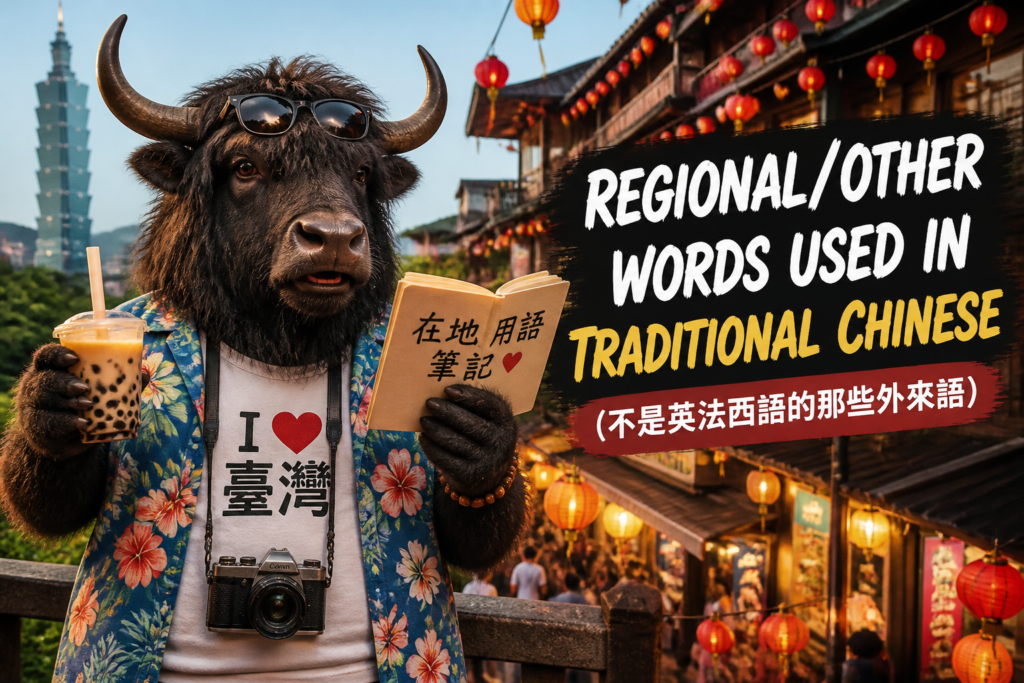
Traditional Chinese is not just “Chinese written in a different script.” It also carries a lot of regional vocabulary, Taiwan-style everyday wording, and borrowed terms that do not come from the usual English, French, or Spanish buckets. In other words: the language is doing its own thing, politely, but with opinions.
For the broader learning path, visit our parent guide.
In this guide, you’ll learn useful regional words and common Taiwan Mandarin expressions that show up in real life, from daily chat to forms, school, work, and travel. By the end, you should be able to recognize them, say them, and avoid the classic “I know this word but not that version” confusion.
If you want a quick official reference for vocabulary level and learner-friendly Mandarin materials, the TOCFL placement test and the Traditional Chinese vocabulary test are handy places to check your progress. And yes, there will be a few words here that feel like they walked in wearing local sneakers.
What “Regional” Means In Traditional Chinese
“Regional” here means words that are common in specific places, especially Taiwan, Hong Kong, and other Chinese-speaking communities, or words that are used in slightly different ways depending on the region. A word can be perfectly normal in Taiwan and sound odd elsewhere. That is not wrong. That is language being a living, mildly chaotic creature.
Some of these words are not “foreign” in the strict sense. They are local, dialect-influenced, or region-specific Mandarin. Others are borrowed from Japanese, Taiwanese Hokkien, Cantonese, or older layers of contact language. The point is not to memorize every historical wrinkle. The point is to understand what people actually mean when they say it.
For a general background on Traditional Chinese script itself, a boring but solid place to start is Traditional Chinese characters. Boring links are useful. Boring links do not lie.
High-Value Regional Words In Taiwan Mandarin
These are words you are likely to hear in daily Taiwan life. Each one includes Traditional Chinese, pinyin, English meaning, and an example sentence. Because language without examples is just decoration.
| Traditional Chinese | Pinyin | Meaning | Example (ZH) | Example (Pinyin) | Translation (EN) |
|---|---|---|---|---|---|
| 垃圾車 | lèsèchē | garbage truck; trash truck | 垃圾車晚上七點來,我要先把垃圾拿出去。 | Lèsèchē wǎnshàng qī diǎn lái, wǒ yào xiān bǎ lèsè ná chūqù. | The trash truck comes at 7 p.m., so I need to take the trash out first. |
| 便當 | biàndāng | lunch box; packed meal | 今天中午我買了雞腿便當。 | Jīntiān zhōngwǔ wǒ mǎi le jītuǐ biàndāng. | Today at noon I bought a chicken leg lunch box. |
| 機車 | jīchē | scooter; motorcycle | 我爸的機車停在便利商店門口。 | Wǒ bà de jīchē tíng zài biànlì shāngdiàn ménkǒu. | My dad’s scooter is parked in front of the convenience store. |
| 行動電源 | xíngdòng diànyuán | power bank | 我的手機快沒電了,行動電源借我一下。 | Wǒ de shǒujī kuài méi diàn le, xíngdòng diànyuán jiè wǒ yíxià. | My phone is almost dead, so lend me your power bank for a second. |
| 飲料 | yǐnliào | drink; beverage | 你要不要順便幫我買一杯飲料? | Nǐ yào bù yào shùnbiàn bāng wǒ mǎi yì bēi yǐnliào? | Do you want to help me buy a drink while you’re at it? |
| 外送 | wàisòng | delivery | 今天太熱了,我們叫外送吧。 | Jīntiān tài rè le, wǒmen jiào wàisòng ba. | It’s too hot today, so let’s order delivery. |
| 早餐店 | zǎocāndiàn | breakfast shop | 我每天早上都去早餐店買蛋餅。 | Wǒ měitiān zǎoshang dōu qù zǎocāndiàn mǎi dànbǐng. | I go to the breakfast shop every morning to buy an egg crepe. |
| 蛋餅 | dànbǐng | egg crepe; Taiwan breakfast item | 這家店的蛋餅很好吃。 | Zhè jiā diàn de dànbǐng hěn hǎochī. | The egg crepes at this shop are very tasty. |
| 騎樓 | qílóu | arcade; covered sidewalk space | 下雨的時候,我們可以在騎樓下等公車。 | Xiàyǔ de shíhòu, wǒmen kěyǐ zài qílóu xià děng gōngchē. | When it rains, we can wait for the bus under the covered walkway. |
| 超商 | chāoshāng | convenience store | 我去超商領包裹。 | Wǒ qù chāoshāng lǐng bāoguǒ. | I’m going to the convenience store to pick up a package. |
Useful Regional Words With Real-Life Nuance
Some words are easy to translate, but the real-life meaning is a little broader or more local. That’s where learners get surprised. Very rude of language, honestly.
| Traditional Chinese | Pinyin | Meaning | Example (ZH) | Example (Pinyin) | Translation (EN) |
|---|---|---|---|---|---|
| 加油 | jiāyóu | to cheer someone on; do your best | 明天考試,加油! | Míngtiān kǎoshì, jiāyóu! | Good luck on the exam tomorrow! |
| 方便 | fāngbiàn | convenient; available; suitable | 你現在方便講電話嗎? | Nǐ xiànzài fāngbiàn jiǎng diànhuà ma? | Is now a convenient time for you to talk on the phone? |
| 麻煩 | máfan | trouble; to bother someone; please | 麻煩你幫我看一下包包。 | Máfan nǐ bāng wǒ kàn yíxià bāobāo. | Please help me watch my bag for a moment. |
| 意思 | yìsi | interesting; thoughtful; meaning | 這個老闆很有意思,講話超直接。 | Zhège lǎobǎn hěn yǒu yìsi, jiǎnghuà chāo zhíjiē. | This boss is interesting; he speaks very directly. |
| 正 | zhèng | very; excellent; solid | 這家牛肉麵真的很正。 | Zhè jiā niúròumiàn zhēn de hěn zhèng. | This beef noodle shop is really great. |
| 撇步 | piēbù | trick; tip; useful method | 你有沒有什麼學中文的撇步? | Nǐ yǒu méiyǒu shénme xué Zhōngwén de piēbù? | Do you have any tips for learning Chinese? |
| 囉唆 | luōsuo | wordy; naggy; annoying in speech | 老師沒有囉唆太多,直接講重點。 | Lǎoshī méiyǒu luōsuo tài duō, zhíjiē jiǎng zhòngdiǎn. | The teacher did not ramble; he went straight to the point. |
| 打卡 | dǎkǎ | clock in; check in; post a location check-in | 我們先在咖啡廳打卡,再去逛街。 | Wǒmen xiān zài kāfēitīng dǎkǎ, zài qù guàngjiē. | Let’s check in at the café first, then go shopping. |
| 包廂 | bāoxiāng | private room; booth | 這間餐廳有包廂,適合聚餐。 | Zhè jiān cāntīng yǒu bāoxiāng, shìhé jùcān. | This restaurant has private rooms, which are good for group meals. |
| 聊得來 | liáo de lái | to get along well in conversation | 我們第一次見面就聊得來。 | Wǒmen dì yī cì jiànmiàn jiù liáo de lái. | We got along well in conversation the first time we met. |
Words That Often Feel “Taiwan-Only” To Learners
These words are especially useful if you are reading menus, chatting with friends, or trying not to look lost at a Taiwanese breakfast shop. A few of them are regional in origin, and a few are just Taiwan-common Mandarin. Either way, they matter.
- 便當 biàndāng — boxed meal / lunch box
- 蛋餅 dànbǐng — egg crepe, very common breakfast item
- 滷肉飯 lǔròufàn — braised pork rice
- 鹹酥雞 xiánsūjī — Taiwanese fried chicken snack
- 珍珠奶茶 zhēnzhū nǎichá — bubble tea; pearl milk tea
- 機車 jīchē — scooter / motorcycle
- 公車 gōngchē — bus
- 捷運 jiéyùn — MRT / metro
- 超商 chāoshāng — convenience store
- 外送 wàisòng — delivery
Notice how some of these are food words, transport words, and convenience-store words. That is not an accident. Daily life is where regional language shows up first, because people need to eat, move, and survive a little too much traffic.
Borrowed Words That Are Not The Usual English-French-Spanish Story
Traditional Chinese includes many borrowings from other languages besides English, French, and Spanish. In Taiwan, some everyday terms came through Japanese, Taiwanese Hokkien, Cantonese, or older cultural contact. The result is a vocabulary stew. Delicious, but not exactly tidy.
| Traditional Chinese | Pinyin | Meaning | Example (ZH) | Example (Pinyin) | Translation (EN) |
|---|---|---|---|---|---|
| 沙發 | shāfā | sofa | 我們坐在沙發上看電視。 | Wǒmen zuò zài shāfā shàng kàn diànshì. | We sat on the sofa and watched TV. |
| 瓦斯 | wǎsī | gas | 瓦斯快沒了,記得叫人來換。 | Wǎsī kuài méi le, jìde jiào rén lái huàn. | The gas is almost out, so remember to call someone to replace it. |
| 馬路 | mǎlù | road; street | 不要在馬路上玩球。 | Bù yào zài mǎlù shàng wán qiú. | Don’t play ball in the street. |
| 咖啡 | kāfēi | coffee | 我早上一定要喝咖啡。 | Wǒ zǎoshang yídìng yào hē kāfēi. | I definitely need to drink coffee in the morning. |
| 麵包 | miànbāo | bread; bun | 我在麵包店買了兩個菠蘿麵包。 | Wǒ zài miànbāo diàn mǎi le liǎng gè bōluó miànbāo. | I bought two pineapple buns at the bakery. |
| 菠蘿麵包 | bōluó miànbāo | pineapple bun | 這個菠蘿麵包上面有酥皮。 | Zhège bōluó miànbāo shàngmiàn yǒu sūpí. | This pineapple bun has a crispy top. |
| 榻榻米 | tàtāmǐ | tatami | 這家日式餐廳有榻榻米座位。 | Zhè jiā Rìshì cāntīng yǒu tàtāmǐ zuòwèi. | This Japanese-style restaurant has tatami seating. |
| 壽司 | shòusī | sushi | 我們晚上去吃壽司吧。 | Wǒmen wǎnshàng qù chī shòusī ba. | Let’s go eat sushi tonight. |
| 拖鞋 | tuōxié | slippers; sandals | 進屋前請先換拖鞋。 | Jìn wū qián qǐng xiān huàn tuōxié. | Please change into slippers before coming inside. |
| 菜市場 | càishìchǎng | traditional market | 阿姨每天去菜市場買菜。 | Āyí měitiān qù càishìchǎng mǎi cài. | Auntie goes to the market to buy vegetables every day. |
Regional Words That Can Be Confusing
Some words look simple, but the region changes the meaning. That is where learners can make polite, tiny mistakes that still matter. Here are a few common traps.
| Word | Taiwan Usage | Other Possible Usage | Tip |
|---|---|---|---|
| 便當 biàndāng | boxed meal, often a full lunch | may be less common in some regions | Very natural in Taiwan; useful for lunch shops and station food. |
| 公車 gōngchē | bus | also used elsewhere, but less central in daily talk in some areas | Common in Taiwan, especially with MRT and transport talk. |
| 機車 jīchē | scooter / motorcycle | can mean motorcycle in general | In Taiwan, “機車” often strongly suggests a scooter. |
| 加油 jiāyóu | encouragement, like “you can do it” | can also literally mean refuel gas | Context does the heavy lifting. As usual, context is working overtime. |
| 意思 yìsi | interesting, thoughtful, amusing | literal meaning | “很有意思” often means “interesting,” not “has a lot of meaning.” |
For a neutral reference on word usage and standard definitions, Taiwan’s Ministry of Education Dictionary is a reliable source. It will not entertain you, but it will be correct, which is frankly more important.
Mini Grammar And Usage Notes
Regional vocabulary is not only about the word itself. The little grammar around it matters too.
| Pattern | Meaning | Example (ZH) | Pinyin | English |
|---|---|---|---|---|
| 很 + adjective | softened description; very common in Mandarin | 這家店很正。 | Zhè jiā diàn hěn zhèng. | This shop is really good. |
| 有 + noun/adj | has the quality of; feels like | 這人很有意思。 | Zhè rén hěn yǒu yìsi. | This person is interesting. |
| 先…再… | do one thing first, then another | 我們先打卡,再吃飯。 | Wǒmen xiān dǎkǎ, zài chīfàn. | We’ll check in first, then eat. |
| 要不要… | casual suggestion / asking if someone wants to do something | 你要不要喝飲料? | Nǐ yào bù yào hē yǐnliào? | Do you want a drink? |
| 可以 + verb | can do; permission or possibility | 這裡可以停機車。 | Zhèlǐ kěyǐ tíng jīchē. | You can park scooters here. |
One small Taiwan note: words like 超商 chāoshāng and 外送 wàisòng are very everyday. If you use them naturally, you sound local fast. If you do not, people still understand you. Language is generous like that, even when the traffic is not.
Regional Words That Often Come From Local Dialects
Some Traditional Chinese words are influenced by Taiwanese Hokkien, Cantonese, or other local speech layers. They are often heard in casual conversation, advertising, food culture, and family talk. You do not need to become a dialect historian. Just recognize the flavor.
| Traditional Chinese | Pinyin | Meaning | Example (ZH) | Example (Pinyin) | Translation (EN) |
|---|---|---|---|---|---|
| 撇步 | piēbù | trick; tip; clever method | 這題有沒有什麼撇步? | Zhè tí yǒu méiyǒu shénme piēbù? | Is there any trick for this question? |
| 滷味 | lǔwèi | braised snack food | 晚餐我想吃滷味。 | Wǎncān wǒ xiǎng chī lǔwèi. | I want to eat braised snacks for dinner. |
| 小吃 | xiǎochī | snack; small dish | 這條街很多小吃。 | Zhè tiáo jiē hěn duō xiǎochī. | There are many snacks on this street. |
| 攤位 | tānwèi | stall; booth | 夜市裡每個攤位都很多人。 | Yèshì lǐ měi gè tānwèi dōu hěn duō rén. | Every stall in the night market has a lot of people. |
| 夜市 | yèshì | night market | 我們週末去夜市逛一逛吧。 | Wǒmen zhōumò qù yèshì guàng yí guàng ba. | Let’s go stroll through the night market this weekend. |
| 客滿 | kèmǎn | fully booked; full | 這家餐廳今晚客滿。 | Zhè jiā cāntīng jīnwǎn kèmǎn. | This restaurant is fully booked tonight. |
| 甘 | gān | sweet; mild; often in flavor wording | 這湯有一點甘甘的。 | Zhè tāng yǒu yìdiǎn gān gān de. | This soup tastes a little sweet and mild. |
| ㄟ | ēi / ei | casual attention sound; “hey” | ㄟ,你在嗎? | Ei, nǐ zài ma? | Hey, are you there? |
Common Mistakes English Speakers Make
These are not disasters. They are just the kind of mistakes that quietly make you sound less natural than you want to sound.
- Using the wrong regional word for the situation. Example: saying “pizza box” style terms when the local word is 便當 biàndāng for a packed meal.
- Forgetting that some words are broader in Mandarin. Example: 意思 yìsi can mean “interesting,” not only “meaning.”
- Assuming a word means the same thing everywhere. Example: 機車 jīchē often means “scooter” in Taiwan, not just any motorcycle in a vague textbook sense.
- Over-translating English habits. A lot of Taiwan Mandarin uses context and short phrases very efficiently. English-style full explanations can sound stiff.
- Ignoring local food vocabulary. If you do not know 蛋餅 dànbǐng, 滷味 lǔwèi, or 鹹酥雞 xiánsūjī, you will miss a lot of real-life conversation.
One especially common trap is tone and sound familiarity. Learners may know the character 正 zhèng from “correct” or “upright,” but in Taiwan casual speech it can also mean “very good” or “solid.” Same characters, different vibe. Mandarin loves that kind of mischief.
Practice: Match The Word To The Situation
Try these quick matches. Say the answer out loud before you peek at the meaning in your head. Tiny effort, big payoff.
- At the breakfast shop: 蛋餅 dànbǐng
- When your phone is dying: 行動電源 xíngdòng diànyuán
- When you want to encourage a friend: 加油 jiāyóu
- When you need a packed meal for lunch: 便當 biàndāng
- When you are talking about the scooter parked outside: 機車 jīchē
- When you are asking if someone is available: 方便 fāngbiàn
- When you want a useful tip: 撇步 piēbù
- When you are at the night market: 夜市 yèshì
Answer key: If you matched them correctly, congratulations. Your brain is now slightly more Taiwan-friendly, which is a surprisingly useful skill.
Quick Translation Drills
Translate these into English first, then back into Chinese if you want extra practice.
| Traditional Chinese | Pinyin | English |
|---|---|---|
| 我先去超商,再回家。 | Wǒ xiān qù chāoshāng, zài huí jiā. | I’ll go to the convenience store first, then go home. |
| 這家早餐店的蛋餅很好吃。 | Zhè jiā zǎocāndiàn de dànbǐng hěn hǎochī. | The egg crepes at this breakfast shop are very tasty. |
| 麻煩你幫我拿一下行動電源。 | Máfan nǐ bāng wǒ ná yíxià xíngdòng diànyuán. | Please help me get the power bank for a second. |
| 晚上我們去夜市吃小吃。 | Wǎnshàng wǒmen qù yèshì chī xiǎochī. | Tonight we’ll go to the night market to eat snacks. |
| 這個方法很有意思。 | Zhège fāngfǎ hěn yǒu yìsi. | This method is interesting. |
Common Variants And Nearby Words
Sometimes a word has a near-synonym, a more formal version, or a Taiwan-preferred version. Knowing the range helps you sound less textbook and more human.
| Word | Variant | Difference | Example Tip |
|---|---|---|---|
| 超商 chāoshāng | 便利商店 biànlì shāngdiàn | More formal / full form | Use either one; “超商” is shorter and very common in Taiwan. |
| 公車 gōngchē | 巴士 bāshì | “巴士” can sound more borrowed or less everyday | “公車” is usually the safer everyday choice in Taiwan. |
| 機車 jīchē | 摩托車 mótuōchē | “摩托車” is more general; “機車” is very Taiwan-common | Listen to the local speaker and follow their lead. |
| 外送 wàisòng | 配送 pèisòng | “配送” is more formal/logistics-like | For food delivery, “外送” is the everyday word. |
| 撇步 piēbù | 技巧 jìqiǎo | “技巧” is more standard and broad | “撇步” feels more casual, local, and lively. |
Why These Words Matter
Regional words are where a language stops being a classroom object and starts being a real social tool. If you know them, menus become readable, conversations become easier, and Taiwan feels a lot less mysterious. Also, you stop sounding like a robot reading a glossary in a trench coat.
If you want more comparisons, you may also like the related guides on English words in Traditional Chinese, French words used in Traditional Chinese, and Spanish words used in Traditional Chinese. Different borrowings, same delicious vocabulary chaos.
Yak Takeaway: Regional words are not random extras. They are the words people actually use every day, especially in Taiwan. Learn them, and suddenly your Chinese becomes warmer, more natural, and much better at ordering food without panic.