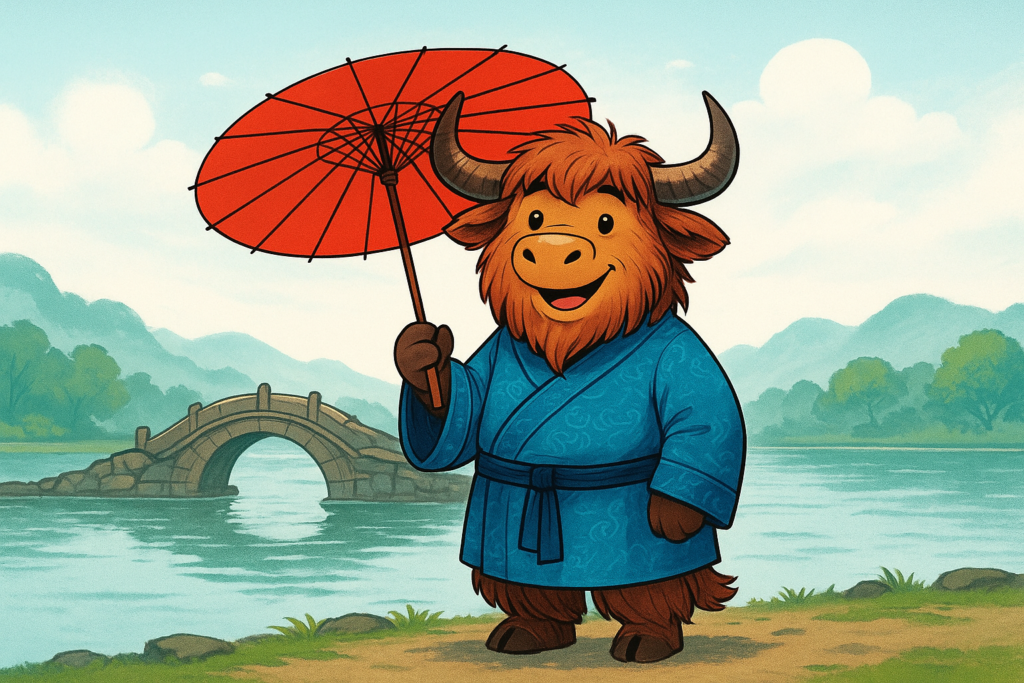
This B1 Intermediate retelling of 白蛇傳 keeps the plot clear for learners while still giving the story some atmosphere and momentum.
This version teaches Traditional Chinese through English and includes clickable word help inside the story, full story audio, and lesson notes after the reading. It is free to use on Yak Yacker and is designed to feel natural, readable, and manageable for learners.
很久很久以前,有一條白色的蛇和一條青色的蛇。她們在深山裏了很多年,終於變成了的女子。白蛇叫白素貞,青蛇叫小青。
有一天,她們來到杭州西湖。湖邊有一座,很美。天空突然下起了大雨。
白素貞和小青在橋邊等雨停。這時,一個年輕人走過來,遞給她們一把傘。這個年輕人叫許仙,是個的藥店。
「謝謝你,」 白素貞笑著說。「你真是個。」 許仙了,說:「這沒什麼。下雨天,互相幫忙是應該的。」
白素貞和許仙。不久,他們結婚了,生活非常幸福。許仙開了一家藥店,白素貞幫忙,小青也跟他們住在一起。
可是,金山寺的和尚法海發現了白素貞的。他知道白素貞是,決定拆散他們。
法海找到許仙,對他說:「你的妻子不是人,她是一條白蛇精!你被她騙了!」 許仙不相信,說:「我妻子善良,你!」
端午節那天,人們都要喝。白素貞知道喝了這個會現出原形,但她不想讓許仙懷疑。她勉強喝了一小口,沒想到立刻。
她跑回房間,躺在床上。許仙端著進門,卻看見床上有一條大白蛇!他嚇得大叫一聲,了。
白素貞醒來後,發現許仙沒了。她非常傷心,對小青說:「我要去仙山偷,才能救活他。」
白素貞飛到仙山,守山的仙童不讓她進去。她,終於感動了。仙翁給了她靈芝。
許仙被救活了,但法海不肯他們。他把許仙帶到,不讓他回家。
白素貞和小青到金山寺找許仙。法海不肯放人,還用攻擊她們。白素貞生氣了,發動,大水沖向金山寺。
「法海,還我丈夫!」 白素貞喊道。法海說:「妖怪,!」 可是大水了寺院,許仙趁亂逃了出來。
白素貞和許仙重逢了,但他們知道法海不會。果然,法海用罩住了白素貞。
白素貞被壓在雷峰塔下。許仙在塔外痛哭,他,天天為妻子祈福。很多年後,他們的兒子長大,考中,到塔前祭拜。傳說雷峰塔倒了,白素貞終於自由了。
Once upon a time, a white snake and a green snake cultivated in the mountains for years and transformed into beautiful women: Bai Suzhen and Xiaoqing.
One day, they came to West Lake in Hangzhou. Near Broken Bridge, with beautiful scenery, a sudden rainstorm hit.
While waiting for the rain to stop, a young man offered them an umbrella. He was Xu Xian, a kind-hearted pharmacy assistant.
"Thank you," Bai Suzhen smiled. "You're so kind." Xu Xian blushed: "It's nothing. We should help each other in the rain."
Bai Suzhen and Xu Xian fell in love at first sight. They soon married and lived happily. Xu Xian opened a pharmacy, Bai Suzhen helped with the medicine, and Xiaoqing lived with them.
But the monk Fahai from Jinshan Temple discovered Bai Suzhen's true identity as a snake spirit and decided to separate them.
Fahai told Xu Xian, "Your wife is not human; she's a white snake demon!" Xu Xian refused to believe him, saying his wife was gentle and kind.
During the Dragon Boat Festival, everyone drank realgar wine. Bai Suzhen knew it would reveal her true form, but she reluctantly drank a sip to avoid suspicion, then became dizzy.
She ran to her room and lay down. Xu Xian brought her soup, but saw a huge white snake on the bed. He screamed in fright and fainted.
When Bai Suzhen woke and found Xu Xian dead, she was heartbroken and told Xiaoqing she would steal the magical lingzhi mushroom from the immortal mountain to save him.
She flew to the mountain, but the guardians refused entry. She pleaded bitterly until the immortal elder was moved and gave her the lingzhi.
Xu Xian was revived, but Fahai wouldn't relent. He took Xu Xian to Jinshan Temple and kept him prisoner.
Bai Suzhen and Xiaoqing went to the temple to demand Xu Xian's release. Fahai refused and attacked them. Enraged, Bai Suzhen summoned a flood against the temple.
"Fahai, give me back my husband!" Bai Suzhen cried. Fahai called her a monster. The flood damaged the temple, and Xu Xian escaped in the chaos.
Bai Suzhen and Xu Xian reunited, but knew Fahai wouldn't give up. Sure enough, Fahai trapped her under his golden alms bowl.
Bai Suzhen was imprisoned under Leifeng Pagoda. Xu Xian wept, became a monk, and prayed daily for her. Years later, their son became top scholar and paid respects. Legend says the pagoda fell, freeing her.
Traditional tales come with a rich set of vocabulary. These words appear in the story and are worth keeping in your pocket. Let's meet a few of them.
Pay attention to how they fit into the sentences. Many of them are two-character verbs that pack a lot of meaning into a small space.
- 修行 (xiūxíng) - to cultivate oneself (often through meditation or discipline). 白蛇和青蛇在深山裏修行了很多年。
- 一見鍾情 (yí jiàn zhōngqíng) - love at first sight. 白素貞和許仙一見鍾情。
- 現出原形 (xiàn chū yuánxíng) - to reveal one's true form. 白素貞喝了雄黃酒,現出原形。
- 感動 (gǎndòng) - to be moved / to touch someone's heart. 她苦苦哀求,終於感動了仙翁。
In Chinese, we often add a second character to a verb to show the result of the action. These are called resultative complements. They make your sentences much more precise and natural.
The pattern is simple: action verb + result. Once you get used to it, you'll start catching it everywhere-like when Xu Xian 看見 (kàn jiàn) the snake, or when he is later 救活 (jiù huó).
- 看見 (kàn jiàn) - to see (look + perceive). 他看見床上有一條大白蛇!
- 找到 (zhǎo dào) - to find (search + succeed). 白素貞和許仙終於找到了彼此。
- 昏倒 (hūn dǎo) - to faint (dizzy + fall over). 許仙嚇得昏倒了。
- 救活 (jiù huó) - to revive (save + alive). 仙翁給了靈芝,把許仙救活了。
A legend is more than words-it's a rhythm. The story uses little time-markers and linking phrases that keep the listener hooked. These are perfect for your own storytelling in Chinese.
They might feel small, but they give your sentences a smooth, traditional flow. Try spotting them when you read or listen to other stories.
- 很久很久以前 (hěn jiǔ hěn jiǔ yǐqián) - long, long ago. 很久很久以前,有一條白色的蛇…
- 這時 (zhè shí) - just then / at this moment. 這時,一個年輕人走過來…
- 沒想到 (méi xiǎng dào) - unexpectedly. 她勉強喝了一小口,沒想到立刻頭暈目眩。
- 終於 (zhōngyú) - at last / finally. 傳說雷峰塔倒了,白素貞終於自由了。
Now you have some of the threads that make the White Snake legend so vivid. Try retelling a little piece of the story-out loud or in writing-using a couple of these new words and the result-verb pattern.
If you feel adventurous, you could even change the ending or add a new character. Many Chinese legends have different versions, and yours could be the next one.
白蛇傳 comes from the Chinese / folklore/literature tradition and is best known as a romantic legend. This Yak Yacker article is an original learner retelling based on Traditional legend; public-domain versions, so the wording here is simplified for modern learners rather than copied from one old edition.
Older printings, translations, and retellings of this story can vary quite a bit. The original audience was usually general/adult, but this version is adapted for B1 Intermediate learners studying Traditional Chinese. Romance/religion/magic; use public folk versions only.
If you want to look into the source tradition, start with Wikipedia.
If you want to keep going, browse more in our Traditional Chinese section. After that, try Essential Traditional Chinese Grammar Words for another useful next step.