Welcome to this free Yak Yacker retelling of the classic Chinese fable, Waiting by a Tree Stump for Rabbits! This short story is perfect for A1 (beginner) learners of Traditional Chinese. Follow a lazy farmer who gets a lucky rabbit meal-and then makes a silly mistake by waiting at the stump for more. Read the story, tap any word for an instant English translation, and listen along to the natural audio track.
After the story, check out our simple lesson notes that break down key Chinese characters and phrases from the tale. Whether you're building vocabulary or just enjoying a quick fable, this interactive reader gives you everything you need to learn naturally. Press play, read aloud, and see why this 2,000-year-old wisdom still makes us smile!
從前,有一個。他每天都在工作。
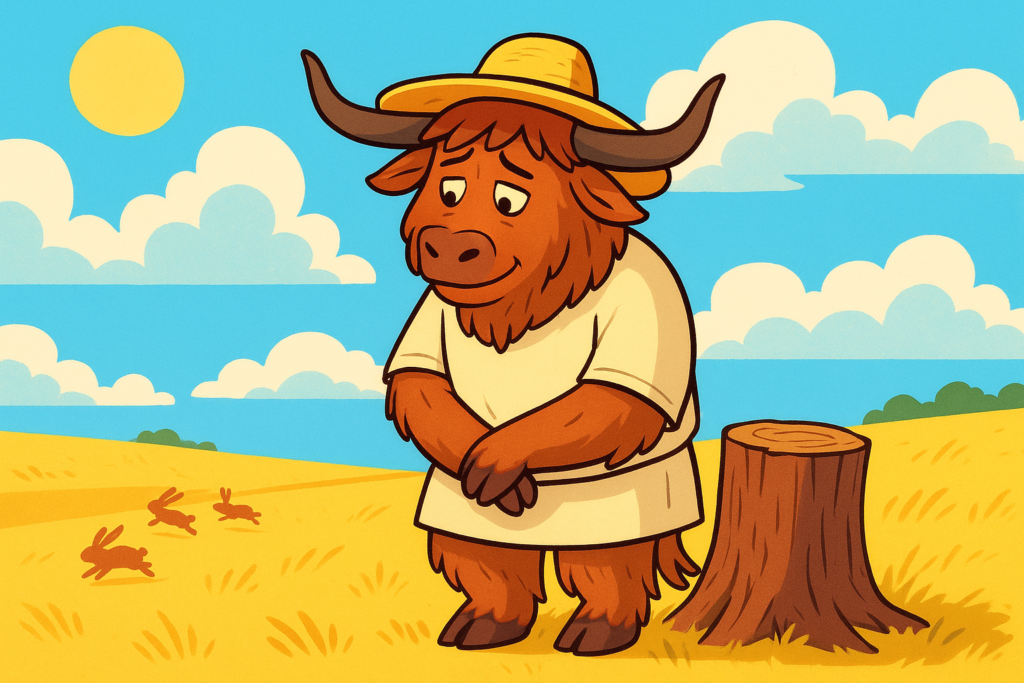
有一天,他看見一隻。兔子,一棵。
兔子。農夫!他說:「太好了!我想吃。」
第二天,農夫了。他坐在,說:「我想在這裡。」
他,。但是沒有兔子跑來。
農夫。他沒有食物了。他地說:「我不應該只等兔子。」
Once upon a time, there was a farmer. He worked in the fields every day.
One day, he saw a rabbit. The rabbit ran very fast and crashed into a big tree.
The rabbit died. The farmer was very happy! He said, 'Great! I want to eat rabbit meat.'
The next day, the farmer didn't want to work. He sat under the tree and said, 'I want to wait for rabbits here.'
He waited for one day, then two days. But no rabbits came running.
The farmer waited for a long time. He had no food left. He regretfully said, 'I shouldn't have just waited for rabbits.'
This story introduces a few simple and useful Chinese words. They will help you talk about people, animals, and everyday actions.
Here are the key words from the fable. Notice how they appear in the story.
- 農夫 (nóng fū) - farmer
- 兔子 (tù zi) - rabbit
- 等 (děng) - to wait
- 工作 (gōng zuò) - to work
At the end of the story, the farmer says, '我不應該只等兔子。' This sentence shows two important words: 應該 (yīng gāi) meaning 'should', and 只 (zhǐ) meaning 'only'.
The pattern is: Subject + 不應該 + 只 + Verb. It expresses 'should not only do something'.
- 我不應該只睡覺。 (I shouldn't only sleep.)
- 他不應該只玩遊戲。 (He shouldn't only play games.)
- 我們不應該只等運氣。 (We shouldn't only wait for luck.)
You've learned some new words and a useful grammar pattern. Try making your own sentence with 只 and 應該.
Remember, just like the farmer learned, hard work is better than waiting. But learning a language is all about practice - a little every day!
守株待兔 comes from the Chinese / idiom story tradition and is best known as a idiom/fable. This Yak Yacker article is an original learner retelling based on Ancient Chinese idiom story; public domain, so the wording here is simplified for modern learners rather than copied from one old edition.
Older printings, translations, and retellings of this story can vary quite a bit. The original audience was usually kids/general, but this version is adapted for A1 Beginner learners studying Traditional Chinese. Easy farming/animal vocabulary.
If you want to look into the source tradition, start with Wikisource.
If you want to keep going, browse more in our Traditional Chinese section. After that, try Essential Traditional Chinese Grammar Words for another useful next step.