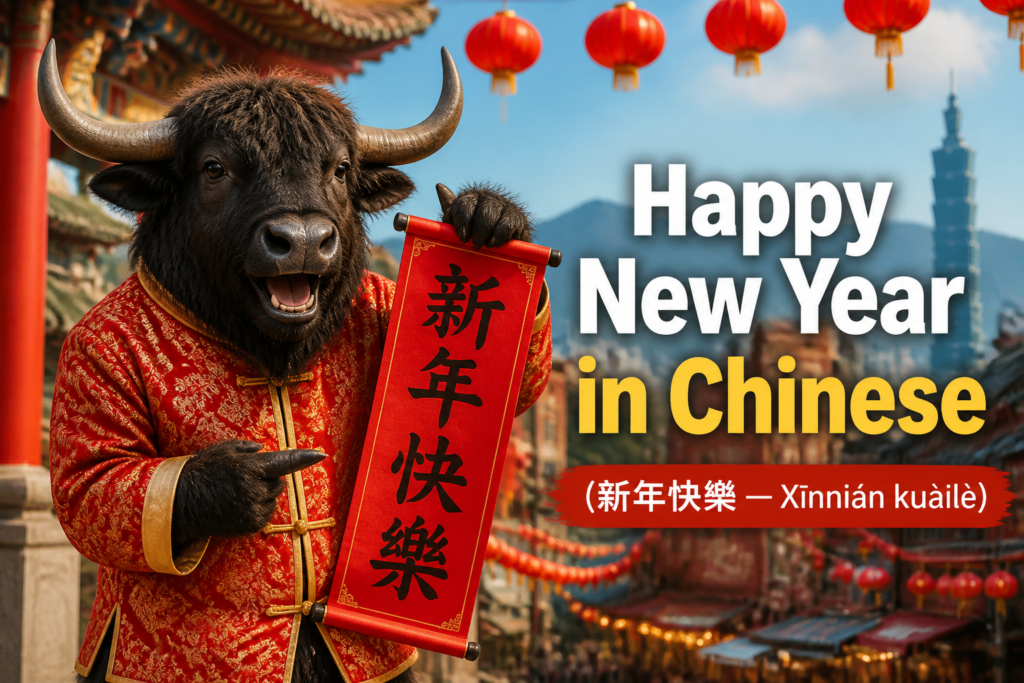
新年快樂(Xīnnián kuàilè)is the classic way to say “Happy New Year” in Traditional Chinese. Simple, useful, and hard to mess up — which is nice, because holiday greetings should not require a rescue mission.
For the broader learning path, visit our parent guide.
If you are learning Chinese, this little phrase is one of the easiest ways to sound warm and natural around the New Year season. It works in Taiwan, in messages, in person, and in that slightly chaotic moment when everyone is holding fruit, snacks, and maybe one too many red envelopes.
In Taiwan, people often also say 新年好(Xīnnián hǎo)or more specifically 恭喜發財(Gōngxǐ fācái)during Lunar New Year. So yes, one phrase is the start, but the festive vocabulary train keeps going. No surprise there: language loves a party.
For a quick reference on Chinese New Year vocabulary, you can also check the related guides on Lunar New Year vocabulary in Traditional Chinese and New Year’s vocabulary in Traditional Chinese.
What 新年快樂 Means
| Traditional Chinese | Pinyin | English Meaning |
|---|---|---|
| 新年快樂 | Xīnnián kuàilè | Happy New Year |
| 新年 | Xīnnián | new year |
| 快樂 | kuàilè | happy; joyful |
Literally, 新年快樂 means “new year happy.” Chinese often likes to put the feeling after the thing, which is very efficient and a little smug about it.
新年快樂 is polite, friendly, and safe for almost any New Year situation. You can text it, say it in person, write it in a card, or use it in a social post. If you want an authority-style reference for the term “Chinese New Year” and related calendar context, a boring-but-reliable place to start is Wikipedia’s overview of Chinese New Year or the Taiwan Ministry of Education resources for language and usage.
How To Say It Naturally
| Phrase | Pinyin | Meaning | Example (ZH) | Example (Pinyin) | Translation (EN) |
|---|---|---|---|---|---|
| 新年快樂 | Xīnnián kuàilè | Happy New Year | 新年快樂! | Xīnnián kuàilè! | Happy New Year! |
| 新年好 | Xīnnián hǎo | Happy New Year; New Year greetings | 老師,新年好! | Lǎoshī, xīnnián hǎo! | Teacher, Happy New Year! |
| 過年快樂 | Guònián kuàilè | Happy Lunar New Year | 過年快樂,大家辛苦了! | Guònián kuàilè, dàjiā xīnkǔ le! | Happy Lunar New Year, everyone worked hard! |
| 恭喜發財 | Gōngxǐ fācái | Wishing you wealth and success | 恭喜發財,紅包拿來! | Gōngxǐ fācái, hóngbāo ná lái! | Wishing you wealth and success, now hand over the red envelope! |
| 萬事如意 | Wànshì rúyì | May everything go as you wish | 祝你萬事如意。 | Zhù nǐ wànshì rúyì. | Wishing you that everything goes well. |
| 心想事成 | Xīnxiǎng shìchéng | May all your wishes come true | 新的一年心想事成。 | Xīn de yì nián xīnxiǎng shìchéng. | May all your wishes come true in the new year. |
In everyday Taiwan usage, 新年快樂 and 新年好 are both common. 新年快樂 sounds a bit more like “Happy New Year” in English. 新年好 feels shorter and very direct, like a cheerful wave with words attached.
Useful New Year Phrases You Will Actually Hear
| Traditional Chinese | Pinyin | Meaning | Example (ZH) | Example (Pinyin) | Translation (EN) |
|---|---|---|---|---|---|
| 祝你新年快樂 | Zhù nǐ xīnnián kuàilè | I wish you a Happy New Year | 祝你新年快樂,身體健康。 | Zhù nǐ xīnnián kuàilè, shēntǐ jiànkāng. | I wish you a Happy New Year and good health. |
| 新年快樂! | Xīnnián kuàilè! | Happy New Year! | 新年快樂,明年見! | Xīnnián kuàilè, míngnián jiàn! | Happy New Year, see you next year! |
| 新年好! | Xīnnián hǎo! | Happy New Year! | 阿姨,新年好! | Āyí, xīnnián hǎo! | Auntie, Happy New Year! |
| 過年好! | Guònián hǎo! | Happy Lunar New Year! | 過年好,最近忙嗎? | Guònián hǎo, zuìjìn máng ma? | Happy Lunar New Year, have you been busy lately? |
| 恭喜你 | Gōngxǐ nǐ | Congratulations to you | 恭喜你找到新工作。 | Gōngxǐ nǐ zhǎodào xīn gōngzuò. | Congratulations on getting a new job. |
| 恭喜發財 | Gōngxǐ fācái | Wishing you wealth and success | 過年大家都會說恭喜發財。 | Guònián dàjiā dōu huì shuō gōngxǐ fācái. | During New Year, everyone says “Gōngxǐ fācái.” |
| 紅包 | Hóngbāo | red envelope | 小朋友最期待紅包。 | Xiǎopéngyǒu zuì qīdài hóngbāo. | Kids look forward to red envelopes the most. |
| 拜年 | Bàinián | to pay New Year visits; to give New Year greetings | 我們明天去外婆家拜年。 | Wǒmen míngtiān qù wàipó jiā bàinián. | We are going to Grandma’s house tomorrow to give New Year greetings. |
| 團圓 | Tuányuán | reunion; to reunite | 過年最重要的是團圓。 | Guònián zuì zhòngyào de shì tuányuán. | The most important thing about New Year is reunion. |
| 除夕 | Chúxī | New Year’s Eve | 除夕我們全家一起吃飯。 | Chúxī wǒmen quánjiā yìqǐ chīfàn. | On New Year’s Eve, our whole family eats together. |
| 春節 | Chūnjié | Spring Festival; Lunar New Year | 春節期間很多店都會休息。 | Chūnjié qíjiān hěn duō diàn dōu huì xiūxí. | Many shops close during the Spring Festival period. |
One small note: 拜年 is not just “to bow for New Year.” It means visiting people, greeting them, and doing the whole polite holiday round. Slightly old-school sounding, still very alive.
Greeting Patterns You Can Reuse
| Pattern | Meaning | Example (ZH) | Pinyin | English |
|---|---|---|---|---|
| 祝你 + 願望 | Wish you + wish | 祝你新年快樂。 | Zhù nǐ xīnnián kuàilè. | I wish you a Happy New Year. |
| 新年 + 形容詞 | New Year + adjective | 新年快樂! | Xīnnián kuàilè! | Happy New Year! |
| 祝你 + 身體健康 | Wishing you good health | 祝你新年快樂,身體健康。 | Zhù nǐ xīnnián kuàilè, shēntǐ jiànkāng. | Wishing you a Happy New Year and good health. |
| 願你 + 願望 | May you + wish | 願你心想事成。 | Yuàn nǐ xīnxiǎng shìchéng. | May all your wishes come true. |
| 祝 + 人 + 順利 | Wish someone smooth success | 祝你工作順利。 | Zhù nǐ gōngzuò shùnlì. | Wishing you smooth work and success. |
| 新的一年 + 願望 | In the new year + wish | 新的一年萬事如意。 | Xīn de yì nián wànshì rúyì. | May everything go well in the new year. |
If you are unsure what to say, 祝你新年快樂 is the safest all-purpose option. It is friendly, natural, and not trying too hard. Holiday greetings should not sound like a corporate email in costume.
Real-Life Examples
| Traditional Chinese | Pinyin | English Translation |
|---|---|---|
| 新年快樂!祝你平安健康。 | Xīnnián kuàilè! Zhù nǐ píng’ān jiànkāng. | Happy New Year! Wishing you peace and good health. |
| 老師,新年快樂,謝謝你這一年的照顧。 | Lǎoshī, xīnnián kuàilè, xièxie nǐ zhè yì nián de zhàogù. | Teacher, Happy New Year, and thank you for taking care of us this year. |
| 新年好!希望你明年更順利。 | Xīnnián hǎo! Xīwàng nǐ míngnián gèng shùnlì. | Happy New Year! I hope next year goes even better for you. |
| 過年快樂,回家路上小心。 | Guònián kuàilè, huíjiā lùshàng xiǎoxīn. | Happy Lunar New Year, and be careful on the way home. |
| 恭喜發財!紅包拿來! | Gōngxǐ fācái! Hóngbāo ná lái! | Wishing you wealth and success! Now hand over the red envelope! |
The last example is a joke, of course. Usually. In a family setting, people may say it playfully, especially children. If an adult says it, they are probably being cheeky on purpose.
Yak wisdom: In Chinese, the right New Year greeting is not about being fancy. It is about sounding warm, normal, and not accidentally like a greeting card written by a robot with great intentions.
Tone And Pronunciation Notes
| Item | Note | Example |
|---|---|---|
| 新年 | 新 is first tone, 年 is second tone. | Xīnnián |
| 快樂 | 快 is fourth tone, 樂 is fourth tone in this phrase. | kuàilè |
| 你好 | The third tone on 你 often changes in speech to a rising sound before another third tone. | Nǐ hǎo → spoken smoothly |
| 一 | The tone of 一 changes depending on the next tone. This matters in real speech, because Mandarin enjoys tiny traps. | 一個 yí gè; 一年 yì nián |
If you want a grammar refresher on how tones and common phrases work in real sentences, the Traditional Chinese vocabulary test and Traditional Chinese placement test for TOCFL can be useful practice tools.
Common Taiwan Usage
| Expression | Pinyin | When To Use It | Notes |
|---|---|---|---|
| 新年快樂 | Xīnnián kuàilè | General New Year greeting | Safe in most situations. |
| 新年好 | Xīnnián hǎo | Shorter, friendly greeting | Very natural and common. |
| 過年快樂 | Guònián kuàilè | For Lunar New Year season | Especially useful in Taiwan because people often say “過年” for the holiday period. |
| 恭喜發財 | Gōngxǐ fācái | Festive Lunar New Year greeting | Very common, often paired with red-envelope jokes. |
| 拜年 | Bàinián | Visiting people for New Year greetings | Traditional holiday behavior, still used a lot. |
In Taiwan, 過年 usually points to the Lunar New Year holiday, family visits, meals, travel, and the glorious moment when everyone suddenly becomes very interested in your life choices. So yes, context matters.
Quick Practice
- Say “Happy New Year” in Chinese: 新年快樂(Xīnnián kuàilè)
- Say “I wish you a Happy New Year”: 祝你新年快樂(Zhù nǐ xīnnián kuàilè)
- Say “Happy Lunar New Year”: 過年快樂(Guònián kuàilè)
- Say “May all your wishes come true”: 心想事成(Xīnxiǎng shìchéng)
- Say “Wishing you wealth and success”: 恭喜發財(Gōngxǐ fācái)
Try switching the subject in 祝你新年快樂. For example:
- 祝你新年快樂。 — Zhù nǐ xīnnián kuàilè. — I wish you a Happy New Year.
- 祝大家新年快樂。 — Zhù dàjiā xīnnián kuàilè. — I wish everyone a Happy New Year.
- 祝老師新年快樂。 — Zhù lǎoshī xīnnián kuàilè. — I wish the teacher a Happy New Year.
- 祝你們新年快樂。 — Zhù nǐmen xīnnián kuàilè. — I wish you all a Happy New Year.
Common Mistakes And Easy Fixes
| Mistake | Why It Happens | Better Version |
|---|---|---|
| 新年快乐 | Simplified Chinese sneaks in by habit. | 新年快樂(Traditional Chinese) |
| 新年快樂嗎? | Trying to turn a greeting into a question. | 新年快樂! |
| 快樂新年 | Word order from English. | 新年快樂 |
| 我祝你新年快樂 | Not wrong, but a bit heavy for casual use. | 祝你新年快樂 |
| Happy Chinese New Year translated too literally | English-first thinking. | 過年快樂 or 新年快樂 depending on context |
A tiny warning: 新年快樂 is fine for general “New Year.” But if you clearly mean the Lunar New Year holiday in Taiwan, 過年快樂 can sound more natural in conversation. Language likes context more than it likes translation charts.
Related Words Worth Learning
| Traditional Chinese | Pinyin | Meaning | Example (ZH) | Example (Pinyin) | Translation (EN) |
|---|---|---|---|---|---|
| 春節 | Chūnjié | Spring Festival; Lunar New Year | 春節是台灣很重要的節日。 | Chūnjié shì Táiwān hěn zhòngyào de jiérì. | Lunar New Year is a very important holiday in Taiwan. |
| 除夕 | Chúxī | New Year’s Eve | 除夕晚上要吃團圓飯。 | Chúxī wǎnshàng yào chī tuányuán fàn. | On New Year’s Eve, people eat a reunion dinner. |
| 年夜飯 | Niányèfàn | New Year’s Eve dinner | 我們家每年都吃年夜飯。 | Wǒmen jiā měinián dōu chī niányèfàn. | Our family eats New Year’s Eve dinner every year. |
| 紅包 | Hóngbāo | red envelope | 小孩收到紅包會很開心。 | Xiǎohái shōudào hóngbāo huì hěn kāixīn. | Kids are very happy when they receive red envelopes. |
| 團圓 | Tuányuán | reunion | 過年重點就是團圓。 | Guònián zhòngdiǎn jiù shì tuányuán. | The main point of New Year is reunion. |
| 拜年 | Bàinián | New Year visits | 初一我們去親戚家拜年。 | Chūyī wǒmen qù qīnqī jiā bàinián. | On the first day of the lunar year, we visit relatives for New Year greetings. |
If you want to keep building your holiday vocabulary, the next useful stop is the phrase guide for Happy Birthday in Traditional Chinese. Different occasion, same useful habit: saying nice things without sounding like a textbook in a trench coat.
Quick Reference Summary
- 新年快樂(Xīnnián kuàilè)= Happy New Year
- 新年好(Xīnnián hǎo)= Happy New Year; short and friendly
- 過年快樂(Guònián kuàilè)= Happy Lunar New Year
- 祝你新年快樂(Zhù nǐ xīnnián kuàilè)= I wish you a Happy New Year
- 恭喜發財(Gōngxǐ fācái)= Wishing you wealth and success
- 心想事成(Xīnxiǎng shìchéng)= May all your wishes come true
- 萬事如意(Wànshì rúyì)= May everything go as you wish
Yak takeaway: if you only learn one phrase, make it 新年快樂(Xīnnián kuàilè). If you learn two, add 恭喜發財(Gōngxǐ fācái). If you learn three, you are already sounding way more prepared than the average holiday-text human.