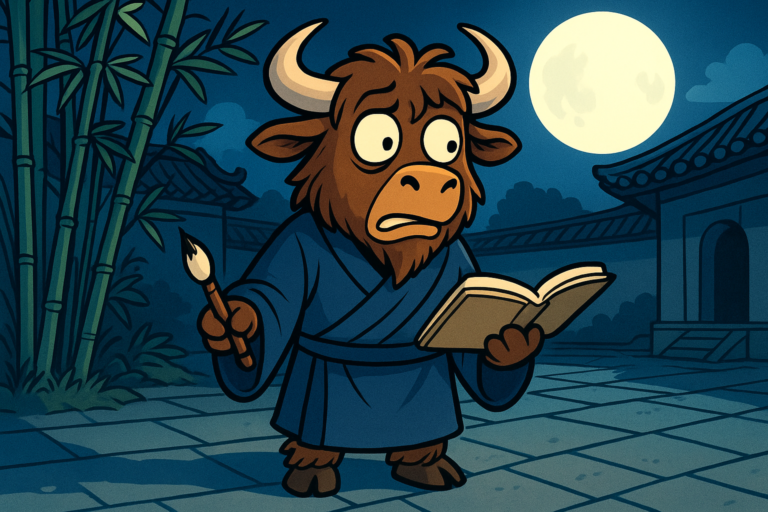
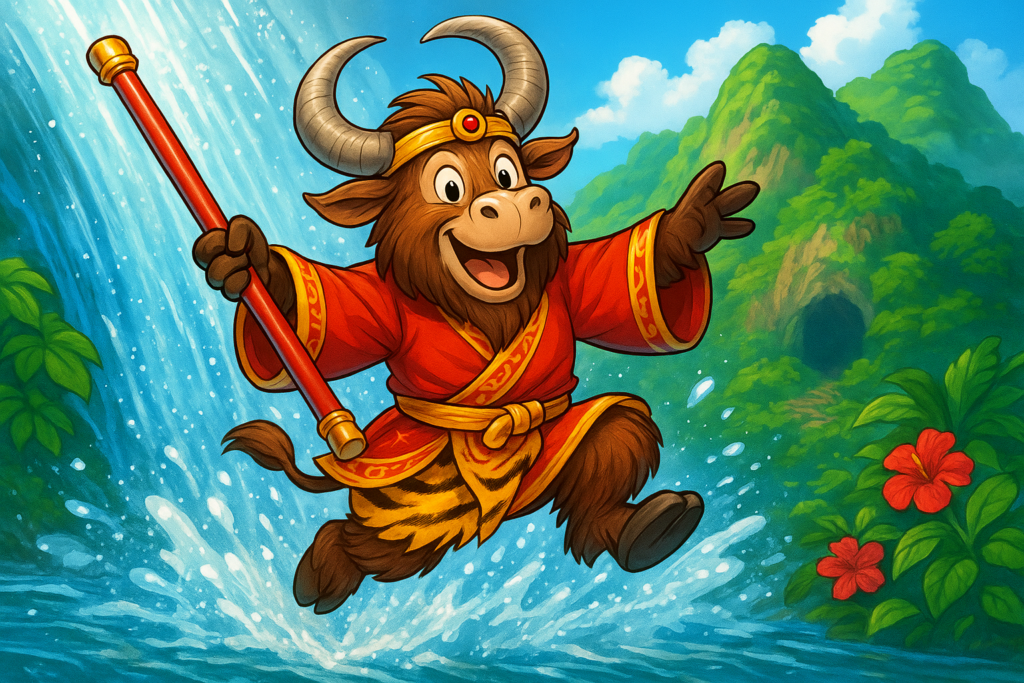
This A2 Elementary retelling of 猴王誕生 keeps the plot clear for learners while still giving the story some atmosphere and momentum.
This version teaches Traditional Chinese through English and includes clickable word help inside the story, full story audio, and lesson notes after the reading. It is free to use on Yak Yacker and is designed to feel natural, readable, and manageable for learners.
很久很久以前,在東方的大海上,有一座神奇的。山上有一塊很大的。
有一天,!從裏面跳出一隻小猴子。他會,也會。
小猴子看著天空,說:「哇!真大啊!我是從出來的!」
他很快遇到了其他的猴子。猴子們很,說:「你是誰?從哪裏來的?」
他們一起玩得很開心。有一天,猴子們了一個大。水從很高的地方。
一隻老猴子說:「誰敢瀑布,又能回來,誰就是我們的王!」
小猴子大聲說:「我來!」他,跳了進去。
瀑布後面有一個大洞,裏面很,有石頭做的。小猴子很開心。
他跳回來,告訴大家:「裏面是一個!我們可以那裏!」猴子們都很高興,讓小猴子當了王。從此,他就是。
Long, long ago, in the eastern sea, there was a magical Flower-Fruit Mountain. On the mountain, there was a huge rock.
One day, the rock suddenly cracked open! A little monkey jumped out. He could walk and talk.
The little monkey looked at the sky, laughed, and said, "Wow! The world is so big! I came from a rock!"
He soon met other monkeys. They were surprised and said, "Who are you? Where did you come from?"
They played happily together. One day, the monkeys discovered a huge waterfall. Water flowed down from very high.
An old monkey said, "Whoever dares to jump into the waterfall and come back safely will be our king!"
The little monkey shouted, "I'll do it!" He closed his eyes and bravely jumped in.
Behind the waterfall was a large cave, beautiful inside, with furniture made of stone. The little monkey was very happy.
He jumped back and told everyone, "Inside is a wonderful place! We can live there!" The monkeys were all happy and made the little monkey their king. From then on, he was the Handsome Monkey King.
Here are some important words from the Monkey King's big debut. Try reading them out loud!
Each word comes with pinyin and a simple meaning.
- 石頭 (shí tou) - stone
- 猴子 (hóu zi) - monkey
- 瀑布 (pù bù) - waterfall
- 王 (wáng) - king
- 勇敢 (yǒng gǎn) - brave
The story used a nice pattern to make a challenge: "誰敢跳進瀑布,又能安全回來,誰就是我們的王!"
This 誰 A 誰就 B structure means "whoever does A will become/do B". It's a dramatic and fun way to set a condition in Chinese.
- 誰最快吃完,誰就可以先玩遊戲。 - Whoever finishes eating first can play the game first.
- 誰先笑,誰就輸了! - Whoever laughs first loses!
- Try making your own sentence with your classmates or learning partner!
小猴子說:「我是從石頭裏出來的!」 The word 從 (cóng) means "from" and often appears with 出來 (come out), 來 (come), or 去 (go) to show movement from a place.
You'll see it a lot when talking about where someone or something came from.
- 他從美國來。 - He comes from America.
- 鳥從樹上飛下來。 - The bird flew down from the tree.
- Notice how 從 is followed by the place, and then an action verb like 來, 去, 出來.
Great job! You've met the Monkey King and picked up some handy Chinese along the way.
Next time you read the story, try spotting the new words and patterns. Why not retell the story in your own words? Even a simple version will boost your confidence.
猴王誕生 comes from the Chinese / Journey to the West tradition and is best known as a classic novel episode. This Yak Yacker article is an original learner retelling based on Journey to the West, 16th century; public domain, so the wording here is simplified for modern learners rather than copied from one old edition.
Older printings, translations, and retellings of this story can vary quite a bit. The original audience was usually kids/general, but this version is adapted for A2 Elementary learners studying Traditional Chinese. Use original novel/folk tradition, not modern animation details.
If you want to look into the source tradition, start with Project Gutenberg.
If you want to keep going, browse more in our Traditional Chinese section. After that, try Essential Traditional Chinese Grammar Words for another useful next step.
More Traditional Chinese to explore
The Legend of the White Snake: B1 Intermediate Traditional Chinese Story with Audio
Nian and the New Year Monster: A1 Beginner Traditional Chinese Story with Audio
Waiting by a Tree Stump for Rabbits: An A1 Chinese Story with Audio