Step into a snowy Japanese winter with 'The Snow Woman,' a classic folk tale reimagined for A2 elementary learners. Also known as Yuki-onna, this eerie story blends beauty and terror against a backdrop of silent, snow-covered mountains.
Follow Minokichi, a young woodcutter, who encounters a mysterious pale woman during a deadly blizzard. She spares his life on one chilling condition: he must never speak of their meeting. Years later, a fateful confession brings the icy secret back to his doorstep, weaving a haunting tale of promises, love, and loss.
This free interactive graded reader lets you enjoy the story in simple Japanese at just the right level. Tap any word for instant translations and explanations, listen to clear story audio, and check the included lesson notes for extra guidance on vocabulary and grammar. It's a complete, self-contained reading experience designed to build your Japanese skills naturally.
昔々、ある冬の夜、みなという若い男がを歩いていました。、雪が降っていました。、とても寒かったです。
みなは小さな小屋を見つけて、中に入りました。彼はが、すぐに。
夜中に、みなは突然。戸が開いて、雪と風が中に入ってきました。そして、を着た美しい女の人が立っていました。彼女の肌は、息は。
「あなたは誰ですか?」みなは尋ねました。女の人は言いました、「私は雪女です。」彼女はみなに。みなはとても怖くて。
雪女は言いました、「あなたは若くて強いですね。でも、今日は。しかし、。今晩のことを誰にも話さないと約束してください。もし話したら、私はあなたを。」みなは、「はい、約束します。」と言いました。雪女は。
次の日、みなは家に帰りました。そして、雪女のことは誰にも話しませんでした。数年後、みなは女性と結婚しました。彼女の名前はゆき子でした。彼女はとても、。二人は、子供も生まれました。
ある夜、みなはゆき子のを見ていました。すると、突然、雪女のことを。彼はゆき子に話したくなりました。「ゆき子、昔々、私は雪女に会いました。あの夜、で…」彼はすべてを話しました。
すると、ゆき子の目が開きました。彼女は立ち上がり、で言いました。「あなたはね。私はあの時の雪女です。しかし、私たちには。だから、あなたの命は。でも、もう二度と約束を破ってはいけません。」そう言って、彼女は。
みなは子供たちを。そして、彼らをことを誓いました。外では雪が降り続けていました。
Once upon a time, on a winter night, a young man named Mina was walking along a mountain path. The sky was dark and snow was falling heavily. The wind was blowing strongly, and it was very cold.
Mina found a small hut and went inside. He tried to warm himself, but he was tired and soon fell asleep.
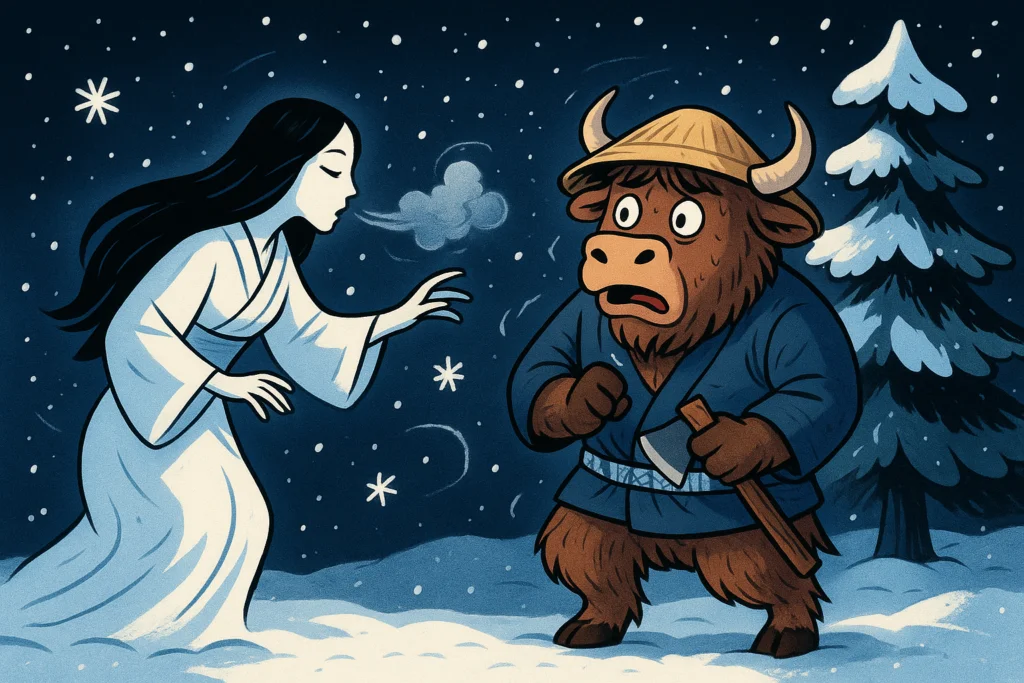
In the middle of the night, Mina suddenly woke up. The door opened, and cold snow and wind came in. And there stood a beautiful woman in a white kimono. Her skin was as white as snow, and her breath was cold.
"Who are you?" Mina asked, frightened. The woman said quietly, "I am the Snow Woman." She approached Mina. Mina was so scared he couldn't move.
The Snow Woman said, "You are young and strong. But I will spare you today. However, you must promise. Promise not to tell anyone about tonight. If you tell, I will kill you." Mina shivered and said, "Yes, I promise." The Snow Woman disappeared with the wind.
The next day, Mina returned home. And he told no one about the Snow Woman. A few years later, Mina married a beautiful woman. Her name was Yukiko. She was very kind and good at cooking. They lived happily, and children were born to them.
One night, Mina was watching Yukiko's sleeping face. Then, suddenly, he remembered the Snow Woman. He wanted to tell Yukiko. "Yukiko, long ago, I met the Snow Woman. That night in the mountain hut..." He told everything.
Then, Yukiko's eyes opened. She stood up and said in a cold voice, "You broke your promise. I am the Snow Woman from that time. However, we have children. So I will spare your life. But you must never break a promise again." Saying that, she disappeared into the snow.
Mina, with a sad feeling, held the children tightly. And he vowed to raise them with care. Outside, the snow continued to fall quietly.
This story is full of wintry imagery. Let's collect the key weather words and see how they're used in real sentences. In Japanese, describing weather often follows the pattern [noun] が [adverb] [verb].
You'll notice many of these words appear with past-tense verbs, since the tale is told in the past. Try reading them aloud to feel the chilly atmosphere!
- 雪 (yuki) - snow: 雪が激しく降っていました。(The snow was falling heavily.)
- 風 (kaze) - wind: 風が強く吹いて、とても寒かったです。(The wind blew strongly, and it was very cold.)
- 寒い (samui) - cold (weather): とても寒かったです。(It was very cold.)
- 冷たい (tsumetai) - cold to the touch: 息は冷たかったです。(Her breath was cold.)
Much of the story uses the polite past form ~ました and the past continuous ~ていました. These are essential for recounting events that happened or were happening.
For actions that were ongoing in the past (like walking, snow falling), we use 〜ていました. For completed actions (like entering, waking up), we use 〜ました. The story mixes both to create a flowing narrative.
- 歩いていました (was walking): みなという若い男が山道を歩いていました。
- 眠ってしまいました (fell asleep): 疲れていてすぐに眠ってしまいました。
- 消えました (disappeared): 雪女は風と一緒に消えました。
- 話しませんでした (did not speak): 雪女のことは誰にも話しませんでした。
Traditional Japanese tales have a distinct style: the opening 昔々 (mukashi mukashi, "long, long ago") sets a timeless mood. Characters speak politely but with urgency, using commands like 約束してください (Please promise) and conditional warnings like もし話したら… (If you tell…).
Pay attention to the way the Snow Woman's words shift from quiet menace to bittersweet mercy. Descriptions often use elegant, simple adverbs like 静かに (quietly) and 冷たく (coldly) to create atmosphere.
- 昔々 (mukashi mukashi) - "once upon a time" (folklore marker)
- 〜てください - polite request: 約束してください。(Please promise.)
- もし〜たら - "if" condition: もし話したら、私はあなたを殺します。(If you tell, I will kill you.)
Now that you've seen the Snow Woman's story, why not create your own? Use the past-tense patterns and weather words to describe a mysterious encounter. You could change the ending: what if Minato kept his promise?
Start with 昔々 and weave in some cold-weather language. Even one paragraph is a great way to make the grammar stick. The key is to enjoy telling the tale-just like a real yokai around a snowy fire.
The Snow Woman comes from the Japanese / Lafcadio Hearn tradition and is best known as a ghost story. This Yak Yacker article is an original learner retelling based on Lafcadio Hearn, Kwaidan, 1904; public domain, so the wording here is simplified for modern learners rather than copied from one old edition.
Older printings, translations, and retellings of this story can vary quite a bit. The original audience was usually general/older kids, but this version is adapted for A2 Elementary learners studying Japanese. Spooky but simple; good winter vocabulary.
If you want to look into the source tradition, start with Project Gutenberg.
If you want to keep going, browse more in our Japanese section and review the Geography Vocabulary in Japanese. After that, try Japanese Question Words for another useful next step.