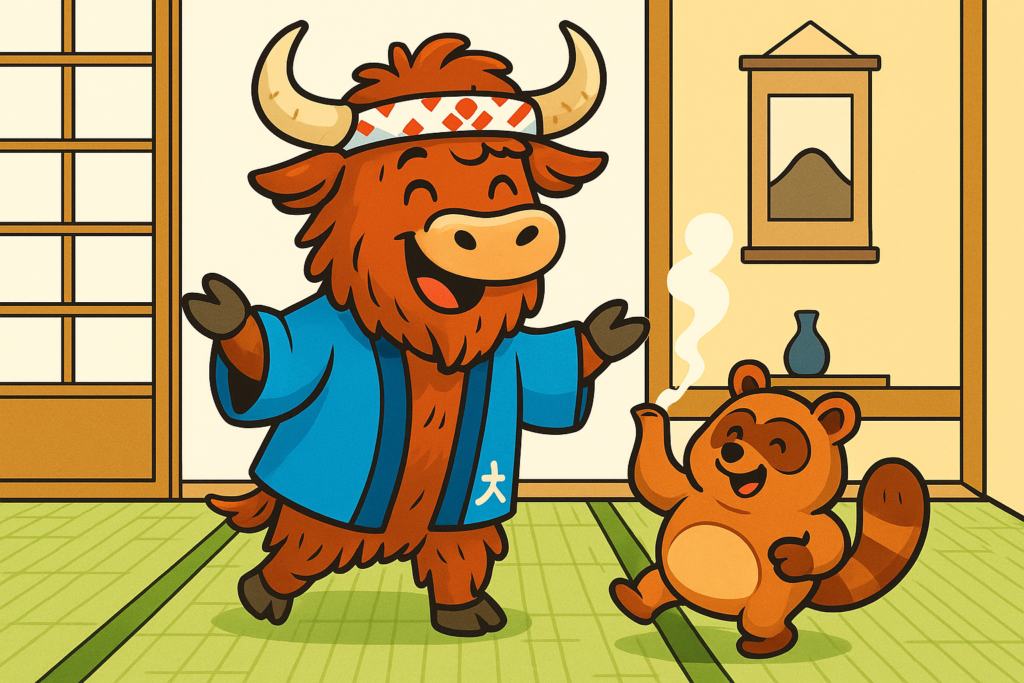
Discover the charming Japanese folk tale of The Magic Tea Kettle (Bunbuku Chagama), retold here for beginner Japanese learners. In this story, a kind old man rescues a tanuki, a shape-shifting raccoon dog, who repays him by turning into a magical tea kettle. The kettle can dance, pour tea, and bring joy and prosperity to the old man's life.
This interactive graded reader helps you read in Japanese with confidence. Every Japanese word is clickable for instant meaning and grammar notes. Listen to the story audio to improve your pronunciation and comprehension, and check out the lesson notes for extra guidance. It's all free and designed for a friendly, stress-free learning experience.
Dive into a classic tale while naturally picking up beginner-level vocabulary and grammar. Whether you're just starting your Japanese journey or reviewing the basics, this story offers a delightful way to practice.
むかしむかし、おじいさんが いました。
おじいさんは が でした。
ある日、おじいさんは ちゃがまを 。
「いい だ。おちゃを 。」
おじいさんは ちゃがまを 。そして、火の上に 。
すると、ちゃがまから が 。なんと、だったのです!
たぬきは を 」と 、。おじいさんは 。
Once upon a time, there was a kind old man.
The old man loved tea very much.
One day, the old man found an old tea kettle.
"This is a nice tea kettle. Let's make some tea."
The old man washed the kettle and placed it over the fire.
Then, a tail popped out of the kettle. It turned out to be a tanuki!
The tanuki said, "I'll show you a fun dance," and danced. The old man enjoyed it very much.
Let's meet the warm words from the story. These will appear again and again in Japanese tales, so it's lovely to know them early!
Below are the key vocabulary items. Notice how many are things you can see or do - perfect for building your first simple sentences.
- おじいさん (ojiisan) - kind old man
- ちゃがま (chagama) - tea kettle
- たぬき (tanuki) - raccoon dog (a playful folklore creature)
- おちゃ (ocha) - tea
- おどり (odori) - dance
The story uses 〜ました (mashita) and 〜ます (masu) - these are polite present and past forms. They make your speech friendly and respectful.
Listen for them: 'みつけました' (found), 'いれましょう' (let's make), 'みせます' (I'll show). They're like putting a warm smile into your verbs!
- 〜ます (masu) - polite present/future: e.g., みせます (show)
- 〜ました (mashita) - polite past: e.g., たのしみました (enjoyed)
- 〜ましょう (mashou) - let's ~: e.g., いれましょう (let's make)
Japanese folklore often has a twist - here, the old kettle sprouts a tail! The tanuki is a beloved trickster, often friendly and fun.
You can use the style of the story yourself. Try starting your own little tale with 'むかしむかし' (long, long ago) and a polite ending like 'おわり' (the end).
- Say 'むかしむかし' to begin a fairy tale.
- Describe what your character does with polite 〜ました.
- End with a smile - just like the story does!
Now that you've met the polite forms and some story words, why not retell the tale in your own voice? Even a sentence or two will feel magical.
Keep an eye out for 〜ます and 〜ました as you explore more Japanese. They're everywhere, and you've already made friends with them!
- Re-read the story aloud and spot all the polite verbs.
- Try saying 'おちゃがすきです' (I like tea) - you just made your own polite sentence!
The Magic Tea Kettle comes from the Japanese / folk tale tradition and is best known as a folk tale. This Yak Yacker article is an original learner retelling based on Traditional Japanese folk tale; public-domain versions, so the wording here is simplified for modern learners rather than copied from one old edition.
Older printings, translations, and retellings of this story can vary quite a bit. The original audience was usually kids, but this version is adapted for A1 Beginner learners studying Japanese. Tanuki story; explain animal simply.
If you want to look into the source tradition, start with Project Gutenberg.
If you want to keep going, browse more in our Japanese section and review the Geography Vocabulary in Japanese. After that, try Essential Japanese Phrases for another useful next step.