This A2 Elementary retelling of Ali Baba and the Forty Thieves keeps the plot clear for learners while still giving the story some atmosphere and momentum. Ali Baba was a poor woodcutter. One day, he went to the forest to collect wood.
This version is written for English-speaking learners and includes clickable word help inside the story, full story audio, and lesson notes after the reading. It is free to use on Yak Yacker and is designed to feel natural, readable, and manageable in English.
Ali Baba was a woodcutter. One day, he went to the forest to wood. Suddenly, he saw forty men on horses. They were ! Ali Baba behind a tree.
The thieves near a big rock. Their leader said, '' A door in the rock . The thieves went inside the . Ali Baba watched carefully.
After the thieves left, Ali Baba went to the rock. He said, 'Open Sesame!' The door opened. Inside, there were of gold and . Ali Baba some gold, said 'Shut Sesame!' and the door closed. He home.
Ali Baba's brother Cassim was rich and . He saw the gold and asked Ali Baba many . Ali Baba told him about the cave. The next day, Cassim went to the rock with ten .
Cassim said, 'Open Sesame!' and the door opened. He bags with gold. But then he the magic words! He tried 'Open Barley!', 'Open Wheat!', but nothing worked. The door stayed .
The thieves came back and found Cassim inside. They were very . Cassim could not . He was never seen again. The thieves took back their gold and said, 'Someone else knows our !'
The thieves looked for the other person. Soon, they found Ali Baba's house. The leader to be an oil seller. He brought big jars that the other thieves. That night, they planned to .
But Ali Baba had a clever servant, Morgiana. She saw the thieves in the jars. She quickly water and it into each jar. The thieves jumped out, shouting and ran away! The leader ran away, too.
Ali Baba was ! He thanked Morgiana and gave her many gold coins. They the treasure with the poor people. From that day, Ali Baba lived a happy and life.
Ali Baba was a poor man who cut wood. One day in the forest, he saw forty men riding horses. They were thieves. He hid behind a tree.
The thieves stopped by a big rock. The leader said a magic word, and a door opened in the rock. The thieves went into a cave. Ali Baba watched.
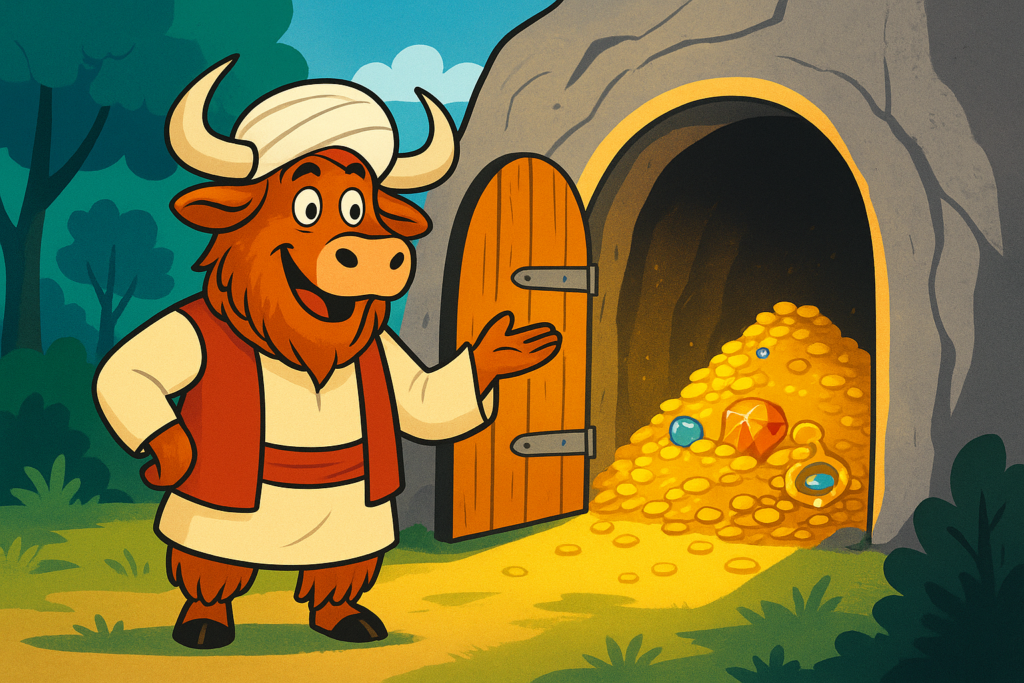
After the thieves left, Ali Baba used the magic word to open the rock door. Inside was a lot of gold and treasure. He took some gold, said the magic words to close the door, and went home quickly.
Ali Baba's brother Cassim was rich but greedy. He saw the gold and asked many questions. Ali Baba told him about the cave. The next day, Cassim went there with ten donkeys.
Cassim used the magic word to open the door. He filled bags with gold. But then he forgot the magic word to open the door again. He tried other words, but the door stayed shut.
The thieves returned and found Cassim inside. They were angry. Cassim could not get out. He was never seen again. The thieves took back their gold and worried someone else knew their secret.
The thieves searched for the other person. They found Ali Baba's house. The leader pretended to sell oil. He brought large jars hiding the other thieves. They planned to attack that night.
Ali Baba's servant Morgiana was smart. She saw the thieves in the jars. She heated water and poured it into the jars. The thieves jumped out, yelled, and ran away. The leader also ran.
Ali Baba was safe. He thanked Morgiana and gave her gold. They shared the treasure with the poor. Ali Baba lived happily ever after.
In the story, Ali Baba discovers a secret cave full of gold. The magic words 'Open Sesame!' and 'Shut Sesame!' help him control the cave door. Let's learn some useful words from the story that you can use in everyday English.
- "Open Sesame!" - a magic phrase to open something hidden.
- "Shut Sesame!" - the phrase to close it again.
- cave - a large natural hole inside a hill or mountain.
- treasure - valuable things like gold, silver, or jewels.
This story is full of past actions, so it uses the simple past tense. The simple past talks about things that happened and finished in the past.
Many past verbs are irregular. Common ones include: go → went, see → saw, say → said, find → found. Regular verbs usually add -ed, like watch → watched.
- "Ali Baba went to the forest." (go → went)
- "He saw forty men on horses." (see → saw)
- "The leader said, 'Open Sesame!'" (say → said)
- "Cassim tried many words." (try → tried)
In English, 'open' and 'shut' are common words for moving doors, windows, or lids. 'Shut' is a little more informal than 'close', but both are correct and used often.
You can also use them in fun ways, like when telling stories or playing games. The story gives us two famous commands!
- "Can you open the window, please?" (polite request)
- "Shut the door, it's cold outside." (everyday speech)
- "Open Sesame!" and "Shut Sesame!" are playful commands from the tale.
- Try using them when you're being playful or telling a story.
You now know how the past tense works in stories and you have some fun new words. Why not use them yourself?
Retelling a story or inventing your own is a great way to remember new language and have fun with it.
- Retell Ali Baba's adventure in your own words, using past tense verbs.
- Invent a new magic phrase and a secret door. What happens?
- Practice with a friend: "What did Ali Baba find?" "He found a cave full of treasure!"
Ali Baba and the Forty Thieves comes from the Arabic / Middle Eastern tradition tradition and is best known as a arabian nights tale. This Yak Yacker article is an original learner retelling based on Arabian Nights/public-domain translations, so the wording here is simplified for modern learners rather than copied from one old edition.
Older printings, translations, and retellings of this story can vary quite a bit. The original audience was usually kids/general, but this version is adapted for A2 Elementary learners studying English. Crime/violence; soften if for kids.
If you want to look into the source tradition, start with Project Gutenberg.
If you want to keep going, browse more in our English section and review the A2 English Vocabulary List. After that, try 1,200 English Phrases and Expressions for another useful next step.