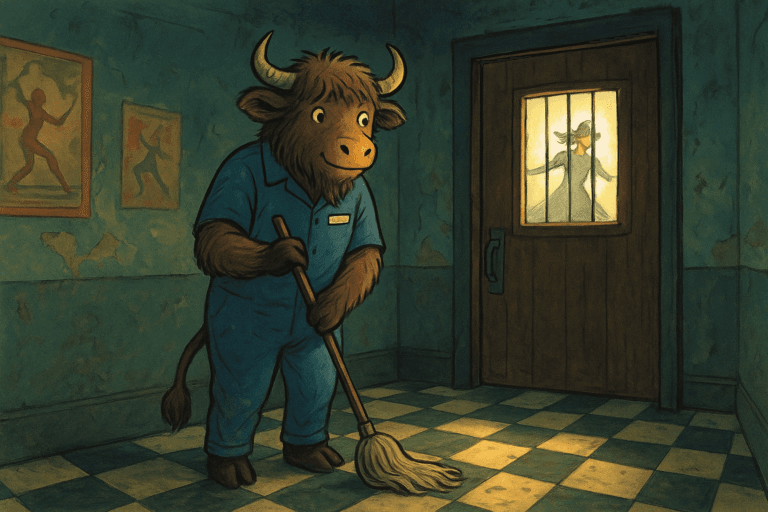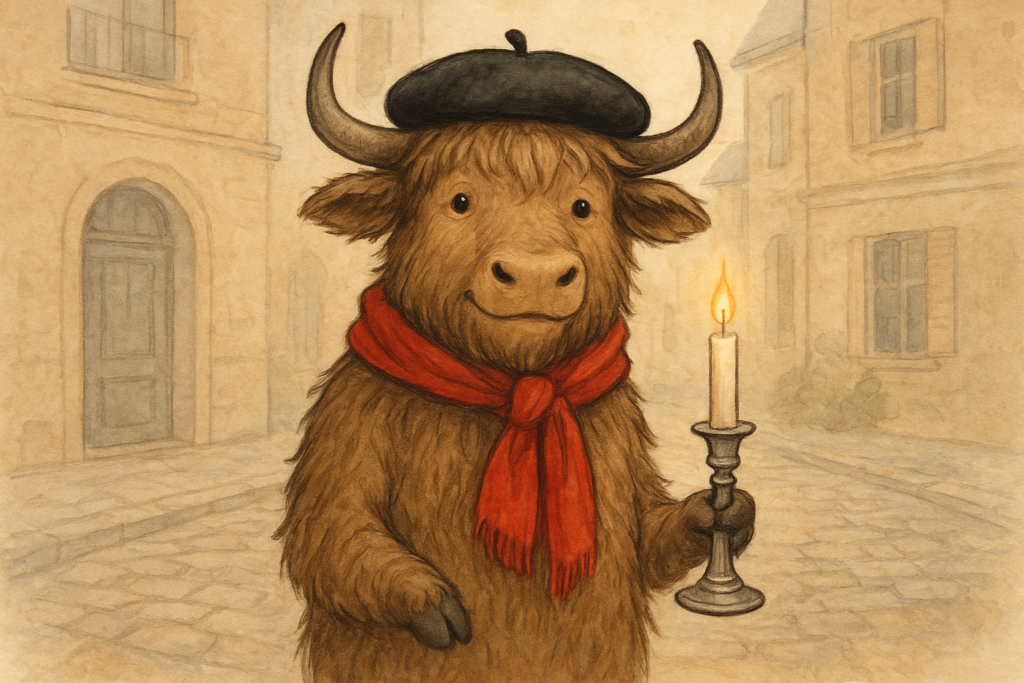
Read this story on Yak Yacker with clickable word help, full story audio, and lesson notes below the text.
This version is written for English-speaking learners who want a friendly reading experience in English.
Jean Valjean walked slowly along the road. He had just left prison after . He was , , and alone. No one wanted to help him. He . "Go away!" a man shouted. "We don't want a criminal here."
Finally, he came to a small house, the bishop's house. An old woman . "Come in," she said kindly. "The bishop ." Valjean sat at the table. The bishop gave him . "Eat," he said. "You must be very hungry." Valjean asked, "Why are you so kind to me?" The bishop replied, "Because everyone ."
That night, Valjean could not sleep. He saw the silver plates on the shelf. He thought about his . He took the plates and .
In the morning, the police Valjean. They brought him back to the bishop's house. "We found this man with your silver plates," they said. The bishop looked at Valjean. Valjean looked down.
"Oh, my friend!" the bishop said with a . "You forgot the silver . I gave you those too." Valjean was . The bishop said to the police, "He is not a thief. I gave him the silver."
After the police left, the bishop told Valjean, "Take this silver. Use it to become a good man. I have . Now you belong to God, not to evil." Valjean took the silver and left, full of .
Years later, Valjean became a mayor. He was good and helped everyone. But Inspector Javert . Javert remembered a strong prisoner from years ago. He thought Valjean might be that man.
One day, a woman named Fantine Valjean's factory. She had a daughter, Cosette, who lived with the Thénardiers. The other workers laughed at Fantine. They asked the boss to send her away. So Fantine lost her job.
Fantine needed money. She , then her teeth. She became very ill. One night, she shouted at a man. Javert her. Valjean saw this and said, "Let her go! She is sick." Javert had to obey. Valjean took Fantine to the hospital. He promised to bring her daughter to her.
Then Javert discovered the truth. He told Valjean, "I know who you are. You are Jean Valjean. I will send you back to prison." Valjean . He went to find Cosette.
Valjean went to the Thénardiers' . It was . Cosette sat outside in the cold. She looked very sad. Valjean asked, "Where is your mother?" She said, "I don't know. I only know the Thénardiers." Valjean gave them money and took Cosette. She held his hand. "Are you my new father?" she asked. "I will take care of you," he said.
They went to Paris and lived quietly. Cosette grew up happy. Valjean loved her like a daughter. But he always worried about .
One day, a young man named Marius saw Cosette in the park. He . They met secretly. But trouble came. There was a . Young men built . Marius fought with them. Javert was caught and tied up.
Valjean went to the barricade to protect Marius. He saw Javert. Valjean could have killed him, but instead he . "You are free," Valjean said. Javert asked, "Why?" Valjean said, "Go."
The soldiers attacked. Marius was hurt. Valjean the tunnels under the city. He saved Marius. When Marius recovered, he and Cosette got married. Valjean told Marius the truth: "I am an . I must go away." Marius did not stop him.
Years later, Marius learned that Valjean had saved his life. He and Cosette went to find him. They found him old and ill. "Cosette… you came," Valjean said. "Oh, my father!" she cried. Valjean smiled. "I love you both… now I can rest." He died peacefully, a man who learned to love.
After 19 years in prison, Jean Valjean was tired, hungry, and alone. No one would help him. When he knocked on a door, a man yelled, 'Go away, criminal!'
Valjean came to the bishop's house. A kind old woman invited him in. The bishop gave him food and said everyone deserves kindness.
Unable to sleep, Valjean saw silver plates. He took them and fled.
Police caught Valjean with the plates and returned him to the bishop. Valjean hung his head.
The bishop smiled and told police that Valjean was no thief; he had also been given the candlesticks. Valjean was shocked.
The bishop told Valjean to use the silver to become good. He said his soul was saved. Valjean left full of hope.
Valjean became a kind mayor. But Javert thought he recognized him as an escaped convict.
Fantine lost her job at Valjean's factory because coworkers disliked her. She had a daughter Cosette living with cruel people.
Fantine sold her hair and teeth, then got sick. Javert arrested her, but Valjean freed her and vowed to bring Cosette.
Javert learned the truth and tried to arrest Valjean, who escaped to get Cosette.
At the inn, Valjean found Cosette cold and sad. He paid the Thénardiers and took her, promising to be her new father.
In Paris, Cosette grew up happily. Valjean loved her but worried about Javert.
Marius fell in love with Cosette. During a revolution, he fought and Javert was captured.
At the barricade, Valjean freed Javert and let him leave, saving his enemy.
Valjean saved Marius from the battle. After Marius married Cosette, Valjean admitted he was an ex-convict and left.
Marius and Cosette found the dying Valjean, called him father, and he died at peace.
Victor Hugo's story is full of memorable people and objects. Let's look at some key words to help you talk about them.
Each one carries meaning, from the bishop's kindness to the silver that changed Valjean's life.
- bishop - a religious leader who helps people
- silver plates - valuable metal dishes
- candlesticks - holders for candles, often made of silver
- ex-convict - a person who was in prison but is now free
The past perfect (had + past participle) helps us talk about events that happened before another past event. It's like taking a step back in time.
In the story, we read: 'He had just left prison after nineteen years.' This tells us the leaving happened before the walking. Similarly, 'Javert remembered a strong prisoner from years ago. He thought Valjean might be that man.' Here, the remembering happens before the thinking.
- Form: had + past participle (e.g., had saved, had broken)
- Use: to show the order of past actions
- Example: Marius learned that Valjean had saved his life.
- Signal words: after, before, already, just
The bishop's words and Valjean's actions teach us how to speak with compassion. Notice how the bishop says: 'You must be very hungry' - a gentle guess about someone's feelings.
When Valjean asks 'Why are you so kind to me?', the bishop answers with a beautiful phrase: 'Because everyone deserves kindness.' You can use these expressions in your own life.
- Offering help: 'Come in', 'Eat', 'I gave you those too'
- Expressing gratitude: 'Why are you so kind?'
- Forgiving: 'I bought your soul. Use it to become a good man.'
- Encouraging: 'Now you belong to God, not to evil.'
The journey of Jean Valjean reminds us that people can change. He started as a hungry ex-convict and ended as a loving father figure. What do you think gave him strength?
Now, try retelling a part of the story in your own words. Or imagine what Cosette would say about Valjean. Use the past perfect and the kind phrases you've learned!
- What would you have done if you were the bishop?
- Can you describe your favorite moment from the story using the new vocabulary?
- Remember: everyone deserves kindness, and every day is a chance to improve.
Les Misérables comes from an older public-domain story tradition and is best known as a public_domain_story_retelling. This Yak Yacker article is an original learner retelling based on public-domain source material, so the wording here is simplified for modern learners rather than copied from one old edition.
Older printings, translations, and retellings of this story can vary quite a bit. This version is adapted for B1 Intermediate learners studying English.
If you want to keep going, browse more in our English section and review the Expand Your B1 Vocabulary. After that, try 1,200 English Phrases and Expressions for another useful next step.