Welcome to this free beginner-friendly retelling of the beloved Japanese folk tale, 'The Old Man Who Made Withered Trees Blossom.' Follow the gentle old man and his faithful dog, Shiro, as they stumble upon a hidden pot of gold, only to face the jealousy of a greedy neighbor. A simple act of kindness soon turns bare trees into clouds of cherry blossoms, while cruelty brings nothing but dust.
This interactive story is designed for A1 learners of Japanese. Every sentence offers clickable word help, so you never get stuck. Plus, listen along with native audio to train your ear and perfect your pronunciation.
Best of all, it's completely free-no sign-up required. Scroll down to find a clean, distraction-free reader, followed by bite-sized lesson notes to reinforce what you've learned. Let's start reading!
A kind old man and his wife had a little dog. They loved it very much.
One day, the dog said, 'Dig here!' The old man dug and found gold.
A neighbor saw the gold. He took the dog. The dog found only dirt. The greedy neighbor the dog.
The old man was sad. He the dog. In a dream, the dog said, The mortar turned rice into gold.
The neighbor the mortar. The dog said in a dream, The old man did. The trees !
A prince saw the . He gave the old man a . The greedy neighbor threw ashes too. But flowers did not come.
The ashes went into the prince's eyes. The prince the greedy neighbor. The kind old man lived happily.
A kind old man and his wife had a little dog. They loved it very much.
One day, the dog said, 'Dig here!' The old man dug and found gold.
A greedy neighbor saw the gold. He took the dog. The dog found only dirt. The greedy neighbor killed the dog.
The old man was sad. He buried the dog. In a dream, the dog said, 'Make a mortar from the tree.' The mortar turned rice into gold.
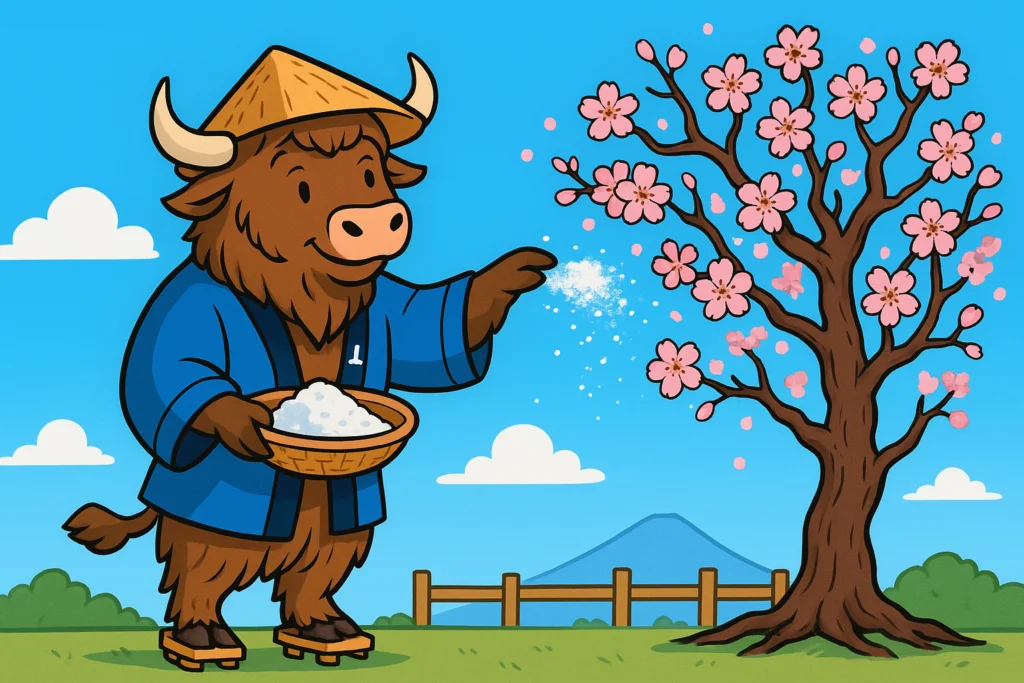
The neighbor burned the mortar. The dog said in a dream, 'Use the ashes on withered trees.' The old man did. The trees blossomed!
A prince saw the blossoms. He gave the old man a reward. The greedy neighbor threw ashes too. But flowers did not come.
The ashes went into the prince's eyes. The prince punished the greedy neighbor. The kind old man lived happily.
Every good story has a few key words that carry its heart. Let's collect some from this tale-simple nouns and verbs you'll meet again and again in Japanese.
- おじいさん (ojiisan) - kind old man
- おばあさん (obaasan) - kind old woman
- いぬ (inu) - dog
- きん (kin) - gold
- ほる (horu) - to dig
- さく (saku) - to bloom
Japanese often lets the verb take the last spot, and the subject can hide when everyone knows who's doing the action. Look at this mini-sentence from the story:
おじいさんが ほりました。 (Ojiisan ga horimashita.) - "The old man dug." Here が (ga) points to the old man as the doer, and ほりました is the polite past of "dig."
Tiny words like は, が, を, and に hold sentences together. They show who does what, to what, and where everything happens. Even a few of these will open many doors.
- は (wa): marks the topic - おじいさんは… (As for the old man…)
- が (ga): marks the subject when it's new or focused - いぬが いいました (The dog said.)
- を (o): marks the object - きんを ほりました (dug gold).
- に (ni): shows direction, time, or place - ゆめの なかに (in a dream).
Try listening to the story again with new ears-pick out the words you know and guess the verbs from their endings. When you're ready, write the key words in hiragana. Little by little, the pieces will click.
The Old Man Who Made Withered Trees Blossom comes from the Japanese / folk tale tradition and is best known as a folk tale. This Yak Yacker article is an original learner retelling based on Traditional Japanese folk tale; public-domain versions, so the wording here is simplified for modern learners rather than copied from one old edition.
Older printings, translations, and retellings of this story can vary quite a bit. The original audience was usually kids, but this version is adapted for A1 Beginner learners studying Japanese. Good kindness/neighbor contrast.
If you want to look into the source tradition, start with Project Gutenberg.
If you want to keep going, browse more in our Japanese section and review the Geography Vocabulary in Japanese. After that, try Essential Japanese Phrases for another useful next step.