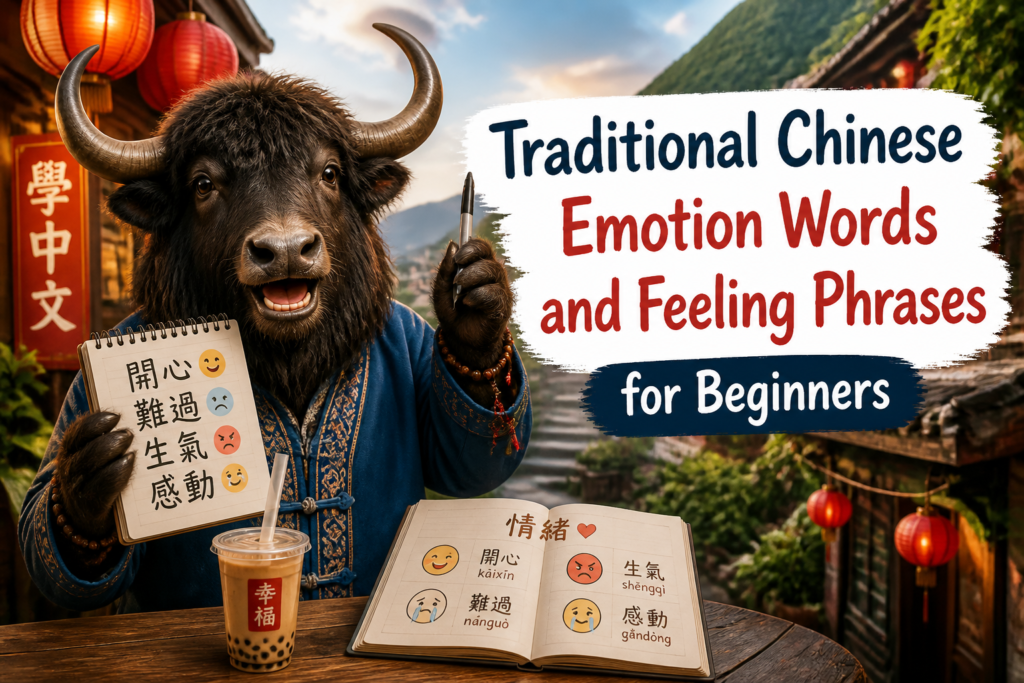
情緒詞彙 qíngxù cíhuì means emotion words. And yes, Mandarin has plenty of ways to say you feel happy, tired, annoyed, nervous, touched, or “I need five minutes and a snack.” This guide gives you beginner-friendly Traditional Chinese words and phrases for real life, with pinyin, English meaning, and example sentences.
If you are learning Traditional Chinese, emotions are one of the fastest ways to sound human instead of like a textbook. Also, people in Taiwan use these words all the time in casual chat, messages, and daily life. Conveniently enough, feelings show up everywhere: at the MRT, in line at a café, after a long workday, or when someone says the last bubble tea is sold out. Tragic.
By the end, you will know how to talk about emotions, describe how someone feels, and use common phrases like 我很開心 wǒ hěn kāixīn and 我有點緊張 wǒ yǒudiǎn jǐnzhāng.
Feelings are language fuel. Once you can say how you feel, even simple Mandarin becomes much more alive.
Quick Starter: Basic Feeling Words
Here are the most useful emotion words first. These are the ones you will actually use a lot, not the dusty dictionary leftovers nobody invites to the party.
| Traditional Chinese | Pinyin | Meaning | Example (ZH) | Example (Pinyin) | Translation (EN) |
|---|---|---|---|---|---|
| 開心 | kāixīn | happy; glad | 我今天很開心。 | Wǒ jīntiān hěn kāixīn. | I’m very happy today. |
| 快樂 | kuàilè | happy; joyful | 祝你生日快樂! | Zhù nǐ shēngrì kuàilè! | Happy birthday! |
| 難過 | nánguò | sad; upset | 他聽了很難過。 | Tā tīng le hěn nánguò. | He felt very sad after hearing it. |
| 生氣 | shēngqì | angry | 你不要生氣。 | Nǐ bú yào shēngqì. | Don’t be angry. |
| 害怕 | hàipà | afraid; scared | 我有點害怕。 | Wǒ yǒudiǎn hàipà. | I’m a little scared. |
| 緊張 | jǐnzhāng | nervous; tense | 我明天面試,現在很緊張。 | Wǒ míngtiān miànshì, xiànzài hěn jǐnzhāng. | I have an interview tomorrow, and I’m nervous now. |
| 興奮 | xīngfèn | excited | 小孩子看到禮物都很興奮。 | Xiǎoháizi kàn dào lǐwù dōu hěn xīngfèn. | Kids get excited when they see gifts. |
| 失望 | shīwàng | disappointed | 我對結果有點失望。 | Wǒ duì jiéguǒ yǒudiǎn shīwàng. | I’m a little disappointed with the result. |
| 驚訝 | jīngyà | surprised | 她聽到消息很驚訝。 | Tā tīngdào xiāoxī hěn jīngyà. | She was very surprised by the news. |
| 感動 | gǎndòng | moved; touched | 我聽了這個故事很感動。 | Wǒ tīng le zhège gùshì hěn gǎndòng. | I was touched by this story. |
Useful Emotion Phrases For Real Life
In Mandarin, emotion words often appear in very short patterns. The good news: once you learn a few core sentence shapes, you can swap in almost any feeling word.
| Traditional Chinese | Pinyin | English Meaning | Example (ZH) | Example (Pinyin) | Translation (EN) |
|---|---|---|---|---|---|
| 我很開心。 | Wǒ hěn kāixīn. | I’m very happy. | 今天放假,我很開心。 | Jīntiān fàngjià, wǒ hěn kāixīn. | It’s a day off today, so I’m very happy. |
| 我有點難過。 | Wǒ yǒudiǎn nánguò. | I’m a little sad. | 他走了,我有點難過。 | Tā zǒu le, wǒ yǒudiǎn nánguò. | He left, and I feel a little sad. |
| 我現在很緊張。 | Wǒ xiànzài hěn jǐnzhāng. | I’m nervous right now. | 第一次上台,我現在很緊張。 | Dì yī cì shàngtái, wǒ xiànzài hěn jǐnzhāng. | It’s my first time on stage, and I’m nervous now. |
| 我有點生氣。 | Wǒ yǒudiǎn shēngqì. | I’m a little angry. | 他又遲到了,我有點生氣。 | Tā yòu chídào le, wǒ yǒudiǎn shēngqì. | He was late again, and I’m a little angry. |
| 我好害怕。 | Wǒ hǎo hàipà. | I’m really scared. | 晚上自己走路,我有點害怕。 | Wǎnshàng zìjǐ zǒulù, wǒ yǒudiǎn hàipà. | Walking alone at night, I’m a little scared. |
| 我很興奮。 | Wǒ hěn xīngfèn. | I’m excited. | 明天要去台北,我很興奮。 | Míngtiān yào qù Táiběi, wǒ hěn xīngfèn. | I’m going to Taipei tomorrow, and I’m excited. |
| 我很失望。 | Wǒ hěn shīwàng. | I’m disappointed. | 我很期待,但結果讓我很失望。 | Wǒ hěn qídài, dàn jiéguǒ ràng wǒ hěn shīwàng. | I was looking forward to it, but the result disappointed me. |
| 我很感動。 | Wǒ hěn gǎndòng. | I’m touched. | 朋友送我小卡片,我很感動。 | Péngyǒu sòng wǒ xiǎo kǎpiàn, wǒ hěn gǎndòng. | A friend gave me a small card, and I felt touched. |
| 我很煩。 | Wǒ hěn fán. | I’m annoyed; frustrated. | 今天事情好多,我很煩。 | Jīntiān shìqíng hǎo duō, wǒ hěn fán. | There’s so much to do today, and I’m annoyed. |
| 我很放鬆。 | Wǒ hěn fàngsōng. | I’m relaxed. | 泡完澡後,我很放鬆。 | Pào wán zǎo hòu, wǒ hěn fàngsōng. | After taking a bath, I feel relaxed. |
Grammar note: In Mandarin, 很 hěn is often used even when you just mean “I am happy,” not necessarily “very happy.” It can sound natural and neutral, not always exaggerated. Mandarin is chill like that.
More Beginner Feeling Words
This next set gives you more range. If you want to describe your mood more exactly, these words help a lot. A few of them overlap in English, but Mandarin often makes the feeling a little more specific.
| Traditional Chinese | Pinyin | Meaning | Example (ZH) | Example (Pinyin) | Translation (EN) |
|---|---|---|---|---|---|
| 輕鬆 | qīngsōng | relaxed; easy | 這個週末我很輕鬆。 | Zhège zhōumò wǒ hěn qīngsōng. | I’m very relaxed this weekend. |
| 舒服 | shūfu | comfortable; feeling good | 坐在這裡很舒服。 | Zuò zài zhèlǐ hěn shūfu. | Sitting here feels comfortable. |
| 累 | lèi | tired | 我今天很累。 | Wǒ jīntiān hěn lèi. | I’m very tired today. |
| 疲倦 | píjuàn | weary; fatigued | 他看起來很疲倦。 | Tā kàn qǐlái hěn píjuàn. | He looks very fatigued. |
| 無聊 | wúliáo | bored | 等車的時候很無聊。 | Děng chē de shíhou hěn wúliáo. | Waiting for the bus is boring. |
| 煩惱 | fánnǎo | worried; troubled | 他最近很多煩惱。 | Tā zuìjìn hěn duō fánnǎo. | He has a lot of worries lately. |
| 焦慮 | jiāolǜ | anxious | 考試前我很焦慮。 | Kǎoshì qián wǒ hěn jiāolǜ. | I feel anxious before the exam. |
| 沮喪 | jǔsàng | depressed; discouraged | 失敗後他很沮喪。 | Shībài hòu tā hěn jǔsàng. | He felt discouraged after failing. |
| 傷心 | shāngxīn | heartbroken; sad | 她很傷心。 | Tā hěn shāngxīn. | She is very sad. |
| 失落 | shīluò | lost; let down | 沒收到回信,我有點失落。 | Méi shōudào huíxìn, wǒ yǒudiǎn shīluò. | I felt a little let down not getting a reply. |
| 期待 | qídài | look forward to; anticipation | 我很期待週末。 | Wǒ hěn qídài zhōumò. | I’m really looking forward to the weekend. |
| 好奇 | hàoqí | curious | 我對這家店很好奇。 | Wǒ duì zhè jiā diàn hěn hàoqí. | I’m very curious about this shop. |
| 感謝 | gǎnxiè | grateful; thankful | 非常感謝你的幫忙。 | Fēicháng gǎnxiè nǐ de bāngmáng. | Thank you very much for your help. |
| 溫暖 | wēnnuǎn | warm; comforting | 這句話讓我很溫暖。 | Zhè jù huà ràng wǒ hěn wēnnuǎn. | That sentence made me feel warm inside. |
| 平靜 | píngjìng | calm; peaceful | 聽音樂讓我很平靜。 | Tīng yīnyuè ràng wǒ hěn píngjìng. | Listening to music makes me feel calm. |
Feelings In Short Phrases
These phrases are handy because they sound natural in conversation. Use them when one word is not enough, but a giant explanation would be annoying.
| Traditional Chinese | Pinyin | Meaning | Example (ZH) | Example (Pinyin) | Translation (EN) |
|---|---|---|---|---|---|
| 有點開心 | yǒudiǎn kāixīn | a little happy | 收到好消息,我有點開心。 | Shōudào hǎo xiāoxī, wǒ yǒudiǎn kāixīn. | I got good news, so I’m a little happy. |
| 非常開心 | fēicháng kāixīn | very happy | 看到你,我非常開心。 | Kàn dào nǐ, wǒ fēicháng kāixīn. | I’m very happy to see you. |
| 真的很難過 | zhēn de hěn nánguò | really sad | 他離開後,我真的很難過。 | Tā líkāi hòu, wǒ zhēn de hěn nánguò. | After he left, I was really sad. |
| 有點生氣 | yǒudiǎn shēngqì | a little angry | 他沒來,我有點生氣。 | Tā méi lái, wǒ yǒudiǎn shēngqì. | He didn’t come, and I’m a little angry. |
| 太緊張了 | tài jǐnzhāng le | too nervous | 我上台前太緊張了。 | Wǒ shàngtái qián tài jǐnzhāng le. | I was too nervous before going on stage. |
| 有點害怕 | yǒudiǎn hàipà | a little scared | 那條路晚上很暗,我有點害怕。 | Nà tiáo lù wǎnshàng hěn àn, wǒ yǒudiǎn hàipà. | That road is dark at night, and I’m a little scared. |
| 很期待 | hěn qídài | really looking forward to it | 我很期待假期。 | Wǒ hěn qídài jiàqī. | I’m really looking forward to the holiday. |
| 有點失望 | yǒudiǎn shīwàng | a little disappointed | 我有點失望,但沒關係。 | Wǒ yǒudiǎn shīwàng, dàn méi guānxi. | I’m a little disappointed, but it’s okay. |
| 非常感動 | fēicháng gǎndòng | deeply touched | 她的話讓我非常感動。 | Tā de huà ràng wǒ fēicháng gǎndòng. | Her words deeply touched me. |
| 心情很好 | xīnqíng hěn hǎo | in a good mood | 今天心情很好。 | Jīntiān xīnqíng hěn hǎo. | I’m in a good mood today. |
For a broader look at Mandarin and Taiwan language usage, you can also peek at the main Traditional Chinese guide, or connect feelings with everyday topics like colors in Traditional Chinese, body and face parts in Traditional Chinese, and places and buildings in Traditional Chinese.
How To Say “I Feel…”
There are a few common ways to express emotion in Mandarin. The easiest pattern is 我很 + emotion word wǒ hěn + qíngxù cí. Another common one is 我有點 + emotion word wǒ yǒudiǎn + emotion word, which softens the feeling.
| Pattern | Meaning | Example (ZH) | Pinyin | English |
|---|---|---|---|---|
| 我很 + 感覺 | I am + feeling | 我很開心。 | Wǒ hěn kāixīn. | I’m happy. |
| 我有點 + 感覺 | I feel a little + feeling | 我有點緊張。 | Wǒ yǒudiǎn jǐnzhāng. | I’m a little nervous. |
| 我真的很 + 感覺 | I’m really + feeling | 我真的很失望。 | Wǒ zhēn de hěn shīwàng. | I’m really disappointed. |
| 他/她很 + 感覺 | He/She is + feeling | 她很難過。 | Tā hěn nánguò. |