


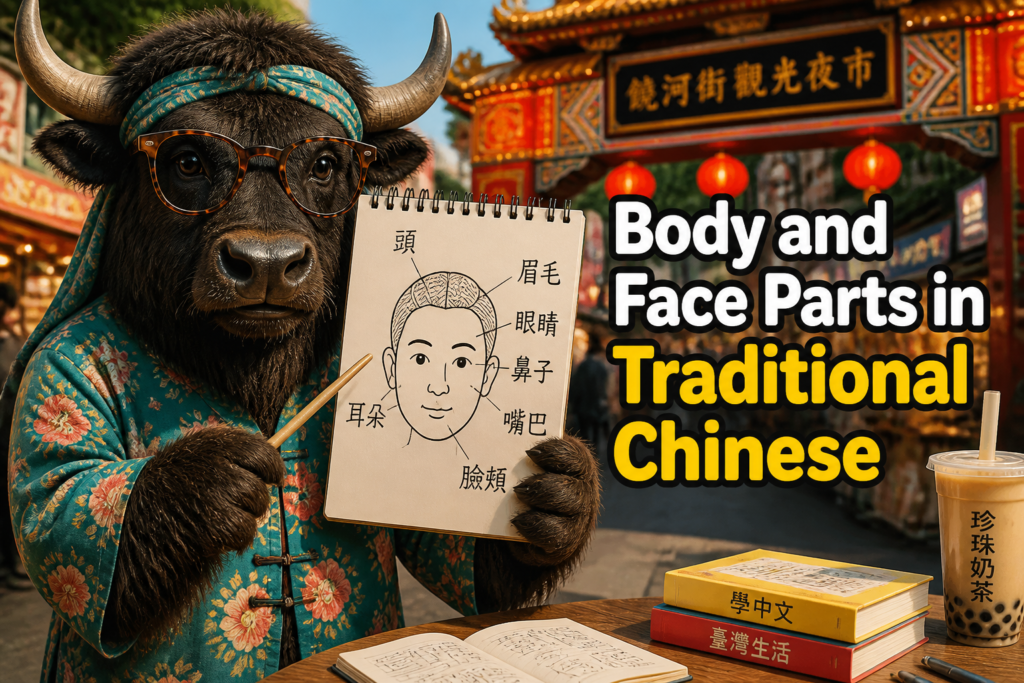
身體和臉部常用詞 shēntǐ hé liǎnbù chángyòng cí — body and face words that are actually useful in real life, not the ultra-medical stuff that only shows up when someone is already having a bad day.
If you want to say things like “my shoulder hurts,” “she has pretty eyes,” or “I need to wash my face,” this is the vocabulary set you want. It is practical, everyday Mandarin with Traditional Chinese, Taiwan-style usage, and no hospital drama unless you invite it.
For a bigger look at related everyday vocabulary, you can also check the main learning hub at learn Traditional Chinese.
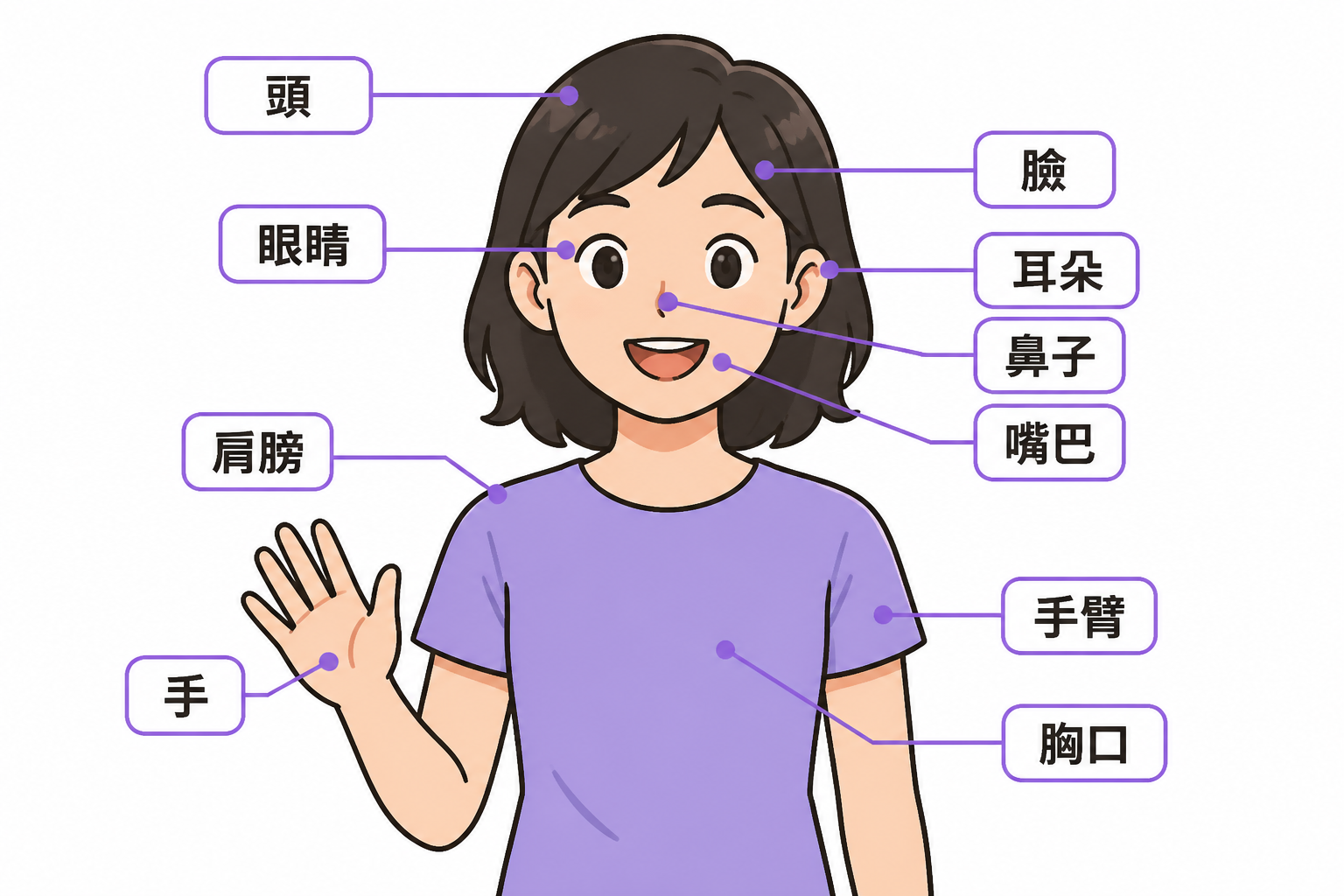
Quick Starter Phrases
Here are some of the most common body and face phrases you will hear all the time. Keep these in your pocket. Your future self will be less confused in mirrors, photos, and casual conversations.
| Traditional Chinese | Pinyin | English Meaning | Example (ZH) | Example (Pinyin) | Translation (EN) |
|---|---|---|---|---|---|
| 頭 | tóu | head | 我頭有點痛。 | Wǒ tóu yǒu diǎn tòng. | My head hurts a little. |
| 臉 | liǎn | face | 你的臉看起來很累。 | Nǐ de liǎn kàn qǐlái hěn lèi. | Your face looks tired. |
| 眼睛 | yǎnjīng | eyes | 她的眼睛很大。 | Tā de yǎnjīng hěn dà. | Her eyes are big. |
| 耳朵 | ěrduo | ears | 我左耳朵有點癢。 | Wǒ zuǒ ěrduo yǒu diǎn yǎng. | My left ear is a little itchy. |
| 鼻子 | bízi | nose | 他的鼻子很挺。 | Tā de bízi hěn tǐng. | His nose is straight. |
| 嘴巴 | zuǐba | mouth | 請張開嘴巴。 | Qǐng zhāngkāi zuǐba. | Please open your mouth. |
| 牙齒 | yáchǐ | teeth | 我想去刷牙,因為牙齒不舒服。 | Wǒ xiǎng qù shuāyá, yīnwèi yáchǐ bù shūfu. | I want to brush my teeth because my teeth feel uncomfortable. |
| 脖子 | bózi | neck | 我今天脖子有點緊。 | Wǒ jīntiān bózi yǒu diǎn jǐn. | My neck is a little stiff today. |
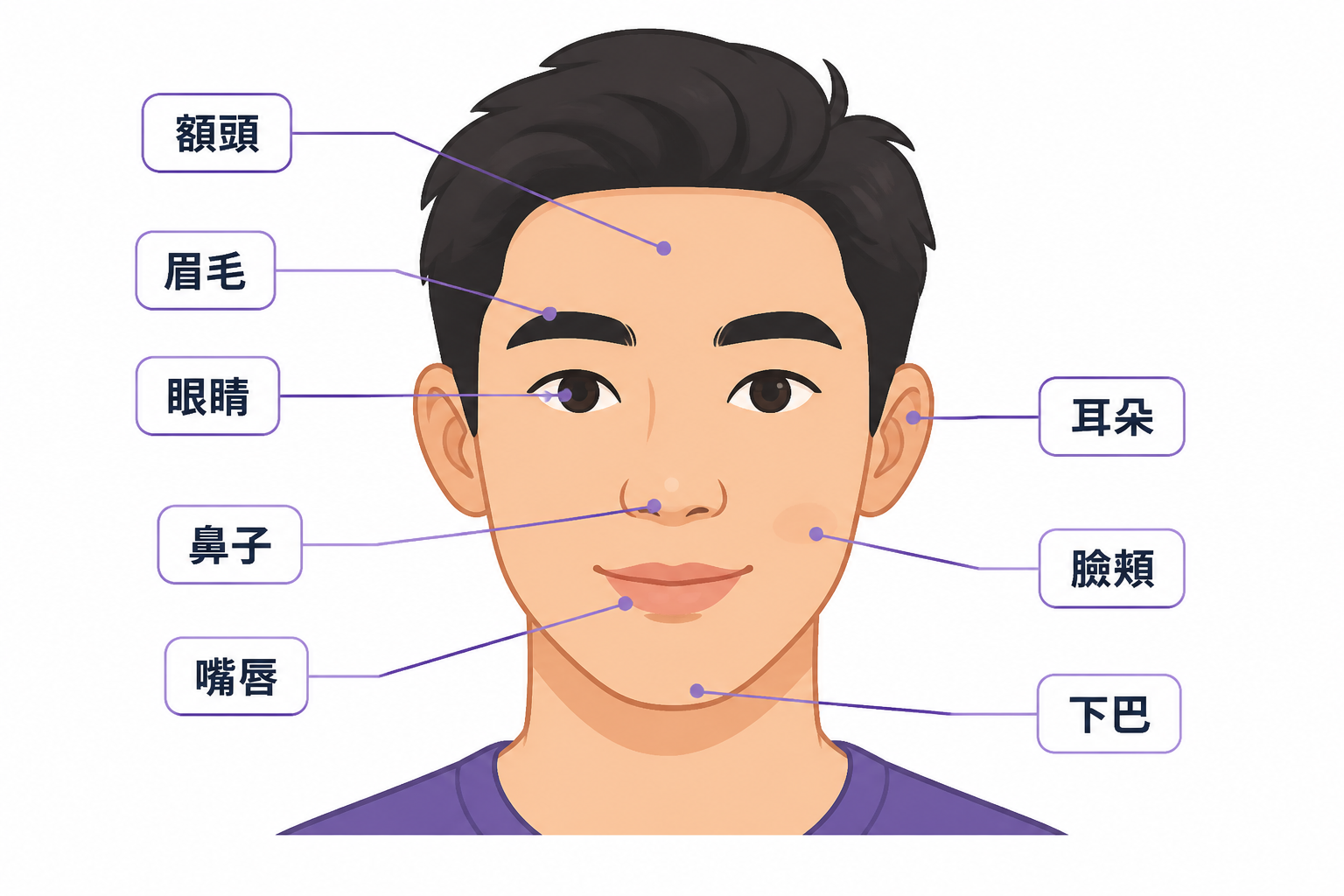
Face Parts You Will Actually Use
The face is where a lot of everyday Mandarin lives. People describe looks, feelings, weather damage, and “I did not sleep enough” energy here.
| Traditional Chinese | Pinyin | Meaning | Example (ZH) | Example (Pinyin) | Translation (EN) |
|---|---|---|---|---|---|
| 額頭 | étóu | forehead | 她的額頭很高。 | Tā de étóu hěn gāo. | Her forehead is high. |
| 眉毛 | méimáo | eyebrows | 他的眉毛很濃。 | Tā de méimáo hěn nóng. | His eyebrows are thick. |
| 睫毛 | jiémáo | eyelashes | 她的睫毛很長。 | Tā de jiémáo hěn cháng. | Her eyelashes are long. |
| 眼皮 | yǎnpí | eyelid | 我今天眼皮一直跳。 | Wǒ jīntiān yǎnpí yìzhí tiào. | My eyelid keeps twitching today. |
| 臉頰 | liǎnjiá | cheek | 小朋友的臉頰很圓。 | Xiǎopéngyǒu de liǎnjiá hěn yuán. | The child’s cheeks are round. |
| 下巴 | xiàba | chin | 他摸著下巴在想事情。 | Tā mō zhe xiàba zài xiǎng shìqíng. | He is stroking his chin and thinking. |
| 嘴唇 | zuǐchún | lips | 你的嘴唇有點乾。 | Nǐ de zuǐchún yǒu diǎn gān. | Your lips are a little dry. |
| 鬍子 | húzi | beard / mustache hair | 他今天沒有刮鬍子。 | Tā jīntiān méiyǒu guā húzi. | He did not shave today. |
In Taiwan, 臉 liǎn is used a lot for everyday talk, especially with skincare, makeup, and appearance. If you want to talk about face care, the related guide on body care and hygiene in Traditional Chinese will help a lot.
Body Parts You Will Hear All The Time
These are the words that show up in daily life: talking about pain, exercise, posture, clothing fit, or just casually complaining like a human being.
| Traditional Chinese | Pinyin | Meaning | Example (ZH) | Example (Pinyin) | Translation (EN) |
|---|---|---|---|---|---|
| 肩膀 | jiānbǎng | shoulder | 我的肩膀很酸。 | Wǒ de jiānbǎng hěn suān. | My shoulders feel sore. |
| 胸口 | xiōngkǒu | chest | 我胸口有點悶。 | Wǒ xiōngkǒu yǒu diǎn mēn. | My chest feels a bit tight. |
| 背 | bèi | back | 我背很痛。 | Wǒ bèi hěn tòng. | My back hurts. |
| 手 | shǒu | hand | 我手很冷。 | Wǒ shǒu hěn lěng. | My hands are cold. |
| 手臂 | shǒubì | arm | 他手臂很壯。 | Tā shǒubì hěn zhuàng. | His arms are strong. |
| 手肘 | shǒuzhǒu | elbow | 我手肘撞到桌角。 | Wǒ shǒuzhǒu zhuàng dào zhuōjiǎo. | I hit my elbow on the corner of the table. |
| 手腕 | shǒuwàn | wrist | 我的手腕有點痛。 | Wǒ de shǒuwàn yǒu diǎn tòng. | My wrist hurts a little. |
| 手指 | shǒuzhǐ | finger | 我手指很冰。 | Wǒ shǒuzhǐ hěn bīng. | My fingers are freezing. |
| 大拇指 | dàmǔzhǐ | thumb | 他的大拇指被門夾到。 | Tā de dàmǔzhǐ bèi mén jiā dào. | He got his thumb caught in the door. |
| 肚子 | dùzi | stomach / belly | 我肚子餓了。 | Wǒ dùzi è le. | I’m hungry. |
| 腰 | yāo | waist / lower back | 她腰很細。 | Tā yāo hěn xì. | Her waist is very slim. |
| 腿 | tuǐ | leg | 我今天走很多路,腿很酸。 | Wǒ jīntiān zǒu hěn duō lù, tuǐ hěn suān. | I walked a lot today, and my legs are sore. |
| 膝蓋 | xīgài | knee | 我的膝蓋怕冷。 | Wǒ de xīgài pà lěng. | My knees are sensitive to cold. |
| 腳 | jiǎo | foot / leg | 我的腳很酸。 | Wǒ de jiǎo hěn suān. | My feet feel sore. |
| 腳踝 | jiǎohuái | ankle | 我腳踝扭到了。 | Wǒ jiǎohuái niǔ dào le. | I twisted my ankle. |
Small note: 腳 jiǎo can mean “foot” or “leg” depending on context in real conversation. Mandarin likes to keep you guessing just enough to be annoying.
More Easy Words For The Head And Upper Body
These are still common, and they make your descriptions sound much more natural. Very handy for telling someone where it hurts, or for describing a person in a normal, polite way.
| Traditional Chinese | Pinyin | Meaning | Example (ZH) | Example (Pinyin) | Translation (EN) |
|---|---|---|---|---|---|
| 頭髮 | tóufǎ | hair | 她的頭髮很長。 | Tā de tóufǎ hěn cháng. | Her hair is long. |
| 髮型 | fàxíng | hairstyle | 你換新髮型了。 | Nǐ huàn xīn fàxíng le. | You changed your hairstyle. |
| 臉蛋 | liǎndàn | face; cute way to say face | 小寶寶的臉蛋很圓。 | Xiǎo bǎobǎo de liǎndàn hěn yuán. | The baby’s face is round and cute. |
| 牙 | yá | tooth | 他掉了一顆牙。 | Tā diào le yì kē yá. | He lost a tooth. |
| 舌頭 | shétou | tongue | 我被熱湯燙到舌頭。 | Wǒ bèi rè tāng tàng dào shétou. | I burned my tongue with hot soup. |
| 喉嚨 | hóulóng | throat | 我喉嚨有點乾。 | Wǒ hóulóng yǒu diǎn gān. | My throat is a little dry. |
| 手掌 | shǒuzhǎng | palm | 我的手掌很粗。 | Wǒ de shǒuzhǎng hěn cū. | My palms are rough. |
| 手背 | shǒubèi | back of the hand | 我手背被蚊子叮了。 | Wǒ shǒubèi bèi wénzi dīng le. | I got bitten by mosquitoes on the back of my hand. |
| 腋下 | yèxià | armpit | 夏天腋下容易流汗。 | Xiàtiān yèxià róngyì liúhàn. | Armpits sweat easily in summer. |
| 肘 | zhǒu | elbow | 這個字比較少用,日常多說手肘。 | Zhège zì bǐjiào shǎo yòng, rìcháng duō shuō shǒuzhǒu. | This word is less common; in daily speech, people usually say shǒuzhǒu. |
If you want face words in a more emotional or descriptive way, the guide on emotions in Traditional Chinese pairs nicely with this one. Faces and feelings are close cousins. They gossip constantly.
Lower Body And Easy Movement Words
| Traditional Chinese | Pinyin | Meaning | Example (ZH) | Example (Pinyin) | Translation (EN) |
|---|---|---|---|---|---|
| 臀部 | túnbù | buttocks / hips area | 這張椅子坐久了,臀部會痛。 | Zhè zhāng yǐzi zuò jiǔ le, túnbù huì tòng. | If I sit too long on this chair, my buttocks hurt. |
| 屁股 | pìgu | butt; casual word | 小朋友跌倒了,屁股先著地。 | Xiǎopéngyǒu diēdǎo le, pìgu xiān zháodì. | The child fell and landed on the butt first. |
| 大腿 | dàtuǐ | thigh | 我大腿很痠。 | Wǒ dàtuǐ hěn suān. | My thigh feels sore. |
| 小腿 | xiǎotuǐ | calf / lower leg | 她小腿很細。 | Tā xiǎotuǐ hěn xì. | Her calves are slim. |
| 腳底 | jiǎodǐ | sole of the foot | 我的腳底很痛。 | Wǒ de jiǎodǐ hěn tòng. | The sole of my foot hurts. |
| 腳趾 | jiǎozhǐ | toe | 我的腳趾撞到床腳。 | Wǒ de jiǎozhǐ zhuàng dào chuángjiǎo. | I hit my toe on the bed frame. |
| 腳趾頭 | jiǎozhǐtóu | toe; casual spoken form | 他的腳趾頭很長。 | Tā de jiǎozhǐtóu hěn cháng. | His toes are long. |
屁股 pìgu is common in speech. 臀部 túnbù sounds more neutral or formal. Taiwan Mandarin uses both, but in casual conversation, 屁股 shows up much more often.
Useful Verbs And Actions With Body Parts
Body words are even more useful when paired with action verbs. This is how you say what you do with your body, not just what the body parts are called.
| Traditional Chinese | Pinyin | Meaning | Example (ZH) | Example (Pinyin) | Translation (EN) |
|---|---|---|---|---|---|
| 看 | kàn | to look / see | 請看我的眼睛。 | Qǐng kàn wǒ de yǎnjīng. | Please look at my eyes. |
| 聽 | tīng | to listen | 用耳朵聽。 | Yòng ěrduo tīng. | Listen with your ears. |
| 聞 | wén | to smell | 我用鼻子聞咖啡。 | Wǒ yòng bízi wén kāfēi. | I smell coffee with my nose. |
| 咬 | yǎo | to bite | 不要咬嘴唇。 | Bú yào yǎo zuǐchún. | Don’t bite your lips. |
| 刷牙 | shuāyá | to brush teeth | 我早上先刷牙。 | Wǒ zǎoshang xiān shuāyá. | I brush my teeth first thing in the morning. |
洗臉More Traditional Chinese to explore How to Type Traditional Chinese Best graded readers for Traditional Chinese Sima Guang Breaks the Vat: A Beginner Chinese Story with Audio – A1 Level Nezha Conquers the Dragon King: A2 Elementary Traditional Chinese Story with Audio |