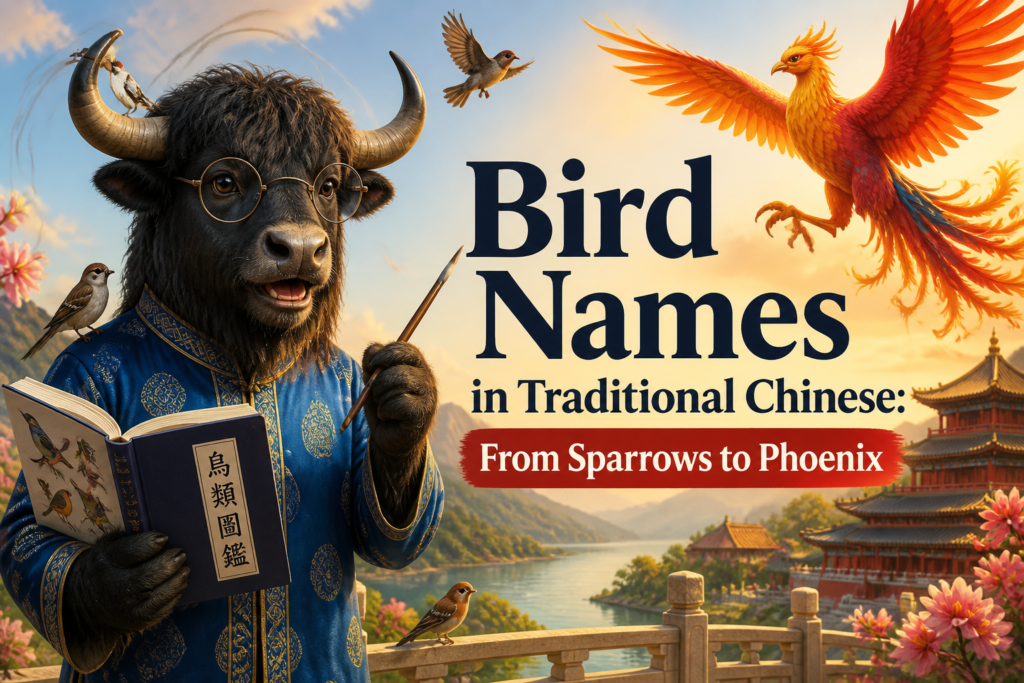
學鳥類名字,常常比你想的更實用。你可能不會每天在捷運上討論「鸞鳥」的神話背景,但你很可能會在公園、夜市周邊、或旅遊照片裡看到麻雀、鴿子、烏鴉,然後想知道它們怎麼說。Traditional Chinese bird names are also a nice shortcut into real vocabulary: some names are wonderfully literal, some are poetic, and some are exactly the kind of thing Chinese likes to do—be both practical and a little extra.
For the broader learning path, visit our parent guide.
In Taiwan, you’ll hear everyday bird words in casual speech, nature videos, and school materials. If you can name a few common birds in Traditional Chinese, you’ll read signs, captions, and simple articles much more comfortably. And yes, the phoenix is here too, because bird vocabulary gets dramatically interesting for no obvious reason.
For a broader official vocabulary reference, the Traditional Chinese vocabulary test is a useful place to keep building your word bank.
Useful Bird Names
| Traditional Chinese | Pinyin | Meaning | Example (ZH) | Example (Pinyin) | Translation (EN) |
|---|---|---|---|---|---|
| 麻雀 | má què | sparrow | 公園裡有很多麻雀。 | Gōngyuán lǐ yǒu hěn duō máquè. | There are many sparrows in the park. |
| 鴿子 | gē zi | pigeon, dove | 廣場上有一群鴿子。 | Guǎngchǎng shàng yǒu yì qún gēzi. | There is a flock of pigeons in the square. |
| 燕子 | yàn zi | swallow | 春天一到,燕子就回來了。 | Chūntiān yí dào, yànzi jiù huílái le. | As soon as spring arrives, the swallows come back. |
| 烏鴉 | wū yā | crow, raven | 那棵樹上停著一隻烏鴉。 | Nà kē shù shàng tíng zhe yì zhī wūyā. | A crow is perched on that tree. |
| 鴨子 | yā zi | duck | 池塘裡的鴨子很可愛。 | Chítáng lǐ de yāzi hěn kě’ài. | The ducks in the pond are cute. |
| 鵝 | é | goose | 那隻鵝走路很慢。 | Nà zhī é zǒulù hěn màn. | That goose walks very slowly. |
| 雞 | jī | chicken | 早上可以聽到雞叫。 | Zǎoshang kěyǐ tīngdào jī jiào. | You can hear chickens crowing in the morning. |
| 鶴 | hè | crane | 鶴在中國文化裡很有象徵性。 | Hè zài Zhōngguó wénhuà lǐ hěn yǒu xiàngzhēngxìng. | Cranes are very symbolic in Chinese culture. |
| 孔雀 | kǒng què | peacock | 孔雀開屏很漂亮。 | Kǒngquè kāipíng hěn piàoliang. | A peacock fanning its tail is beautiful. |
| 鸚鵡 | yīng wǔ | parrot | 鸚鵡會學人說話。 | Yīngwǔ huì xué rén shuōhuà. | Parrots can imitate human speech. |
| 鴕鳥 | tuó niǎo | ostrich | 鴕鳥跑得很快。 | Tuóniǎo pǎo de hěn kuài. | Ostriches run very fast. |
| 鷹 | yīng | eagle, hawk | 山上偶爾可以看到鷹。 | Shān shàng ǒu’ěr kěyǐ kàn dào yīng. | You can sometimes see eagles in the mountains. |
| 鳥 | niǎo | bird | 我喜歡看鳥在樹上飛。 | Wǒ xǐhuān kàn niǎo zài shù shàng fēi. | I like watching birds fly in the trees. |
| 候鳥 | hòu niǎo | migratory bird | 這裡是候鳥的重要棲地。 | Zhèlǐ shì hòuniǎo de zhòngyào qīdì. | This is an important habitat for migratory birds. |
| 猛禽 | měng qín | bird of prey | 猛禽通常有很強的視力。 | Měngqín tōngcháng yǒu hěn qiáng de shìlì. | Birds of prey usually have very strong eyesight. |
A quick Taiwan note: 鴿子 can mean both “pigeon” and “dove” in everyday speech. English likes to split those hairs; Mandarin usually does not care that much. Convenient, honestly.
Common Bird Phrases For Real Life
| Traditional Chinese | Pinyin | Meaning | Example (ZH) | Example (Pinyin) | Translation (EN) |
|---|---|---|---|---|---|
| 看鳥 | kàn niǎo | to birdwatch | 週末我喜歡去公園看鳥。 | Zhōumò wǒ xǐhuān qù gōngyuán kàn niǎo. | On weekends, I like to go to the park and birdwatch. |
| 鳥叫 | niǎo jiào | birdsong, bird call | 清晨的鳥叫很舒服。 | Qīngchén de niǎo jiào hěn shūfu. | The birdsong in the early morning is very soothing. |
| 鳥巢 | niǎo cháo | bird nest | 樹上有一個鳥巢。 | Shù shàng yǒu yí ge niǎo cháo. | There is a bird nest in the tree. |
| 候鳥遷徙 | hòu niǎo qiān xǐ | migratory bird migration | 候鳥遷徙的季節到了。 | Hòuniǎo qiānxǐ de jìjié dào le. | The migratory bird season has arrived. |
| 鳥糞 | niǎo fèn | bird droppings | 椅子上有鳥糞,先擦一下。 | Yǐzi shàng yǒu niǎofèn, xiān cā yíxià. | There are bird droppings on the chair, so wipe it first. |
| 鳥籠 | niǎo lóng | birdcage | 這隻鳥住在鳥籠裡。 | Zhè zhī niǎo zhù zài niǎolóng lǐ. | This bird lives in a cage. |
| 飛來飛去 | fēi lái fēi qù | to fly around | 麻雀在屋簷下飛來飛去。 | Máquè zài wūyán xià fēilái-fēiqù. | Sparrows are flying around under the roof eaves. |
| 嘰嘰喳喳 | jī ji zhā zhā | chirping, chattering | 早上的鳥聲嘰嘰喳喳的。 | Zǎoshang de niǎo shēng jījizhāzhā de. | The birds are chirping noisily in the morning. |
| 一群鳥 | yì qún niǎo | a flock of birds | 天空中有一群鳥飛過。 | Tiānkōng zhōng yǒu yì qún niǎo fēi guò. | A flock of birds flew past in the sky. |
| 保護鳥類 | bǎohù niǎolèi | to protect birds / bird species | 大家都應該保護鳥類。 | Dàjiā dōu yīnggāi bǎohù niǎolèi. | Everyone should protect bird species. |
If you want the broader animal vocabulary rabbit hole, the related guides on fish names in Traditional Chinese, flowers in Traditional Chinese, and fruits in Traditional Chinese make a neat little vocabulary trio. Because apparently one category of nature words is never enough.
Bird Names That Show Up In Culture And Writing
| Traditional Chinese | Pinyin | Meaning | Example (ZH) | Example (Pinyin) | Translation (EN) |
|---|---|---|---|---|---|
| 鳳凰 | fèng huáng | phoenix | 鳳凰是中國文化裡的重要神鳥。 | Fènghuáng shì Zhōngguó wénhuà lǐ de zhòngyào shénniǎo. | The phoenix is an important mythical bird in Chinese culture. |
| 鸞鳥 | luán niǎo | mythical bird | 古書裡常出現鸞鳥。 | Gǔshū lǐ cháng chūxiàn luánniǎo. | Mythical birds often appear in ancient texts. |
| 鵲 | què | magpie | 喜鵲在民間文化裡很吉祥。 | Xǐquè zài mínjiān wénhuà lǐ hěn jíxiáng. | Magpies are considered lucky in folk culture. |
| 喜鵲 | xǐ què | magpie | 窗外有一隻喜鵲在叫。 | Chuāng wài yǒu yì zhī xǐquè zài jiào. | A magpie is calling outside the window. |
| 白鷺鷥 | bái lù sī | egret | 白鷺鷥常在稻田邊出現。 | Báilùsī cháng zài dàotián biān chūxiàn. | Egrets often appear near rice fields. |
| 鴛鴦 | yuān yāng | mandarin duck | 鴛鴦常被當作成雙成對的象徵。 | Yuānyāng cháng bèi dāngzuò chéngshuāng chéngduì de xiàngzhēng. | Mandarin ducks are often used as a symbol of pairs. |
The big cultural bird word is 鳳凰 fèng huáng. In English, “phoenix” usually makes people think of one fire-resurrection bird. In Chinese, 鳳凰 is a mythic symbol with a long cultural life, often paired with imperial and auspicious imagery. If you want a boring-but-reliable background read, the Wikipedia entry on the phoenix is a decent starting point.
Patterns That Make Bird Words Easier
Chinese bird names often use a simple pattern: a general bird word plus a more specific sound or character. Once you notice the pattern, the vocabulary gets less scary and a lot less random.
| Pattern | Meaning | Example (ZH) | Pinyin | English |
|---|---|---|---|---|
| 鳥 + specific name | bird category + type | 麻雀 | má què | sparrow |
| 鳥 + descriptive/animal word | bird name built from a description | 鴕鳥 | tuó niǎo | ostrich |
| color + bird | bird with a color detail | 白鷺鷥 | bái lù sī | egret |
| bird + sound word | bird call or sound effect | 鳥叫 | niǎo jiào | bird call |
| mythical bird name | literary or symbolic bird | 鳳凰 | fèng huáng | phoenix |
A useful pronunciation note: 鳥 is niǎo, with a third tone. In real speech, it should sound low and dipping, not like you’re interrogating the bird. Also, 一隻鳥 yì zhī niǎo uses the measure word 隻 zhī for many animals, including birds.
Example: 我看到一隻鳥。 Wǒ kàn dào yì zhī niǎo. “I see a bird.”
Useful Sentences For Everyday Talk
| Traditional Chinese | Pinyin | Meaning | Example (ZH) | Example (Pinyin) | Translation (EN) |
|---|---|---|---|---|---|
| 我喜歡看鳥。 | Wǒ xǐhuān kàn niǎo. | I like birdwatching. | 我喜歡看鳥。 | Wǒ xǐhuān kàn niǎo. | I like birdwatching. |
| 這裡有很多麻雀。 | Zhèlǐ yǒu hěn duō máquè. | There are many sparrows here. | 這裡有很多麻雀。 | Zhèlǐ yǒu hěn duō máquè. | There are many sparrows here. |
| 那隻鴿子好肥。 | Nà zhī gēzi hǎo féi. | That pigeon is really fat. | 那隻鴿子好肥。 | Nà zhī gēzi hǎo féi. | That pigeon is really fat. |
| 麻雀在屋頂上跳來跳去。 | Máquè zài wūdǐng shàng tiào lái tiào qù. | The sparrow is hopping around on the roof. | 麻雀在屋頂上跳來跳去。 | Máquè zài wūdǐng shàng tiào lái tiào qù. | The sparrow is hopping around on the roof. |
| 清晨的鳥叫很漂亮。 | Qīngchén de niǎo jiào hěn piàoliang. | The morning birdsong is beautiful. | 清晨的鳥叫很漂亮。 | Qīngchén de niǎo jiào hěn piàoliang. | The morning birdsong is beautiful. |
| 那邊有一隻烏鴉。 | Nà biān yǒu yì zhī wūyā. | There is a crow over there. | 那邊有一隻烏鴉。 | Nà biān yǒu yì zhī wūyā. | There is a crow over there. |
| 候鳥每年都會回來。 | Hòuniǎo měinián dōu huì huílái. | Migratory birds return every year. | 候鳥每年都會回來。 | Hòuniǎo měinián dōu huì huílái. | Migratory birds return every year. |
| 孔雀開屏的時候最漂亮。 | Kǒngquè kāipíng de shíhòu zuì piàoliang. | A peacock is most beautiful when it fans its tail. | 孔雀開屏的時候最漂亮。 | Kǒngquè kāipíng de shíhòu zuì piàoliang. | A peacock is most beautiful when it fans its tail. |
| 鸚鵡會學人說話。 | Yīngwǔ huì xué rén shuōhuà. | Parrots can imitate human speech. | 鸚鵡會學人說話。 | Yīngwǔ huì xué rén shuōhuà. | Parrots can imitate human speech. |
| 我想去賞鳥。 | Wǒ xiǎng qù shǎng niǎo. | I want to go birdwatching. | 我想去賞鳥。 | Wǒ xiǎng qù shǎng niǎo. | I want to go birdwatching. |
Mini Notes On Confusing Bird Words
鴿子 gēzi is often “pigeon” in everyday use, but it can also cover “dove.” If you are talking in a scientific or very specific context, the exact English label may matter more. In normal conversation? Nobody is going to file a complaint with the grammar police.
鷹 yīng can mean eagle or hawk depending on context. Mandarin speakers often use broader everyday categories, while English likes to separate them more sharply.
白鷺鷥 báilùsī is a great example of how Mandarin bird names can sound wonderfully specific and slightly poetic. English just says “egret” and moves on. Mandarin sometimes takes the scenic route.
鳳凰 fènghuáng is not exactly a normal “bird in the park” word. It belongs to mythology, symbols, and elegant cultural imagery. So if you see it in a text, expect a more literary tone.
Quick Practice
Try these before your brain decides it has seen enough feathers for one day.
- Translate: “sparrow” = 麻雀 máquè
- Translate: “duck” = 鴨子 yāzi
- Translate: “crow” = 烏鴉 wūyā
- Translate: “parrot” = 鸚鵡 yīngwǔ
- Translate: “phoenix” = 鳳凰 fènghuáng
Now switch these into Chinese:
- A flock of birds
- Birdsong
- A migratory bird
- A bird nest
- To birdwatch
Suggested answers: 一群鳥 yì qún niǎo, 鳥叫 niǎo jiào, 候鳥 hòuniǎo, 鳥巢 niǎo cháo, 看鳥 kàn niǎo.
Bird Words And Related Nature Vocabulary
Bird vocabulary fits nicely with other nature words. If you’re building a themed word set, bird names pair well with animals, plants, and food vocabulary. That means more useful language with less random memorizing, which is a rare gift.
- Fish Names in Traditional Chinese
- Flowers in Traditional Chinese
- Fruits in Traditional Chinese
- Traditional Chinese Placement Test TOCFL
Yak takeaway: If you know 鳥 niǎo, 隻 zhī, and a few everyday bird names like 麻雀, 鴿子, and 烏鴉, you can already talk about birds in simple real-life Mandarin. Add 鳳凰, and suddenly your vocabulary sounds a lot more majestic than a park pigeon probably deserves.