
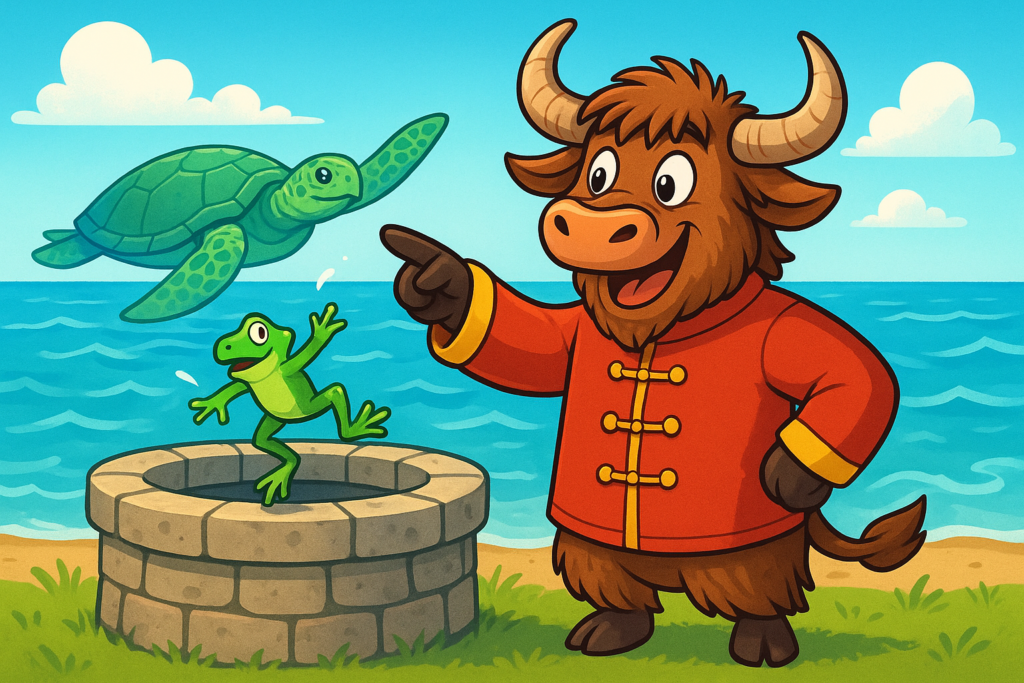
This A1 Beginner retelling of 井底的青蛙 keeps the plot clear for learners while still giving the story some atmosphere and momentum.
This version teaches Traditional Chinese through English and includes clickable word help inside the story, full story audio, and lesson notes after the reading. It is free to use on Yak Yacker and is designed to feel natural, readable, and manageable for learners.
有一口。井裡住著一隻。
青蛙每天天空。天空只有那麼大。
「這裡是!」青蛙說。
有一天,一隻來了。青蛙:「你的家大嗎?」
海龜說:「我的家是海。海很大很大。」青蛙說:「比我的井大嗎?」海龜笑了笑。「井很小,海很大。」
海龜說:「你看看吧。」青蛙從井裡。他看到了。
「哇,好啊!」青蛙說。青蛙自己的井很小。他新事物。
There's an old well with a frog living in it.
Daily, the frog sees only a well-mouth-sized patch of sky.
The frog declares, 'This is the best place in the world!'
When a sea turtle visits, the frog asks about the size of its home.
The turtle describes the vast sea. The frog compares it to the well; the turtle notes the well's smallness.
The frog jumps out at the turtle's invitation and views the ocean.
Astonished by the sea's size, the frog understands his well's smallness and gains new knowledge.
The story gives us simple, useful words. Let's look at a few.
- 井 (jǐng) - a well
- 青蛙 (qīngwā) - frog
- 海龜 (hǎiguī) - sea turtle
- 大海 (dàhǎi) - the sea
- 大 (dà) - big, 小 (xiǎo) - small
The frog thinks the well is big, but the sea turtle shows him the sea. To compare, use 比 (bǐ).
Say 'A 比 B + adjective' to mean 'A is more adjective than B.'
- 海比井大。 (The sea is bigger than the well.)
- 井比海小。 (The well is smaller than the sea.)
- Easy, right? Try making your own sentences with 大 and 小.
At the end, the frog 學會了新事物 (learned new things). The 了 (le) shows a change or something new.
After 學會 (xuéhuì - to learn/acquire a skill), adding 了 tells us the learning happened.
- 青蛙知道了。 (The frog now knows.)
- 他看到了大海。 (He saw the sea.)
- Use 了 after a verb to show an action is completed or a situation has changed.
The frog took a small hop and saw a big world. You're already building your Chinese step by step.
Keep these words and patterns in mind, and soon you'll describe your own world in Chinese!
井底的青蛙 comes from the Chinese / idiom story tradition and is best known as a idiom/fable. This Yak Yacker article is an original learner retelling based on Ancient Chinese idiom story; public domain, so the wording here is simplified for modern learners rather than copied from one old edition.
Older printings, translations, and retellings of this story can vary quite a bit. The original audience was usually kids/general, but this version is adapted for A1 Beginner learners studying Traditional Chinese. Very clear moral; good for place/size vocabulary.
If you want to look into the source tradition, start with Wikisource.
If you want to keep going, browse more in our Traditional Chinese section. After that, try Essential Traditional Chinese Grammar Words for another useful next step.
More Traditional Chinese to explore
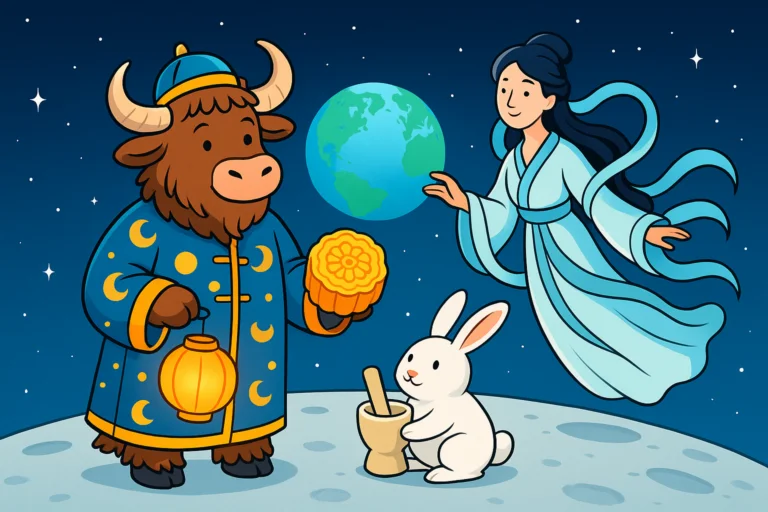
Chang’e Flies to the Moon: A2 Elementary Traditional Chinese Story with Audio
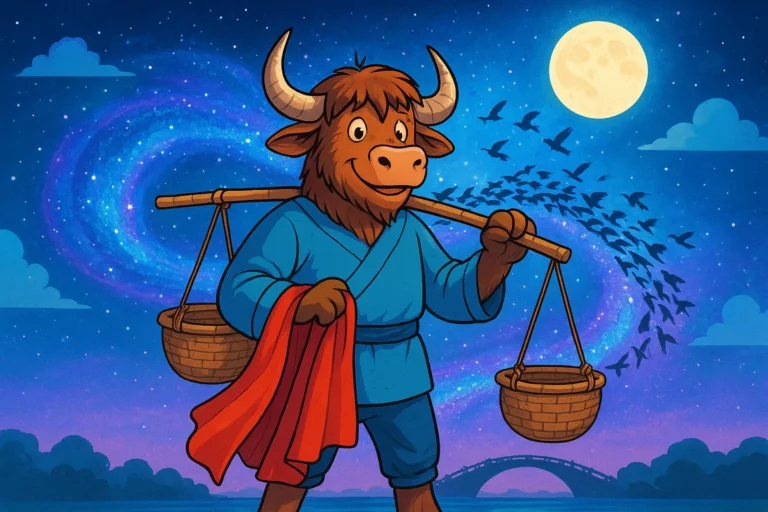
The Cowherd and the Weaver Girl: A2 Elementary Traditional Chinese Story with Audio
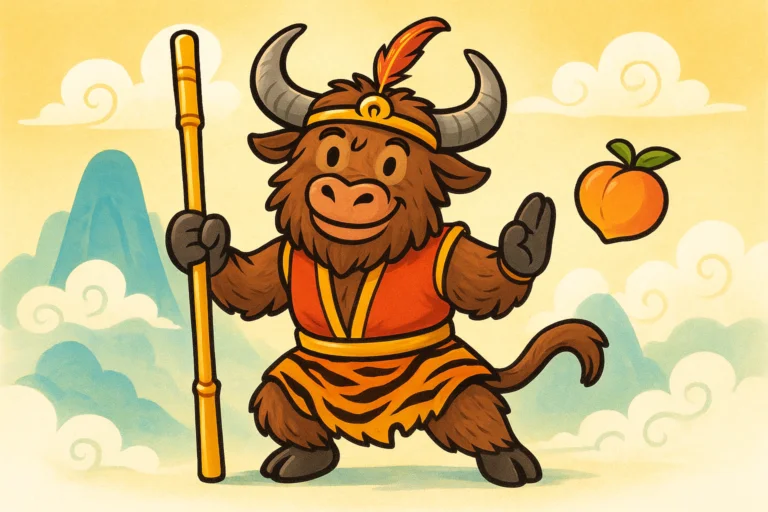
Journey to the West: B1 Intermediate Traditional Chinese Story with Audio