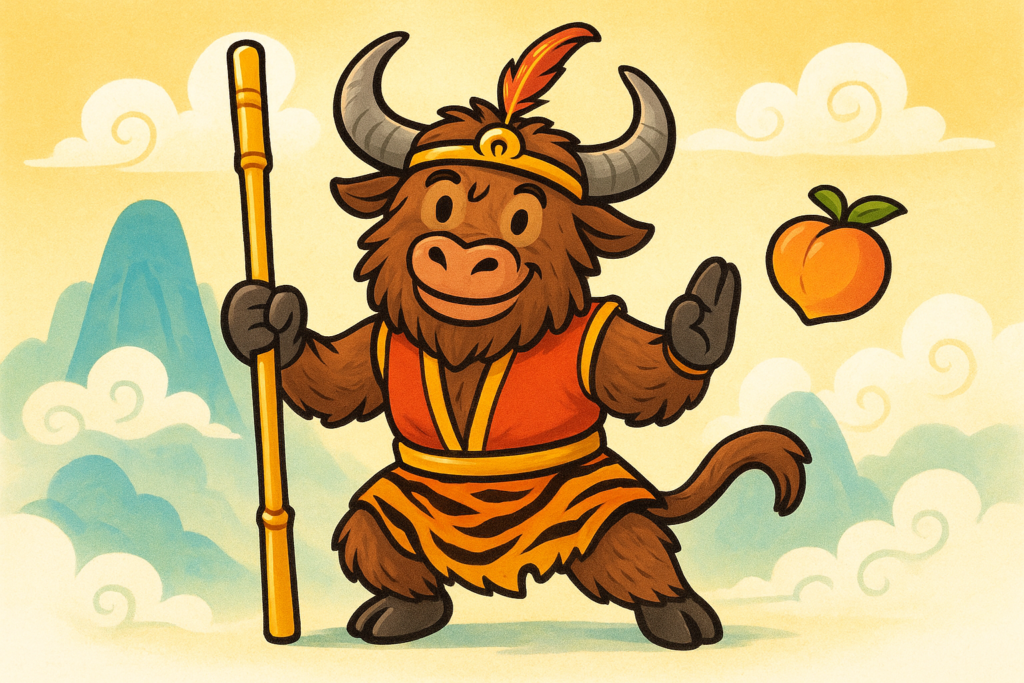
This B1 Intermediate retelling of 西遊記:白骨的詭計 keeps the plot clear for learners while still giving the story some atmosphere and momentum.
This version teaches Traditional Chinese through English and includes clickable word help inside the story, full story audio, and lesson notes after the reading. It is free to use on Yak Yacker and is designed to feel natural, readable, and manageable for learners.
很久以前,有一個和尚叫唐三藏。他要到西天去取佛經,幫助世人。他有三個徒弟:孫悟空、豬八戒和沙悟淨。
一天,他們來到一座很大的山。山上的,沒有,也沒有。
原來,這座山裡住著一個。她聽說吃了唐僧肉可以,就一直在等他們。
白骨精變成一個,手裡一籃水果。她走到他們面前,笑著說:「師父們好!你們要去哪裡?我這裡有水果,給你們吃吧!」
唐三藏正要說謝謝,孫悟空卻大喊:「師父小心!她是!」他拿出,就打向姑娘。姑娘倒在地上,但一縷黑煙飛走了。水果變成了石頭和蟲子。唐三藏很生氣:「悟空,你為什麼打好人?太沒有了!」
不久,一個老婆婆哭著走來,邊走邊喊:「我的女兒啊!你去了哪裡?」孫悟空用一看,又是那白骨精變的。他舉棒又打。老婆婆也黑煙逃走了。
唐三藏這次更生氣了。他開始。悟空的頭痛得像要裂開一樣,他大喊:「師父,不要念了!她是妖怪,我沒有騙你!」可是唐僧不相信,他說:「你連老人也打,我不要你這樣的。你走吧!」
孫悟空很難過,他只好一個,飛回了花果山。他一路上哭著說:「師父為什麼不相信我?」
白骨精看到孫悟空走了,非常高興。她立刻,一陣黑風把唐三藏山洞裡。
豬八戒和沙悟淨打不過白骨精,只好去找幫忙。他們飛到花果山,對孫悟空說:「大師兄,不好了!師父被白骨精抓走了!你快去他吧!」
孫悟空一聽,馬上忘記了傷心。他跟著他們回來。他變成白骨精的,走進山洞。白骨精看到母親,很高興地。
悟空假裝關心地問:「聽說你抓了唐僧,是真的嗎?他有個徒弟叫孫悟空,很厲害,你要小心啊。」白骨精得意地說:「娘,你放心!孫悟空被我了,他的師父很快就會被吃掉了。而且我知道孫悟空的,只要他聽到緊箍咒就會頭痛。」
這時,悟空突然,大聲說:「妖怪!你吧!俺老孫來也!」他舉起金箍棒,一棒打死了白骨精,救出了唐三藏。
唐三藏被救出來後,非常後悔。他對悟空說:「悟空,我錯怪你了。謝謝你救我。」悟空笑著說:「沒關係,師父。我相信你以後會相信我的。」從此,互相信任,繼續往。
This classic tale introduces four main pilgrims: 唐三藏 (Táng Sānzàng), the monk on a quest for Buddhist scriptures, and his three disciples-孫悟空 (Sūn Wùkōng), the Monkey King with incredible powers; 豬八戒 (Zhū Bājiè), the gluttonous pig; and 沙悟淨 (Shā Wùjìng), the quiet sand demon. The villain is 白骨精 (Báigǔjīng), a bone demon who can shapeshift to deceive humans.
Knowing these names helps you follow not only this episode but many other adventure stories. Below are additional key terms you'll encounter across the narrative.
- 妖怪 (yāoguài) - demon or monster; a common word in folklore.
- 金箍棒 (jīngūbàng) - Sun Wukong's magic staff that can change size.
- 火眼金睛 (huǒyǎn jīnjīng) - 'fiery eyes, golden pupils'; Wukong's ability to see through disguises.
- 緊箍咒 (jǐngūzhòu) - the tightening band spell used to control Wukong by causing him headaches.
Chinese uses markers like 了 (le), 著 (zhe), and 過 (guò) to express whether an action is complete, ongoing, or experienced, respectively. In the story, you see many examples: '飛走了' (fēi zǒu le) means 'flew away', with 了 showing the action is done. '哭著走來' (kū zhe zǒu lái) uses 著 to describe 'crying while coming'-an ongoing state.
Notice how these markers attach directly to verbs without changing for tense. The time frame comes from context. For instance, '她聽說吃了唐僧肉可以長生不老,就一直在等他們'-the 在 here marks ongoing action, while later 了 signals completion.
- 了 (le) after a verb: indicates a completed action (e.g., 打了, 'hit').
- 著 (zhe) after a verb: describes a continuous state or background action (e.g., 提著, 'carrying').
- 過 (guò) after a verb: indicates an experience (not directly in this story, but useful for the pattern).
- Try to spot more examples like 變成 (biàn chéng) - 'turned into'-where 成 serves as a result complement, not an aspect marker.
A resultative complement follows a verb to show the outcome of the action. In the story, you saw compounds like 打死 (dǎ sǐ - 'beat to death'), 救出 (jiù chū - 'rescue out'), and 騙走 (piàn zǒu - 'deceive and make leave'). The first character is the action, the second is the result.
This pattern is extremely productive in Chinese. For example, 吃完 (chī wán) means 'finish eating', 看清楚 (kàn qīngchǔ) means 'see clearly'. Pay attention to which result complements pair naturally with which verbs-just as in English we say 'beat up' but not 'beat down' in all contexts.
- Verb + 死 (sǐ): indicates a fatal outcome, as in 打死 (beat to death).
- Verb + 走 (zǒu): indicates departure or removal, as in 騙走 (cheat away).
- Verb + 出 (chū): indicates emergence or outward movement, as in 救出 (rescue out).
- Practice by forming sentences: 你看懂了嗎? (Did you understand by reading?) - using 懂 as result.
This episode ends with the pilgrims reconciling and strengthening their bond. Language learning also builds trust-trust in your ability to notice patterns and guess meanings from context. Reread the story aloud, focusing on the rhythm created by aspect markers and resultatives.
Challenge yourself: try rewriting a short paragraph from the demon's perspective, using some of the terms we covered. Or, explore the next chapter of the Journey to the West to see how the characters' speech reflects their personalities.
西遊記:白骨的詭計 comes from the Chinese / Journey to the West tradition and is best known as a classic fantasy novel. This Yak Yacker article is an original learner retelling based on Wu Cheng’en, 16th century; public domain, so the wording here is simplified for modern learners rather than copied from one old edition.
Older printings, translations, and retellings of this story can vary quite a bit. The original audience was usually general, but this version is adapted for B1 Intermediate learners studying Traditional Chinese. Best as episode series, not single summary.
If you want to look into the source tradition, start with Project Gutenberg.
If you want to keep going, browse more in our Traditional Chinese section. After that, try 1,000 Traditional Chinese Phrases and Expressions for another useful next step.
More Traditional Chinese to explore

Monkey Borrows the Banana Fan: A2 Elementary Traditional Chinese Story with Audio
The Legend of Hou Yi and the Ten Suns: An A2 Chinese Story with Audio
Wu Song Fights the Tiger: A B1 Intermediate Chinese Graded Reader with Audio