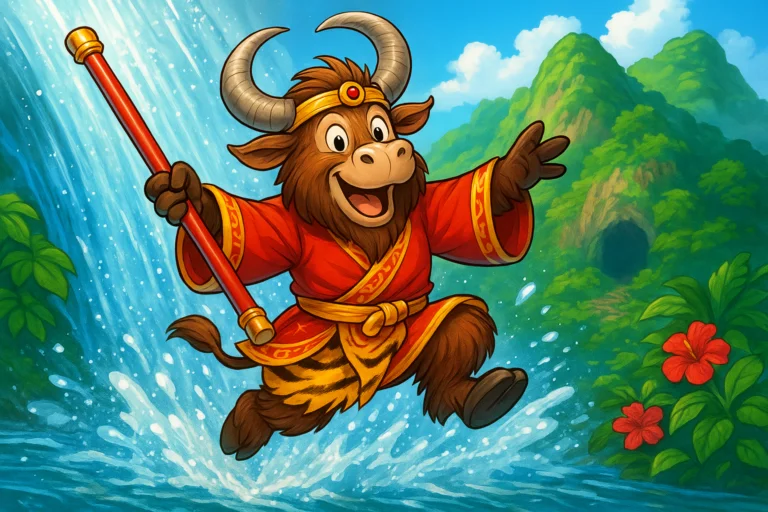
Welcome to a timeless Chinese myth! Today, we dive into the legend of Hou Yi, the skilled archer who saved the world from ten scorching suns. This story has been told for centuries and is perfect for anyone learning Traditional Chinese at the A2 (elementary) level.
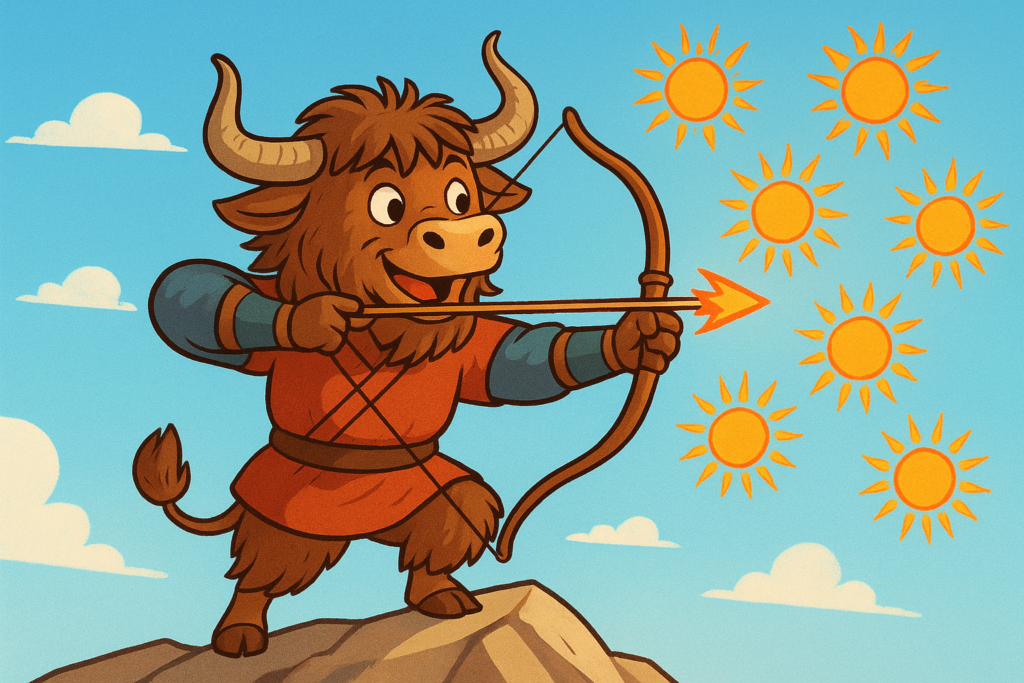
Long ago, ten suns rose together, burning the earth and causing great suffering. The hero Hou Yi took his bow and arrows and shot down nine of them, leaving just one to give us light and warmth. It's a tale of courage, balance, and the power of a single determined person.
Read this graded retelling at your own pace. Click any tricky word for instant help, listen to the full story audio, and check out the quick teaching notes. It's all free and designed to make your Chinese reading journey enjoyable and effective.
很久很久以前,天上有十個太陽。它們是兄弟,
六、七、八、九!
Once upon a time, there were ten suns in the sky. They were brothers, each taking turns to shine upon the earth.
One day, bored, the ten suns decided to come out together. All ten rose at once, making the earth scorching hot.
Rivers dried, plants died, and people were hot and thirsty. Everyone suffered, not knowing what to do.
A brave young man named Hou Yi, a divine archer with great skill, was asked to shoot down the suns.
Hou Yi climbed the highest mountain, took his divine bow and arrows, and shouted: "Suns, you are too wicked!"
He drew the bow and shot. Whoosh! One sun fell. A second arrow, whoosh! Another sun fell.
He shot down the third, fourth, and fifth suns, then kept shooting: six, seven, eight, nine! Only one sun remained.
The last sun, terrified, said: "Sorry! Don't shoot me. I'll be good, rising and setting on time each day."
Hou Yi thought and said: "Okay, you may stay. Remember this lesson!" From then on, one sun worked daily, and the earth revived.
These words appear in the story and are great for talking about legends, nature, and heroes. Take a moment to learn them-you'll spot them when you re-read!
- 太陽 (tàiyáng) - sun. Example: 天上有一個太陽 (There is one sun in the sky).
- 后羿 (Hòu Yì) - Hou Yi, a famous archer in Chinese mythology.
- 射箭 (shè jiàn) - to shoot an arrow. Example: 后羿會射箭 (Hou Yi can shoot arrows).
- 勇敢 (yǒnggǎn) - brave. Example: 后羿很勇敢 (Hou Yi is very brave).
The story uses simple but useful structures you can try right away. Here are three to add to your toolkit.
- 又...又... (yòu...yòu...) - both...and... Example: 人們又熱又渴 (People were both hot and thirsty).
- 不停地 (bù tíng de) - without stopping. Example: 后羿不停地射箭 (Hou Yi shot arrows without stopping).
- 從此 (cóng cǐ) - from then on. Example: 從此,一個太陽每天工作 (From then on, one sun worked every day).
In classic Chinese tales, multiple suns often mean the world is out of balance. Hou Yi's bold act brings back harmony-a reminder that even small actions can fix big problems. It's also a gentle nudge: too much of anything (even sunshine!) can cause trouble.
- This myth is part of a larger story that includes the moon goddess Chang'e. If you're curious, look her up next!
Now it's your turn. Retell the myth in your own words using the vocabulary and patterns above. Don't worry about perfection-just have fun with it. You could even change the ending: what if the last sun refused to behave? How would you convince it?
- Record yourself telling the tale and listen back. Notice how the rhythm feels.
- Try swapping in other characters or emotions: is there a timid sun? A grumpy cloud?
Hou Yi Shoots the Suns comes from the Chinese / myth tradition and is best known as a myth. This Yak Yacker article is an original learner retelling based on Ancient Chinese myth; public domain, so the wording here is simplified for modern learners rather than copied from one old edition.
Older printings, translations, and retellings of this story can vary quite a bit. The original audience was usually kids/general, but this version is adapted for A2 Elementary learners studying Traditional Chinese. Good for numbers/weather/hero vocabulary.
If you want to look into the source tradition, start with Wikipedia.
If you want to keep going, browse more in our Traditional Chinese section. After that, try Traditional Chinese Grammar Patterns for another useful next step.
More Traditional Chinese to explore
Monkey Borrows the Banana Fan: A2 Elementary Traditional Chinese Story with Audio
Wu Song Fights the Tiger: A B1 Intermediate Chinese Graded Reader with Audio
The Butterfly Lovers: A B1 Interactive Story in Traditional Chinese with Audio