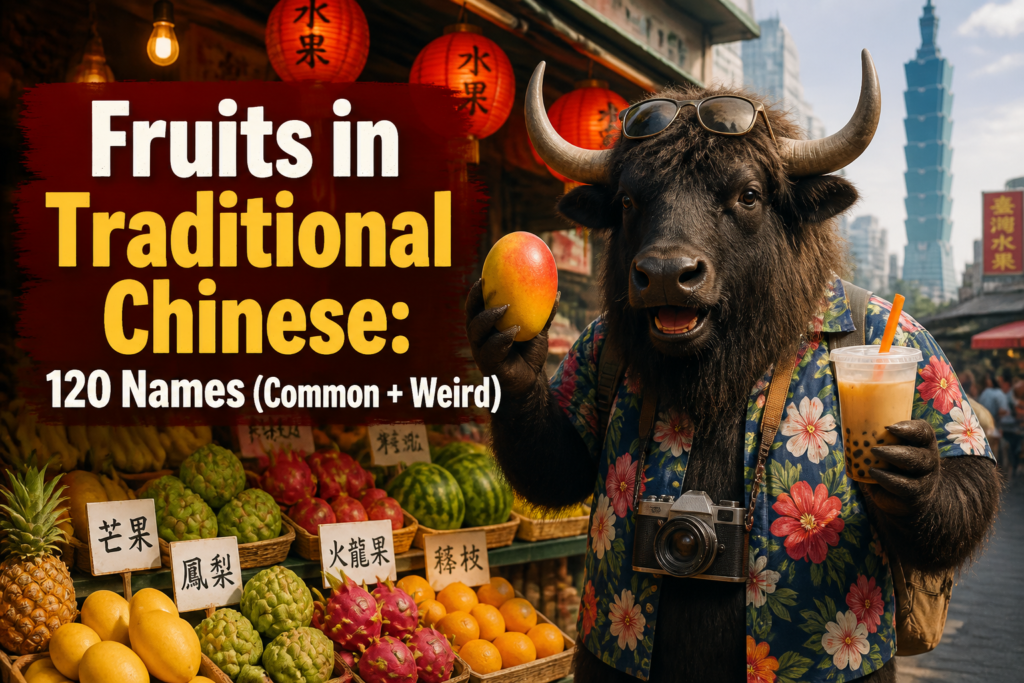
水果學起來,通常比背「政治、經濟、社會」更有生命力。畢竟你真的會在夜市、超商、菜市場、早餐店、手搖飲店遇到它們。有人想買芒果冰,有人只想知道木瓜牛奶到底在點什麼,生活就是這麼不講理。
For the broader learning path, visit our parent guide.
This guide teaches 120 fruit names in Traditional Chinese, with pinyin and English meaning. You will also see real example sentences, Taiwan-friendly usage, and a few weird fruits that make Mandarin learners pause for a second and go, “Wait, that is a fruit?” Yes. Yes, it is.
For a bit of boring-but-useful background, you can always check a reliable reference like Wikipedia’s fruit overview or the Taiwan Ministry of Education resources if you want to compare word usage later. Not glamorous, but solid. Like a plastic stool outside a fruit stand.
Core Fruit Vocabulary
Here are the most useful fruit words first. These are the ones that show up in daily life, menus, and shopping conversations.
| Traditional Chinese | Pinyin | Meaning | Example (ZH) | Example (Pinyin) | Translation (EN) |
|---|---|---|---|---|---|
| 水果 | shuǐguǒ | fruit | 我今天想吃很多水果。 | Wǒ jīntiān xiǎng chī hěn duō shuǐguǒ. | I want to eat lots of fruit today. |
| 蘋果 | píngguǒ | apple | 這個蘋果很甜。 | Zhège píngguǒ hěn tián. | This apple is very sweet. |
| 香蕉 | xiāngjiāo | banana | 我早上吃了一根香蕉。 | Wǒ zǎoshang chīle yī gēn xiāngjiāo. | I ate a banana this morning. |
| 橘子 | júzi | orange / tangerine | 過年時大家常吃橘子。 | Guònián shí dàjiā cháng chī júzi. | People often eat tangerines during Lunar New Year. |
| 柳橙 | liǔchéng | orange | 我想喝一杯柳橙汁。 | Wǒ xiǎng hē yī bēi liǔchéng zhī. | I want to drink a glass of orange juice. |
| 芒果 | mángguǒ | mango | 夏天我最愛芒果冰。 | Xiàtiān wǒ zuì ài mángguǒ bīng. | In summer, I love mango shaved ice the most. |
| 鳳梨 | fènglí | pineapple | 台灣的鳳梨很好吃。 | Táiwān de fènglí hěn hǎochī. | Taiwanese pineapple is delicious. |
| 西瓜 | xīguā | watermelon | 天氣熱的時候,我想吃西瓜。 | Tiānqì rè de shíhou, wǒ xiǎng chī xīguā. | When the weather is hot, I want to eat watermelon. |
| 葡萄 | pútáo | grape | 這串葡萄很新鮮。 | Zhè chuàn pútáo hěn xīnxiān. | This bunch of grapes is very fresh. |
| 草莓 | cǎoméi | strawberry | 草莓蛋糕看起來很好吃。 | Cǎoméi dàngāo kàn qǐlái hěn hǎochī. | The strawberry cake looks delicious. |
Small note: 橘子 is often used for “tangerine” in Taiwan, while 柳橙 is the more common “orange” juice fruit word. Yes, Mandarin likes to be slightly annoying like that.
Common Fruit Names
| Traditional Chinese | Pinyin | Meaning | Example (ZH) | Example (Pinyin) | Translation (EN) |
|---|---|---|---|---|---|
| 梨子 | lízi | pear | 這顆梨子很多汁。 | Zhè kē lízi hěn duō zhī. | This pear is very juicy. |
| 桃子 | táozi | peach | 我媽買了幾個桃子。 | Wǒ mā mǎile jǐ ge táozi. | My mom bought a few peaches. |
| 李子 | lǐzi | plum | 這些李子有點酸。 | Zhèxiē lǐzi yǒudiǎn suān. | These plums are a little sour. |
| 櫻桃 | yīngtáo | cherry | 櫻桃很貴,但很好吃。 | Yīngtáo hěn guì, dàn hěn hǎochī. | Cherries are expensive, but they are tasty. |
| 柿子 | shìzi | persimmon | 柿子熟了以後很甜。 | Shìzi shúle yǐhòu hěn tián. | Persimmons are very sweet when ripe. |
| 柚子 | yòuzi | pomelo / grapefruit-type citrus | 中秋節常吃柚子。 | Zhōngqiū Jié cháng chī yòuzi. | People often eat pomelo during the Mid-Autumn Festival. |
| 葡萄柚 | pútáo yòu | grapefruit | 我喜歡葡萄柚汁。 | Wǒ xǐhuān pútáo yòu zhī. | I like grapefruit juice. |
| 檸檬 | níngméng | lemon | 這杯茶加了檸檬。 | Zhè bēi chá jiāle níngméng. | This tea has lemon added. |
| 青檸 | qīngníng | lime | 我想要青檸口味的飲料。 | Wǒ xiǎng yào qīngníng kǒuwèi de yǐnliào. | I want a lime-flavored drink. |
| 木瓜 | mùguā | papaya | 木瓜牛奶在台灣很常見。 | Mùguā niúnǎi zài Táiwān hěn chángjiàn. | Papaya milk is very common in Taiwan. |
| 火龍果 | huǒlóngguǒ | dragon fruit | 火龍果的顏色很亮。 | Huǒlóngguǒ de yánsè hěn liàng. | Dragon fruit has a bright color. |
| 百香果 | bǎixiāngguǒ | passion fruit | 百香果很香。 | Bǎixiāngguǒ hěn xiāng. | Passion fruit smells very fragrant. |
| 荔枝 | lìzhī | lychee | 荔枝季節很短。 | Lìzhī jìjié hěn duǎn. | Lychee season is short. |
| 龍眼 | lóngyǎn | longan | 龍眼可以做甜湯。 | Lóngyǎn kěyǐ zuò tiántāng. | Longan can be used in sweet soup. |
| 蓮霧 | liánwù | wax apple | 蓮霧吃起來很清爽。 | Liánwù chī qǐlái hěn qīngshuǎng. | Wax apple tastes refreshing. |
| 芭樂 | bālè | guava | 芭樂加梅粉很好吃。 | Bālè jiā méifěn hěn hǎochī. | Guava with plum powder is delicious. |
| 楊桃 | yángtáo | starfruit | 楊桃切開像星星。 | Yángtáo qiē kāi xiàng xīngxīng. | Starfruit looks like a star when cut open. |
| 桑椹 | sāngshèn | mulberry | 桑椹果醬很香。 | Sāngshèn guǒjiàng hěn xiāng. | Mulberry jam smells great. |
| 山竹 | shānzhú | mangosteen | 山竹外面硬,裡面很甜。 | Shānzhú wàimiàn yìng, lǐmiàn hěn tián. | Mangosteen is hard outside and sweet inside. |
| 榴槤 | liúlián | durian | 榴槤味道很強烈。 | Liúlián wèidào hěn qiángliè. | Durian has a very strong smell. |
| 釋迦 | shìjiā | sugar apple | 台灣的釋迦很有名。 | Táiwān de shìjiā hěn yǒumíng. | Taiwan’s sugar apple is famous. |
| 蓮子 | liánzǐ | lotus seed | 蓮子常放進甜湯裡。 | Liánzǐ cháng fàng jìn tiántāng lǐ. | Lotus seeds are often put in sweet soup. |
More Fruits You Will Actually See
| Traditional Chinese | Pinyin | Meaning | Example (ZH) | Example (Pinyin) | Translation (EN) |
|---|---|---|---|---|---|
| 石榴 | shíliú | pomegranate | 石榴籽很多。 | Shíliú zǐ hěn duō. | Pomegranate has many seeds. |
| 無花果 | wúhuāguǒ | fig | 無花果可以直接吃。 | Wúhuāguǒ kěyǐ zhíjiē chī. | Figs can be eaten directly. |
| 枇杷 | pípá | loquat | 枇杷季節很短。 | Pípá jìjié hěn duǎn. | Loquat season is short. |
| 水蜜桃 | shuǐmìtáo | nectarine / peach variety | 水蜜桃很香。 | Shuǐmìtáo hěn xiāng. | Nectarines smell wonderful. |
| 油桃 | yóutáo | nectarine | 油桃的皮比較光滑。 | Yóutáo de pí bǐjiào guānghuá. | Nectarines have smoother skin. |
| 蜜桃 | mìtáo | peach, sweet peach | 這個甜點有蜜桃口味。 | Zhège tiándiǎn yǒu mìtáo kǒuwèi. | This dessert has peach flavor. |
| 哈密瓜 | hāmìguā | cantaloupe / melon | 哈密瓜很適合夏天吃。 | Hāmìguā hěn shìhé xiàtiān chī. | Cantaloupe is great for summer. |
| 香瓜 | xiāngguā | sweet melon | 香瓜聞起來很香。 | Xiāngguā wén qǐlái hěn xiāng. | Sweet melon smells fragrant. |
| 甜瓜 | tiánguā | melon | 甜瓜很清甜。 | Tiánguā hěn qīngtián. | Melon tastes lightly sweet. |
| 青蘋果 | qīng píngguǒ | green apple | 青蘋果比較酸。 | Qīng píngguǒ bǐjiào suān. | Green apples are more sour. |
| 紅蘋果 | hóng píngguǒ | red apple | 紅蘋果看起來很漂亮。 | Hóng píngguǒ kàn qǐlái hěn piàoliang. | Red apples look very pretty. |
| 小番茄 | xiǎo fānqié | cherry tomato | 我午餐吃了小番茄。 | Wǒ wǔcān chīle xiǎo fānqié. | I ate cherry tomatoes for lunch. |
| 番石榴 | fānshíliú | guava | 番石榴也很常見。 | Fānshíliú yě hěn chángjiàn. | Guava is also very common. |
| 奇異果 | qíyìguǒ | kiwi fruit | 奇異果有很多維他命C。 | Qíyìguǒ yǒu hěn duō Wéitāmìng C. | Kiwi fruit has a lot of vitamin C. |
| 金桔 | jīnjú | kumquat | 金桔可以做蜜餞。 | Jīnjú kěyǐ zuò mìjiàn. | Kumquats can be made into preserved fruit. |
| 梅子 | méizi | plum | 梅子口味很受歡迎。 | Méizi kǒuwèi hěn shòu huānyíng. | Plum flavor is very popular. |
| 酸梅 | suānméi | sour plum | 我喜歡酸梅湯。 | Wǒ xǐhuān suānméi tāng. | I like sour plum drink. |
| 芫荽果 | yánsui guǒ | coriander fruit / seed pod | 這個名稱比較少見。 | Zhège míngchēng bǐjiào shǎojiàn. | This name is less common. |
| 西番蓮果 | xīfānlián guǒ | passion fruit | 西番蓮果就是百香果。 | Xīfānlián guǒ jiùshì bǎixiāngguǒ. | Passion fruit is also called passionflower fruit. |
Weird, Wild, And Useful Fruit Words
These are fun because they feel a little strange at first. Some are botanical names, some are borrowed names, and some are just the sort of thing you will see if you wander into a fruit market with curiosity and too much free time.
| Traditional Chinese | Pinyin | Meaning | Example (ZH) | Example (Pinyin) | Translation (EN) |
|---|---|---|---|---|---|
| 佛手 | fóshǒu | fingered citron | 佛手看起來像手掌。 | Fóshǒu kàn qǐlái xiàng shǒuzhǎng. | Fingered citron looks like a hand. |
| 仙桃 | xiāntáo | apricot / mythic peach name | 仙桃這個名字很夢幻。 | Xiāntáo zhège míngzi hěn mènghuàn. | The name “xian peach” sounds dreamy. |
| 人參果 | rénshēnguǒ | pepino / ginseng fruit name | 人參果不是神話裡才有。 | Rénshēnguǒ bùshì shénhuà lǐ cái yǒu. | Ginseng fruit is not only from myths. |
| 神秘果 | shénmìguǒ | miracle fruit | 神秘果會影響味覺。 | Shénmìguǒ huì yǐngxiǎng wèijué. | Miracle fruit affects taste perception. |
| 嘉寶果 | jiābǎoguǒ | jabuticaba | 嘉寶果長在樹幹上。 | Jiābǎoguǒ zhǎng zài shùgàn shàng. | Jabuticaba grows on the trunk. |
| 刺果番荔枝 | cìguǒ fānlìzhī | soursop | 刺果番荔枝的外表很特別。 | Cìguǒ fānlìzhī de wàibiǎo hěn tèbié. | Soursop has a very unusual look. |
| 牛奶果 | niúnǎiguǒ | star apple / milk fruit | 牛奶果名字很可愛。 | Niúnǎiguǒ míngzi hěn kě’ài. | The name “milk fruit” is cute. |
| 蛇皮果 | shépígǔo | salak | 蛇皮果外皮像鱗片。 | Shépíguǒ wàipí xiàng línpiàn. | Salak has scale-like skin. |
| 羅望子 | luówàngzǐ | tamarind | 羅望子常做成醬。 | Luówàngzǐ cháng zuò chéng jiàng. | Tamarind is often made into paste. |
| 蛋黃果 | dànhuángguǒ | canistel / egg fruit | 蛋黃果吃起來像甜甜的蛋黃。 | Dànhuángguǒ chī qǐlái xiàng tiántián de dànhuáng. | Egg fruit tastes like sweet egg yolk. |
| 阿開木 | ākāimù | ackee | 阿開木不是台灣常見水果。 | Ākāimù bùshì Táiwān chángjiàn shuǐguǒ. | Ackee is not common in Taiwan. |
| 巴拉圭櫻桃 | bālāguī yīngtáo | Surinam cherry | 巴拉圭櫻桃名字很長。 | Bālāguī yīngtáo míngzi hěn cháng. | Surinam cherry has a long name. |
| 黑柿 | hēishì | black sapote | 黑柿成熟後很軟。 | Hēishì chéngshú hòu hěn ruǎn. | Black sapote becomes very soft when ripe. |
| 番荔枝 | fānlìzhī | custard apple | 番荔枝和釋迦有點像。 | Fānlìzhī hé shìjiā yǒudiǎn xiàng. | Custard apple is somewhat like sugar apple. |
| 布福娜 | bùfúnà | pandanus fruit | 布福娜是少見的名字。 | Bùfúnà shì shǎojiàn de míngzi. | Bu fu na is a rare name. |
| 羊奶果 | yángnǎiguǒ | Elaeagnus fruit | 羊奶果名字聽起來很新奇。 | Yángnǎiguǒ míngzi tīng qǐlái hěn xīnqí. | The name sounds unusual. |
| 木奶果 | mùnǎiguǒ | Baccaurea fruit | 木奶果不是一般超市常見的水果。 | Mùnǎiguǒ bùshì yìbān chāoshì chángjiàn de shuǐguǒ. | Wood milk fruit is not a normal supermarket fruit. |
| 麵包果 | miànbāoguǒ | breadfruit | 麵包果可以煮來吃。 | Miànbāoguǒ kěyǐ zhǔ lái chī. | Breadfruit can be cooked and eaten. |
| 棗子 | zǎozi | jujube / date-like fruit | 棗子常出現在中藥店附近。 | Zǎozi cháng chūxiàn zài zhōngyào diàn fùjìn. | Jujubes often appear near Chinese medicine shops. |
Useful Fruit Phrases
These phrases help you go beyond single vocabulary words. Because knowing “mango” is nice, but knowing how to ask for mango is what keeps you from pointing like a confused tourist.
| Traditional Chinese | Pinyin | Meaning | Example (ZH) | Example (Pinyin) | Translation (EN) |
|---|---|---|---|---|---|
| 水果攤 | shuǐguǒ tān | fruit stand | 我們去水果攤買芒果吧。 | Wǒmen qù shuǐguǒ tān mǎi mángguǒ ba. | Let’s go to the fruit stand and buy mangoes. |
| 切水果 | qiē shuǐguǒ | to cut fruit | 媽媽正在切水果。 | Māma zhèngzài qiē shuǐguǒ. | Mom is cutting fruit. |
| 水果沙拉 | shuǐguǒ shālā | fruit salad | 我午餐吃水果沙拉。 | Wǒ wǔcān chī shuǐguǒ shālā. | I eat fruit salad for lunch. |
| 新鮮水果 | xīnxiān shuǐguǒ | fresh fruit | 這家店賣新鮮水果。 | Zhè jiā diàn mài xīnxiān shuǐguǒ. | This shop sells fresh fruit. |
| 當季水果 | dāngjì shuǐguǒ | seasonal fruit | 當季水果通常比較便宜。 | Dāngjì shuǐguǒ tōngcháng bǐjiào piányi. | Seasonal fruit is usually cheaper. |
| 水果汁 | shuǐguǒ zhī | fruit juice | 我想喝水果汁。 | Wǒ xiǎng hē shuǐguǒ zhī. | I want to drink fruit juice. |
| 水果冰 | shuǐguǒ bīng | fruit shaved ice | 夏天最適合吃水果冰。 | Xiàtiān zuì shìhé chī shuǐguǒ bīng. | Fruit shaved ice is best in summer. |
| 水果茶 | shuǐguǒ chá | fruit tea | 我點了一杯水果茶。 | Wǒ diǎnle yī bēi shuǐguǒ chá. | I ordered a cup of fruit tea. |
| 水果盒 | shuǐguǒ hé | fruit box | 這份水果盒很方便。 | Zhè fèn shuǐguǒ hé hěn fāngbiàn. | This fruit box is very convenient. |
| 水果優格 | shuǐguǒ yōugé | fruit yogurt | 早餐我常吃水果優格。 | Zǎocān wǒ cháng chī shuǐguǒ yōugé. | I often eat fruit yogurt for breakfast. |
| 削皮 | xiāopí | peel | 鳳梨要先削皮。 | Fènglí yào xiān xiāopí. | Pineapple needs to be peeled first. |
| 去籽 | qù zǐ | remove seeds | 吃西瓜前先去籽。 | Chī xīguā qián xiān qù zǐ. | Remove the seeds before eating watermelon. |
| 剝皮 | bāopí | peel off skin | 荔枝要先剝皮。 | Lìzhī yào xiān bāopí. | Lychees need to be peeled first. |
| 果肉 | guǒròu | fruit flesh | 這個水果的果肉很軟。 | Zhège shuǐguǒ de guǒròu hěn ruǎn. | The flesh of this fruit is soft. |
| 果皮 | guǒpí | fruit skin | 這個果皮不能吃。 | Zhège guǒpí bù néng chī. | This skin cannot be eaten. |
Real-Life Sentences You Can Steal
Here are natural sentences for shopping, ordering, and casual conversation. Because fruit is never just fruit. It is breakfast, dessert, a gift, a snack, and sometimes an excuse to leave a conversation early.
- 你要不要吃蘋果? Nǐ yào bú yào chī píngguǒ? — Do you want to eat an apple?
- 我今天買了香蕉和葡萄。 Wǒ jīntiān mǎile xiāngjiāo hé pútáo. — I bought bananas and grapes today.
- 這個芒果很甜。 Zhège mángguǒ hěn tián. — This mango is very sweet.
- 請幫我切成小塊。 Qǐng bāng wǒ qiē chéng xiǎo kuài. — Please cut it into small pieces for me.
- 我不太喜歡榴槤。 Wǒ bú tài xǐhuān liúlián. — I do not really like durian.
- 這裡有當季水果嗎? Zhèlǐ yǒu dāngjì shuǐguǒ ma? — Do you have seasonal fruit here?
- 這杯飲料可以加百香果嗎? Zhè bēi yǐnliào kěyǐ jiā bǎixiāngguǒ ma? — Can this drink be made with passion fruit?
- 中秋節我家會買柚子。 Zhōngqiū Jié wǒ jiā huì mǎi yòuzi. — My family buys pomelos for Mid-Autumn Festival.
- 她最愛吃草莓蛋糕。 Tā zuì ài chī cǎoméi dàngāo. — She loves strawberry cake the most.
- 這些蓮霧看起來很新鮮。 Zhèxiē liánwù kàn qǐlái hěn xīnxiān. — These wax apples look very fresh.
Quick Taiwan Usage Notes
In Taiwan, fruit culture is serious business. Fruit is often cut neatly, served as a gift, or sold by the bowl in convenient portions. You will hear 芭樂 everywhere, and 鳳梨 shows up in desserts, gifts, and snacks like it owns the place.
Also, the word 水果 is very general. If you want a specific fruit, say the fruit name directly. If you want “fruit in general,” 水果 is the safe choice. If you want to sound natural, learn the measure words too: 一顆蘋果 (one apple), 一根香蕉 (one banana), 一串葡萄 (one bunch of grapes), 一片西瓜 or 一塊西瓜 depending on the cut.
For more official vocabulary practice later, the boring-but-helpful Traditional Chinese Placement Test TOCFL and the Traditional Chinese Vocabulary Test are useful next steps.
Tone And Pronunciation Tips
A few fruit names are worth slowing down on:
- 水果 shuǐguǒ — the uǐ sound can feel slippery at first.
- 葡萄 pútáo — two rising tones in a row, nice and bouncy.
- 芒果 mángguǒ — the second syllable is a third tone, not a dramatic growl.
- 鳳梨 fènglí — watch the fourth tone + second tone combo.
- 草莓 cǎoméi — the second syllable is méi, not méi with an English “may” sound.
When you want to sound natural, do not rush through the tones like you are late for a train. Mandarin fruit words often sound clearer when you speak a little slowly. Convenient, since fruit stands are not going anywhere.
Word Families And Related Expressions
| Traditional Chinese | Pinyin | Meaning | Example (ZH) | Example (Pinyin) | Translation (EN) |
|---|---|---|---|---|---|
| 果汁 | guǒzhī | juice | 我想喝果汁。 | Wǒ xiǎng hē guǒzhī. | I want to drink juice. |
| 果醬 | guǒjiàng | jam | 這是草莓果醬。 | Zhè shì cǎoméi guǒjiàng. | This is strawberry jam. |
| 果乾 | guǒgān | dried fruit | 我喜歡吃果乾。 | Wǒ xǐhuān chī guǒgān. | I like eating dried fruit. |
| 果盤 | guǒpán | fruit plate | 餐廳送了一盤果盤。 | Cāntīng sòngle yì pán guǒpán. | The restaurant brought a fruit plate. |
| 果汁機 | guǒzhījī | juicer / blender | 我家的果汁機壞了。 | Wǒ jiā de guǒzhījī huàile. | The juicer at my home broke. |
| 水果店 | shuǐguǒ diàn | fruit shop | 這附近有一家水果店。 | Zhè fùjìn yǒu yì jiā shuǐguǒ diàn. | There is a fruit shop nearby. |
| 水果禮盒 | shuǐguǒ lǐhé | fruit gift box | 過年常送水果禮盒。 | Guònián cháng sòng shuǐguǒ lǐhé. | Fruit gift boxes are often given during Lunar New Year. |
| 水果香 | shuǐguǒ xiāng | fruity aroma | 這款茶有水果香。 | Zhè kuǎn chá yǒu shuǐguǒ xiāng. | This tea has a fruity aroma. |
Practice Time
Try these quick drills. No fancy ceremony. Just vocabulary doing its job.
- Match the fruit to the meaning: 芒果, 草莓, 柚子, 火龍果
- Say these in Chinese: apple, banana, watermelon, lychee, guava
- Fill in the blank: 我想喝一杯_____汁。 (I want to drink a glass of _____ juice.)
- Translate: “These grapes are very sweet.”
- Translate: “My family likes pomelo during Mid-Autumn Festival.”
Answers if you want to check yourself: 柳橙 or 果汁 context depending on the drink, 葡萄 for grapes, 中秋節我家喜歡吃柚子。
Extra Challenge: Say It Naturally
Try these sentences out loud:
- 我想買兩顆蘋果。 Wǒ xiǎng mǎi liǎng kē píngguǒ. — I want to buy two apples.
- 這根香蕉有點熟了。 Zhè gēn xiāngjiāo yǒudiǎn shúle. — This banana is a little ripe.
- 那串葡萄看起來很好吃。 Nà chuàn pútáo kàn qǐlái hěn hǎochī. — That bunch of grapes looks delicious.
Common Mistakes And Fixes
| Common Mistake | Better Version | Why It Helps |
|---|---|---|
| Using simplified characters like 水果 when the lesson asks for Traditional | Use 水果, 蘋果, 鳳梨, 草莓 | Traditional and Simplified are not the same system. |
| Saying 一個香蕉 | 一根香蕉 | 香蕉 usually uses 根, not 個. |
| Saying 一個葡萄 | 一串葡萄 | Grapes are usually counted by bunch. |
| Forgetting tones in pinyin | mángguǒ, pútáo, liánwù | Tones matter, and fruit words often sound very different without them. |
| Using 橙子 in Taiwan casually | 柳橙 or 橘子 depending on meaning | Taiwan usage often prefers these words. |
| Mixing up 柚子 and 葡萄柚 | Use 柚子 for pomelo; 葡萄柚 for grapefruit | They are related, but not the same thing. |
Quick Reference Summary
- Fruit = 水果 shuǐguǒ
- Apple = 蘋果 píngguǒ
- Banana = 香蕉 xiāngjiāo
- Mango = 芒果 mángguǒ
- Pineapple = 鳳梨 fènglí
- Watermelon = 西瓜 xīguā
- Grape = 葡萄 pútáo
- Strawberry = 草莓 cǎoméi
- Guava = 芭樂 bālè
- Durian = 榴槤 liúlián
If you want to keep going, a nice next stop is Chinese Food in Trad Chinese, because fruit and food vocabulary naturally hang out together like old friends. You can also explore Fish Names in Trad Chinese if you enjoy collecting useful nouns with a side of “why does this one have three names?”
Yak takeaway: learn the common fruit words first, then the weird ones for fun. That way you can order snacks, understand menus, and survive fruit season like a competent human instead of a person pointing at a mango with desperate confidence.