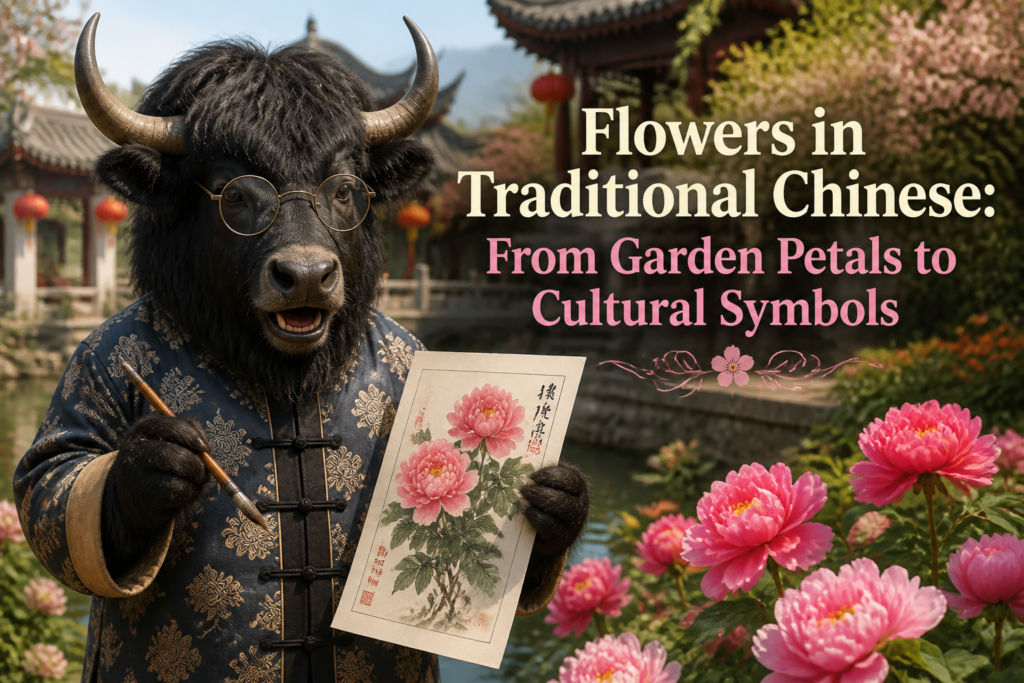
Flowers in Traditional Chinese are not just pretty decorations. They show up in gardens, poems, festivals, love messages, and even quiet little insults that are somehow still polite. Mandarin has lots of flower words, and in Taiwan people use them in everyday speech, not just in fancy literature. That makes this topic very useful, very usable, and a little more charming than your average vocabulary list.
For the broader learning path, visit our parent guide.
If you have ever walked past a flower market in Taipei, you already know the vibe: bright colors, strong smells, and people buying flowers for birthdays, ceremonies, and “I forgot, please forgive me” moments. By the end of this article, you will know common flower names, useful phrases, cultural meanings, and a few symbols that show up again and again in Traditional Chinese writing.
For a quick language benchmark, you can also try the Traditional Chinese vocabulary test or the Traditional Chinese placement test (TOCFL). Flowers may look soft and harmless, but the vocabulary pile can still get sneaky.
Core Flower Vocabulary
Here are the most useful flower words first. These are the ones you will actually see in daily life, signs, gift notes, poems, and garden talk.
| Traditional Chinese | Pinyin | Meaning | Example (ZH) | Example (Pinyin) | Translation (EN) |
|---|---|---|---|---|---|
| 花 | huā | flower | 這朵花很香。 | Zhè duǒ huā hěn xiāng. | This flower smells very good. |
| 花朵 | huāduǒ | blossom; flower | 春天的花朵開了。 | Chūntiān de huāduǒ kāi le. | The flowers of spring have opened. |
| 玫瑰 | méiguī | rose | 她收到一束玫瑰。 | Tā shōudào yí shù méiguī. | She received a bouquet of roses. |
| 百合 | bǎihé | lily | 百合很適合婚禮。 | Bǎihé hěn shìhé hūnlǐ. | Lilies are very suitable for weddings. |
| 鬱金香 | yùjīnxiāng | tulip | 我喜歡鬱金香的顏色。 | Wǒ xǐhuān yùjīnxiāng de yánsè. | I like the color of tulips. |
| 向日葵 | xiàngrìkuí | sunflower | 向日葵看起來很有活力。 | Xiàngrìkuí kàn qǐlái hěn yǒu huólì. | Sunflowers look very energetic. |
| 櫻花 | yīnghuā | cherry blossom | 我們去看櫻花吧。 | Wǒmen qù kàn yīnghuā ba. | Let’s go see cherry blossoms. |
| 荷花 | héhuā | lotus | 荷花在夏天很常見。 | Héhuā zài xiàtiān hěn chángjiàn. | Lotus flowers are common in summer. |
| 菊花 | júhuā | chrysanthemum | 菊花茶很受歡迎。 | Júhuā chá hěn shòu huānyíng. | Chrysanthemum tea is very popular. |
| 牡丹 | mǔdān | peony | 牡丹常被當成富貴的象徵。 | Mǔdān cháng bèi dàng chéng fùguì de xiàngzhēng. | Peonies are often treated as a symbol of wealth and honor. |
Useful Phrases With Flowers
These phrases help you talk about flowers in real life, not just in a vocabulary quiz that pretends your brain is a storage warehouse.
| Traditional Chinese | Pinyin | English Meaning | Example (ZH) | Example (Pinyin) | Translation (EN) |
|---|---|---|---|---|---|
| 送花 | sòng huā | to give flowers | 他常常送花給媽媽。 | Tā chángcháng sòng huā gěi māma. | He often gives flowers to his mother. |
| 買花 | mǎi huā | to buy flowers | 我想去花店買花。 | Wǒ xiǎng qù huādiàn mǎi huā. | I want to go to the flower shop to buy flowers. |
| 插花 | chāhuā | flower arranging | 她很會插花。 | Tā hěn huì chāhuā. | She is good at flower arranging. |
| 花店 | huādiàn | flower shop | 這家花店開很久了。 | Zhè jiā huādiàn kāi hěn jiǔ le. | This flower shop has been open for a long time. |
| 花束 | huāshù | bouquet | 這束花束很漂亮。 | Zhè shù huāshù hěn piàoliang. | This bouquet is very beautiful. |
| 花園 | huāyuán | garden | 我們在花園裡散步。 | Wǒmen zài huāyuán lǐ sànbù. | We walked in the garden. |
| 開花 | kāihuā | to bloom | 這棵樹快開花了。 | Zhè kē shù kuài kāihuā le. | This tree is about to bloom. |
| 花香 | huāxiāng | flower fragrance | 空氣裡有花香。 | Kōngqì lǐ yǒu huāxiāng. | There is flower fragrance in the air. |
| 花瓣 | huābàn | petal | 花瓣掉在桌上了。 | Huābàn diào zài zhuō shàng le. | A petal fell on the table. |
| 花期 | huāqī | blooming period | 這裡的花期很短。 | Zhèlǐ de huāqī hěn duǎn. | The blooming period here is very short. |
| 賞花 | shǎng huā | to admire flowers | 週末我們去公園賞花。 | Zhōumò wǒmen qù gōngyuán shǎng huā. | We’ll go to the park to admire flowers on the weekend. |
| 花語 | huāyǔ | the language of flowers | 玫瑰的花語常和愛有關。 | Méiguī de huāyǔ cháng hé ài yǒuguān. | The language of roses is often related to love. |
Common Flower Types And Their Feel
Not every flower carries the same vibe. Some feel romantic, some feel formal, and some feel like “someone is trying to be thoughtful but does not want to overdo it.” That, honestly, is a very human category.
| Traditional Chinese | Pinyin | Meaning | Example (ZH) | Example (Pinyin) | Translation (EN) |
|---|---|---|---|---|---|
| 玫瑰 | méiguī | rose; romance | 紅玫瑰通常代表愛情。 | Hóng méiguī tōngcháng dàibiǎo àiqíng. | Red roses usually represent love. |
| 百合 | bǎihé | lily; purity | 白色百合看起來很優雅。 | Báisè bǎihé kàn qǐlái hěn yōuyǎ. | White lilies look elegant. |
| 向日葵 | xiàngrìkuí | sunflower; warmth | 向日葵給人很溫暖的感覺。 | Xiàngrìkuí gěi rén hěn wēnnuǎn de gǎnjué. | Sunflowers give people a warm feeling. |
| 櫻花 | yīnghuā | cherry blossom; seasonal beauty | 櫻花季很多人會去旅行。 | Yīnghuā jì hěn duō rén huì qù lǚxíng. | During cherry blossom season, many people travel. |
| 荷花 | héhuā | lotus; purity in culture | 荷花常出現在中文詩詞裡。 | Héhuā cháng chūxiàn zài Zhōngwén shīcí lǐ. | Lotus flowers often appear in Chinese poetry. |
| 菊花 | júhuā | chrysanthemum; autumn, endurance | 菊花常讓人想到秋天。 | Júhuā cháng ràng rén xiǎngdào qiūtiān. | Chrysanthemums often make people think of autumn. |
| 牡丹 | mǔdān | peony; wealth, elegance | 牡丹很常見於傳統圖案。 | Mǔdān hěn chángjiàn yú chuántǒng tú’àn. | Peonies are common in traditional patterns. |
| 梅花 | méihuā | plum blossom; resilience | 梅花在寒冬裡開花。 | Méihuā zài hándōng lǐ kāihuā. | Plum blossoms bloom in the cold winter. |
Cultural Symbols You Will See Again And Again
Flowers are symbolic in Chinese culture, and that symbolism is not random decoration. It often connects to history, poetry, morality, seasons, or wishes for a better life. If you want a wider picture of symbols in general, you can compare this topic with symbols in Traditional Chinese.
| Traditional Chinese | Pinyin | Symbolic Meaning | Example (ZH) | Example (Pinyin) | Translation (EN) |
|---|---|---|---|---|---|
| 梅花 | méihuā | strength, perseverance | 梅花象徵堅強。 | Méihuā xiàngzhēng jiānqiáng. | Plum blossoms symbolize strength. |
| 蘭花 | lánhuā | elegance, refinement | 蘭花常代表高雅。 | Lánhuā cháng dàibiǎo gāoyǎ. | Orchids often represent elegance. |
| 竹 | zhú | flexibility, integrity | 雖然不是花,竹子也很常出現在文化象徵裡。 | Suīrán bú shì huā, zhúzi yě hěn cháng chūxiàn zài wénhuà xiàngzhēng lǐ. | Although it is not a flower, bamboo also often appears in cultural symbolism. |
| 荷花 | héhuā | purity, calmness | 荷花常被視為清淨的象徵。 | Héhuā cháng bèi shì wéi qīngjìng de xiàngzhēng. | The lotus is often seen as a symbol of purity. |
| 牡丹 | mǔdān | prosperity, honor | 牡丹常出現在新年裝飾裡。 | Mǔdān cháng chūxiàn zài Xīnnián zhuāngshì lǐ. | Peonies often appear in Lunar New Year decorations. |
| 菊花 | júhuā | longevity, autumn | 菊花在傳統文化中很有地位。 | Júhuā zài chuántǒng wénhuà zhōng hěn yǒu dìwèi. | Chrysanthemums have an important place in traditional culture. |
| 櫻花 | yīnghuā | beauty, short-lived time | 櫻花很美,但花期不長。 | Yīnghuā hěn měi, dàn huāqī bù cháng. | Cherry blossoms are beautiful, but the blooming period is short. |
Real-Life Flower Phrases
These are the kinds of phrases that help you talk naturally with friends, in a café, at a market, or while staring at a plant and pretending you are very peaceful.
| Traditional Chinese | Pinyin | Meaning | Example (ZH) | Example (Pinyin) | Translation (EN) |
|---|---|---|---|---|---|
| 這朵花 | zhè duǒ huā | this flower | 這朵花很好看。 | Zhè duǒ huā hěn hǎokàn. | This flower looks very nice. |
| 一束花 | yí shù huā | a bouquet of flowers | 我買了一束花送給朋友。 | Wǒ mǎi le yí shù huā sòng gěi péngyǒu. | I bought a bouquet of flowers for my friend. |
| 花開了 | huā kāi le | the flowers have bloomed | 院子裡的花開了。 | Yuànzi lǐ de huā kāi le. | The flowers in the yard have bloomed. |
| 花謝了 | huā xiè le | the flowers have faded | 花謝了以後,葉子還在。 | Huā xiè le yǐhòu, yèzi hái zài. | After the flowers fade, the leaves are still there. |
| 花很香 | huā hěn xiāng | the flowers smell nice | 這裡的花很香。 | Zhèlǐ de huā hěn xiāng. | The flowers here smell nice. |
| 花很漂亮 | huā hěn piàoliang | the flowers are beautiful | 你挑的花很漂亮。 | Nǐ tiāo de huā hěn piàoliang. | The flowers you picked are beautiful. |
| 送花給你 | sòng huā gěi nǐ | give you flowers | 我想送花給你。 | Wǒ xiǎng sòng huā gěi nǐ. | I want to give you flowers. |
| 在花店 | zài huādiàn | at the flower shop | 我在花店看到很多康乃馨。 | Wǒ zài huādiàn kàndào hěn duō kāngnǎixīn. | I saw many carnations at the flower shop. |
| 花的顏色 | huā de yánsè | the color of a flower | 我喜歡這種花的顏色。 | Wǒ xǐhuān zhè zhǒng huā de yánsè. | I like the color of this flower. |
| 春天的花 | chūntiān de huā | spring flowers | 春天的花很多。 | Chūntiān de huā hěn duō. | There are many spring flowers. |
Grammar And Word Notes You Should Not Ignore
Measure word: 朵 duǒ is the most common measure word for flowers.
| Pattern | Meaning | Example (ZH) | Pinyin | English |
|---|---|---|---|---|
| 一朵花 | one flower | 我買了一朵花。 | Wǒ mǎi le yì duǒ huā. | I bought one flower. |
| 兩朵花 | two flowers | 桌上有兩朵花。 | Zhuō shàng yǒu liǎng duǒ huā. | There are two flowers on the table. |
| 三束花 | three bouquets | 他送了三束花。 | Tā sòng le sān shù huā. | He gave three bouquets. |
| 花很… | flowers are very… | 這些花很新鮮。 | Zhèxiē huā hěn xīnjiān. | These flowers are very fresh. |
| 花的… | the flower’s… | 花的香味很舒服。 | Huā de xiāngwèi hěn shūfu. | The flower’s scent is very pleasant. |
一 yī changes tone before fourth tone words, so you say 一朵 yì duǒ here, not yī duǒ. Mandarin does enjoy making simple things slightly annoying.
兩 liǎng is usually used for counted objects like flowers, so 兩朵花 is natural. Use 二 èr when reading numbers, dates, or formal counting contexts.
Flower Words In Everyday Taiwan Mandarin
In Taiwan, you will hear flower vocabulary in practical places: flower shops, weddings, temples, festivals, and gift-giving. People often say 買花 mǎi huā, 送花 sòng huā, and 賞花 shǎng huā in a very normal, everyday way. If you want to compare how people describe a person with similar everyday vocabulary, take a look at describe a person in Traditional Chinese.
| Traditional Chinese | Pinyin | Taiwan Usage / Note | Example (ZH) | Example (Pinyin) | Translation (EN) |
|---|---|---|---|---|---|
| 花市 | huāshì | flower market | 假日很多人去花市買花。 | Jiàrì hěn duō rén qù huāshì mǎi huā. | Many people go to the flower market on weekends. |
| 花藝 | huāyì | flower art; floral design | 她在學花藝。 | Tā zài xué huāyì. | She is studying floral design. |
| 花牌 | huāpái | flower stand for events | 開幕常會送花牌。 | Kāimù cháng huì sòng huāpái. | People often send flower stands for openings. |
| 康乃馨 | kāngnǎixīn | carnation | 母親節常看到康乃馨。 | Mǔqīnjié cháng kàndào kāngnǎixīn. | Carnations are often seen on Mother’s Day. |
| 花束卡片 | huāshù kǎpiàn | card with bouquet | 我寫了一張卡片放在花束裡。 | Wǒ xiě le yì zhāng kǎpiàn fàng zài huāshù lǐ. | I wrote a card and put it in the bouquet. |
Short Cultural Notes
Flowers can carry meaning beyond “pretty.” For example, 梅花 méihuā is often linked to endurance because it blooms in cold weather. 蓮花 liánhuā or 荷花 héhuā often suggest purity and calm. 菊花 júhuā is associated with autumn and long life in traditional culture. And 牡丹 mǔdān usually feels rich, elegant, and a little bit fancy. Not “I bought this at the convenience store” fancy. More like “I had this painted on a screen in the old days” fancy.
Some flower symbolism also appears in literature, art, and festivals. If you enjoy this kind of visual vocabulary, you may also like bird names in Traditional Chinese, because birds and flowers are basically the classic duo of old-school Chinese imagery. They are the decorative power couple of the language.
Yak Wisdom: In Chinese, flowers are never just flowers. They are also mood, season, and symbolism wearing a nice outfit.
Practice: Translate The Flower Words
Try these quick translation drills. Keep the Chinese in your head, then check the pinyin, then the English. That order is annoying, but effective.
| Chinese | Pinyin | English |
|---|---|---|
| 我想買花。 | Wǒ xiǎng mǎi huā. | I want to buy flowers. |
| 這朵玫瑰很漂亮。 | Zhè duǒ méiguī hěn piàoliang. | This rose is very beautiful. |
| 春天的花開了。 | Chūntiān de huā kāi le. | The spring flowers have bloomed. |
| 她喜歡賞花。 | Tā xǐhuān shǎng huā. | She likes to admire flowers. |
| 我在花店買了一束百合。 | Wǒ zài huādiàn mǎi le yí shù bǎihé. | I bought a bouquet of lilies at the flower shop. |
| 菊花茶很好喝。 | Júhuā chá hěn hǎohē. | Chrysanthemum tea tastes very good. |
| 櫻花季很多人去拍照。 | Yīnghuā jì hěn duō rén qù pāizhào. | Many people go take photos during cherry blossom season. |
| 這束花是送給你的。 | Zhè shù huā shì sòng gěi nǐ de. | This bouquet is for you. |
Spot The Difference
These pairs often confuse learners. The difference is small, but Mandarin likes tiny traps. It is very committed to the craft.
| Word | Meaning | Common Confusion | Simple Reminder |
|---|---|---|---|
| 花 | flower | Can also mean “to spend” in some contexts | Look at the sentence meaning. |
| 花朵 | flower, blossom | More literary or descriptive than 花 | Use it when you want a softer, prettier tone. |
| 荷花 | lotus flower | Sometimes confused with 蓮花 | Both can point to lotus-related flowers in cultural speech. |
| 櫻花 | cherry blossom | Not the same as 桃花 | 櫻花 is cherry blossom; 桃花 is peach blossom. |
| 花店 | flower shop | Not the same as 花園 | 店 = shop, 園 = garden. |
Quick Reference Summary
| Category | Traditional Chinese | Pinyin | Meaning |
|---|---|---|---|
| General word | 花 | huā | flower |
| Common flower | 玫瑰 | méiguī | rose |
| Common flower | 百合 | bǎihé | lily |
| Common flower | 櫻花 | yīnghuā | cherry blossom |
| Common flower | 荷花 | héhuā | lotus |
| Common flower | 菊花 | júhuā | chrysanthemum |
| Useful phrase | 送花 | sòng huā | give flowers |
| Useful phrase | 買花 | mǎi huā | buy flowers |
| Useful phrase | 賞花 | shǎng huā | admire flowers |
| Useful phrase | 花語 | huāyǔ | flower language; symbolism |
One last useful note: if you want to build broader vocabulary around nature and descriptions, the words in this article connect nicely with many other topics. Flowers work with colors, seasons, feelings, gifts, and culture, which means you are not just learning “flower names.” You are building little language bridges everywhere.
Yak Takeaway: In Traditional Chinese, flowers are easy to name, fun to describe, and surprisingly deep in meaning. Learn the basic words, use them in real sentences, and suddenly your Mandarin sounds a lot less like a textbook and a lot more like a human being who has actually stepped outside.