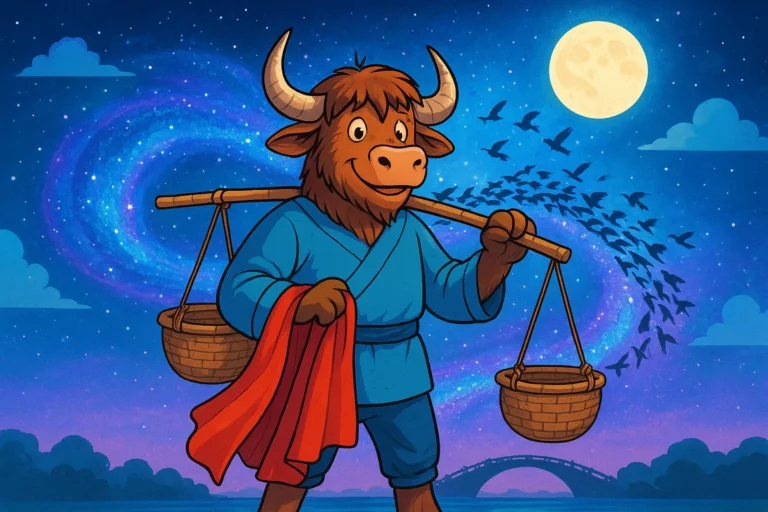
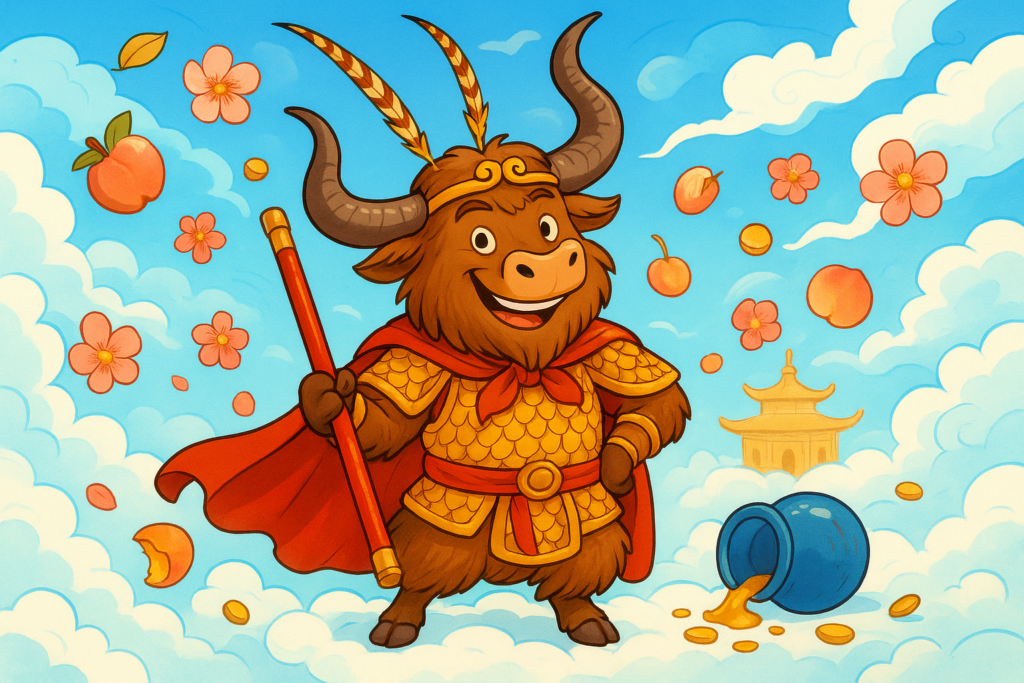
This A2 Elementary retelling of 大鬧天宮 keeps the plot clear for learners while still giving the story some atmosphere and momentum.
This version teaches Traditional Chinese through English and includes clickable word help inside the story, full story audio, and lesson notes after the reading. It is free to use on Yak Yacker and is designed to feel natural, readable, and manageable for learners.
在很久很久以前,花果山上有一塊神奇的石頭。有一天,石頭裂開,跳出一個猴子。他很聰明,會說話,力氣也很大。猴子們都叫他「」。
美猴王想要永遠活著。他到很遠的地方,找到一個神仙,學會了的法術。他還從龍王那裡拿到一根神奇的,能大能小。
天上的聽說他這麼厲害,想要他。他請美猴王到天上去,給他一個官做。可是這個官只管馬,美猴王發現了,很生氣。
美猴王說:「我是大王,怎麼只管馬?我回我的山去!」他自己封自己為「」,意思是和天一樣偉大。
玉皇大帝派兵去抓他,可是美猴王用金箍棒所有天兵天將。玉帝沒有辦法,只好說:「請你回來吧,給你做真正的大官。」他讓美猴王去看管。
蟠桃園裡的桃子一千年才長一次,吃了可以。美猴王忍不住,吃了很多大桃子。後來,王母娘娘要開蟠桃盛會,卻沒有邀請他。
美猴王更生氣了!他變成神仙的樣子,走進盛會,喝了最好的仙酒,又去太上老君的宮裡,吃了。他笑著說:「我老孫不怕天,不怕地,誰也我!」
天上亂成一團。玉皇大帝派更多天兵天將來抓他,美猴王一邊。最後,二郎神和他的狗了他,天兵才抓住他。可是刀砍不死,火燒不死,因為他吃了桃子和金丹。
最後,來了。他笑著說:「你如果能我的手掌,天就讓你管。」美猴王跳上去,以為到了天邊,還寫了字。可是他回來一看,自己還在佛祖手裡。佛祖把他壓在下,過了五百年才出來。
Long long ago, on Flower Fruit Mountain, there was a magical stone. One day, the stone cracked open and a monkey jumped out. He was very clever, could talk, and had great strength. The monkeys all called him "Handsome Monkey King."
The Handsome Monkey King wanted to live forever. He traveled far, found an immortal, and learned the 72 transformations. He also got a magical golden staff from the Dragon King that could grow or shrink at will.
The Jade Emperor in heaven heard how powerful he was and wanted to control him. He invited the Monkey King to heaven and gave him an official position. But it was just a horse caretaker. When the Monkey King found out, he was furious.
The Monkey King said, "I am a king, why should I only look after horses? I'm going back to my mountain!" He declared himself the "Great Sage Equal to Heaven," meaning as great as heaven itself.
The Jade Emperor sent soldiers to capture him, but the Monkey King defeated all the heavenly troops with his staff. The Jade Emperor had no choice but to say, "Please come back, I'll give you a real high position." He put him in charge of the Peach Garden.
The peaches in the garden only ripened once every thousand years, and eating them granted immortality. The Monkey King couldn't resist and secretly ate many large peaches. Later, the Queen Mother held a peach banquet but didn't invite him.
The Monkey King got even angrier! He transformed into an immortal, entered the banquet, drank the finest celestial wine, and then went to Lord Lao's palace and ate the golden elixir. He laughed and said, "I, Old Sun, fear neither heaven nor earth - no one can control me!"
Heaven was in chaos. The Jade Emperor sent even more celestial soldiers to capture him, but the Monkey King fought playfully. Finally, Erlang and his dog bit and caught him, so the soldiers seized him. But swords couldn't kill him, nor fire burn him, because he had eaten the peaches and elixir.
In the end, the Buddha came. He smiled and said, "If you can jump out of my palm, you can rule heaven." The Monkey King leaped, thought he reached the edge of heaven, and even wrote some words. But when he looked back, he was still in the Buddha's palm. The Buddha trapped him under the Five Elements Mountain, where he remained for 500 years before being freed.
This story is full of big names and bigger personalities. The Monkey King is clever, strong, and always ready to cause trouble in the sky.
In Chinese stories, characters often have special titles. These titles help you understand who has power, who is respected, and who is being teased.
- 美猴王 = the Monkey King
- 玉皇大帝 = the Jade Emperor
- 齊天大聖 = "Great Sage Equal to Heaven"
- 神仙 = immortal or deity
A few words appear again and again in this kind of legend. Learning them will help you follow the action faster, even when the story gets wild.
Try to notice how these words show movement, power, and magic. They are small words with very busy jobs.
- 神奇 = magical, amazing
- 法術 = magic skill or spell
- 金箍棒 = the Monkey King's magic staff
- 天兵天將 = heavenly soldiers
- 長生不老 = live forever, not grow old
The story often uses simple action patterns: he went, he got, he became angry, they tried to catch him. This makes the legend easy to follow, even when the events are huge.
In Chinese, short action sentences can stack up quickly. That gives the story a fast, lively feeling, like the Monkey King is always one step ahead.
- Look for time words like 有一天 and 後來 to follow the order.
- Verbs often come in a clear chain: 去, 學會, 拿到, 打敗, 抓住.
- The story uses direct speech to show attitude, like "我回我的山去!"
- Big reactions are part of the style: angry, proud, playful, and bold.
This legend is fun because it mixes magic, rebellion, and humor. The Monkey King is powerful, but he also makes mistakes, which makes the story feel human.
When you read it again, try to spot the moments where his pride causes trouble. That is often the heart of the story, and it is a great way to remember the vocabulary too.
- Read for the action first, then for the meaning behind it.
- Notice how the Monkey King changes from clever hero to troublemaker.
- If you want, reread the story and underline every word for power or magic.
大鬧天宮 comes from the Chinese / Journey to the West tradition and is best known as a classic novel episode. This Yak Yacker article is an original learner retelling based on Journey to the West, 16th century; public domain, so the wording here is simplified for modern learners rather than copied from one old edition.
Older printings, translations, and retellings of this story can vary quite a bit. The original audience was usually kids/general, but this version is adapted for A2 Elementary learners studying Traditional Chinese. Very famous; simplify character names.
If you want to look into the source tradition, start with Project Gutenberg.
If you want to keep going, browse more in our Traditional Chinese section. After that, try Common Traditional Chinese Adjectives for another useful next step.
More Traditional Chinese to explore
The Oath of the Peach Garden: A B1 Interactive Chinese Reader with Audio
The Frog at the Bottom of the Well: A1 Beginner Traditional Chinese Story with Audio
Chang’e Flies to the Moon: A2 Elementary Traditional Chinese Story with Audio