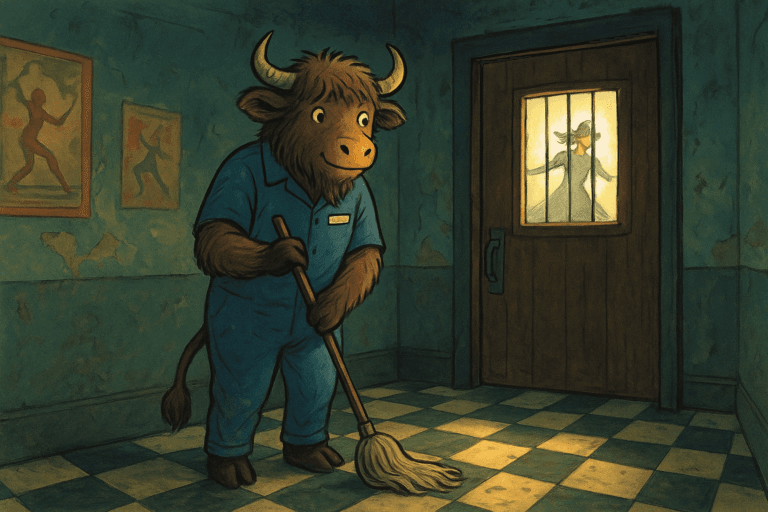
Welcome to our B1 intermediate English retelling of Gaston Leroux's classic tale, The Phantom of the Opera. This mysterious story takes you deep under the Paris Opera House, where a strange, masked figure haunts the corridors and falls tragically in love with a young singer, Christine. As you read, you'll follow the suspenseful events that unfold when the Phantom demands Christine be given the lead role-or else.
Our graded reader version is designed for intermediate English learners (CEFR B1). Every chapter includes clickable word definitions, so you can learn new vocabulary without stopping your reading flow. You can also listen to the full story audio to improve your pronunciation and comprehension. Plus, we've included free lesson notes with key phrases and teaching tips.
Whether you're a student or a teacher, this story offers a fun, immersive way to practice English. Just click on any underlined word for an instant definition, and use the audio to read along. Enjoy the magic of the opera ghost-and boost your English skills at the same time!
The Paris Opera House was a and building. It had many floors, , and underground. People said a ghost lived there. They called him the Phantom of the Opera.
The Phantom was not really a ghost. He was a man, but he had a . He wore a to hide it. He was a and knew all the of the opera house.
There was a young singer named Christine Daaé. She was and had a . She worked in the opera chorus. Nobody noticed her much.
One night, the famous singer Carlotta . The managers needed someone to . Christine was very nervous, but she had to . She sang beautifully, and the audience loved her.
After the show, her childhood friend Raoul came to see her. He was now a young man, the . He looked at her with . "Christine, your voice is like an angel's," he said.
But Christine looked sad. "Thank you, Raoul. But my singing teacher . He is a wonderful teacher. I do not see him, but I hear his voice. He is my ." Raoul was and a little worried.
At night, the Phantom often spoke to Christine through her mirror. His voice was . He taught her to sing with more . "You will be a star," he told her. "But you must love only the music."
The Phantom loved Christine. He watched her from the . He became when Raoul was with her. His heart was full of . He was a lonely man, and he wanted Christine to be his forever.
One evening, the opera house held a big . The Phantom appeared in a . He looked tall and . He spoke to the managers. "You must let Christine sing the main roles. Or something terrible will happen," he warned.
Christine was afraid. She told Raoul everything. "He is not an angel. He is a man. A man with a terrible face and a . He lives . I am very scared," she whispered. Raoul held her hand. "I will ," he promised.
The Phantom heard them. His eyes filled with tears of . He was . That night, during the show, he turned off all the lights. In the , he took Christine down to his secret home under the opera house.
It was a and beautiful place. There were candles and music. The Phantom sat at an , playing . Christine sat in a chair, tied with a rope. The Phantom asked, "Will you be my wife? I will give you everything. But you can never leave me."
Christine looked at his masked face. She was , but she also felt . "Please let me go," she said quietly. "I am for your teaching, but my heart belongs to someone else."
Suddenly, Raoul arrived. He had found a way down. But the Phantom was too quick. He Raoul and tied him up too. The Phantom laughed . "Now you will both stay with me forever. Or you will die."
Christine knew she had to make a . She walked slowly to the Phantom. She looked into his eyes. Then, very gently, she his ugly, unmasked face. It was a kiss full of , not love.
The Phantom was shocked. No one had ever kissed him like that. His anger . He started to cry. "Go," he said softly. "Take Raoul and go. You have given me more than I ever had."
Christine and Raoul left quickly. They never saw the Phantom again. The opera house became quiet. Some say you can still hear his in the . And a still waits for kindness.
This story uses many words to express feelings. Instead of just 'happy' or 'sad,' we see more specific words like 'heartbroken,' 'jealous,' and 'terrified.' These give a clearer picture of the characters' inner worlds.
Pay attention to how emotions can be shown through actions: 'His eyes filled with tears of rage' tells us more than simply saying 'he was angry.'
- heartbroken - very, very sad, often because of love
- jealous - unhappy because someone you love likes another person
- terrified - extremely afraid
- rage - violent, uncontrolled anger
The story smoothly combines past simple, past continuous, and past perfect to move the action forward and give background details.
Past simple ('She sang beautifully') is for main events. Past continuous ('He was watching from the shadows') shows an ongoing action at a moment. Past perfect ('He had found a way down') tells us something happened earlier.
- Main events: 'The Phantom appeared,' 'Christine kissed his face'
- Background action: 'The Phantom was playing sad songs'
- Before the moment: 'She told Raoul everything she had experienced'
The writer uses strong descriptive words to create a mysterious, romantic, and sad mood. Instead of 'big building,' we see 'grand and beautiful,' followed by 'long corridors, and secret rooms underground.' That immediately feels eerie and magical.
Notice how physical details (mask, candles, darkness) echo the characters' emotions. The 'strange and beautiful' underground home shows the Phantom is both dark and artistic.
- Contrasting adjectives: 'sweet, gentle voice' vs. 'sad, bitter laugh'
- Symbolic objects: the mask hides his face and his pain
- Setting mirrors mood: the dark corridors suggest loneliness and mystery
You've just read a classic tale while picking up new ways to talk about feelings and use different past tenses. The next time you tell a story in English, try mixing past simple, continuous, and perfect-and choose vivid emotion words. You'll make your listener feel what your characters feel.
Why not retell a simple moment from your own life using these tools? Describe the scene, what was happening, what had just happened, and how you felt. You might surprise yourself with how expressive you can be.
The Phantom of the Opera: A Graded Reader for B1 English Learners comes from the French / Gaston Leroux tradition and is best known as a gothic mystery novel. This Yak Yacker article is an original learner retelling based on Gaston Leroux, 1910; public domain, so the wording here is simplified for modern learners rather than copied from one old edition.
Older printings, translations, and retellings of this story can vary quite a bit. The original audience was usually general/adult, but this version is adapted for B1 Intermediate learners studying English. Use novel, not musical/movie versions.
If you want to look into the source tradition, start with Project Gutenberg.
If you want to keep going, browse more in our English section and review the B1 English Vocabulary List. After that, try 1,200 English Phrases and Expressions for another useful next step.