Step into one of China's most beloved legends with our B1 intermediate retelling of The Oath of the Peach Garden. This famous scene from the classic novel Romance of the Three Kingdoms introduces the sworn brothers Liu Bei, Guan Yu, and Zhang Fei as they pledge loyalty to one another beneath blooming peach trees. Their bond of brotherhood becomes the foundation for an epic saga of heroism and strategy, and now you can experience it in accessible Traditional Chinese.
In this interactive graded reader, every word is clickable for instant English translations, so you never lose the flow of the story. Listen to native-speaker audio as you read, helping you master pronunciation and rhythm. After the story, review key vocabulary and cultural insights in our lesson notes-perfect for solidifying your skills. Ready to begin? Dive in and start reading free, with all tools at your fingertips.
東漢末年,天下大亂。百姓生活很辛苦,到處都是戰爭和饑荒。
一個叫劉備的年輕人,
原來是關羽和張飛。
三人一起喝酒聊天。
張飛大聲說:
劉備說:「我,劉備。」關羽說:「我,關羽。」張飛說:「我,張飛。」
從那天起,
後來,他們雖然經歷了無數艱難,卻始終沒有忘記桃園的誓言。他們的故事流傳千古,成為忠義的典範。
At the end of the Eastern Han Dynasty, the world was in chaos. Life was hard for the common people, with war and famine everywhere.
A young man named Liu Bei, though poor, had royal blood. He made a living selling straw sandals.
Liu Bei often sighed, wishing to do something for the country and bring peace to the people.
One day, he saw two strong men competing on the street. One had a face like red dates, the other eyes like copper bells.
They were Guan Yu and Zhang Fei. They hit it off immediately and soon became good friends.
The three drank and talked together. Liu Bei shared his ideal: "A true man should serve the country and save the people from misery!"
Guan Yu and Zhang Fei were deeply moved. Zhang Fei exclaimed, "There's a peach orchard in my backyard, in full bloom. Let's become sworn brothers and take on the world together!"
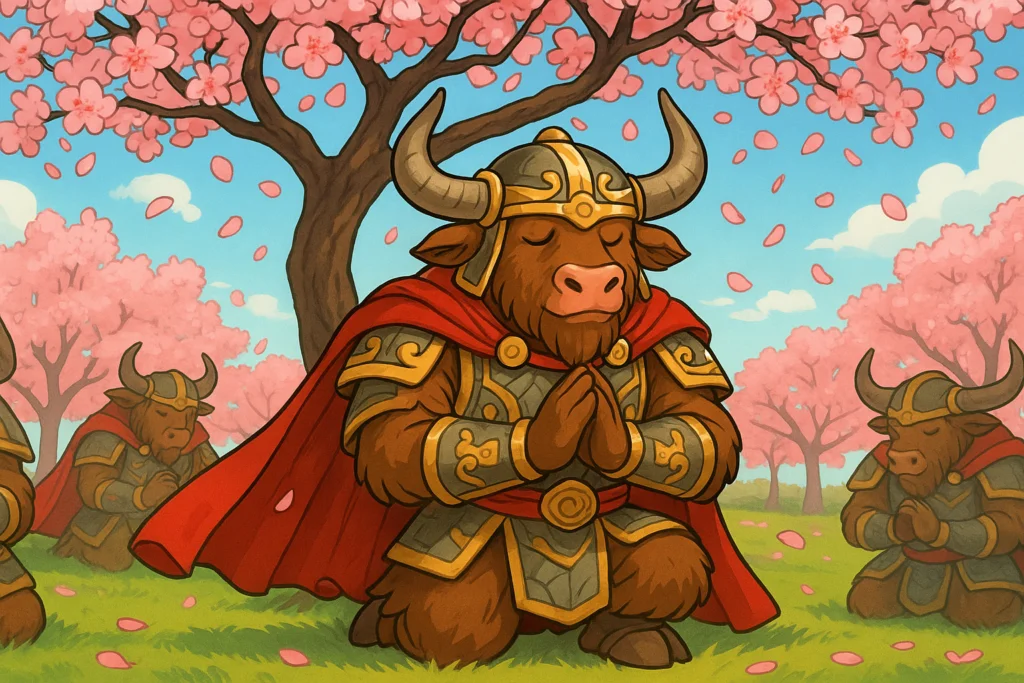
Liu Bei and Guan Yu happily agreed. The next day, they prepared sacrifices of a black ox and a white horse in the peach orchard, lit incense, and knelt to heaven.
Liu Bei said, "I, Liu Bei." Guan Yu said, "I, Guan Yu." Zhang Fei said, "I, Zhang Fei."
"Today we pledge brotherhood in the peach orchard. We may not be born on the same day, but we vow to die on the same day. From now on, with one heart, we shall serve the country above and bring peace to the people below!"
After the oath, they kowtowed eight times and embraced tightly. From that day, they became inseparable sworn brothers.
Later, though they faced countless hardships, they never forgot the oath in the peach orchard. Their story has been passed down through the ages as a model of loyalty and brotherhood.
Let's unpack the key words and phrases that make Liu Bei, Guan Yu, and Zhang Fei's oath so powerful. These aren't just fancy words-they're the building blocks of loyalty and brotherhood in Chinese.
Mastering these will help you read not just this story, but also historical dramas and literature.
- 結義 (jiéyì) - to swear brotherhood; literally "bind righteousness"
- 異姓兄弟 (yìxìng xiōngdì) - sworn brothers of different surnames
- 磕頭 (kētóu) - to kowtow, a deep bow showing utmost respect
- 誓言 (shìyán) - oath, vow
- 上報國家,下安百姓 (shàng bào guójiā, xià ān bǎixìng) - serve the country above and bring peace to the people below
The oath itself uses a striking parallel structure that's typical of formal pledges. Notice the pattern 不求...但求... (bù qiú... dàn qiú...): "I do not seek X, but I seek Y." This contrast emphasizes what truly matters.
Another classic pattern is the use of opposites like 上/下 (shàng/xià, above/below) or 生/死 (shēng/sǐ, life/death) to create a sense of cosmic balance.
- 不求同年同月同日生,但求同年同月同日死 - "I do not seek to be born on the same day, but I seek to die on the same day."
- 上報國家,下安百姓 - neatly pairs duty upward and care downward.
- These patterns feel ancient but are still used in modern solemn promises or poetic writing.
Sworn brotherhood (結義) is a deep-rooted tradition, elevating friendship to a sacred bond. The Peach Garden oath is the most famous example, and it turned 忠義 (zhōngyì, loyalty and righteousness) into a cultural ideal.
Even today, you might hear someone call their closest friend their 桃園兄弟 (táoyuán xiōngdì) - a reference to this very story.
- 忠義 (zhōngyì) - the combined virtue of loyalty and righteousness
- 桃園三結義 - the 'Three Sworn Brothers of the Peach Garden' is a byword for unbreakable trust.
- This tale comes from Romance of the Three Kingdoms, shaping how Chinese culture views friendship and promises.
Now it's your turn to play with these patterns! Try crafting a simple, heartfelt pledge using 不求...但求... about something you value in friendship or life.
For example: 不求天天見面,但求心心相印 (bù qiú tiāntiān jiànmiàn, dàn qiú xīn xīn xiāng yìn) - "I don't ask to meet every day, but I ask that our hearts remain connected." See? A little drama, a lot of heart.
- Jot down your own promise using 不求...但求... - it can be serious or playful.
- Share it with a friend or in a language journal, and notice how these patterns make even simple phrases sound more weighty.
- You've just woven a tiny thread of Chinese tradition into your own words!
桃園結義 comes from the Chinese / Romance of Three Kingdoms tradition and is best known as a historical novel episode. This Yak Yacker article is an original learner retelling based on Romance of the Three Kingdoms, 14th century; public domain, so the wording here is simplified for modern learners rather than copied from one old edition.
Older printings, translations, and retellings of this story can vary quite a bit. The original audience was usually general, but this version is adapted for B1 Intermediate learners studying Traditional Chinese. Heavy names; use one-episode reader.
If you want to look into the source tradition, start with Project Gutenberg.
If you want to keep going, browse more in our Traditional Chinese section. After that, try 1,000 Traditional Chinese Phrases and Expressions for another useful next step.
More Traditional Chinese to explore
The Frog at the Bottom of the Well: A1 Beginner Traditional Chinese Story with Audio
Chang’e Flies to the Moon: A2 Elementary Traditional Chinese Story with Audio
The Cowherd and the Weaver Girl: A2 Elementary Traditional Chinese Story with Audio