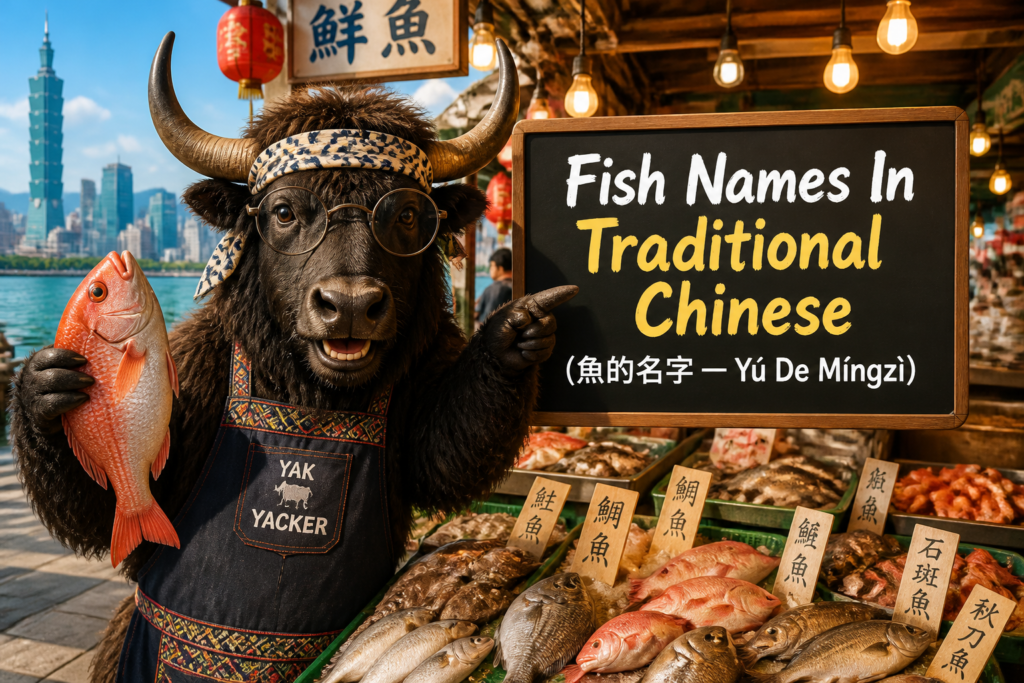
魚的名字 yú de míngzì means “fish names.” If you like seafood, aquarium trips, or just not pointing at a menu like a confused pigeon, this one is useful. Fish show up everywhere in Taiwan: night market grills, family dinners, hot pot restaurants, and the occasional “What is that thing?” moment at a wet market.
For the broader learning path, visit our parent guide.
Traditional Chinese fish names can be wonderfully practical. Some are everyday names, some are the names you will see on menus, and some are the names you need when you want to sound like you know what you are ordering. Tiny victory, big appetite.
For a broader basics refresher, you can also jump to Traditional Chinese basic words and phrases. And if you want to test your memory later, there are Traditional Chinese vocabulary tests and the TOCFL placement test.
Everyday Fish Words You Will Actually Use
| Traditional Chinese | Pinyin | Meaning | Example (ZH) | Example (Pinyin) | Translation (EN) |
|---|---|---|---|---|---|
| 魚 | yú | fish | 我喜歡吃魚。 | Wǒ xǐhuān chī yú. | I like eating fish. |
| 魚肉 | yúròu | fish meat | 這道菜是魚肉做的。 | Zhè dào cài shì yúròu zuò de. | This dish is made with fish meat. |
| 鮭魚 | guīyú | salmon | 我今天想吃鮭魚丼飯。 | Wǒ jīntiān xiǎng chī guīyú dǒngfàn. | I want to eat salmon rice bowl today. |
| 鯖魚 | qīngyú | mackerel | 鯖魚很適合做便當菜。 | Qīngyú hěn shìhé zuò biàndāng cài. | Mackerel is great for lunchbox food. |
| 鱸魚 | lúyú | sea bass / perch-like fish | 媽媽煮了鱸魚湯。 | Māma zhǔ le lúyú tāng. | Mom cooked sea bass soup. |
| 鯛魚 | diāoyú | sea bream | 這家店的鯛魚飯很好吃。 | Zhè jiā diàn de diāoyú fàn hěn hǎochī. | The sea bream rice at this shop is very good. |
| 鱈魚 | xuěyú | cod | 我想點鱈魚排。 | Wǒ xiǎng diǎn xuěyú pái. | I want to order cod fillet. |
| 石斑魚 | shíbānyú | grouper | 石斑魚通常不便宜。 | Shíbānyú tōngcháng bù piányi. | Grouper is usually not cheap. |
| 秋刀魚 | qiūdāoyú | Pacific saury | 烤秋刀魚很香。 | Kǎo qiūdāoyú hěn xiāng. | Grilled Pacific saury smells amazing. |
| 虱目魚 | shīmùyú | milkfish | 台南的虱目魚料理很有名。 | Táinán de shīmùyú liàolǐ hěn yǒumíng. | Tainan’s milkfish dishes are famous. |
Notice how many fish names end in 魚 yú. That is your friendly clue. Mandarin loves sticking the category word on the end, because apparently clarity is fashionable.
Common Fish Names In Traditional Chinese
| Traditional Chinese | Pinyin | Meaning | Example (ZH) | Example (Pinyin) | Translation (EN) |
|---|---|---|---|---|---|
| 金魚 | jīnyú | goldfish | 這缸金魚很漂亮。 | Zhè gāng jīnyú hěn piàoliang. | This tank of goldfish is very pretty. |
| 鯉魚 | lǐyú | carp | 鯉魚常出現在節慶菜色裡。 | Lǐyú cháng chūxiàn zài jiéqìng càisè lǐ. | Carp often appears in festive dishes. |
| 草魚 | cǎoyú | grass carp | 草魚也常拿來做料理。 | Cǎoyú yě cháng ná lái zuò liàolǐ. | Grass carp is also often used in cooking. |
| 羅非魚 | luófēiyú | tilapia | 羅非魚是很常見的白肉魚。 | Luófēiyú shì hěn chángjiàn de báiròuyú. | Tilapia is a very common white fish. |
| 吳郭魚 | wúguōyú | tilapia, Taiwan common term | 市場裡很多人說吳郭魚。 | Shìchǎng lǐ hěn duō rén shuō wúguōyú. | Many people at the market say “wúguōyú” for tilapia. |
| 鰻魚 | mányú | eel | 鰻魚飯很受歡迎。 | Mányú fàn hěn shòu huānyíng. | Eel rice is very popular. |
| 鱔魚 | shànyú | eel, yellow eel | 鱔魚麵是台灣常見小吃。 | Shànyú miàn shì Táiwān chángjiàn xiǎochī. | Eel noodles are a common Taiwanese snack. |
| 魟魚 | hóngyú | ray | 水族館裡有魟魚。 | Shuǐzúguǎn lǐ yǒu hóngyú. | There are rays in the aquarium. |
| 鯊魚 | shāyú | shark | 鯊魚看起來很兇。 | Shāyú kàn qǐlái hěn xiōng. | Sharks look fierce. |
| 鮪魚 | wěiyú | tuna | 我早餐常吃鮪魚三明治。 | Wǒ zǎocān cháng chī wěiyú sānmíngzhì. | I often eat tuna sandwiches for breakfast. |
Some fish names are the same in many Chinese-speaking places, but Taiwan also has its own everyday habits. For example, 吳郭魚 wúguōyú is a very common Taiwan usage for tilapia, while 羅非魚 luófēiyú is also understood. Both can appear, so do not panic if the menu changes its mind.
More Fish Names For Menus, Markets, And Seafood Chats
| Traditional Chinese | Pinyin | Meaning | Example (ZH) | Example (Pinyin) | Translation (EN) |
|---|---|---|---|---|---|
| 旗魚 | qíyú | sailfish / swordfish-like market name | 旗魚丸很好吃。 | Qíyú wán hěn hǎochī. | Swordfish balls are tasty. |
| 飛魚 | fēiyú | flying fish | 飛魚是東部常見的海鮮。 | Fēiyú shì dōngbù chángjiàn de hǎixiān. | Flying fish is common seafood in eastern Taiwan. |
| 沙丁魚 | shādīngyú | sardine | 沙丁魚罐頭很方便。 | Shādīngyú guàntóu hěn fāngbiàn. | Canned sardines are very convenient. |
| 秋刀魚 | qiūdāoyú | Pacific saury | 夜市常賣烤秋刀魚。 | Yèshì cháng mài kǎo qiūdāoyú. | Night markets often sell grilled Pacific saury. |
| 比目魚 | bǐmùyú | flatfish / flounder | 比目魚看起來扁扁的。 | Bǐmùyú kàn qǐlái biǎn biǎn de. | Flatfish looks flat and squashed. |
| 鰹魚 | jiānyú | bonito | 柴魚片通常來自鰹魚。 | Cháiyú piàn tōngcháng láizì jiānyú. | Katsuobushi usually comes from bonito. |
| 鯷魚 | tíyú | anchovy | 鯷魚常拿來做醬料。 | Tíyú cháng ná lái zuò jiàngliào. | Anchovies are often used to make sauces. |
| 鰈魚 | diéyú | sole / flatfish | 鰈魚適合清蒸。 | Diéyú shìhé qīngzhēng. | Sole is good steamed. |
| 鯰魚 | niányú | catfish | 鯰魚有鬍鬚,外型很特別。 | Niányú yǒu húxū, wàixíng hěn tèbié. | Catfish has whiskers and a distinctive look. |
| 鯽魚 | jìyú | crucian carp | 鯽魚湯很常見。 | Jìyú tāng hěn chángjiàn. | Crucian carp soup is very common. |
Useful Fish Phrases And Real-Life Sentences
| Traditional Chinese | Pinyin | English Meaning | Example Sentence |
|---|---|---|---|
| 我想吃魚。 | Wǒ xiǎng chī yú. | I want to eat fish. | 我今天不想吃肉,我想吃魚。 / Wǒ jīntiān bù xiǎng chī ròu, wǒ xiǎng chī yú. / Today I do not want meat; I want fish. |
| 這是什麼魚? | Zhè shì shénme yú? | What fish is this? | 這是什麼魚?看起來很好吃。 / Zhè shì shénme yú? Kàn qǐlái hěn hǎochī. / What fish is this? It looks delicious. |
| 這條魚很新鮮。 | Zhè tiáo yú hěn xīnxiān. | This fish is very fresh. | 市場裡這條魚很新鮮。 / Shìchǎng lǐ zhè tiáo yú hěn xīnxiān. / This fish at the market is very fresh. |
| 請給我一條魚。 | Qǐng gěi wǒ yì tiáo yú. | Please give me one fish. | 請給我一條魚,謝謝。 / Qǐng gěi wǒ yì tiáo yú, xièxie. / Please give me one fish, thank you. |
| 我要一份鮭魚。 | Wǒ yào yí fèn guīyú. | I want one serving of salmon. | 我要一份鮭魚,外帶。 / Wǒ yào yí fèn guīyú, wàidài. / I want one serving of salmon, to go. |
| 這魚怎麼煮? | Zhè yú zěnme zhǔ? | How do you cook this fish? | 這魚怎麼煮比較好吃? / Zhè yú zěnme zhǔ bǐjiào hǎochī? / How should this fish be cooked to taste better? |
| 清蒸魚 | qīngzhēng yú | steamed fish | 清蒸魚最能吃出鮮味。 / Qīngzhēng yú zuì néng chī chū xiānwèi. / Steamed fish best brings out the fresh flavor. |
| 烤魚 | kǎo yú | grilled fish | 夜市的烤魚很香。 / Yèshì de kǎo yú hěn xiāng. / The grilled fish at the night market smells great. |
| 魚湯 | yútāng | fish soup | 我想喝魚湯。 / Wǒ xiǎng hē yútāng. / I want to drink fish soup. |
| 魚刺很多。 | Yúcì hěn duō. | There are many fish bones. | 小心,這條魚刺很多。 / Xiǎoxīn, zhè tiáo yú cì hěn duō. / Be careful, this fish has many bones. |
| 去骨 | qù gǔ | remove bones | 可以幫我去骨嗎? / Kěyǐ bāng wǒ qù gǔ ma? / Can you remove the bones for me? |
How To Say Fish Names In Taiwan
In Taiwan, you will often hear fish talked about in very practical, very food-first ways. People may care less about the perfect scientific species name and more about whether the fish is 新鮮 xīnxiān (fresh), easy to cook, and full of bones you will regret later.
| Word | Pinyin | Meaning | Taiwan Note |
|---|---|---|---|
| 吳郭魚 | wúguōyú | tilapia | Very common in Taiwan speech and markets. |
| 虱目魚 | shīmùyú | milkfish | Classic Taiwanese fish, especially famous in Tainan. |
| 鱸魚 | lúyú | sea bass / perch-like fish | Often used for soup and home-style dishes. |
| 秋刀魚 | qiūdāoyú | Pacific saury | Very common grilled item at shops and night markets. |
If you want a boring but reliable fish reference, the Wikipedia fish overview is a decent place to start. It is dry, which is perfect for vocabulary study.
Measure Words For Fish
Fish are a nice reminder that Mandarin measure words are not optional glitter. They matter. For fish, the most common measure word is 條 tiáo.
| Pattern | Meaning | Example (ZH) | Pinyin | English |
|---|---|---|---|---|
| 一條魚 | one fish | 我買了一條魚。 | Wǒ mǎi le yì tiáo yú. | I bought one fish. |
| 兩條魚 | two fish | 冰箱裡有兩條魚。 | Bīngxiāng lǐ yǒu liǎng tiáo yú. | There are two fish in the fridge. |
| 一片魚排 | one fish fillet | 我要一片鱈魚排。 | Wǒ yào yí piàn xuěyú pái. | I want one cod fillet. |
| 一份魚料理 | one serving of fish dish | 請給我一份魚料理。 | Qǐng gěi wǒ yí fèn yú liàolǐ. | Please give me one fish dish. |
Small note: 兩 liǎng is usually used before measure words for “two,” not 二 èr. So you say 兩條魚 liǎng tiáo yú, not 二條魚. Mandarin likes its little rules. Charming, in a controlling sort of way.
Useful Fish Verbs And Descriptions
| Traditional Chinese | Pinyin | Meaning | Example (ZH) | Example (Pinyin) | Translation (EN) |
|---|---|---|---|---|---|
| 釣魚 | diàoyú | to fish, go fishing | 週末我去釣魚。 | Zhōumò wǒ qù diàoyú. | On the weekend I go fishing. |
| 養魚 | yǎng yú | to raise fish | 他在家裡養魚。 | Tā zài jiālǐ yǎng yú. | He keeps fish at home. |
| 抓魚 | zhuā yú | to catch fish | 小孩在河邊抓魚。 | Xiǎohái zài hé biān zhuā yú. | The children catch fish by the river. |
| 殺魚 | shā yú | to kill a fish; prepare fish | 老闆在處理殺魚。 | Lǎobǎn zài chǔlǐ shā yú. | The老板 is handling the fish. |
| 蒸魚 | zhēng yú | to steam fish | 她很會蒸魚。 | Tā hěn huì zhēng yú. | She is good at steaming fish. |
| 烤魚 | kǎo yú | to grill fish | 店家正在烤魚。 | Diànjiā zhèngzài kǎo yú. | The shop is grilling fish. |
Curious Bit: Fish Names Versus Fish Dishes
Sometimes the fish name is the same, but the dish name changes how people talk about it. For example, 鮭魚 guīyú can become 鮭魚飯 guīyú fàn (salmon rice), 鮭魚丼 guīyú dǒng (salmon bowl), or simply 生魚片 shēngyúpiàn when it is served raw as sashimi-style slices.
And yes, 生魚片 shēngyúpiàn literally means “raw fish slices.” It is the kind of phrase that says exactly what it means, no poetry, no drama, just dinner.
Practice: Match The Fish Name
| Traditional Chinese | Pinyin | English |
|---|---|---|
| 鮭魚 | guīyú | salmon |
| 金魚 | jīnyú | goldfish |
| 虱目魚 | shīmùyú | milkfish |
| 鯊魚 | shāyú | shark |
| 鰻魚 | mányú | eel |
| 鱈魚 | xuěyú | cod |
Now try swapping the subject in these sentences:
- 我想吃鮭魚。 Wǒ xiǎng chī guīyú. — I want to eat salmon.
- 我想吃鯖魚。 Wǒ xiǎng chī qīngyú. — I want to eat mackerel.
- 我想吃鱸魚。 Wǒ xiǎng chī lúyú. — I want to eat sea bass.
- 我想吃虱目魚。 Wǒ xiǎng chī shīmùyú. — I want to eat milkfish.
Common Mistakes And Easy Fixes
| Mistake | Why It Happens | Better Version |
|---|---|---|
| Using 二條魚 | English speakers often treat “two” the same everywhere. | 兩條魚 liǎng tiáo yú |
| Forgetting the measure word | It feels optional in English. | 一條魚 yì tiáo yú |
| Mixing up 魚 and 肉 | Both can mean food, but not the same food. | 魚 = fish, 肉 = meat |
| Using only the English fish name in Mandarin | The menu is not impressed by your confidence. | Learn the Mandarin fish name, then point less and smile more. |
| Saying 我吃魚很喜歡 | Word order sounds off in Mandarin. | 我很喜歡吃魚。 Wǒ hěn xǐhuān chī yú. |
Quick grammar note: if you are saying “I like eating fish,” the natural word order is 我很喜歡吃魚 Wǒ hěn xǐhuān chī yú. Mandarin often prefers the action after the feeling word. English brain may protest. Ignore it. It will survive.
Quick Reference Summary
- 魚 yú = fish
- 一條魚 yì tiáo yú = one fish
- 兩條魚 liǎng tiáo yú = two fish
- 鮭魚 guīyú = salmon
- 鯖魚 qīngyú = mackerel
- 鱸魚 lúyú = sea bass
- 鯛魚 diāoyú = sea bream
- 鱈魚 xuěyú = cod
- 石斑魚 shíbānyú = grouper
- 虱目魚 shīmùyú = milkfish
- 吳郭魚 wúguōyú = tilapia, common Taiwan usage
- 釣魚 diàoyú = to fish, go fishing
Yak Takeaway: If a fish name ends in 魚 yú, you are already halfway there. Add the measure word 條 tiáo, keep your pinyin handy, and you can survive the seafood menu without dramatic hand gestures. Mostly.