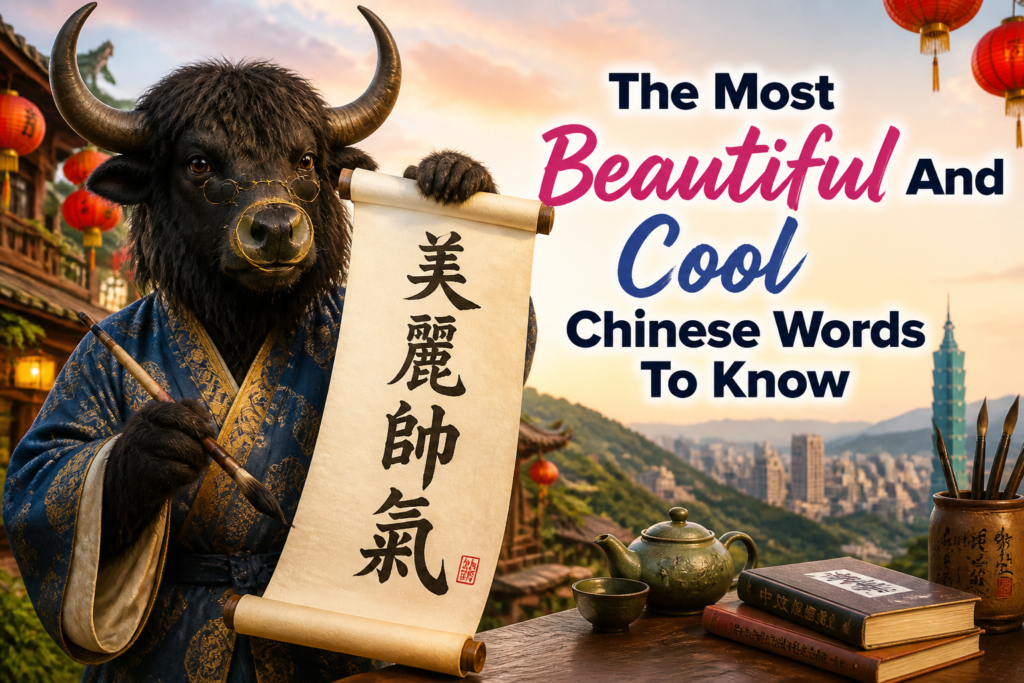
If Chinese ever looked like a wall of mystery to you, good news: some words are not just useful, they are genuinely pretty. A few are soft and elegant, a few are sharp and stylish, and a few sound so good they almost deserve their own theme music. The trick is not memorizing random dictionary dust. It is learning words people actually use, in real life, with real feeling.
For the broader learning path, visit our parent guide.
This guide gives you beautiful and cool Traditional Chinese words with pinyin, English meanings, and example sentences. You will also see a few words that feel especially natural in Taiwan Mandarin, because saying things the local way is usually less awkward than walking into language class wearing borrowed shoes.
For a broader study path, you can also check Traditional Chinese Vocabulary Test, Traditional Chinese Placement Test TOCFL, Essential Traditional Chinese Phrases, Traditional Chinese Basic Words And Phrases, and Popular Traditional Chinese Idioms.
Beautiful Chinese Words
| Traditional Chinese | Pinyin | Meaning | Example (ZH) | Example (Pinyin) | Translation (EN) |
|---|---|---|---|---|---|
| 美麗 | měi lì | beautiful | 這個湖很美麗。 | Zhè ge hú hěn měi lì. | This lake is very beautiful. |
| 優雅 | yōu yǎ | elegant | 她的動作很優雅。 | Tā de dòng zuò hěn yōu yǎ. | Her movements are very elegant. |
| 溫柔 | wēn róu | gentle; tender | 他說話很溫柔。 | Tā shuō huà hěn wēn róu. | He speaks very gently. |
| 浪漫 | làng màn | romantic | 這家咖啡廳很浪漫。 | Zhè jiā kā fēi tīng hěn làng màn. | This café is very romantic. |
| 迷人 | mí rén | charming; enchanting | 她有一種迷人的氣質。 | Tā yǒu yī zhǒng mí rén de qì zhì. | She has a charming aura. |
| 清新 | qīng xīn | fresh; refreshing | 這首歌聽起來很清新。 | Zhè shǒu gē tīng qǐ lái hěn qīng xīn. | This song sounds very refreshing. |
| 純淨 | chún jìng | pure; clean | 山上的空氣很純淨。 | Shān shàng de kōng qì hěn chún jìng. | The air in the mountains is very pure. |
| 燦爛 | càn làn | brilliant; dazzling | 她笑得很燦爛。 | Tā xiào de hěn càn làn. | She smiled brilliantly. |
| 寧靜 | níng jìng | peaceful; quiet | 這裡的晚上很寧靜。 | Zhè lǐ de wǎn shàng hěn níng jìng. | Nights here are peaceful. |
| 璀璨 | cuǐ càn | sparkling; radiant | 夜景很璀璨。 | Yè jǐng hěn cuǐ càn. | The night view is sparkling. |
Quick note: 美麗 měi lì is very direct and common. 優雅 yōu yǎ sounds more refined. 璀璨 cuǐ càn is more poetic, so it is less for your grocery list and more for things that sparkle dramatically.
Cool Chinese Words
| Traditional Chinese | Pinyin | Meaning | Example (ZH) | Example (Pinyin) | Translation (EN) |
|---|---|---|---|---|---|
| 酷 | kù | cool | 那件外套很酷。 | Nà jiàn wài tào hěn kù. | That jacket is cool. |
| 帥 | shuài | handsome; cool-looking | 他今天看起來很帥。 | Tā jīn tiān kàn qǐ lái hěn shuài. | He looks very handsome today. |
| 厲害 | lì hài | amazing; impressive | 你會彈吉他?太厲害了! | Nǐ huì tán jí tā? Tài lì hài le! | You can play guitar? That is impressive! |
| 有型 | yǒu xíng | stylish; with presence | 這雙鞋很有型。 | Zhè shuāng xié hěn yǒu xíng. | These shoes are stylish. |
| 帥氣 | shuài qì | handsome; stylish; cool | 他穿西裝很帥氣。 | Tā chuān xī zhuāng hěn shuài qì. | He looks stylish in a suit. |
| 炸裂 | zhà liè | explosive; insanely intense | 這場表演真的炸裂。 | Zhè chǎng biǎo yǎn zhēn de zhà liè. | This performance is absolutely explosive. |
| 狂 | kuáng | crazy; wild; intense | 他打球打得很狂。 | Tā dǎ qiú dǎ de hěn kuáng. | He plays basketball with wild energy. |
| 潮 | cháo | trendy; stylish | 這家店很潮。 | Zhè jiā diàn hěn cháo. | This shop is very trendy. |
| 閃亮 | shǎn liàng | shiny; eye-catching | 她的耳環很閃亮。 | Tā de ěr huán hěn shǎn liàng. | Her earrings are very shiny. |
| 氣場 | qì chǎng | aura; presence | 她一進來,氣場就很強。 | Tā yī jìn lái, qì chǎng jiù hěn qiáng. | As soon as she walked in, her presence was strong. |
Twist worth knowing: 帥 shuài can mean “handsome,” but in Taiwan it can also feel broadly “cool” in casual speech. So yes, a bike, outfit, or person can all be 帥 shuài. Mandarin does enjoy making one word do multiple jobs and acting innocent about it.
Words That Sound Especially Poetic
| Traditional Chinese | Pinyin | Meaning | Example (ZH) | Example (Pinyin) | Translation (EN) |
|---|---|---|---|---|---|
| 星辰 | xīng chén | stars; celestial bodies | 夜空裡的星辰很亮。 | Yè kōng lǐ de xīng chén hěn liàng. | The stars in the night sky are bright. |
| 晨曦 | chén xī | morning light | 晨曦照進房間。 | Chén xī zhào jìn fáng jiān. | Morning light shines into the room. |
| 晚霞 | wǎn xiá | sunset glow | 今天的晚霞很美。 | Jīn tiān de wǎn xiá hěn měi. | Today’s sunset glow is beautiful. |
| 微光 | wēi guāng | soft light; glimmer | 窗外有一點微光。 | Chuāng wài yǒu yī diǎn wēi guāng. | There is a little glimmer outside the window. |
| 流光 | liú guāng | flowing light; shimmering light | 湖面上有流光。 | Hú miàn shàng yǒu liú guāng. | There is shimmering light on the lake. |
| 夢幻 | mèng huàn | dreamlike | 這個地方很夢幻。 | Zhè ge dì fāng hěn mèng huàn. | This place feels dreamlike. |
| 絢爛 | xuàn làn | gorgeous; dazzling | 煙火非常絢爛。 | Yān huǒ fēi cháng xuàn làn. | The fireworks are gorgeous. |
| 靜謐 | jìng mì | quiet and peaceful | 森林裡很靜謐。 | Sēn lín lǐ hěn jìng mì. | The forest is very peaceful. |
| 飄逸 | piāo yì | graceful; flowing | 她的長髮很飄逸。 | Tā de cháng fà hěn piāo yì. | Her long hair is flowing beautifully. |
| 深邃 | shēn suì | deep; profound | 他的眼神很深邃。 | Tā de yǎn shén hěn shēn suì. | His gaze is deep. |
Words With Strong Style In Taiwan
Some words are not just pretty or cool. They are also very useful in Taiwan daily life. These are the kind of words you hear in cafés, on the MRT, in class, or when someone is describing a person, an outfit, or a vibe. That last one is doing a lot of work now.
| Traditional Chinese | Pinyin | Meaning | Example (ZH) | Example (Pinyin) | Translation (EN) |
|---|---|---|---|---|---|
| 氣質 | qì zhì | temperament; elegance | 她很有氣質。 | Tā hěn yǒu qì zhì. | She has elegance. |
| 質感 | zhí gǎn | quality feel; texture; classy feel | 這個包很有質感。 | Zhè ge bāo hěn yǒu zhí gǎn. | This bag feels high-quality. |
| 氛圍感 | fēn wéi gǎn | atmosphere; vibe | 這間餐廳很有氛圍感。 | Zhè jiān cān tīng hěn yǒu fēn wéi gǎn. | This restaurant has a great vibe. |
| 文青 | wén qīng | literary; artsy; hipster-ish | 這家書店很文青。 | Zhè jiā shū diàn hěn wén qīng. | This bookstore is artsy. |
| 療癒 | liáo yù | healing; soothing | 看貓很療癒。 | Kàn māo hěn liáo yù. | Watching cats is soothing. |
| 自在 | zì zài | at ease; relaxed | 她笑起來很自在。 | Tā xiào qǐ lái hěn zì zài. | She smiles very naturally and relaxed. |
| 大方 | dà fāng | generous; elegant; confident | 她的穿搭很大方。 | Tā de chuān dā hěn dà fāng. | Her outfit is elegant. |
| 俐落 | lì luo | neat; sharp; efficient | 他剪了俐落的短髮。 | Tā jiǎn le lì luo de duǎn fà. | He got a neat short haircut. |
| 順眼 | shùn yǎn | pleasing to look at | 這個設計很順眼。 | Zhè ge shè jì hěn shùn yǎn. | This design is pleasing to look at. |
| 耐看 | nài kàn | stays attractive over time | 這件衣服很耐看。 | Zhè jiàn yī fú hěn nài kàn. | This outfit keeps looking good. |
Yak wisdom: Some words are beautiful because they sound lovely. Some are cool because they have attitude. The best words do both without trying too hard. That is basically the Mandarin version of looking effortless while definitely thinking about it.
Useful Phrases You Can Actually Use
| Traditional Chinese | Pinyin | Meaning | Example (ZH) | Example (Pinyin) | Translation (EN) |
|---|---|---|---|---|---|
| 太美了 | tài měi le | so beautiful | 這裡的海景太美了。 | Zhè lǐ de hǎi jǐng tài měi le. | The ocean view here is so beautiful. |
| 很有感覺 | hěn yǒu gǎn jué | has a strong feel; very atmospheric | 這家咖啡廳很有感覺。 | Zhè jiā kā fēi tīng hěn yǒu gǎn jué. | This café has a great vibe. |
| 超級帥 | chāo jí shuài | super cool / handsome | 他今天穿得超級帥。 | Tā jīn tiān chuān de chāo jí shuài. | He is dressed super cool today. |
| 有點厲害 | yǒu diǎn lì hài | pretty impressive | 你居然會修車,有點厲害。 | Nǐ jū rán huì xiū chē, yǒu diǎn lì hài. | You can fix cars? Pretty impressive. |
| 非常有型 | fēi cháng yǒu xíng | very stylish | 這套衣服非常有型。 | Zhè tào yī fú fēi cháng yǒu xíng. | This outfit is very stylish. |
| 真的很酷 | zhēn de hěn kù | really cool | 這個創意真的很酷。 | Zhè ge chuàng yì zhēn de hěn kù. | This idea is really cool. |
| 好有質感 | hǎo yǒu zhí gǎn | so classy; so high-quality | 這間店的裝潢好有質感。 | Zhè jiān diàn de zhuāng huáng hǎo yǒu zhí gǎn. | This shop’s decor feels so classy. |
| 看起來很順眼 | kàn qǐ lái hěn shùn yǎn | looks pleasing | 這個版面看起來很順眼。 | Zhè ge bǎn miàn kàn qǐ lái hěn shùn yǎn. | This layout looks pleasing. |
| 很療癒 | hěn liáo yù | very soothing | 這段音樂很療癒。 | Zhè duàn yīn yuè hěn liáo yù. | This music is very soothing. |
| 充滿氛圍感 | chōng mǎn fēn wéi gǎn | full of atmosphere | 這個小鎮充滿氛圍感。 | Zhè ge xiǎo zhèn chōng mǎn fēn wéi gǎn. | This town is full of atmosphere. |
Common Nuance Notes
美麗 měi lì and 漂亮 piào liang both mean beautiful, but 漂亮 piào liang is more common in daily speech. 美麗 měi lì often feels a bit more formal or literary.
帥 shuài is often used for men, but in casual Taiwan Mandarin it can also describe things that look cool or stylish. 酷 kù is more directly borrowed from English-style “cool,” and it works in many casual situations.
有型 yǒu xíng and 有質感 yǒu zhí gǎn are great Taiwan-style compliments. One means stylish or with presence; the other means the item or place feels high-quality and well-made.
If you want to compare your own level with real test formats, the TOCFL placement test and vocabulary test can help you see how well these words fit into real study goals, not just pretty flashcards.
Practice Time
Try swapping in a stronger word. The point is not to sound like a poetry machine. The point is to pick the word that actually fits.
- 把「很漂亮」換成更有感覺的說法:很美麗 hěn měi lì、很優雅 hěn yōu yǎ、很迷人 hěn mí rén
- 把「很酷」換成更自然的說法:很帥 hěn shuài、很有型 hěn yǒu xíng、很潮 hěn cháo
- 把「很安靜」換成更有畫面感的說法:很寧靜 hěn níng jìng、很靜謐 hěn jìng mì
- 把「很舒服」換成更有情緒的說法:很療癒 hěn liáo yù、很自在 hěn zì zài
Fill in the blank:
| Traditional Chinese | Pinyin | English |
|---|---|---|
| 這裡的風景非常___。 | Zhè lǐ de fēng jǐng fēi cháng _____. | The scenery here is very ____. |
| 他的穿搭真的很___。 | Tā de chuān dā zhēn de hěn _____. | His outfit is really ____. |
| 這首歌聽起來很___。 | Zhè shǒu gē tīng qǐ lái hěn _____. | This song sounds very ____. |
| 這家店很有___。 | Zhè jiā diàn hěn yǒu _____. | This shop has a very good ____. |
Suggested answers: 美麗 měi lì, 帥 shuài or 有型 yǒu xíng, 清新 qīng xīn, 質感 zhí gǎn or 氛圍感 fēn wéi gǎn.
Common Mistakes And Fixes
| Common Mistake | Better Way | Why |
|---|---|---|
| Using 漂亮 for everything | Mix in 美麗、優雅、迷人 | Different words create different shades of meaning. |
| Calling every stylish thing 酷 | Use 有型、帥氣、潮 | These sound more natural in many Taiwan conversations. |
| Forgetting tone marks in pinyin | Write měi lì, not mei li | Tones matter. Annoying, yes. Important, also yes. |
| Using poetic words in casual chat too much | Keep 璀璨、晨曦 for special moments | Some words sound lovely, but a little too dramatic for everyday talk. |
| Using Simplified Chinese forms by accident | Stick to Traditional Chinese: 美麗, 優雅, 氣質 | This article is for Traditional Chinese learners. |
Quick Reference Summary
- Beautiful words: 美麗 měi lì, 優雅 yōu yǎ, 溫柔 wēn róu, 迷人 mí rén, 燦爛 càn làn
- Cool words: 酷 kù, 帥 shuài, 有型 yǒu xíng, 潮 cháo, 厲害 lì hài
- Poetic words: 星辰 xīng chén, 晨曦 chén xī, 晚霞 wǎn xiá, 靜謐 jìng mì, 絢爛 xuàn làn
- Taiwan-style vibe words: 質感 zhí gǎn, 氛圍感 fēn wéi gǎn, 療癒 liáo yù, 文青 wén qīng, 自在 zì zài
If you want to keep building your vocabulary, start with the words you will actually use, not the ones that only show up when someone is trying to sound poetic in a movie. A few good words, used well, beat a hundred random ones sitting in a forgotten notebook.
Yak takeaway: learn one beautiful word, one cool word, and one practical word each day. That way your Chinese sounds nicer, sharper, and less like a dictionary fell down the stairs.