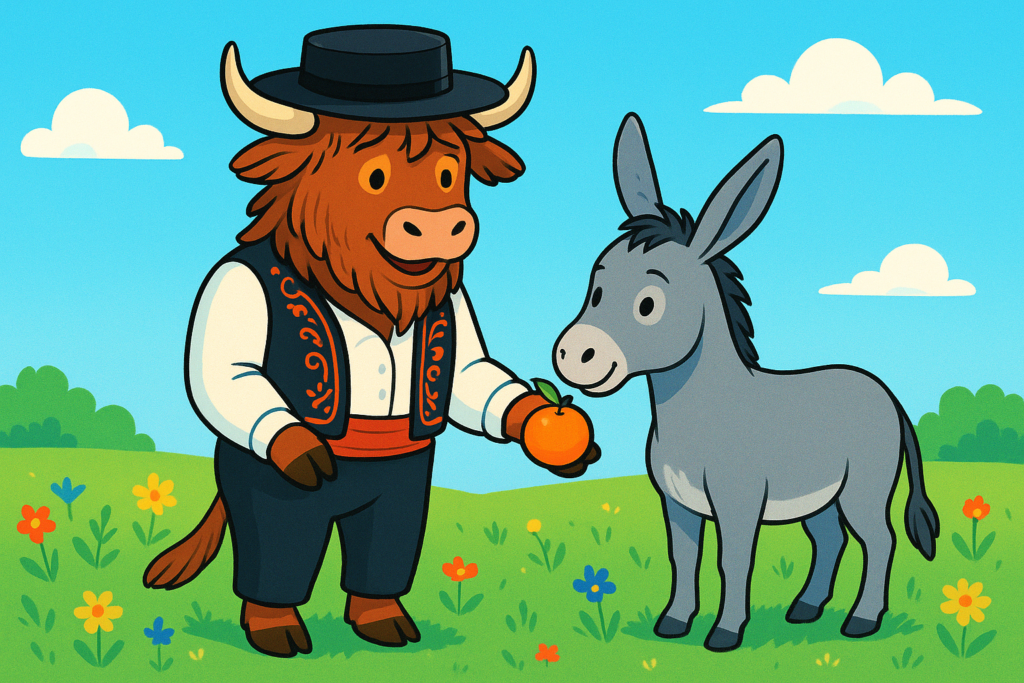
This A2 Elementary retelling of Platero y yo: Platero keeps the plot clear for learners while still giving the story some atmosphere and momentum. Platero es pequeño, peludo y suave. Es un burro de color plata.
This version teaches Spanish through English and includes clickable word help inside the story, full story audio, and lesson notes after the reading. It is free to use on Yak Yacker and is designed to feel natural, readable, and manageable for learners.
Platero es , y . Es un burro de color plata. Tiene . Siempre está conmigo.
Platero es y . Cuando lo , él . Le doy pan y naranjas. Le gustan mucho las naranjas.
Un día, le digo: 'Platero, ¿quieres ?'. Él . Yo río. 'Tú eres mi mejor amigo', le digo.
Paseamos juntos por el . El campo está y . Platero y yo miro el cielo azul.
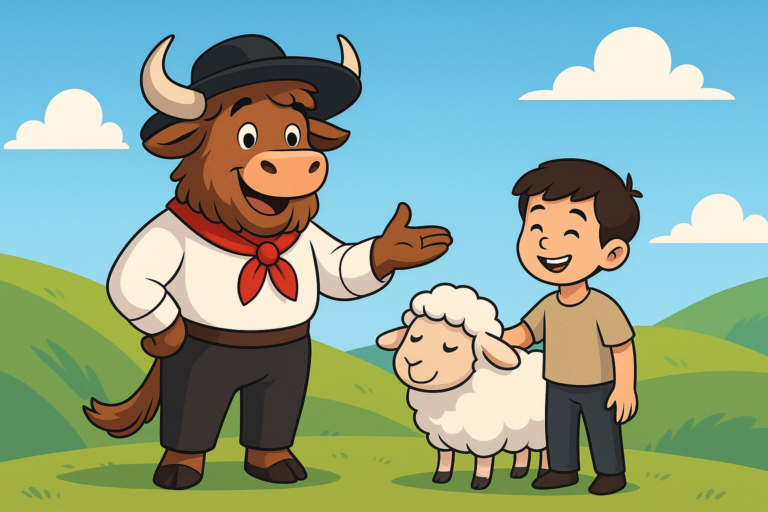
A veces, los niños . '¡Platero! ¡Platero!', ellos. Platero es muy . Los niños le dan zanahorias.
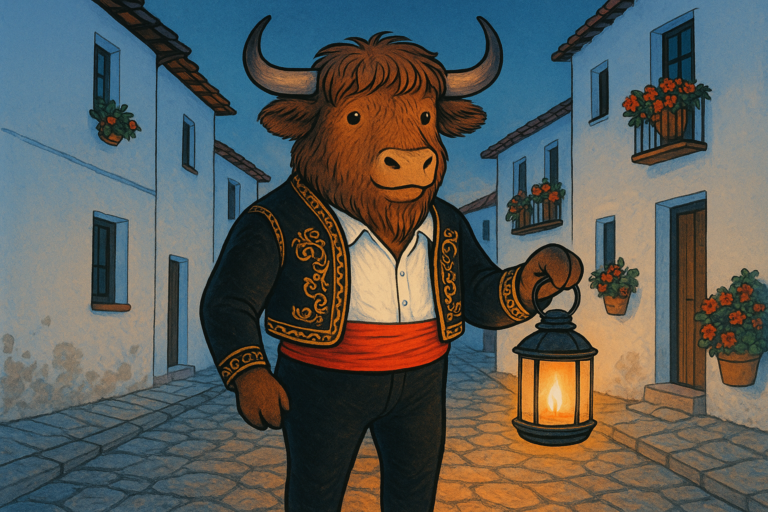
Por la noche, Platero en el . Yo le digo: 'Buenas noches, Platero'. Él contento.
Platero es mi amigo. Siempre estamos juntos. Yo lo .
Platero is small, furry, and soft. He's a silver-colored donkey. He has big black eyes. He's always with me.
Platero is gentle and calm. When I call him, he comes. I give him bread and oranges. He really likes oranges.
One day, I say to him, "Platero, do you want to eat grass?" He wiggles his ears. I laugh. "You are my best friend," I tell him.
We stroll together through the countryside. The countryside is green and full of flowers. Platero eats grass and I look at the blue sky.
Sometimes, the children come. "Platero! Platero!" they shout. Platero is very patient. The children give him carrots.
At night, Platero sleeps in the stable. I say to him, "Good night, Platero." He closes his eyes, content.
Platero is my friend. We are always together. I love him very much.
In this sweet story, we get to know Platero, the little donkey. The description is full of useful words for talking about animals and friends. Let’s pick out some of the key vocabulary so you can use it yourself.
You saw words like pequeño (small), peludo (furry), suave (soft), and tranquilo (calm). Platero is un burro de color plata – a silver-colored donkey. His eyes are grandes y negros (big and black). And of course, he loves comer hierba (eating grass) and naranjas (oranges).
- pequeño/a – small; peludo/a – furry; suave – soft; amable – kind; tranquilo/a – calm
- un burro – a donkey; de color plata – silver-colored; ojos – eyes
- dar – to give; gustar – to like; comer – to eat; pasear – to walk/stroll
- el campo – the countryside; el establo – the stable; las flores – the flowers
In Spanish, adjectives usually change their ending to match the noun they describe. Notice how the story describes Platero: he is pequeño, peludo, and suave. All these adjectives end in -o because burro is masculine singular.
But look at his eyes: ojos grandes y negros. Now the adjectives end in -os because ojos is masculine plural. If we described something feminine, like la noche (the night), we’d say la noche tranquila. This matching is key to sounding natural in Spanish.
- Masculine singular: burro pequeño, ojo negro
- Feminine singular: hierba verde, noche tranquila
- Masculine plural: ojos grandes, niños contentos
- Endings often follow: -o → -a → -os → -as; but words like suave and amable stay the same
Expressing likes is a big part of the story: Le gustan mucho las naranjas. In Spanish, we use gustar in a special way. Think of it as -something is pleasing to someone.- So le gustan las naranjas means -oranges are pleasing to him.-
For one thing, use gusta: Me gusta el pan (I like bread). For more than one, use gustan: Le gustan las zanahorias (He likes carrots). You can also ask: ¿Te gusta la hierba? (Do you like grass?). Notice how the verb changes with the thing liked, not the person.
- (A mí) me gusta/n – I like; (A ti) te gusta/n – you like; (A él/ella) le gusta/n – he/she likes
- Me gusta la noche. / Me gustan los paseos.
- ¿Platero, te gustan las naranjas? – Platero, do you like oranges?
- Remember: the thing you like decides if it’s gusta or gustan.
Now you’ve got words and patterns to describe a special animal or friend. Why not create your own mini-description? It doesn’t have to be a donkey—maybe it’s a dog, a cat, or even a person you love.
Try a few sentences: say what they look like (Es… Tiene…), what they like to eat (Le gusta/n…), and what you do together (Paseamos, jugamos…). Reading and writing just a little every day builds your Spanish gently and joyfully, just like a walk with Platero.
Platero y yo: Platero comes from an older public-domain story tradition and is best known as a public_domain_story_retelling. This Yak Yacker article is an original learner retelling based on public-domain source material, so the wording here is simplified for modern learners rather than copied from one old edition.
Older printings, translations, and retellings of this story can vary quite a bit. This version is adapted for A2 Elementary learners studying Spanish.
If you want to keep going, browse more in our Spanish section and review the A2 Spanish Vocabulary List. After that, try Spanish Gender Rules for Nouns and Adjectives for another useful next step.