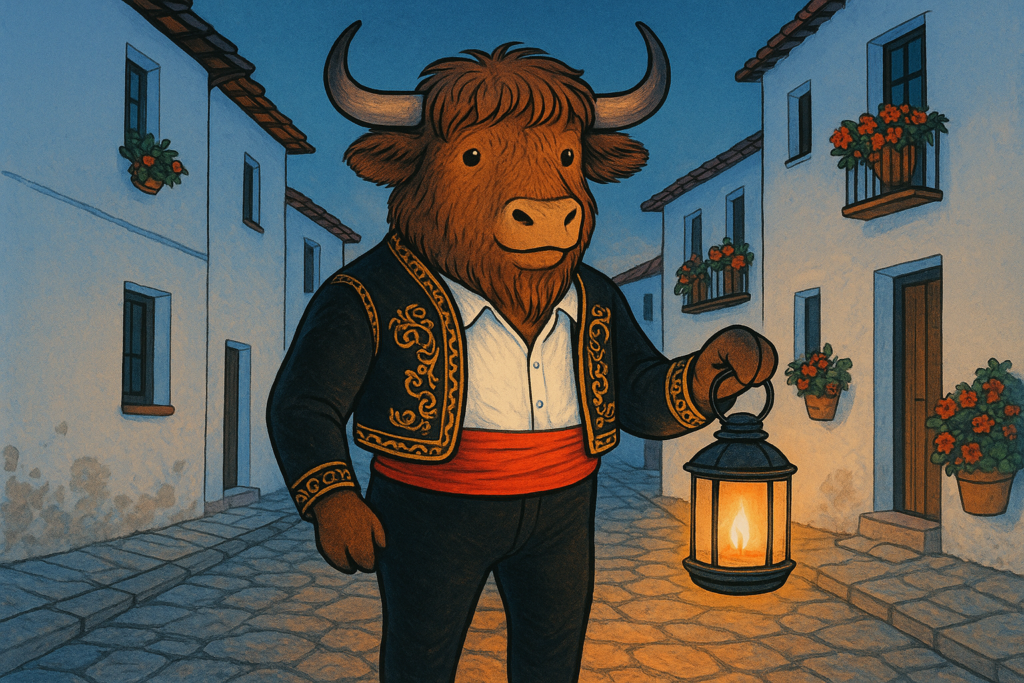
Marianela is a poor, unloved girl in a small Spanish mining town. She has a kind heart, but everyone calls her ugly. Her only friend is Pablo, a wealthy blind young man. Marianela acts as his eyes, describing the world to him with beauty and imagination. They spend their days together, and Marianela falls deeply in love with Pablo, but she fears the day he might see her face.
This classic story by Benito Pérez Galdós is retold here in simple, natural Spanish for B1 learners. You'll follow Marianela's emotional journey as Pablo's vision is restored and the truth comes out. As you read, click on any word you don't know for an instant translation. Listen to the full story audio to improve your pronunciation and flow. And check the free lesson notes for grammar tips and vocabulary explanations. Dive into this unforgettable tale and boost your Spanish naturally.
Había una vez una chica llamada Marianela. Todos la llamaban Nela. Era huérfana y muy pobre. No era bonita, pero tenía un .
Nela de un joven ciego llamado Pablo. Él era hijo de un hombre rico. Todos los días, Nela a Pablo por el campo y le el mundo.
-Pablo, hoy las flores están muy rojas -le dijo Nela una mañana. -El viento es y el sol en el cielo azul.
A Pablo le encantaba oír la voz de Nela. Él no podía ver su cara, pero imaginaba que ella era . -Nela, en mi mente tú eres la chica más del mundo -le confesó un día.
Nela se sintió al oír eso. Ella sabía que no era hermosa. Pero no le dijo la verdad a Pablo. No quería .
Un día, el padre de Pablo, don Francisco, habló con un médico famoso. -Doctor Teodoro, ¿puede usted a mi hijo? -le preguntó. El médico y respondió: -Voy a .
Nela oyó la conversación y se mucho. Pensó: «Si Pablo ve, ya no me querrá». Esa noche lloró en .
El médico los ojos de Pablo. Después de unos días, le quitó las . -Pablo, -le dijo. Pablo obedeció y, al principio, solo vio luz.
Poco a poco, Pablo empezó a formas y caras. Buscó a Nela con la mirada. -¿Dónde está Nela? -preguntó .
Cuando Pablo vio a Nela, se quedó . Ella no era como la había imaginado. -Nela, eres tú… pero eres diferente -dijo él con y un poco de .
Nela sintió un dolor inmenso. Sus ojos se llenaron de lágrimas. -Sí, soy yo, la que te guiaba… la Nela -dijo con voz . Y salió corriendo.
Pablo se quedó confundido. Luego recordó todos los momentos felices con Nela: su voz dulce, sus palabras amables, su . Comprendió que la era lo más importante.
Salió a buscarla y la encontró llorando junto a un árbol. -Nela, -le dijo Pablo a su lado-. Antes era ciego de vista, pero ahora veo con el corazón. Tú eres la persona más hermosa que conozco.
Nela lo miró sin creerlo. Pero en los ojos de Pablo ya no había , sino amor. Sonrió y él le tomó la mano. Desde ese día, su amistad se hizo más fuerte que nunca.
Marianela is a story about inner beauty, and it's packed with words for emotions and personal qualities. Understanding these terms will help you express feelings with more nuance in Spanish.
Pay attention to how these words appear in context. For example, 'bondad' (kindness) describes Nela's heart, while 'ilusión' (hope/dream) shows what Pablo imagined. 'Decepción' (disappointment) and 'dolor' (pain) capture the climax, and 'amor' (love) closes the story on a warm note.
- la bondad - kindness; Nela tenía un corazón lleno de bondad.
- la ilusión - hope, illusion; No quería romper su ilusión.
- la decepción - disappointment; Pablo sintió un poco de decepción.
- el dolor - pain, grief; Nela sintió un dolor inmenso.
- las lágrimas - tears; Sus ojos se llenaron de lágrimas.
Spanish storytelling relies heavily on two past tenses: the preterite and the imperfect. In 'Marianela', you can see them working together to set scenes and advance the plot.
Use the imperfect for ongoing or habitual past actions and descriptions: 'Nela trabajaba como lazarillo' (she worked regularly) and 'Era huérfana y muy pobre' (description). The preterite signals completed, one-time events: 'El médico operó los ojos' (he performed the surgery) and 'Pablo obedeció' (he obeyed). Mixing them brings a story to life.
- Imperfect: descriptions, habits, ongoing states (brillaba, guiaba, imaginaba).
- Preterite: completed actions, key plot developments (dijo, sintió, salió).
- Look for time markers: 'todos los días' often pairs with imperfect; 'un día' often introduces preterite.
- In the story, 'Pablo buscó a Nela' (one search) vs. 'Nela guiaba a Pablo' (repeated guiding).
You probably noticed several verbs with 'se' in the story: 'se asustó', 'se quedó inmóvil', 'se llenaron de lágrimas'. These are not just reflexive in the literal sense; they often express a change of state or an emotional reaction.
In 'se asustó', 'asustarse' means 'to get scared'-the 'se' shows that the subject experiences the fear. Similarly, 'quedarse' (to become/stay) describes Pablo's reaction: 'se quedó inmóvil' (he stood still). Mastering these pronominal verbs will make your Spanish sound much more natural.
- asustarse - to get scared (Nela se asustó mucho).
- quedarse + adjective - to become/stay a way (se quedó confundido).
- llenarse de - to fill with (se llenaron de lágrimas).
- hacerse + adjective - to become over time (su amistad se hizo más fuerte).
Now you've experienced a classic Spanish tale and sharpened your past tenses and emotional vocabulary. Try retelling the story in your own words, switching between preterite and imperfect to capture the flow of events.
For extra practice, look for other short stories by Benito Pérez Galdós or modern adaptations. The more you read, the more naturally these tenses will come to you. ¡Ánimo!
Marianela comes from the Spanish / Galdós tradition and is best known as a public_domain_story_retelling. This Yak Yacker article is an original learner retelling based on public-domain source material, so the wording here is simplified for modern learners rather than copied from one old edition.
Older printings, translations, and retellings of this story can vary quite a bit. This version is adapted for B1 Intermediate learners studying Spanish.
If you want to keep going, browse more in our Spanish section and review the B1 Spanish Vocabulary List. After that, try Spanish Gender Rules for Nouns and Adjectives for another useful next step.