This B1 Intermediate retelling of La vida es sueño keeps the plot clear for learners while still giving the story some atmosphere and momentum. En una torre oscura y lejana, en el reino de Polonia, un hombre encadenado grita al cielo. ¿Por qué estoy aquí, sin libertad, viendo solo piedras y sombras?
This version teaches Spanish through English and includes clickable word help inside the story, full story audio, and lesson notes after the reading. It is free to use on Yak Yacker and is designed to feel natural, readable, and manageable for learners.
En una , en el reino de Polonia, un hombre grita al cielo.
«¡Ay, mísero de mí! ¿Qué delito cometí al nacer? ¿Por qué estoy aquí, sin libertad, viendo solo piedras y sombras?» El hombre es Segismundo, príncipe de Polonia, aunque no lo sabe.
Su único compañero es , un viejo guardián que le enseña las estrellas y la historia, pero nunca le dice la verdad sobre su .
Un día, una joven , Rosaura, cerca de la torre. Ve a Segismundo y escucha sus cadenas. «¿Quién eres tú, ?» pregunta ella.
«Soy un hombre, pero menos que un hombre. Un en esta cueva, olvidado del mundo,» responde Segismundo con .
Clotaldo descubre a Rosaura y la lleva ante el rey Basilio. El rey, al ver una espada antigua, a Rosaura como hija de alguien querido, pero .
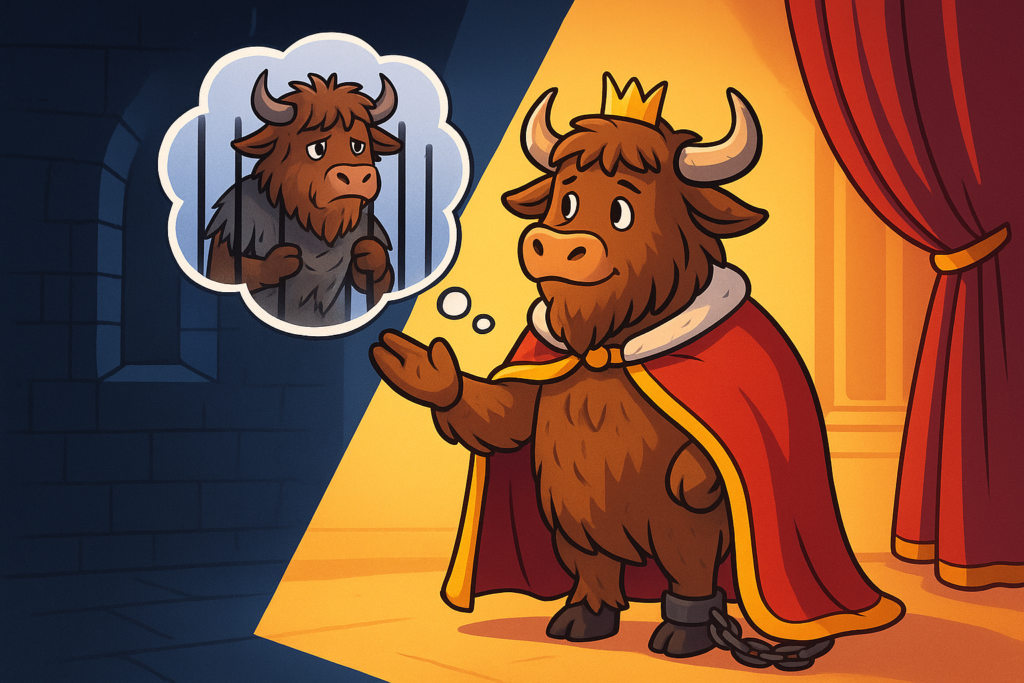
El rey Basilio tiene un . «He decidido si las estrellas mintieron. Daremos a Segismundo un día como rey. Si se porta con , lo devolveremos a su prisión y le diremos que todo fue un sueño,» explica a su corte.
Esa noche, a Segismundo y lo visten con . Cuando despierta en el palacio, cree estar soñando. «¡Qué hermoso sueño! ¿Soy un rey? ¡Tráiganme , que quiero probar el poder!» ordena.
Pero su alegría se convierte en cuando un criado le contradice. «¿Tú te atreves a ?» grita Segismundo y lanza al criado por la ventana. Luego, intenta forzar a su prima Estrella.
El rey, horrorizado, ordena a Segismundo otra vez y devolverlo a la torre. Clotaldo le susurra: «Príncipe, incluso en sueños, hay que hacer el bien.»
En la prisión, Segismundo despierta . Recuerda los lujos, la furia, la caída. «¿Fue todo un sueño? Entonces, ¿qué es la vida? ¿Un , una ilusión, una sombra? Pues si es sueño, soñemos bien, haciendo el bien,» decide.
Poco después, el pueblo se contra Basilio y a Segismundo. «¡Viva nuestro verdadero rey! ¡Líbranos del tirano!» aclaman.
Segismundo, ahora con un , se enfrenta a su padre en batalla. Pero, recordando su lección, a Basilio y se arrodilla ante él. «Padre, el sueño me enseñó: aun en la victoria, hay que ser .»
El rey, , lo abraza. «Hijo, tu virtud a las estrellas. Tú eres el verdadero rey.»
Y así, Segismundo, el príncipe encadenado, se convierte en un rey sabio, porque ha comprendido que la vida es sueño, y los sueños, sueños son.
The tale of Segismundo is packed with dramatic and descriptive words. Let's lift a few directly from the text so you can use them in your own Spanish.
Focus on how these words create mood—solitude, illusion, and intensity. Try reading them aloud with expression!
- encadenado/a – chained (literally or figuratively feeling trapped)
- torre oscura – dark tower (a classic image of isolation)
- sueño – dream (used both literally and as a metaphor for life)
- desgraciado/a – wretched or unfortunate (a strong, literary word)
- frenesí – frenzy (intense emotion, often out of control)
- sombra – shadow (a symbol of something fleeting or unreal)
Spanish often uses the subjunctive after -aunque- (although/even though) when referring to a hypothetical or unknown situation. If the fact is certain, use the indicative.
Look at these two examples: -Aunque esté encadenado, es libre en sus sueños- (Even though he may be chained, he is free in his dreams – we don't know if he's actually chained, it's a possibility). Compare with -Aunque está encadenado, no pierde la esperanza- (Even though he is chained, he doesn't lose hope – we know he is chained).
- aunque + subjunctive: hypothetical or uncertain event
- aunque + indicative: known fact or experienced reality
- Try it yourself: Aunque … (no tener) dinero, viajaría por el mundo. (Answer: tenga, because it’s hypothetical)
This story echoes the famous Spanish Golden Age play by Calderón de la Barca. Notice the rhetorical questions, exclamations, and powerful contrasts that give the language a lyrical, almost philosophical feel.
Segismundo’s famous reflection -¿Qué es la vida? Un frenesí, una ilusión, una sombra…- layers metaphor upon metaphor to question reality. This style, full of rhythm and imagery, is a hallmark of classic Spanish literature.
- Rhetorical questions: -¿Qué delito cometí al nacer?- – no answer expected, just raw emotion
- Metaphor strings: life = frenzy = illusion = shadow – each adding depth
- Contrast: dark prison vs. bright palace, reality vs. dream – keep an eye out for these in your reading!
You’ve journeyed through a short slice of a timeless classic. If you’re curious, the original play -La vida es sueño- is a fantastic next step for B1/B2 readers—complex but deeply rewarding.
For now, why not write a short dream scene of your own? Use at least three new vocabulary words and one -aunque- phrase. Share it with a friend or your tutor and see if they can feel the dream-like mood.
- Re-read the story aloud to practice rhythm and pronunciation
- Write a 4–5 sentence dream sequence using today’s vocabulary
- Look up the full play for a more challenging read!
La vida es sueño comes from an older public-domain story tradition and is best known as a public_domain_story_retelling. This Yak Yacker article is an original learner retelling based on public-domain source material, so the wording here is simplified for modern learners rather than copied from one old edition.
Older printings, translations, and retellings of this story can vary quite a bit. This version is adapted for B1 Intermediate learners studying Spanish.
If you want to keep going, browse more in our Spanish section and review the B1 Spanish Vocabulary List. After that, try Basic Questions in Spanish for another useful next step.