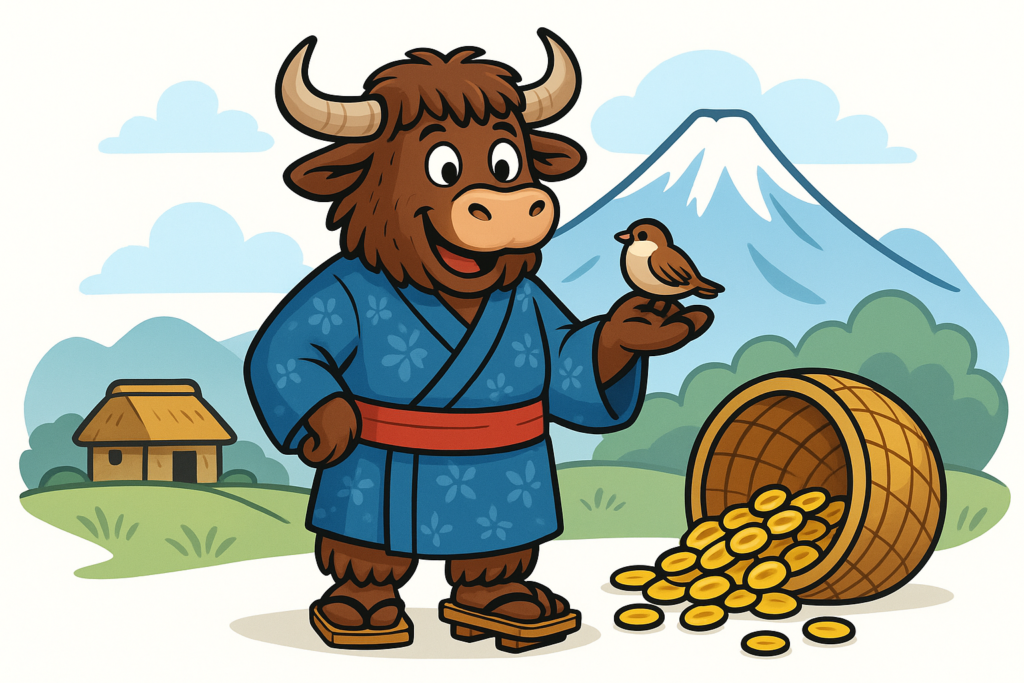
This A1 Beginner retelling of したきりすずめ keeps the plot clear for learners while still giving the story some atmosphere and momentum.
This version teaches Japanese through English and includes clickable word help inside the story, full story audio, and lesson notes after the reading. It is free to use on Yak Yacker and is designed to feel natural, readable, and manageable for learners.
おじいさんは いきました。すると、 すずめが いて、
おじいさんは と いいました。それから、 いえに 。
おばあさんは 。あるひ、 おばあさんの おばあさんは 、すずめの
すずめは と 、。おじいさんは 、すずめを いきました。
おじいさんは すずめたちは と いって、。
すずめは おじいさんに 「おおきいほうと ちいさいほう、」おじいさんは
いえにかえると、おばあさんも いくと、 えらんで、おばあさんは 、。
The old man went to the mountain. There was a little sparrow with an injured leg.
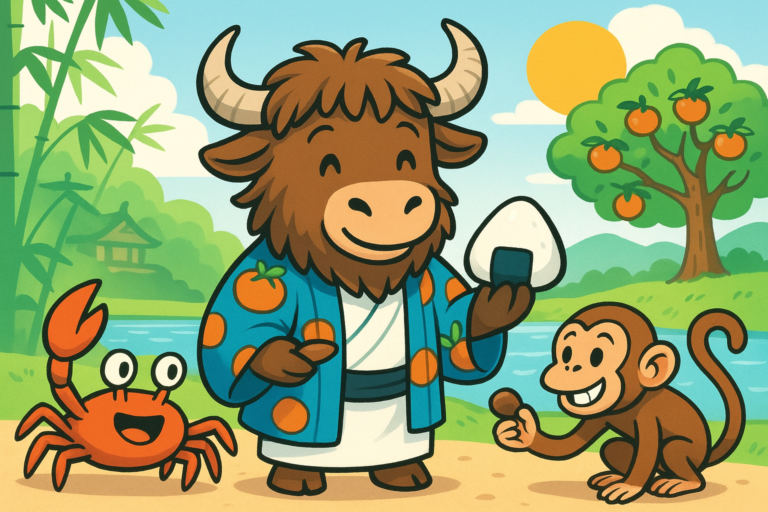
The old man said, "Poor thing." Then he took the sparrow home.
The old woman disliked the sparrow. One day, the sparrow ate her laundry starch. The old woman got angry and cut the sparrow's tongue.
The sparrow cried "chichichi" and flew away. The old man was sad and went searching for the sparrow.
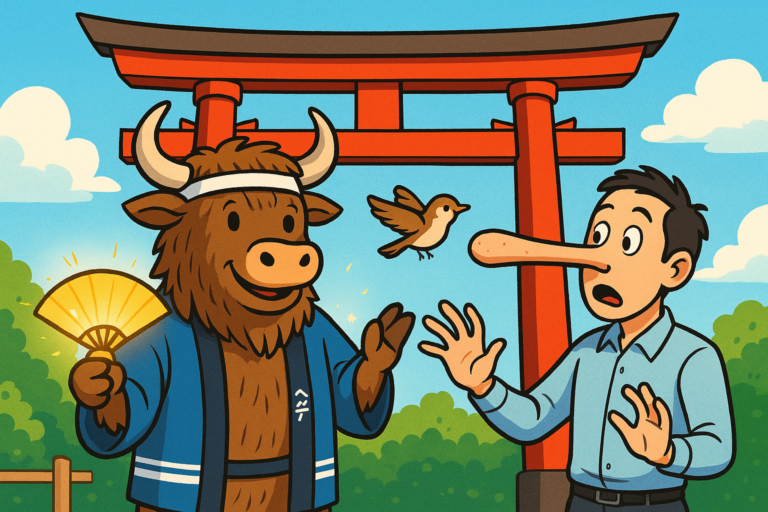
The old man found the sparrow's lodge. The sparrows said, "You came well," welcoming him.
The sparrow showed the old man two boxes. "The big one or the small one, which do you prefer?" The old man chose the small box.
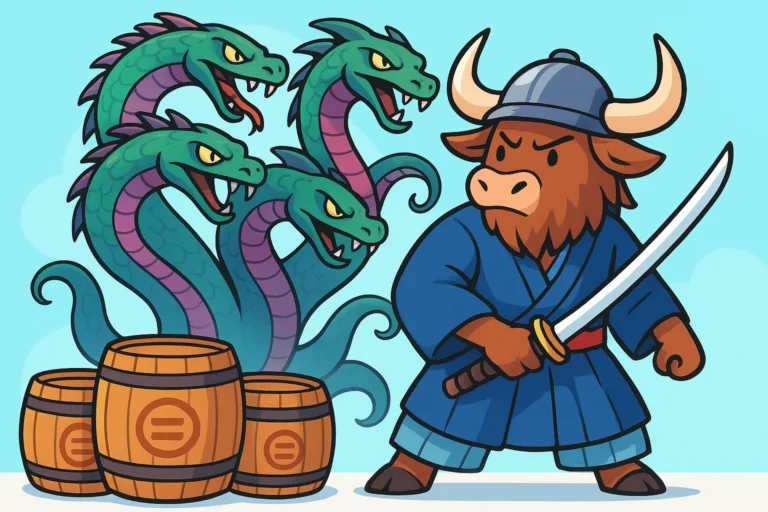
When he returned home, the small box was full of treasure. The old woman also went, chose the big box, and monsters came out. The old woman was startled and ran away.
Let's look at some important words from the story. These will help you talk about people and places in Japanese!
- おじいさん (ojiisan) - old man / grandfather
- おばあさん (obaasan) - old woman / grandmother
- すずめ (suzume) - sparrow
- やま (yama) - mountain
You saw many verbs ending in ~ました in the story. That's the polite way to say something happened. It's super useful for storytelling!
- To make the past tense, change ~ます to ~ました.
- いきます (go) → いきました (went)
- います (is, for living beings) → いました (was)
- たべます (eat) → たべました (ate)
This is a classic Japanese folk tale. It reminds us to be gentle and not greedy. In Japan, sparrows are often seen as cheerful, friendly birds-even if they can be a little mischievous!
You did it! Try retelling the story aloud using the words and past tense you just practiced. Even a simple 'おじいさんは やまへ いきました' is a great start. Keep going, and you'll be a storytelling pro in no time!
したきりすずめ comes from the Japanese / folk tale tradition and is best known as a folk tale. This Yak Yacker article is an original learner retelling based on Traditional Japanese folk tale; public-domain versions, so the wording here is simplified for modern learners rather than copied from one old edition.
Older printings, translations, and retellings of this story can vary quite a bit. The original audience was usually kids, but this version is adapted for A1 Beginner learners studying Japanese. Some cruelty; soften for A1.
If you want to look into the source tradition, start with Project Gutenberg.
If you want to keep going, browse more in our Japanese section and review the Geography Vocabulary in Japanese. After that, try Japanese Question Words for another useful next step.