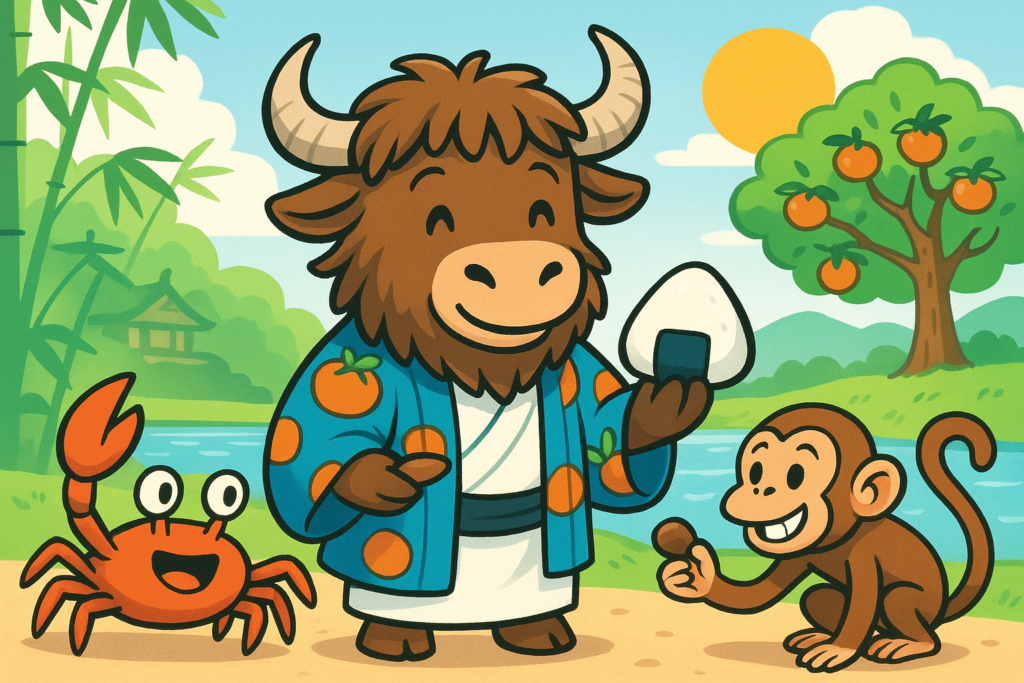
Welcome to another Yak Yacker story! This time, we bring you 'The Crab and the Monkey', a classic Japanese folk tale. It's a simple story about a clever crab and a greedy monkey, full of fun and a little mischief.
In this interactive graded reader, you can read and listen to the entire tale in easy Japanese. Just click any word you don't know to see its meaning instantly. There's also full story audio, so you can listen to a native speaker while you read along. Plus, we've added lesson notes to help you understand the language better.
Whether you're a complete beginner or just starting out, this A1-level story is designed to help you learn Japanese naturally. Enjoy the adventure, and don't forget to watch out for the monkey's tricks!
カニはをもっています。サルはをもっています。
カニとサルは。「おにぎりとを。」「いいですよ。」
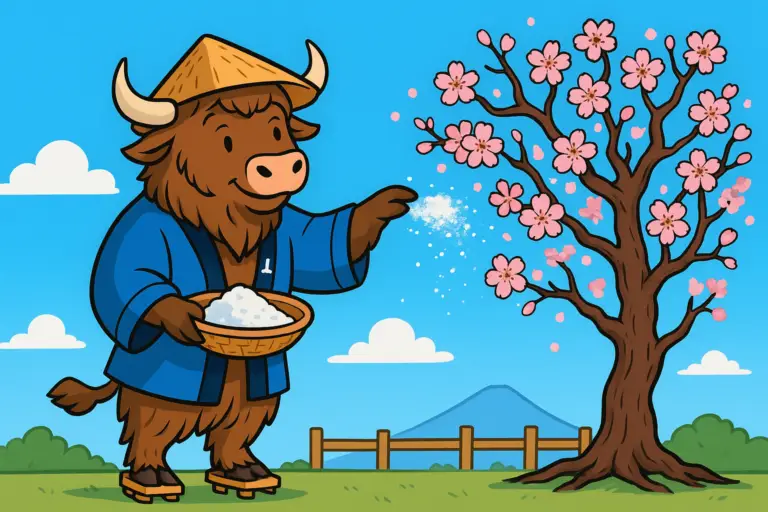
カニは。。「おおきくなあれ、おおきくなあれ。」
きは。ができます。サルは、。
サルはかきをぜんぶたべます。カニは「ひとつちょうだい」といいます。でもサルはあおいかきをなげます。カニはいたいです。
ちょうちょとがきます。サルのいえにいきます。はちは。
サルは「ごめんなさい」といいます。カニとサルはなかよしになります。おしまい。
The crab has a rice ball. The monkey has a persimmon seed.
The crab and monkey exchange. 'Want to trade the rice ball for the seed?' 'Sure.'
The crab plants the seed and waters it daily. 'Grow big, grow big.'
The tree grows big with many persimmons. The monkey climbs and picks them.
The monkey eats all. The crab asks for one, but the monkey throws a green persimmon, hurting the crab.
A butterfly and bee come. They go to the monkey's house, and the bee stings him.
The monkey apologizes. The crab and monkey become friends. The end.
This folktale uses a small set of useful Japanese words again and again. That repetition is great for beginners, because the words start to feel familiar very quickly.
Try to spot the main nouns and actions: crab, monkey, rice ball, seed, tree, water, climb, eat, and say sorry.
- カニ = crab
- サル = monkey
- おにぎり = rice ball
- たね = seed
- き = tree
The story is full of easy action words. These help you follow what each character is doing, even if you do not know every word.
Look for verbs like もっています, こうかんします, うえます, のぼって, とります, and いいます. They show the story step by step.
- もっています = has / is holding
- こうかんします = exchanges
- うえます = plants
- のぼって = climbs
- とります = takes / picks
This story uses short, clear sentences, which is perfect for A1 learners. The pattern often looks like noun + は + action, so it is easy to see who is doing what.
You also see polite forms like いいですよ and ごめんなさい. These are useful everyday phrases, and they make the story sound friendly and natural.
- は often marks the topic of the sentence
- ます forms are polite and beginner-friendly
- まいにち means every day
- たくさん means many or a lot
This story is memorable because the same simple language appears in a clear chain of events. That makes it easier to read, retell, and remember.
If you want, read it again and try to say the story in your own words using just a few Japanese words. Small steps count, and this crab-and-monkey tale is a good one to practice with.
- Read once for the story
- Read again for the repeated words
- Try retelling one scene
- Notice the polite phrases
カニとサル comes from the Japanese / folk tale tradition and is best known as a folk tale. This Yak Yacker article is an original learner retelling based on Traditional Japanese folk tale; public-domain versions, so the wording here is simplified for modern learners rather than copied from one old edition.
Older printings, translations, and retellings of this story can vary quite a bit. The original audience was usually kids, but this version is adapted for A1 Beginner learners studying Japanese. Can be violent; soften if for children.
If you want to look into the source tradition, start with Project Gutenberg.
If you want to keep going, browse more in our Japanese section and review the Geography Vocabulary in Japanese. After that, try Essential Japanese Phrases for another useful next step.