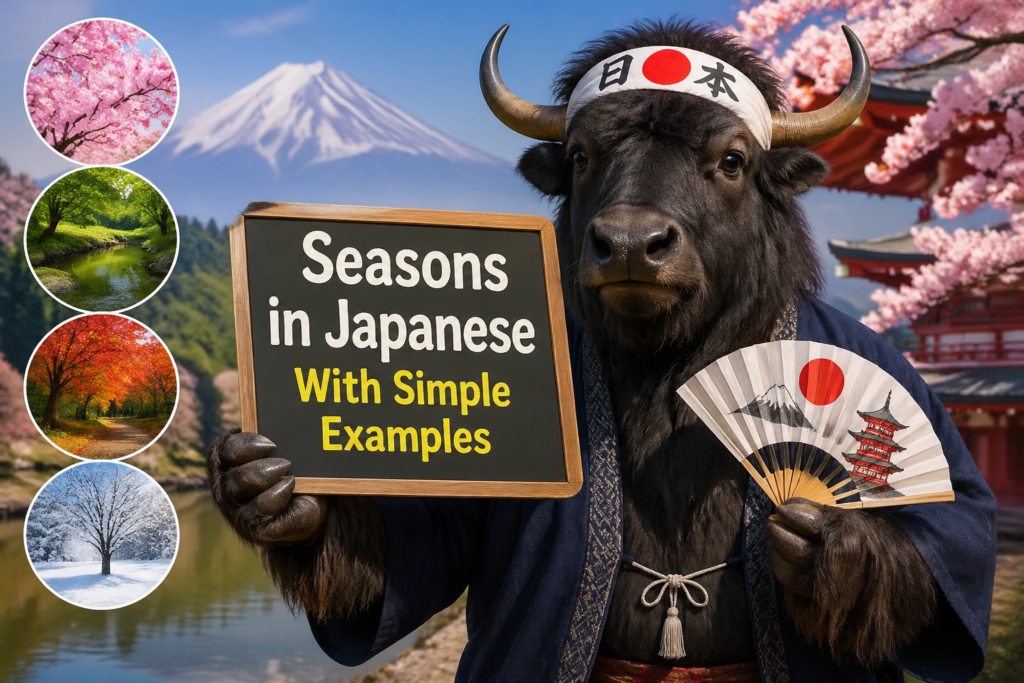
Japanese has beautifully simple words for the four seasons, but of course the language does not stop there. It never does. Once you learn the basic season words, you start noticing them everywhere: weather reports, school calendars, poetry, food packaging, anime dialogue, and those little daily conversations about how hot, cold, sticky, windy, or suspiciously sneezy life has become.
In Japan, the seasons are a big deal. Not a tiny “nice weather today” deal. A proper cultural event. Cherry blossoms scream spring, fireworks smell like summer, red leaves own autumn, and winter arrives with hot pot, scarves, and heroic convenience store snacks. If you can talk about seasons, you can suddenly say a lot more than you think.
So let’s make the four seasons feel easy, useful, and very usable in real life.
The Four Basic Seasons In Japanese
| Kanji | Rōmaji | Meaning | Example (Japanese) | Example (Rōmaji) | Translation |
|---|---|---|---|---|---|
| 春 | haru | spring | 春は花がきれいです。 | haru wa hana ga kirei desu. | Spring flowers are beautiful. |
| 夏 | natsu | summer | 夏はとても暑いです。 | natsu wa totemo atsui desu. | Summer is very hot. |
| 秋 | aki | autumn / fall | 秋は食べ物がおいしいです。 | aki wa tabemono ga oishii desu. | Food is delicious in autumn. |
| 冬 | fuyu | winter | 冬は日が短いです。 | fuyu wa hi ga mijikai desu. | Days are short in winter. |
That is the core set right there. Four tiny words. Very efficient. Japanese really knows when to keep things neat.
Useful Season Phrases And Real-Life Sentences
Below are common words and phrases that help you actually talk about seasons, not just nod politely when you see them in a textbook.
| Kanji | Rōmaji | Meaning | Example (Japanese) | Example (Rōmaji) | Translation |
|---|---|---|---|---|---|
| 季節 | kisetsu | season | 日本は四つの季節があります。 | Nihon wa yottsu no kisetsu ga arimasu. | Japan has four seasons. |
| 四季 | shiki | the four seasons | 日本の四季は人気があります。 | Nihon no shiki wa ninki ga arimasu. | Japan’s four seasons are popular. |
| 春休み | haru yasumi | spring vacation | 春休みに京都へ行きます。 | haru yasumi ni Kyōto e ikimasu. | I’m going to Kyoto during spring vacation. |
| 夏休み | natsu yasumi | summer vacation | 夏休みはいつからですか。 | natsu yasumi wa itsu kara desu ka. | When does summer vacation start? |
| 秋風 | akikaze | autumn breeze | 秋風が気持ちいいです。 | akikaze ga kimochi ii desu. | The autumn breeze feels nice. |
| 冬休み | fuyu yasumi | winter vacation | 冬休みは家でゆっくりします。 | fuyu yasumi wa ie de yukkuri shimasu. | I’ll relax at home during winter vacation. |
| 梅雨 | tsuyu | rainy season | 梅雨は毎日雨が多いです。 | tsuyu wa mainichi ame ga ooi desu. | During the rainy season, there is a lot of rain every day. |
| 花見 | hanami | flower viewing, especially cherry blossoms | 友だちと花見をしました。 | tomodachi to hanami o shimashita. | I went flower viewing with friends. |
| 紅葉 | kōyō | autumn leaves | 紅葉を見に行きたいです。 | kōyō o mi ni ikitai desu. | I want to go see the autumn leaves. |
| 雪 | yuki | snow | 雪がたくさん降っています。 | yuki ga takusan futte imasu. | A lot of snow is falling. |
| 桜 | sakura | cherry blossom | 桜は春の花です。 | sakura wa haru no hana desu. | Cherry blossoms are spring flowers. |
| 暑い | atsui | hot (weather) | 今日はとても暑いです。 | kyō wa totemo atsui desu. | It is very hot today. |
| 寒い | samui | cold (weather) | 朝はかなり寒いです。 | asa wa kanari samui desu. | It is quite cold in the morning. |
| 暖かい | atatakai | warm | 春はだんだん暖かいです。 | haru wa dandan atatakai desu. | Spring gradually becomes warm. |
| 涼しい | suzushii | cool, pleasantly cool | 秋の夜は涼しいです。 | aki no yoru wa suzushii desu. | Autumn nights are cool. |
How To Use The Season Words Naturally
The easiest pattern is this:
春 / 夏 / 秋 / 冬 + は + description
That means: “As for spring/summer/autumn/winter, …”
Examples:
- 春は短いです。
haru wa mijikai desu.
Spring is short. - 夏は海に行きます。
natsu wa umi ni ikimasu.
In summer, I go to the beach. - 秋は読書にいいです。
aki wa dokusho ni ii desu.
Autumn is good for reading. - 冬は早く暗くなります。
fuyu wa hayaku kuraku narimasu.
It gets dark early in winter.
You can also connect a season to a noun with の.
- 春の花
haru no hana
spring flowers - 夏の祭り
natsu no matsuri
summer festival - 秋の空
aki no sora
autumn sky - 冬の朝
fuyu no asa
winter morning
And yes, this pattern is everywhere. Once you spot it, Japanese starts looking a lot less mysterious and a lot more cooperative.
Spring In Japanese
春
haru
spring
Spring in Japanese often carries ideas of new beginnings. School years and business years often start in April, so spring has a “fresh notebook, fresh life” feeling.
- 春が来ました。
haru ga kimashita.
Spring has come. - 春は新しいスタートの季節です。
haru wa atarashii sutāto no kisetsu desu.
Spring is the season of new starts. - 春に桜が咲きます。
haru ni sakura ga sakimasu.
Cherry blossoms bloom in spring.
A very common spring image is 桜 (sakura), cherry blossoms. If you want to sound a little more natural when talking about spring in Japan, that word is pure gold.
桜
sakura
cherry blossom
Example: 桜の季節が好きです。
sakura no kisetsu ga suki desu.
I like cherry blossom season.
Summer In Japanese
夏
natsu
summer
Summer in Japan is famous for being hot, humid, and not even a little shy about it. You will hear people say it is hot constantly, because it is useful, true, and emotionally necessary.
- 夏は毎日アイスを食べたいです。
natsu wa mainichi aisu o tabetai desu.
In summer, I want to eat ice cream every day. - 夏の夜はにぎやかです。
natsu no yoru wa nigiyaka desu.
Summer nights are lively. - 夏に花火を見ます。
natsu ni hanabi o mimasu.
I watch fireworks in summer.
One helpful summer word is this:
花火
hanabi
fireworks
Example: 花火大会は夏の楽しみです。
hanabi taikai wa natsu no tanoshimi desu.
Fireworks festivals are a summer pleasure.
Autumn In Japanese
秋
aki
autumn, fall
Autumn gets a very good reputation in Japanese. It is cool, colorful, comfortable, and often linked with food, reading, and travel. Honestly, autumn has strong favorite-child energy.
- 秋は散歩にいい季節です。
aki wa sanpo ni ii kisetsu desu.
Autumn is a good season for walks. - 秋の山はきれいです。
aki no yama wa kirei desu.
Mountains are beautiful in autumn. - 秋は空気がさわやかです。
aki wa kūki ga sawayaka desu.
The air is refreshing in autumn.
Another very useful autumn word:
紅葉
kōyō
autumn leaves
Example: 紅葉の写真を撮りました。
kōyō no shashin o torimashita.
I took photos of the autumn leaves.
Winter In Japanese
冬
fuyu
winter
Winter words in Japanese often show up with snow, cold air, holidays, and warm food. The language somehow manages to sound crisp and cozy at the same time. Quite rude, really, because that is a very nice trick.
- 冬はコートが必要です。
fuyu wa kōto ga hitsuyō desu.
You need a coat in winter. - 冬に雪だるまを作ります。
fuyu ni yukidaruma o tsukurimasu.
We make a snowman in winter. - 冬の朝は静かです。
fuyu no asa wa shizuka desu.
Winter mornings are quiet.
A must-know winter word:
雪
yuki
snow
Example: 雪を見ると冬だと思います。
yuki o miru to fuyu da to omoimasu.
When I see snow, I think it is winter.
Season Questions You Can Use Right Away
| Japanese | Rōmaji | Meaning |
|---|---|---|
| 好きな季節は何ですか。 | suki na kisetsu wa nan desu ka. | What is your favorite season? |
| 日本の夏はどうですか。 | Nihon no natsu wa dō desu ka. | What is summer in Japan like? |
| 春はいつからですか。 | haru wa itsu kara desu ka. | When does spring start? |
| 冬は寒いですか。 | fuyu wa samui desu ka. | Is winter cold? |
| 秋に何をしますか。 | aki ni nani o shimasu ka. | What do you do in autumn? |
These are great starter questions for conversation practice. They are simple, natural, and lead to real answers instead of one-word textbook grunts.
Common Season Adjectives
| Kanji | Rōmaji | Meaning | Example (Japanese) | Example (Rōmaji) | Translation |
|---|---|---|---|---|---|
| 暑い | atsui | hot | 夏は暑いです。 | natsu wa atsui desu. | Summer is hot. |
| 寒い | samui | cold | 冬は寒いです。 | fuyu wa samui desu. | Winter is cold. |
| 暖かい | atatakai | warm | 今日は暖かい春の日です。 | kyō wa atatakai haru no hi desu. | Today is a warm spring day. |
| 涼しい | suzushii | cool, refreshing | 秋の朝は涼しいです。 | aki no asa wa suzushii desu. | Autumn mornings are cool. |
| 蒸し暑い | mushiatsui | humid and hot | 日本の夏は蒸し暑いです。 | Nihon no natsu wa mushiatsui desu. | Japanese summers are hot and humid. |
| さわやか | sawayaka | fresh, refreshing | 秋の風はさわやかです。 | aki no kaze wa sawayaka desu. | The autumn wind is refreshing. |
A Curious Bit: 春夏秋冬
春夏秋冬
shunkashūtō
spring, summer, autumn, winter; the four seasons
This is a compact four-kanji expression that lists all the seasons in order. You may see it in titles, poems, design, advertising, or seasonal writing. It feels a bit literary or polished compared with just saying 四季.
Example: 春夏秋冬、日本の景色は美しいです。
shunkashūtō, Nihon no keshiki wa utsukushii desu.
Through spring, summer, autumn, and winter, Japan’s scenery is beautiful.
Season Word Tables By Theme
Nature And Weather
| Kanji | Rōmaji | Meaning | Example (Japanese) | Example (Rōmaji) | Translation |
|---|---|---|---|---|---|
| 風 | kaze | wind | 春の風はやさしいです。 | haru no kaze wa yasashii desu. | Spring wind is gentle. |
| 雨 | ame | rain | 夏は雨が多いです。 | natsu wa ame ga ooi desu. | There is a lot of rain in summer. |
| 空 | sora | sky | 秋の空は高く見えます。 | aki no sora wa takaku miemasu. | The autumn sky looks high. |
| 雪 | yuki | snow | 雪の日は静かです。 | yuki no hi wa shizuka desu. | Snowy days are quiet. |
Season Activities
| Kanji | Rōmaji | Meaning | Example (Japanese) | Example (Rōmaji) | Translation |
|---|---|---|---|---|---|
| 花見 | hanami | flower viewing | 週末に花見をします。 | shūmatsu ni hanami o shimasu. | We will go flower viewing this weekend. |
| 祭り | matsuri | festival | 夏の祭りは楽しいです。 | natsu no matsuri wa tanoshii desu. | Summer festivals are fun. |
| 紅葉狩り | momijigari | autumn-leaf viewing | 家族と紅葉狩りに行きます。 | kazoku to momijigari ni ikimasu. | I’m going autumn-leaf viewing with my family. |
| スキー | sukī | skiing | 冬にスキーをします。 | fuyu ni sukī o shimasu. | I go skiing in winter. |
School Breaks And Time Words
| Kanji | Rōmaji | Meaning | Example (Japanese) | Example (Rōmaji) | Translation |
|---|---|---|---|---|---|
| 春休み | haru yasumi | spring vacation | 春休みは短いです。 | haru yasumi wa mijikai desu. | Spring vacation is short. |
| 夏休み | natsu yasumi | summer vacation | 子どもたちは夏休みが大好きです。 | kodomotachi wa natsu yasumi ga daisuki desu. | Children love summer vacation. |
| 秋 | aki | autumn | 秋は新しい勉強を始めます。 | aki wa atarashii benkyō o hajimemasu. | In autumn, I start new studies. |
| 冬休み | fuyu yasumi | winter vacation | 冬休みに本をたくさん読みます。 | fuyu yasumi ni hon o takusan yomimasu. | I read a lot of books during winter vacation. |
Common Confusions To Avoid
Here are a few quick fixes that save beginners a lot of trouble.
- 暑い and 熱い are not the same. 暑い
atsui
means hot weather. 熱い
atsui
means something physically hot, like coffee or soup.
Example: コーヒーが熱いです。
kōhī ga atsui desu.
The coffee is hot. - 寒い
samui
is for cold weather. For touching something cold, Japanese often uses 冷たい
tsumetai
cold to the touch.
Example: 水が冷たいです。
mizu ga tsumetai desu.
The water is cold. - 秋
aki
can mean autumn or fall. Both are correct in English. No drama needed. - 梅雨
tsuyu
is not one of the main four seasons, but it is very important in Japan. If you live there or visit during early summer, you will absolutely notice it. Very wetly.
四季
shiki
Knowing the four seasons gives you more than four words. It gives you weather talk, travel talk, food talk, and small talk that actually sounds natural.
Mini Practice: Can You Say These?
Try reading these aloud and checking that the season word feels automatic.
- 私の好きな季節は春です。
watashi no suki na kisetsu wa haru desu.
My favorite season is spring. - 夏は暑いですが、楽しいです。
natsu wa atsui desu ga, tanoshii desu.
Summer is hot, but fun. - 秋の食べ物が好きです。
aki no tabemono ga suki desu.
I like autumn food. - 冬に雪を見たいです。
fuyu ni yuki o mitai desu.
I want to see snow in winter.
If you can read and understand those, you are already using season vocabulary in real Japanese sentences. Nicely done.
Related Japanese Words You Might Want Next
If seasonal vocabulary is your thing, the bigger picture starts getting fun fast. You can build from seasons into weather, holidays, festivals, food, and cultural events. For more holiday-related vocabulary, have a look at Halloween in Japanese. If you want the broader hub for more lessons, visit Learn Japanese. There is also another useful related guide here: Japanese lesson.
Yak Takeaway
The essential season words are wonderfully simple: 春 (haru), 夏 (natsu), 秋 (aki), and 冬 (fuyu). Add a few high-frequency words like 季節 (kisetsu), 桜 (sakura), 紅葉 (kōyō), and 雪 (yuki), and suddenly you can say a lot about daily life in Japanese. Start with short patterns like 春は暖かいです or 冬は寒いです, and let those become automatic. Small, seasonal, useful. That is a pretty nice combo.