



| Common Mistake | Better Form | Why It Works |
|---|---|---|
| 今日は熱いです。 | 今日は暑いです。 | 熱い (atsui) means hot to the touch; 暑い (atsui) means hot weather. |
| 雨が降ります when you mean “It is raining now” | 雨が降っています。 | The -ています form shows an action happening now. |
| 春は寒いです for every place | 春は暖かいです。 or 春は寒暖差があります。 | Spring is often warm, but mornings and nights can still be cold. |
| 曇りです for “It is cloudy” | 曇っています。 | Both exist, but 曇っています sounds more like “the sky is cloudy right now.” |
Quick Practice
Try swapping the season or weather word. Simple drills beat complicated theory most days. Annoying, but true.
- 今日は_____です。 → Use 晴れ, 曇り, 寒い, or 暑い
- _____は好きです。 → Use 春, 夏, 秋, or 冬
- _____が降っています。 → Use 雨 or 雪
- _____が強いです。 → Use 風
- 今日は_____ですね。 → Use いい天気, 暑い, or 寒い
Example answers:
- 今日は晴れです。 — Kyou wa hare desu. — It’s sunny today.
- 春は好きです。 — Haru wa suki desu. — I like spring.
- 雨が降っています。 — Ame ga futte imasu. — It is raining.
- 風が強いです。 — Kaze ga tsuyoi desu. — The wind is strong.
- 今日はいい天気ですね。 — Kyou wa ii tenki desu ne. — Nice weather today, isn’t it?
Quick Reference Summary
| Type | Japanese | Rōmaji | English |
|---|---|---|---|
| Weather | 天気 | tenki | weather |
| Sunny | 晴れ | hare | sunny weather |
| Rain | 雨 | ame | rain |
| Snow | 雪 | yuki | snow |
| Cloudy | 曇り | kumori | cloudy |
| Spring | 春 | haru | spring |
| Summer | 夏 | natsu | summer |
| Autumn | 秋 | aki | autumn, fall |
| Winter | 冬 | fuyu | winter |
Once you can say the weather, the season, and one short opinion like 好きです (suki desu, I like it) or 寒いですね (samui desu ne, it’s cold, isn’t it?), you already have real conversation material. Not flashy, but very useful. The best kind of useful.
More Japanese to explore

Best graded readers for Japanese
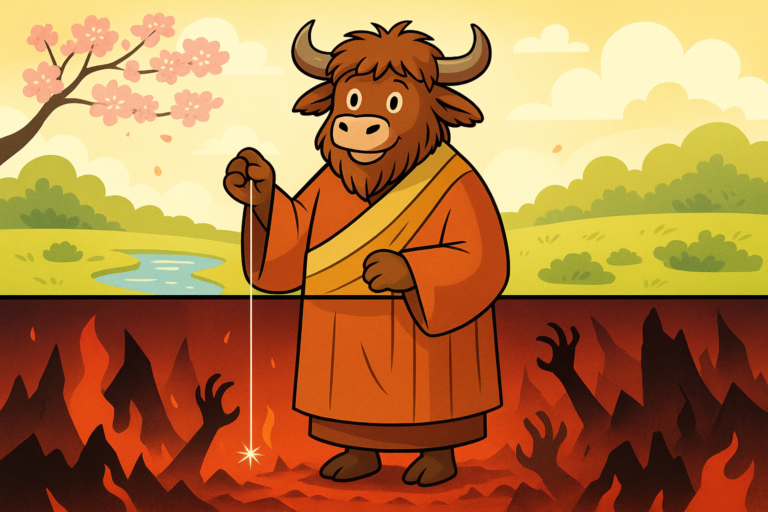
The Spider’s Thread: A2 Elementary Japanese Story with Audio

Golden Boy in Japanese: A1 Beginner Story with Audio, Tap-to-Translate Help & Free Lesson Notes

Learn Japanese with The Tale of the Bamboo Cutter – An A2 Graded Reader with Audio
| Kanji | Rōmaji | Meaning | Example | Rōmaji | English |
|---|---|---|---|---|---|
| 桜 | sakura | cherry blossom | 春は桜が有名です。 | Haru wa sakura ga yuumei desu. | Cherry blossoms are famous in spring. |
| 花見 | hanami | flower viewing, cherry blossom viewing | 花見に行きます。 | Hanami ni ikimasu. | I’m going cherry blossom viewing. |
| 紅葉 | kouyou | autumn leaves | 紅葉が始まります。 | Kouyou ga hajimarimasu. | The autumn leaves start to change. |
| 台風 | taifuu | typhoon | 台風が近づいています。 | Taifuu ga chikazuite imasu. | A typhoon is approaching. |
| 梅雨 | tsuyu | rainy season | 梅雨は雨が多いです。 | Tsuyu wa ame ga ooi desu. | There is a lot of rain in the rainy season. |
Japanese weather talk is small talk with training wheels. Learn the seasons, learn the common adjectives, and suddenly everyday conversation gets a lot easier.
Common Mistakes And Easy Fixes
| Common Mistake | Better Form | Why It Works |
|---|---|---|
| 今日は熱いです。 | 今日は暑いです。 | 熱い (atsui) means hot to the touch; 暑い (atsui) means hot weather. |
| 雨が降ります when you mean “It is raining now” | 雨が降っています。 | The -ています form shows an action happening now. |
| 春は寒いです for every place | 春は暖かいです。 or 春は寒暖差があります。 | Spring is often warm, but mornings and nights can still be cold. |
| 曇りです for “It is cloudy” | 曇っています。 | Both exist, but 曇っています sounds more like “the sky is cloudy right now.” |
Quick Practice
Try swapping the season or weather word. Simple drills beat complicated theory most days. Annoying, but true.
- 今日は_____です。 → Use 晴れ, 曇り, 寒い, or 暑い
- _____は好きです。 → Use 春, 夏, 秋, or 冬
- _____が降っています。 → Use 雨 or 雪
- _____が強いです。 → Use 風
- 今日は_____ですね。 → Use いい天気, 暑い, or 寒い
Example answers:
- 今日は晴れです。 — Kyou wa hare desu. — It’s sunny today.
- 春は好きです。 — Haru wa suki desu. — I like spring.
- 雨が降っています。 — Ame ga futte imasu. — It is raining.
- 風が強いです。 — Kaze ga tsuyoi desu. — The wind is strong.
- 今日はいい天気ですね。 — Kyou wa ii tenki desu ne. — Nice weather today, isn’t it?
Quick Reference Summary
| Type | Japanese | Rōmaji | English |
|---|---|---|---|
| Weather | 天気 | tenki | weather |
| Sunny | 晴れ | hare | sunny weather |
| Rain | 雨 | ame | rain |
| Snow | 雪 | yuki | snow |
| Cloudy | 曇り | kumori | cloudy |
| Spring | 春 | haru | spring |
| Summer | 夏 | natsu | summer |
| Autumn | 秋 | aki | autumn, fall |
| Winter | 冬 | fuyu | winter |
Once you can say the weather, the season, and one short opinion like 好きです (suki desu, I like it) or 寒いですね (samui desu ne, it’s cold, isn’t it?), you already have real conversation material. Not flashy, but very useful. The best kind of useful.
More Japanese to explore
| Kanji | Rōmaji | Meaning | Example | Rōmaji | English |
|---|---|---|---|---|---|
| 傘を持っていますか。 | Kasa o motte imasu ka. | Do you have an umbrella? | 雨なので、傘を持っていますか。 | Ame na node, kasa o motte imasu ka. | Since it’s raining, do you have an umbrella? |
| 外は寒そうです。 | Soto wa samusou desu. | It looks cold outside. | 空が暗いので、外は寒そうです。 | Sora ga kuroi node, soto wa samusou desu. | Because the sky is dark, it looks cold outside. |
| 今日は出かけません。 | Kyou wa dekakemasen. | I’m not going out today. | 台風なので、今日は出かけません。 | Taifuu na node, kyou wa dekakemasen. | I’m not going out today because of the typhoon. |
| 洗濯日和です。 | Sentaku biyori desu. | It’s a good day for laundry. | 今日は洗濯日和です。 | Kyou wa sentaku biyori desu. | Today is a great day for laundry. |
| 散歩にいい天気です。 | Sanpo ni ii tenki desu. | It’s good weather for a walk. | 今日は散歩にいい天気です。 | Kyou wa sanpo ni ii tenki desu. | It’s good weather for a walk today. |
Seasonal Words That Often Show Up In Conversation
| Kanji | Rōmaji | Meaning | Example | Rōmaji | English |
|---|---|---|---|---|---|
| 桜 | sakura | cherry blossom | 春は桜が有名です。 | Haru wa sakura ga yuumei desu. | Cherry blossoms are famous in spring. |
| 花見 | hanami | flower viewing, cherry blossom viewing | 花見に行きます。 | Hanami ni ikimasu. | I’m going cherry blossom viewing. |
| 紅葉 | kouyou | autumn leaves | 紅葉が始まります。 | Kouyou ga hajimarimasu. | The autumn leaves start to change. |
| 台風 | taifuu | typhoon | 台風が近づいています。 | Taifuu ga chikazuite imasu. | A typhoon is approaching. |
| 梅雨 | tsuyu | rainy season | 梅雨は雨が多いです。 | Tsuyu wa ame ga ooi desu. | There is a lot of rain in the rainy season. |
Japanese weather talk is small talk with training wheels. Learn the seasons, learn the common adjectives, and suddenly everyday conversation gets a lot easier.
Common Mistakes And Easy Fixes
| Common Mistake | Better Form | Why It Works |
|---|---|---|
| 今日は熱いです。 | 今日は暑いです。 | 熱い (atsui) means hot to the touch; 暑い (atsui) means hot weather. |
| 雨が降ります when you mean “It is raining now” | 雨が降っています。 | The -ています form shows an action happening now. |
| 春は寒いです for every place | 春は暖かいです。 or 春は寒暖差があります。 | Spring is often warm, but mornings and nights can still be cold. |
| 曇りです for “It is cloudy” | 曇っています。 | Both exist, but 曇っています sounds more like “the sky is cloudy right now.” |
Quick Practice
Try swapping the season or weather word. Simple drills beat complicated theory most days. Annoying, but true.
- 今日は_____です。 → Use 晴れ, 曇り, 寒い, or 暑い
- _____は好きです。 → Use 春, 夏, 秋, or 冬
- _____が降っています。 → Use 雨 or 雪
- _____が強いです。 → Use 風
- 今日は_____ですね。 → Use いい天気, 暑い, or 寒い
Example answers:
- 今日は晴れです。 — Kyou wa hare desu. — It’s sunny today.
- 春は好きです。 — Haru wa suki desu. — I like spring.
- 雨が降っています。 — Ame ga futte imasu. — It is raining.
- 風が強いです。 — Kaze ga tsuyoi desu. — The wind is strong.
- 今日はいい天気ですね。 — Kyou wa ii tenki desu ne. — Nice weather today, isn’t it?
Quick Reference Summary
| Type | Japanese | Rōmaji | English |
|---|---|---|---|
| Weather | 天気 | tenki | weather |
| Sunny | 晴れ | hare | sunny weather |
| Rain | 雨 | ame | rain |
| Snow | 雪 | yuki | snow |
| Cloudy | 曇り | kumori | cloudy |
| Spring | 春 | haru | spring |
| Summer | 夏 | natsu | summer |
| Autumn | 秋 | aki | autumn, fall |
| Winter | 冬 | fuyu | winter |
Once you can say the weather, the season, and one short opinion like 好きです (suki desu, I like it) or 寒いですね (samui desu ne, it’s cold, isn’t it?), you already have real conversation material. Not flashy, but very useful. The best kind of useful.
More Japanese to explore
| Kanji | Rōmaji | Meaning | Example | Rōmaji | English |
|---|---|---|---|---|---|
| 気温 | kion | temperature | 今日の気温は高いです。 | Kyou no kion wa takai desu. | Today’s temperature is high. |
| 湿度 | shitsudo | humidity | 夏は湿度が高いです。 | Natsu wa shitsudo ga takai desu. | Humidity is high in summer. |
| 気持ちいい | kimochi ii | feels good, comfortable | 今日は気持ちいい天気です。 | Kyou wa kimochi ii tenki desu. | The weather feels nice today. |
| 蒸し暑い | mushi atsui | hot and humid | 今日は蒸し暑いです。 | Kyou wa mushi atsui desu. | It’s hot and humid today. |
| 寒暖差 | kandansa | temperature difference between day and night | 春は寒暖差があります。 | Haru wa kandansa ga arimasu. | There is a temperature difference in spring. |
Conversation Phrases For Real Situations
| Kanji | Rōmaji | Meaning | Example | Rōmaji | English |
|---|---|---|---|---|---|
| 傘を持っていますか。 | Kasa o motte imasu ka. | Do you have an umbrella? | 雨なので、傘を持っていますか。 | Ame na node, kasa o motte imasu ka. | Since it’s raining, do you have an umbrella? |
| 外は寒そうです。 | Soto wa samusou desu. | It looks cold outside. | 空が暗いので、外は寒そうです。 | Sora ga kuroi node, soto wa samusou desu. | Because the sky is dark, it looks cold outside. |
| 今日は出かけません。 | Kyou wa dekakemasen. | I’m not going out today. | 台風なので、今日は出かけません。 | Taifuu na node, kyou wa dekakemasen. | I’m not going out today because of the typhoon. |
| 洗濯日和です。 | Sentaku biyori desu. | It’s a good day for laundry. | 今日は洗濯日和です。 | Kyou wa sentaku biyori desu. | Today is a great day for laundry. |
| 散歩にいい天気です。 | Sanpo ni ii tenki desu. | It’s good weather for a walk. | 今日は散歩にいい天気です。 | Kyou wa sanpo ni ii tenki desu. | It’s good weather for a walk today. |
Seasonal Words That Often Show Up In Conversation
| Kanji | Rōmaji | Meaning | Example | Rōmaji | English |
|---|---|---|---|---|---|
| 桜 | sakura | cherry blossom | 春は桜が有名です。 | Haru wa sakura ga yuumei desu. | Cherry blossoms are famous in spring. |
| 花見 | hanami | flower viewing, cherry blossom viewing | 花見に行きます。 | Hanami ni ikimasu. | I’m going cherry blossom viewing. |
| 紅葉 | kouyou | autumn leaves | 紅葉が始まります。 | Kouyou ga hajimarimasu. | The autumn leaves start to change. |
| 台風 | taifuu | typhoon | 台風が近づいています。 | Taifuu ga chikazuite imasu. | A typhoon is approaching. |
| 梅雨 | tsuyu | rainy season | 梅雨は雨が多いです。 | Tsuyu wa ame ga ooi desu. | There is a lot of rain in the rainy season. |
Japanese weather talk is small talk with training wheels. Learn the seasons, learn the common adjectives, and suddenly everyday conversation gets a lot easier.
Common Mistakes And Easy Fixes
| Common Mistake | Better Form | Why It Works |
|---|---|---|
| 今日は熱いです。 | 今日は暑いです。 | 熱い (atsui) means hot to the touch; 暑い (atsui) means hot weather. |
| 雨が降ります when you mean “It is raining now” | 雨が降っています。 | The -ています form shows an action happening now. |
| 春は寒いです for every place | 春は暖かいです。 or 春は寒暖差があります。 | Spring is often warm, but mornings and nights can still be cold. |
| 曇りです for “It is cloudy” | 曇っています。 | Both exist, but 曇っています sounds more like “the sky is cloudy right now.” |
Quick Practice
Try swapping the season or weather word. Simple drills beat complicated theory most days. Annoying, but true.
- 今日は_____です。 → Use 晴れ, 曇り, 寒い, or 暑い
- _____は好きです。 → Use 春, 夏, 秋, or 冬
- _____が降っています。 → Use 雨 or 雪
- _____が強いです。 → Use 風
- 今日は_____ですね。 → Use いい天気, 暑い, or 寒い
Example answers:
- 今日は晴れです。 — Kyou wa hare desu. — It’s sunny today.
- 春は好きです。 — Haru wa suki desu. — I like spring.
- 雨が降っています。 — Ame ga futte imasu. — It is raining.
- 風が強いです。 — Kaze ga tsuyoi desu. — The wind is strong.
- 今日はいい天気ですね。 — Kyou wa ii tenki desu ne. — Nice weather today, isn’t it?
Quick Reference Summary
| Type | Japanese | Rōmaji | English |
|---|---|---|---|
| Weather | 天気 | tenki | weather |
| Sunny | 晴れ | hare | sunny weather |
| Rain | 雨 | ame | rain |
| Snow | 雪 | yuki | snow |
| Cloudy | 曇り | kumori | cloudy |
| Spring | 春 | haru | spring |
| Summer | 夏 | natsu | summer |
| Autumn | 秋 | aki | autumn, fall |
| Winter | 冬 | fuyu | winter |
Once you can say the weather, the season, and one short opinion like 好きです (suki desu, I like it) or 寒いですね (samui desu ne, it’s cold, isn’t it?), you already have real conversation material. Not flashy, but very useful. The best kind of useful.
More Japanese to explore
| Kanji | Rōmaji | Meaning | Example | Rōmaji | English |
|---|---|---|---|---|---|
| 今日は何の天気ですか。 | Kyou wa nan no tenki desu ka. | What is the weather today? | 今日は何の天気ですか。 | Kyou wa nan no tenki desu ka. | What is the weather today? |
| 明日は晴れますか。 | Ashita wa haremasu ka. | Will it be sunny tomorrow? | 明日は晴れますか。 | Ashita wa haremasu ka. | Will it be sunny tomorrow? |
| 雨はいつ止みますか。 | Ame wa itsu yamimasu ka. | When will the rain stop? | 雨はいつ止みますか。 | Ame wa itsu yamimasu ka. | When will the rain stop? |
| 寒いですか。 | Samui desu ka. | Is it cold? | 外は寒いですか。 | Soto wa samui desu ka. | Is it cold outside? |
Season Words In Real Life
In Japan, seasons are not just background scenery. They show up in food, festivals, clothes, and small talk. People notice them. A lot. So if you can say 春 (haru, spring) or 秋 (aki, autumn), you are already talking like a normal human being instead of a textbook.
Here are a few related words that often appear with weather and seasons:
| Kanji | Rōmaji | Meaning | Example | Rōmaji | English |
|---|---|---|---|---|---|
| 気温 | kion | temperature | 今日の気温は高いです。 | Kyou no kion wa takai desu. | Today’s temperature is high. |
| 湿度 | shitsudo | humidity | 夏は湿度が高いです。 | Natsu wa shitsudo ga takai desu. | Humidity is high in summer. |
| 気持ちいい | kimochi ii | feels good, comfortable | 今日は気持ちいい天気です。 | Kyou wa kimochi ii tenki desu. | The weather feels nice today. |
| 蒸し暑い | mushi atsui | hot and humid | 今日は蒸し暑いです。 | Kyou wa mushi atsui desu. | It’s hot and humid today. |
| 寒暖差 | kandansa | temperature difference between day and night | 春は寒暖差があります。 | Haru wa kandansa ga arimasu. | There is a temperature difference in spring. |
Conversation Phrases For Real Situations
| Kanji | Rōmaji | Meaning | Example | Rōmaji | English |
|---|---|---|---|---|---|
| 傘を持っていますか。 | Kasa o motte imasu ka. | Do you have an umbrella? | 雨なので、傘を持っていますか。 | Ame na node, kasa o motte imasu ka. | Since it’s raining, do you have an umbrella? |
| 外は寒そうです。 | Soto wa samusou desu. | It looks cold outside. | 空が暗いので、外は寒そうです。 | Sora ga kuroi node, soto wa samusou desu. | Because the sky is dark, it looks cold outside. |
| 今日は出かけません。 | Kyou wa dekakemasen. | I’m not going out today. | 台風なので、今日は出かけません。 | Taifuu na node, kyou wa dekakemasen. | I’m not going out today because of the typhoon. |
| 洗濯日和です。 | Sentaku biyori desu. | It’s a good day for laundry. | 今日は洗濯日和です。 | Kyou wa sentaku biyori desu. | Today is a great day for laundry. |
| 散歩にいい天気です。 | Sanpo ni ii tenki desu. | It’s good weather for a walk. | 今日は散歩にいい天気です。 | Kyou wa sanpo ni ii tenki desu. | It’s good weather for a walk today. |
Seasonal Words That Often Show Up In Conversation
| Kanji | Rōmaji | Meaning | Example | Rōmaji | English |
|---|---|---|---|---|---|
| 桜 | sakura | cherry blossom | 春は桜が有名です。 | Haru wa sakura ga yuumei desu. | Cherry blossoms are famous in spring. |
| 花見 | hanami | flower viewing, cherry blossom viewing | 花見に行きます。 | Hanami ni ikimasu. | I’m going cherry blossom viewing. |
| 紅葉 | kouyou | autumn leaves | 紅葉が始まります。 | Kouyou ga hajimarimasu. | The autumn leaves start to change. |
| 台風 | taifuu | typhoon | 台風が近づいています。 | Taifuu ga chikazuite imasu. | A typhoon is approaching. |
| 梅雨 | tsuyu | rainy season | 梅雨は雨が多いです。 | Tsuyu wa ame ga ooi desu. | There is a lot of rain in the rainy season. |
Japanese weather talk is small talk with training wheels. Learn the seasons, learn the common adjectives, and suddenly everyday conversation gets a lot easier.
Common Mistakes And Easy Fixes
| Common Mistake | Better Form | Why It Works |
|---|---|---|
| 今日は熱いです。 | 今日は暑いです。 | 熱い (atsui) means hot to the touch; 暑い (atsui) means hot weather. |
| 雨が降ります when you mean “It is raining now” | 雨が降っています。 | The -ています form shows an action happening now. |
| 春は寒いです for every place | 春は暖かいです。 or 春は寒暖差があります。 | Spring is often warm, but mornings and nights can still be cold. |
| 曇りです for “It is cloudy” | 曇っています。 | Both exist, but 曇っています sounds more like “the sky is cloudy right now.” |
Quick Practice
Try swapping the season or weather word. Simple drills beat complicated theory most days. Annoying, but true.
- 今日は_____です。 → Use 晴れ, 曇り, 寒い, or 暑い
- _____は好きです。 → Use 春, 夏, 秋, or 冬
- _____が降っています。 → Use 雨 or 雪
- _____が強いです。 → Use 風
- 今日は_____ですね。 → Use いい天気, 暑い, or 寒い
Example answers:
- 今日は晴れです。 — Kyou wa hare desu. — It’s sunny today.
- 春は好きです。 — Haru wa suki desu. — I like spring.
- 雨が降っています。 — Ame ga futte imasu. — It is raining.
- 風が強いです。 — Kaze ga tsuyoi desu. — The wind is strong.
- 今日はいい天気ですね。 — Kyou wa ii tenki desu ne. — Nice weather today, isn’t it?
Quick Reference Summary
| Type | Japanese | Rōmaji | English |
|---|---|---|---|
| Weather | 天気 | tenki | weather |
| Sunny | 晴れ | hare | sunny weather |
| Rain | 雨 | ame | rain |
| Snow | 雪 | yuki | snow |
| Cloudy | 曇り | kumori | cloudy |
| Spring | 春 | haru | spring |
| Summer | 夏 | natsu | summer |
| Autumn | 秋 | aki | autumn, fall |
| Winter | 冬 | fuyu | winter |
Once you can say the weather, the season, and one short opinion like 好きです (suki desu, I like it) or 寒いですね (samui desu ne, it’s cold, isn’t it?), you already have real conversation material. Not flashy, but very useful. The best kind of useful.
More Japanese to explore
| Kanji | Rōmaji | Meaning | Example | Rōmaji | English |
|---|---|---|---|---|---|
| 春は花が咲きます。 | Haru wa hana ga sakimasu. | Flowers bloom in spring. | 春は花が咲きます。 | Haru wa hana ga sakimasu. | Flowers bloom in spring. |
| 夏は暑いです。 | Natsu wa atsui desu. | Summer is hot. | 夏は暑いです。 | Natsu wa atsui desu. | Summer is hot. |
| 秋は紅葉がきれいです。 | Aki wa kouyou ga kirei desu. | Autumn leaves are beautiful. | 秋は紅葉がきれいです。 | Aki wa kouyou ga kirei desu. | Autumn leaves are beautiful. |
| 冬は雪が降ります。 | Fuyu wa yuki ga furimasu. | It snows in winter. | 冬は雪が降ります。 | Fuyu wa yuki ga furimasu. | It snows in winter. |
Useful Daily Weather Questions
| Kanji | Rōmaji | Meaning | Example | Rōmaji | English |
|---|---|---|---|---|---|
| 今日は何の天気ですか。 | Kyou wa nan no tenki desu ka. | What is the weather today? | 今日は何の天気ですか。 | Kyou wa nan no tenki desu ka. | What is the weather today? |
| 明日は晴れますか。 | Ashita wa haremasu ka. | Will it be sunny tomorrow? | 明日は晴れますか。 | Ashita wa haremasu ka. | Will it be sunny tomorrow? |
| 雨はいつ止みますか。 | Ame wa itsu yamimasu ka. | When will the rain stop? | 雨はいつ止みますか。 | Ame wa itsu yamimasu ka. | When will the rain stop? |
| 寒いですか。 | Samui desu ka. | Is it cold? | 外は寒いですか。 | Soto wa samui desu ka. | Is it cold outside? |
Season Words In Real Life
In Japan, seasons are not just background scenery. They show up in food, festivals, clothes, and small talk. People notice them. A lot. So if you can say 春 (haru, spring) or 秋 (aki, autumn), you are already talking like a normal human being instead of a textbook.
Here are a few related words that often appear with weather and seasons:
| Kanji | Rōmaji | Meaning | Example | Rōmaji | English |
|---|---|---|---|---|---|
| 気温 | kion | temperature | 今日の気温は高いです。 | Kyou no kion wa takai desu. | Today’s temperature is high. |
| 湿度 | shitsudo | humidity | 夏は湿度が高いです。 | Natsu wa shitsudo ga takai desu. | Humidity is high in summer. |
| 気持ちいい | kimochi ii | feels good, comfortable | 今日は気持ちいい天気です。 | Kyou wa kimochi ii tenki desu. | The weather feels nice today. |
| 蒸し暑い | mushi atsui | hot and humid | 今日は蒸し暑いです。 | Kyou wa mushi atsui desu. | It’s hot and humid today. |
| 寒暖差 | kandansa | temperature difference between day and night | 春は寒暖差があります。 | Haru wa kandansa ga arimasu. | There is a temperature difference in spring. |
Conversation Phrases For Real Situations
| Kanji | Rōmaji | Meaning | Example | Rōmaji | English |
|---|---|---|---|---|---|
| 傘を持っていますか。 | Kasa o motte imasu ka. | Do you have an umbrella? | 雨なので、傘を持っていますか。 | Ame na node, kasa o motte imasu ka. | Since it’s raining, do you have an umbrella? |
| 外は寒そうです。 | Soto wa samusou desu. | It looks cold outside. | 空が暗いので、外は寒そうです。 | Sora ga kuroi node, soto wa samusou desu. | Because the sky is dark, it looks cold outside. |
| 今日は出かけません。 | Kyou wa dekakemasen. | I’m not going out today. | 台風なので、今日は出かけません。 | Taifuu na node, kyou wa dekakemasen. | I’m not going out today because of the typhoon. |
| 洗濯日和です。 | Sentaku biyori desu. | It’s a good day for laundry. | 今日は洗濯日和です。 | Kyou wa sentaku biyori desu. | Today is a great day for laundry. |
| 散歩にいい天気です。 | Sanpo ni ii tenki desu. | It’s good weather for a walk. | 今日は散歩にいい天気です。 | Kyou wa sanpo ni ii tenki desu. | It’s good weather for a walk today. |
Seasonal Words That Often Show Up In Conversation
| Kanji | Rōmaji | Meaning | Example | Rōmaji | English |
|---|---|---|---|---|---|
| 桜 | sakura | cherry blossom | 春は桜が有名です。 | Haru wa sakura ga yuumei desu. | Cherry blossoms are famous in spring. |
| 花見 | hanami | flower viewing, cherry blossom viewing | 花見に行きます。 | Hanami ni ikimasu. | I’m going cherry blossom viewing. |
| 紅葉 | kouyou | autumn leaves | 紅葉が始まります。 | Kouyou ga hajimarimasu. | The autumn leaves start to change. |
| 台風 | taifuu | typhoon | 台風が近づいています。 | Taifuu ga chikazuite imasu. | A typhoon is approaching. |
| 梅雨 | tsuyu | rainy season | 梅雨は雨が多いです。 | Tsuyu wa ame ga ooi desu. | There is a lot of rain in the rainy season. |
Japanese weather talk is small talk with training wheels. Learn the seasons, learn the common adjectives, and suddenly everyday conversation gets a lot easier.
Common Mistakes And Easy Fixes
| Common Mistake | Better Form | Why It Works |
|---|---|---|
| 今日は熱いです。 | 今日は暑いです。 | 熱い (atsui) means hot to the touch; 暑い (atsui) means hot weather. |
| 雨が降ります when you mean “It is raining now” | 雨が降っています。 | The -ています form shows an action happening now. |
| 春は寒いです for every place | 春は暖かいです。 or 春は寒暖差があります。 | Spring is often warm, but mornings and nights can still be cold. |
| 曇りです for “It is cloudy” | 曇っています。 | Both exist, but 曇っています sounds more like “the sky is cloudy right now.” |
Quick Practice
Try swapping the season or weather word. Simple drills beat complicated theory most days. Annoying, but true.
- 今日は_____です。 → Use 晴れ, 曇り, 寒い, or 暑い
- _____は好きです。 → Use 春, 夏, 秋, or 冬
- _____が降っています。 → Use 雨 or 雪
- _____が強いです。 → Use 風
- 今日は_____ですね。 → Use いい天気, 暑い, or 寒い
Example answers:
- 今日は晴れです。 — Kyou wa hare desu. — It’s sunny today.
- 春は好きです。 — Haru wa suki desu. — I like spring.
- 雨が降っています。 — Ame ga futte imasu. — It is raining.
- 風が強いです。 — Kaze ga tsuyoi desu. — The wind is strong.
- 今日はいい天気ですね。 — Kyou wa ii tenki desu ne. — Nice weather today, isn’t it?
Quick Reference Summary
| Type | Japanese | Rōmaji | English |
|---|---|---|---|
| Weather | 天気 | tenki | weather |
| Sunny | 晴れ | hare | sunny weather |
| Rain | 雨 | ame | rain |
| Snow | 雪 | yuki | snow |
| Cloudy | 曇り | kumori | cloudy |
| Spring | 春 | haru | spring |
| Summer | 夏 | natsu | summer |
| Autumn | 秋 | aki | autumn, fall |
| Winter | 冬 | fuyu | winter |
Once you can say the weather, the season, and one short opinion like 好きです (suki desu, I like it) or 寒いですね (samui desu ne, it’s cold, isn’t it?), you already have real conversation material. Not flashy, but very useful. The best kind of useful.
More Japanese to explore
| Pattern | Meaning | Example | Rōmaji | English |
|---|---|---|---|---|
| 今日は暑いです。 | It’s hot today. | 今日は暑いです。 | Kyou wa atsui desu. | It’s hot today. |
| 今日は寒いです。 | It’s cold today. | 今日は寒いです。 | Kyou wa samui desu. | It’s cold today. |
| 今日は晴れです。 | It’s sunny today. | 今日は晴れです。 | Kyou wa hare desu. | It’s sunny today. |
| 今日は曇りです。 | It’s cloudy today. | 今日は曇りです。 | Kyou wa kumori desu. | It’s cloudy today. |
Notice how Japanese keeps things compact. No extra drama, no weather essay, just the useful bit. Efficient and slightly smug.
Talking About The Four Seasons
| Kanji | Rōmaji | Meaning | Example | Rōmaji | English |
|---|---|---|---|---|---|
| 春は花が咲きます。 | Haru wa hana ga sakimasu. | Flowers bloom in spring. | 春は花が咲きます。 | Haru wa hana ga sakimasu. | Flowers bloom in spring. |
| 夏は暑いです。 | Natsu wa atsui desu. | Summer is hot. | 夏は暑いです。 | Natsu wa atsui desu. | Summer is hot. |
| 秋は紅葉がきれいです。 | Aki wa kouyou ga kirei desu. | Autumn leaves are beautiful. | 秋は紅葉がきれいです。 | Aki wa kouyou ga kirei desu. | Autumn leaves are beautiful. |
| 冬は雪が降ります。 | Fuyu wa yuki ga furimasu. | It snows in winter. | 冬は雪が降ります。 | Fuyu wa yuki ga furimasu. | It snows in winter. |
Useful Daily Weather Questions
| Kanji | Rōmaji | Meaning | Example | Rōmaji | English |
|---|---|---|---|---|---|
| 今日は何の天気ですか。 | Kyou wa nan no tenki desu ka. | What is the weather today? | 今日は何の天気ですか。 | Kyou wa nan no tenki desu ka. | What is the weather today? |
| 明日は晴れますか。 | Ashita wa haremasu ka. | Will it be sunny tomorrow? | 明日は晴れますか。 | Ashita wa haremasu ka. | Will it be sunny tomorrow? |
| 雨はいつ止みますか。 | Ame wa itsu yamimasu ka. | When will the rain stop? | 雨はいつ止みますか。 | Ame wa itsu yamimasu ka. | When will the rain stop? |
| 寒いですか。 | Samui desu ka. | Is it cold? | 外は寒いですか。 | Soto wa samui desu ka. | Is it cold outside? |
Season Words In Real Life
In Japan, seasons are not just background scenery. They show up in food, festivals, clothes, and small talk. People notice them. A lot. So if you can say 春 (haru, spring) or 秋 (aki, autumn), you are already talking like a normal human being instead of a textbook.
Here are a few related words that often appear with weather and seasons:
| Kanji | Rōmaji | Meaning | Example | Rōmaji | English |
|---|---|---|---|---|---|
| 気温 | kion | temperature | 今日の気温は高いです。 | Kyou no kion wa takai desu. | Today’s temperature is high. |
| 湿度 | shitsudo | humidity | 夏は湿度が高いです。 | Natsu wa shitsudo ga takai desu. | Humidity is high in summer. |
| 気持ちいい | kimochi ii | feels good, comfortable | 今日は気持ちいい天気です。 | Kyou wa kimochi ii tenki desu. | The weather feels nice today. |
| 蒸し暑い | mushi atsui | hot and humid | 今日は蒸し暑いです。 | Kyou wa mushi atsui desu. | It’s hot and humid today. |
| 寒暖差 | kandansa | temperature difference between day and night | 春は寒暖差があります。 | Haru wa kandansa ga arimasu. | There is a temperature difference in spring. |
Conversation Phrases For Real Situations
| Kanji | Rōmaji | Meaning | Example | Rōmaji | English |
|---|---|---|---|---|---|
| 傘を持っていますか。 | Kasa o motte imasu ka. | Do you have an umbrella? | 雨なので、傘を持っていますか。 | Ame na node, kasa o motte imasu ka. | Since it’s raining, do you have an umbrella? |
| 外は寒そうです。 | Soto wa samusou desu. | It looks cold outside. | 空が暗いので、外は寒そうです。 | Sora ga kuroi node, soto wa samusou desu. | Because the sky is dark, it looks cold outside. |
| 今日は出かけません。 | Kyou wa dekakemasen. | I’m not going out today. | 台風なので、今日は出かけません。 | Taifuu na node, kyou wa dekakemasen. | I’m not going out today because of the typhoon. |
| 洗濯日和です。 | Sentaku biyori desu. | It’s a good day for laundry. | 今日は洗濯日和です。 | Kyou wa sentaku biyori desu. | Today is a great day for laundry. |
| 散歩にいい天気です。 | Sanpo ni ii tenki desu. | It’s good weather for a walk. | 今日は散歩にいい天気です。 | Kyou wa sanpo ni ii tenki desu. | It’s good weather for a walk today. |
Seasonal Words That Often Show Up In Conversation
| Kanji | Rōmaji | Meaning | Example | Rōmaji | English |
|---|---|---|---|---|---|
| 桜 | sakura | cherry blossom | 春は桜が有名です。 | Haru wa sakura ga yuumei desu. | Cherry blossoms are famous in spring. |
| 花見 | hanami | flower viewing, cherry blossom viewing | 花見に行きます。 | Hanami ni ikimasu. | I’m going cherry blossom viewing. |
| 紅葉 | kouyou | autumn leaves | 紅葉が始まります。 | Kouyou ga hajimarimasu. | The autumn leaves start to change. |
| 台風 | taifuu | typhoon | 台風が近づいています。 | Taifuu ga chikazuite imasu. | A typhoon is approaching. |
| 梅雨 | tsuyu | rainy season | 梅雨は雨が多いです。 | Tsuyu wa ame ga ooi desu. | There is a lot of rain in the rainy season. |
Japanese weather talk is small talk with training wheels. Learn the seasons, learn the common adjectives, and suddenly everyday conversation gets a lot easier.
Common Mistakes And Easy Fixes
| Common Mistake | Better Form | Why It Works |
|---|---|---|
| 今日は熱いです。 | 今日は暑いです。 | 熱い (atsui) means hot to the touch; 暑い (atsui) means hot weather. |
| 雨が降ります when you mean “It is raining now” | 雨が降っています。 | The -ています form shows an action happening now. |
| 春は寒いです for every place | 春は暖かいです。 or 春は寒暖差があります。 | Spring is often warm, but mornings and nights can still be cold. |
| 曇りです for “It is cloudy” | 曇っています。 | Both exist, but 曇っています sounds more like “the sky is cloudy right now.” |
Quick Practice
Try swapping the season or weather word. Simple drills beat complicated theory most days. Annoying, but true.
- 今日は_____です。 → Use 晴れ, 曇り, 寒い, or 暑い
- _____は好きです。 → Use 春, 夏, 秋, or 冬
- _____が降っています。 → Use 雨 or 雪
- _____が強いです。 → Use 風
- 今日は_____ですね。 → Use いい天気, 暑い, or 寒い
Example answers:
- 今日は晴れです。 — Kyou wa hare desu. — It’s sunny today.
- 春は好きです。 — Haru wa suki desu. — I like spring.
- 雨が降っています。 — Ame ga futte imasu. — It is raining.
- 風が強いです。 — Kaze ga tsuyoi desu. — The wind is strong.
- 今日はいい天気ですね。 — Kyou wa ii tenki desu ne. — Nice weather today, isn’t it?
Quick Reference Summary
| Type | Japanese | Rōmaji | English |
|---|---|---|---|
| Weather | 天気 | tenki | weather |
| Sunny | 晴れ | hare | sunny weather |
| Rain | 雨 | ame | rain |
| Snow | 雪 | yuki | snow |
| Cloudy | 曇り | kumori | cloudy |
| Spring | 春 | haru | spring |
| Summer | 夏 | natsu | summer |
| Autumn | 秋 | aki | autumn, fall |
| Winter | 冬 | fuyu | winter |
Once you can say the weather, the season, and one short opinion like 好きです (suki desu, I like it) or 寒いですね (samui desu ne, it’s cold, isn’t it?), you already have real conversation material. Not flashy, but very useful. The best kind of useful.
More Japanese to explore
Japanese weather talk is one of those polite little superpowers that makes conversation feel natural fast. People talk about rain, heat, cherry blossoms, and typhoons all the time. Very dramatic weather, honestly. Good news: the words are practical, the patterns are friendly, and you can use them almost immediately.
If you want a bigger Japanese study path after this, the main learning hub is here: Japanese learning guides. For a useful reference on seasonal change in Japan, this page is a solid, boring, and helpful read: seasonal Japanese study notes.
Japanese conversations often start with weather because it is safe, common, and easy to answer. You do not need a big speech. A simple “It’s hot today” already does a lot of social work. Tiny sentence, big results. Nature loves a humble brag.
Basic Weather Words
| Kanji | Rōmaji | Meaning | Example | Rōmaji | English |
|---|---|---|---|---|---|
| 天気 | tenki | weather | 今日は天気がいいです。 | Kyou wa tenki ga ii desu. | The weather is nice today. |
| 晴れ | hare | clear weather, sunny weather | 明日は晴れです。 | Ashita wa hare desu. | Tomorrow will be sunny. |
| 雨 | ame | rain | 雨が降っています。 | Ame ga futte imasu. | It is raining. |
| 雪 | yuki | snow | 今年は雪が多いです。 | Kotoshi wa yuki ga ooi desu. | There is a lot of snow this year. |
| 曇り | kumori | cloudy weather | 今日は曇りです。 | Kyou wa kumori desu. | It is cloudy today. |
| 風 | kaze | wind | 風が強いです。 | Kaze ga tsuyoi desu. | The wind is strong. |
| 暑い | atsui | hot | 今日は暑いですね。 | Kyou wa atsui desu ne. | It’s hot today, isn’t it? |
| 寒い | samui | cold | 朝は寒いです。 | Asa wa samui desu. | Mornings are cold. |
| 暖かい | atatakai | warm | 春は暖かいです。 | Haru wa atatakai desu. | Spring is warm. |
| 涼しい | suzushii | cool, pleasantly cool | 夜は涼しいです。 | Yoru wa suzushii desu. | It is cool at night. |
Seasons In Japanese
| Kanji | Rōmaji | Meaning | Example | Rōmaji | English |
|---|---|---|---|---|---|
| 春 | haru | spring | 春は花がきれいです。 | Haru wa hana ga kirei desu. | Flowers are beautiful in spring. |
| 夏 | natsu | summer | 夏は海に行きます。 | Natsu wa umi ni ikimasu. | I go to the beach in summer. |
| 秋 | aki | autumn, fall | 秋は過ごしやすいです。 | Aki wa sugoshi yasui desu. | Autumn is comfortable. |
| 冬 | fuyu | winter | 冬は寒いです。 | Fuyu wa samui desu. | Winter is cold. |
Common Conversation Phrases
| Kanji | Rōmaji | Meaning | Example | Rōmaji | English |
|---|---|---|---|---|---|
| 今日はいい天気ですね。 | Kyou wa ii tenki desu ne. | Nice weather today, isn’t it? | 今日はいい天気ですね。 | Kyou wa ii tenki desu ne. | Nice weather today, isn’t it? |
| 雨が降っています。 | Ame ga futte imasu. | It is raining. | 外で雨が降っています。 | Soto de ame ga futte imasu. | It is raining outside. |
| 今日は暑いですね。 | Kyou wa atsui desu ne. | It’s hot today. | 今日は暑いですね。 | Kyou wa atsui desu ne. | It’s hot today. |
| 今日は寒いです。 | Kyou wa samui desu. | It’s cold today. | 今日は寒いです。 | Kyou wa samui desu. | It’s cold today. |
| 風が強いです。 | Kaze ga tsuyoi desu. | The wind is strong. | 今日は風が強いです。 | Kyou wa kaze ga tsuyoi desu. | The wind is strong today. |
| 雪が降っています。 | Yuki ga futte imasu. | It is snowing. | 北海道で雪が降っています。 | Hokkaidou de yuki ga futte imasu. | It is snowing in Hokkaido. |
| 曇っています。 | Kumotte imasu. | It is cloudy. | 空が曇っています。 | Sora ga kumotte imasu. | The sky is cloudy. |
| 今日は少し涼しいです。 | Kyou wa sukoshi suzushii desu. | It’s a little cool today. | 夜は少し涼しいです。 | Yoru wa sukoshi suzushii desu. | It is a little cool at night. |
| 春が好きです。 | Haru ga suki desu. | I like spring. | 私は春が好きです。 | Watashi wa haru ga suki desu. | I like spring. |
| 秋は過ごしやすいです。 | Aki wa sugoshi yasui desu. | Autumn is comfortable. | 秋は過ごしやすいです。 | Aki wa sugoshi yasui desu. | Autumn is comfortable. |
| 台風が来ます。 | Taifuu ga kimasu. | A typhoon is coming. | 台風が来ます。 | Taifuu ga kimasu. | A typhoon is coming. |
| 明日は晴れるでしょう。 | Ashita wa hareru deshou. | It will probably be sunny tomorrow. | 明日は晴れるでしょう。 | Ashita wa hareru deshou. | It will probably be sunny tomorrow. |
Simple Pattern For Weather Talk
The easiest weather sentence in Japanese is usually:
今日は + weather/adjective + です。
Rōmaji: Kyou wa + weather/adjective + desu.
English: “Today is …” / “It’s … today.”
| Pattern | Meaning | Example | Rōmaji | English |
|---|---|---|---|---|
| 今日は暑いです。 | It’s hot today. | 今日は暑いです。 | Kyou wa atsui desu. | It’s hot today. |
| 今日は寒いです。 | It’s cold today. | 今日は寒いです。 | Kyou wa samui desu. | It’s cold today. |
| 今日は晴れです。 | It’s sunny today. | 今日は晴れです。 | Kyou wa hare desu. | It’s sunny today. |
| 今日は曇りです。 | It’s cloudy today. | 今日は曇りです。 | Kyou wa kumori desu. | It’s cloudy today. |
Notice how Japanese keeps things compact. No extra drama, no weather essay, just the useful bit. Efficient and slightly smug.
Talking About The Four Seasons
| Kanji | Rōmaji | Meaning | Example | Rōmaji | English |
|---|---|---|---|---|---|
| 春は花が咲きます。 | Haru wa hana ga sakimasu. | Flowers bloom in spring. | 春は花が咲きます。 | Haru wa hana ga sakimasu. | Flowers bloom in spring. |
| 夏は暑いです。 | Natsu wa atsui desu. | Summer is hot. | 夏は暑いです。 | Natsu wa atsui desu. | Summer is hot. |
| 秋は紅葉がきれいです。 | Aki wa kouyou ga kirei desu. | Autumn leaves are beautiful. | 秋は紅葉がきれいです。 | Aki wa kouyou ga kirei desu. | Autumn leaves are beautiful. |
| 冬は雪が降ります。 | Fuyu wa yuki ga furimasu. | It snows in winter. | 冬は雪が降ります。 | Fuyu wa yuki ga furimasu. | It snows in winter. |
Useful Daily Weather Questions
| Kanji | Rōmaji | Meaning | Example | Rōmaji | English |
|---|---|---|---|---|---|
| 今日は何の天気ですか。 | Kyou wa nan no tenki desu ka. | What is the weather today? | 今日は何の天気ですか。 | Kyou wa nan no tenki desu ka. | What is the weather today? |
| 明日は晴れますか。 | Ashita wa haremasu ka. | Will it be sunny tomorrow? | 明日は晴れますか。 | Ashita wa haremasu ka. | Will it be sunny tomorrow? |
| 雨はいつ止みますか。 | Ame wa itsu yamimasu ka. | When will the rain stop? | 雨はいつ止みますか。 | Ame wa itsu yamimasu ka. | When will the rain stop? |
| 寒いですか。 | Samui desu ka. | Is it cold? | 外は寒いですか。 | Soto wa samui desu ka. | Is it cold outside? |
Season Words In Real Life
In Japan, seasons are not just background scenery. They show up in food, festivals, clothes, and small talk. People notice them. A lot. So if you can say 春 (haru, spring) or 秋 (aki, autumn), you are already talking like a normal human being instead of a textbook.
Here are a few related words that often appear with weather and seasons:
| Kanji | Rōmaji | Meaning | Example | Rōmaji | English |
|---|---|---|---|---|---|
| 気温 | kion | temperature | 今日の気温は高いです。 | Kyou no kion wa takai desu. | Today’s temperature is high. |
| 湿度 | shitsudo | humidity | 夏は湿度が高いです。 | Natsu wa shitsudo ga takai desu. | Humidity is high in summer. |
| 気持ちいい | kimochi ii | feels good, comfortable | 今日は気持ちいい天気です。 | Kyou wa kimochi ii tenki desu. | The weather feels nice today. |
| 蒸し暑い | mushi atsui | hot and humid | 今日は蒸し暑いです。 | Kyou wa mushi atsui desu. | It’s hot and humid today. |
| 寒暖差 | kandansa | temperature difference between day and night | 春は寒暖差があります。 | Haru wa kandansa ga arimasu. | There is a temperature difference in spring. |
Conversation Phrases For Real Situations
| Kanji | Rōmaji | Meaning | Example | Rōmaji | English |
|---|---|---|---|---|---|
| 傘を持っていますか。 | Kasa o motte imasu ka. | Do you have an umbrella? | 雨なので、傘を持っていますか。 | Ame na node, kasa o motte imasu ka. | Since it’s raining, do you have an umbrella? |
| 外は寒そうです。 | Soto wa samusou desu. | It looks cold outside. | 空が暗いので、外は寒そうです。 | Sora ga kuroi node, soto wa samusou desu. | Because the sky is dark, it looks cold outside. |
| 今日は出かけません。 | Kyou wa dekakemasen. | I’m not going out today. | 台風なので、今日は出かけません。 | Taifuu na node, kyou wa dekakemasen. | I’m not going out today because of the typhoon. |
| 洗濯日和です。 | Sentaku biyori desu. | It’s a good day for laundry. | 今日は洗濯日和です。 | Kyou wa sentaku biyori desu. | Today is a great day for laundry. |
| 散歩にいい天気です。 | Sanpo ni ii tenki desu. | It’s good weather for a walk. | 今日は散歩にいい天気です。 | Kyou wa sanpo ni ii tenki desu. | It’s good weather for a walk today. |
Seasonal Words That Often Show Up In Conversation
| Kanji | Rōmaji | Meaning | Example | Rōmaji | English |
|---|---|---|---|---|---|
| 桜 | sakura | cherry blossom | 春は桜が有名です。 | Haru wa sakura ga yuumei desu. | Cherry blossoms are famous in spring. |
| 花見 | hanami | flower viewing, cherry blossom viewing | 花見に行きます。 | Hanami ni ikimasu. | I’m going cherry blossom viewing. |
| 紅葉 | kouyou | autumn leaves | 紅葉が始まります。 | Kouyou ga hajimarimasu. | The autumn leaves start to change. |
| 台風 | taifuu | typhoon | 台風が近づいています。 | Taifuu ga chikazuite imasu. | A typhoon is approaching. |
| 梅雨 | tsuyu | rainy season | 梅雨は雨が多いです。 | Tsuyu wa ame ga ooi desu. | There is a lot of rain in the rainy season. |
Japanese weather talk is small talk with training wheels. Learn the seasons, learn the common adjectives, and suddenly everyday conversation gets a lot easier.
Common Mistakes And Easy Fixes
| Common Mistake | Better Form | Why It Works |
|---|---|---|
| 今日は熱いです。 | 今日は暑いです。 | 熱い (atsui) means hot to the touch; 暑い (atsui) means hot weather. |
| 雨が降ります when you mean “It is raining now” | 雨が降っています。 | The -ています form shows an action happening now. |
| 春は寒いです for every place | 春は暖かいです。 or 春は寒暖差があります。 | Spring is often warm, but mornings and nights can still be cold. |
| 曇りです for “It is cloudy” | 曇っています。 | Both exist, but 曇っています sounds more like “the sky is cloudy right now.” |
Quick Practice
Try swapping the season or weather word. Simple drills beat complicated theory most days. Annoying, but true.
- 今日は_____です。 → Use 晴れ, 曇り, 寒い, or 暑い
- _____は好きです。 → Use 春, 夏, 秋, or 冬
- _____が降っています。 → Use 雨 or 雪
- _____が強いです。 → Use 風
- 今日は_____ですね。 → Use いい天気, 暑い, or 寒い
Example answers:
- 今日は晴れです。 — Kyou wa hare desu. — It’s sunny today.
- 春は好きです。 — Haru wa suki desu. — I like spring.
- 雨が降っています。 — Ame ga futte imasu. — It is raining.
- 風が強いです。 — Kaze ga tsuyoi desu. — The wind is strong.
- 今日はいい天気ですね。 — Kyou wa ii tenki desu ne. — Nice weather today, isn’t it?
Quick Reference Summary
| Type | Japanese | Rōmaji | English |
|---|---|---|---|
| Weather | 天気 | tenki | weather |
| Sunny | 晴れ | hare | sunny weather |
| Rain | 雨 | ame | rain |
| Snow | 雪 | yuki | snow |
| Cloudy | 曇り | kumori | cloudy |
| Spring | 春 | haru | spring |
| Summer | 夏 | natsu | summer |
| Autumn | 秋 | aki | autumn, fall |
| Winter | 冬 | fuyu | winter |
Once you can say the weather, the season, and one short opinion like 好きです (suki desu, I like it) or 寒いですね (samui desu ne, it’s cold, isn’t it?), you already have real conversation material. Not flashy, but very useful. The best kind of useful.