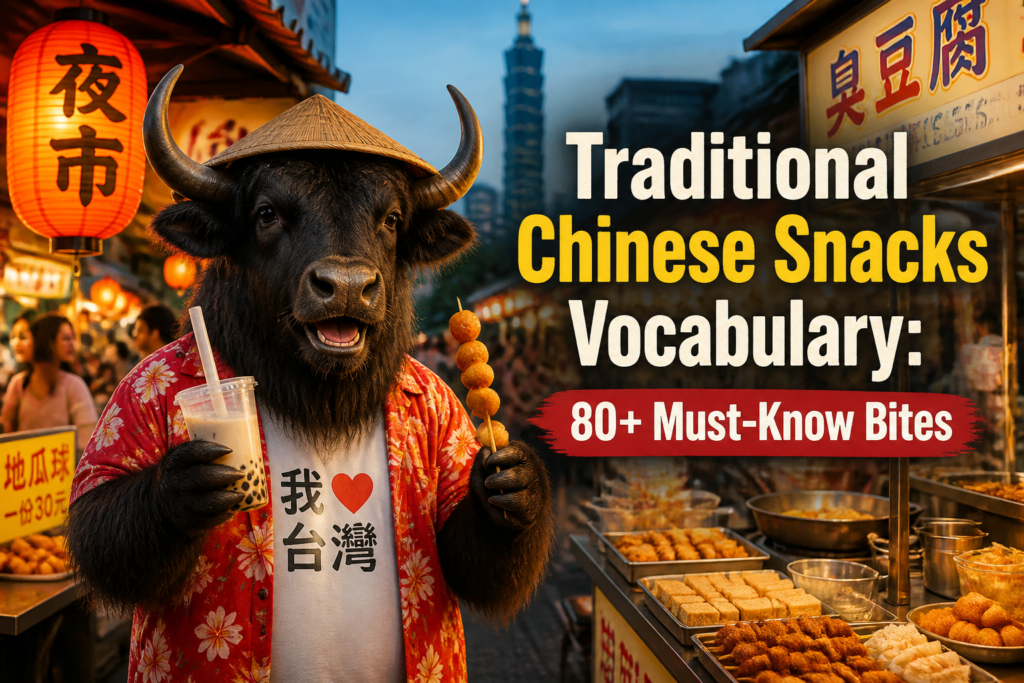
If you can order snacks in Traditional Chinese, Taiwan gets a lot more fun very quickly. Night markets stop being “wow, so many things” and start becoming “yes, I know exactly what that crispy, suspiciously delicious thing is.”
For the broader learning path, visit our parent guide.
In Taiwan, snack culture is not a small side quest. It is basically a national hobby with better lighting and stronger smell. You will see people grabbing 雞排 jī pái, 鹽酥雞 yán sū jī, 珍珠奶茶 zhēn zhū nǎi chá, and other glorious little treats on the way home, during lunch, after class, and sometimes for no reason at all. Very reasonable behavior, obviously.
This guide teaches useful Traditional Chinese snack words with pinyin, English meaning, and real example sentences. If you want broader food vocabulary later, you can also jump to this food vocab guide. For test practice, there is also a Traditional Chinese vocabulary test and a TOCFL placement test.
Useful Snack Words And Real-Life Sentences
| Traditional Chinese | Pinyin | Meaning | Example (ZH) | Example (Pinyin) | Translation (EN) |
|---|---|---|---|---|---|
| 點心 | diǎn xīn | snack; dim sum | 我下午常吃一點點心。 | Wǒ xiàwǔ cháng chī yī diǎn diǎnxīn. | I often eat a little snack in the afternoon. |
| 零食 | líng shí | snack food | 他很少買零食。 | Tā hěn shǎo mǎi língshí. | He rarely buys snacks. |
| 小吃 | xiǎo chī | snack; street food | 這家店的小吃很多。 | Zhè jiā diàn de xiǎochī hěn duō. | This shop has lots of snacks. |
| 夜市 | yè shì | night market | 我們晚上去夜市吃東西。 | Wǒmen wǎnshàng qù yèshì chī dōngxi. | We go to the night market to eat at night. |
| 攤位 | tān wèi | stall; booth | 那個攤位排隊排很久。 | Nà ge tānwèi pái duì pái hěn jiǔ. | The line at that stall is very long. |
| 炸物 | zhá wù | fried food | 我今天想吃炸物。 | Wǒ jīntiān xiǎng chī zháwù. | I feel like eating fried food today. |
| 鹹食 | xián shí | savory food | 我比較想吃鹹食,不想吃甜的。 | Wǒ bǐjiào xiǎng chī xiánshí, bù xiǎng chī tián de. | I’d rather eat savory food, not sweet food. |
| 甜點 | tián diǎn | dessert | 晚餐後我想吃甜點。 | Wǎncān hòu wǒ xiǎng chī tiándiǎn. | After dinner, I want dessert. |
| 餅乾 | bǐng gān | cookies; crackers | 這包餅乾快吃完了。 | Zhè bāo bǐnggān kuài chī wán le. | This bag of cookies is almost gone. |
| 蛋糕 | dàn gāo | cake | 生日的時候我會買蛋糕。 | Shēngrì de shíhòu wǒ huì mǎi dàngāo. | I buy cake for birthdays. |
| 麵包 | miàn bāo | bread; bun | 我早餐常吃麵包。 | Wǒ zǎocān cháng chī miànbāo. | I often eat bread for breakfast. |
| 包子 | bāo zi | steamed bun | 這裡的肉包很好吃。 | Zhèlǐ de ròubāo hěn hǎochī. | The meat buns here are delicious. |
| 饅頭 | mán tou | plain steamed bun | 我媽早上會買饅頭。 | Wǒ mā zǎoshang huì mǎi mántou. | My mom buys steamed buns in the morning. |
| 湯包 | tāng bāo | soup dumpling | 小籠湯包很燙。 | Xiǎolóng tāngbāo hěn tàng. | Soup dumplings are very hot. |
| 水餃 | shuǐ jiǎo | boiled dumplings | 我晚餐吃了十顆水餃。 | Wǒ wǎncān chī le shí kē shuǐjiǎo. | I ate ten dumplings for dinner. |
| 鍋貼 | guō tiē | pan-fried dumplings | 鍋貼外皮很脆。 | Guōtiē wàipí hěn cuì. | The dumpling skin is very crispy. |
| 燒餅 | shāo bǐng | baked sesame flatbread | 我喜歡早餐店的燒餅。 | Wǒ xǐhuān zǎocān diàn de shāobǐng. | I like the sesame flatbread from breakfast shops. |
| 油條 | yóu tiáo | fried dough stick | 豆漿配油條很經典。 | Dòujiāng pèi yóutiáo hěn jīngdiǎn. | Soy milk with fried dough sticks is a classic combo. |
| 飯糰 | fàn tuán | rice ball | 我今天早上買了一個飯糰。 | Wǒ jīntiān zǎoshang mǎi le yī ge fàntuán. | I bought a rice ball this morning. |
| 蛋餅 | dàn bǐng | egg pancake wrap | 蛋餅加起司很受歡迎。 | Dànbǐng jiā qǐsī hěn shòu huānyíng. | Egg pancakes with cheese are very popular. |
| 蔥抓餅 | cōng zhuā bǐng | scallion pancake | 我想要一份加蛋的蔥抓餅。 | Wǒ xiǎng yào yī fèn jiā dàn de cōngzhuābǐng. | I’d like one scallion pancake with egg. |
| 地瓜球 | dì guā qiú | sweet potato balls | 地瓜球很Q,很有嚼勁。 | Dìguāqiú hěn Q, hěn yǒu jiáojìn. | Sweet potato balls are chewy and bouncy. |
| 雞排 | jī pái | fried chicken steak | 他一週會吃一次雞排。 | Tā yī zhōu huì chī yī cì jīpái. | He eats fried chicken steak once a week. |
| 鹽酥雞 | yán sū jī | Taiwanese fried chicken bites | 鹽酥雞可以加九層塔。 | Yánsūjī kěyǐ jiā jiǔcéngtǎ. | You can add Thai basil to Taiwanese fried chicken. |
| 雞翅 | jī chì | chicken wing | 我想再點兩支雞翅。 | Wǒ xiǎng zài diǎn liǎng zhī jīchì. | I want to order two more chicken wings. |
| 雞塊 | jī kuài | chicken nugget | 小朋友很愛吃雞塊。 | Xiǎopéngyǒu hěn ài chī jīkuài. | Kids really like chicken nuggets. |
| 甜不辣 | tián bù là | fish cake; fish paste snack | 我買了甜不辣和米血。 | Wǒ mǎi le tiánbùlà hé mǐxuè. | I bought fish cake and rice blood cake. |
| 米血 | mǐ xuè | rice blood cake | 米血有很特別的口感。 | Mǐxuè yǒu hěn tèbié de kǒugǎn. | Rice blood cake has a very special texture. |
| 滷味 | lǔ wèi | braised snack foods | 我晚上常買滷味回家。 | Wǒ wǎnshàng cháng mǎi lǔwèi huí jiā. | I often buy braised snacks to take home at night. |
| 鴨血 | yā xuè | duck blood tofu | 他不敢吃鴨血。 | Tā bù gǎn chī yāxuè. | He doesn’t dare to eat duck blood tofu. |
| 臭豆腐 | chòu dòu fu | stinky tofu | 臭豆腐聞起來很臭,吃起來很香。 | Chòudòufu wén qǐlái hěn chòu, chī qǐlái hěn xiāng. | Stinky tofu smells awful but tastes great. |
| 碗粿 | wǎn guǒ | rice cake in a bowl | 這裡的碗粿很軟。 | Zhèlǐ de wǎnguǒ hěn ruǎn. | The rice cake here is very soft. |
| 米糕 | mǐ gāo | rice cake | 我爸爸喜歡吃米糕。 | Wǒ bàba xǐhuān chī mǐgāo. | My dad likes to eat rice cake. |
| 刈包 | guà bāo | Taiwanese steamed bun sandwich | 刈包裡面通常有豬肉。 | Guàbāo lǐmiàn tōngcháng yǒu zhūròu. | A gua bao usually has pork inside. |
| 春捲 | chūn juǎn | spring roll | 春捲裡有很多菜。 | Chūnjuǎn lǐ yǒu hěn duō cài. | Spring rolls have lots of vegetables inside. |
| 花生捲冰淇淋 | huā shēng juǎn bīng qí lín | peanut ice cream roll | 花生捲冰淇淋是我最愛的夜市甜點。 | Huāshēng juǎn bīngqílín shì wǒ zuì ài de yèshì tiándiǎn. | Peanut ice cream rolls are my favorite night market dessert. |
| 珍珠奶茶 | zhēn zhū nǎi chá | bubble milk tea | 我每週都會喝珍珠奶茶。 | Wǒ měi zhōu dōu huì hē zhēnzhū nǎichá. | I drink bubble milk tea every week. |
| 紅茶 | hóng chá | black tea | 我要一杯紅茶,少冰。 | Wǒ yào yī bēi hóngchá, shǎo bīng. | I want a cup of black tea, less ice. |
| 綠茶 | lǜ chá | green tea | 她喜歡喝無糖綠茶。 | Tā xǐhuān hē wútáng lǜchá. | She likes to drink sugar-free green tea. |
| 豆漿 | dòu jiāng | soy milk | 我早餐會喝熱豆漿。 | Wǒ zǎocān huì hē rè dòujiāng. | I drink hot soy milk for breakfast. |
| 冰沙 | bīng shā | slush; smoothie | 夏天我很想喝芒果冰沙。 | Xiàtiān wǒ hěn xiǎng hē mángguǒ bīngshā. | In summer I really want mango slush. |
| 冰淇淋 | bīng qí lín | ice cream | 小孩看到冰淇淋就很開心。 | Xiǎohái kàn dào bīngqílín jiù hěn kāixīn. | Kids get happy when they see ice cream. |
| 糖葫蘆 | táng hú lu | candied fruit skewer | 我在夜市買了糖葫蘆。 | Wǒ zài yèshì mǎi le tánghúlu. | I bought candied fruit skewers at the night market. |
| 麻糬 | má shǔ | mochi; sticky rice cake | 麻糬很黏,吃的時候要小心。 | Máshǔ hěn nián, chī de shíhòu yào xiǎoxīn. | Mochi is sticky, so be careful when eating it. |
| 湯圓 | tāng yuán | glutinous rice ball | 冬天很多人吃湯圓。 | Dōngtiān hěn duō rén chī tāngyuán. | Many people eat tangyuan in winter. |
| 仙草 | xiān cǎo | grass jelly | 我喜歡加仙草的甜品。 | Wǒ xǐhuān jiā xiāncǎo de tiánpǐn. | I like desserts with grass jelly. |
| 愛玉 | ài yù | Aiyu jelly | 愛玉加檸檬很好喝。 | Àiyù jiā níngméng hěn hǎohē. | Aiyu jelly with lemon is very refreshing. |
10 Must-Know Snack Phrases
| Traditional Chinese | Pinyin | Meaning | Example (ZH) | Example (Pinyin) | Translation (EN) |
|---|---|---|---|---|---|
| 我要這個 | Wǒ yào zhè ge | I want this one | 這個看起來很好吃,我要這個。 | Zhè ge kàn qǐlái hěn hǎochī, wǒ yào zhè ge. | This one looks delicious. I want this one. |
| 請給我一份 | Qǐng gěi wǒ yī fèn | Please give me one serving | 請給我一份雞排。 | Qǐng gěi wǒ yī fèn jīpái. | Please give me one fried chicken steak. |
| 要加辣嗎? | Yào jiā là ma? | Do you want it spicy? | 要加辣嗎?我可以吃一點。 | Yào jiā là ma? Wǒ kěyǐ chī yī diǎn. | Do you want it spicy? I can handle a little. |
| 少冰 | shǎo bīng | less ice | 我要少冰的紅茶。 | Wǒ yào shǎo bīng de hóngchá. | I want black tea with less ice. |
| 微糖 | wēi táng | light sugar | 她習慣喝微糖。 | Tā xíguàn hē wēitáng. | She is used to light sugar. |
| 無糖 | wú táng | no sugar | 我想點無糖綠茶。 | Wǒ xiǎng diǎn wútáng lǜchá. | I want to order sugar-free green tea. |
| 外帶 | wài dài | to go; takeout | 這個我要外帶。 | Zhè ge wǒ yào wàidài. | I want this to go. |
| 內用 | nèi yòng | dine in | 這家店可以內用嗎? | Zhè jiā diàn kěyǐ nèiyòng ma? | Can we eat inside this shop? |
| 打包 | dǎ bāo | pack up leftovers | 吃不完可以幫我打包嗎? | Chī bù wán kěyǐ bāng wǒ dǎbāo ma? | Can you pack it up for me if I don’t finish it? |
| 多少錢? | duō shǎo qián? | How much is it? | 這一份多少錢? | Zhè yī fèn duō shǎo qián? | How much is this one serving? |
More Snacks You Will Actually Hear
| Traditional Chinese | Pinyin | Meaning | Example (ZH) | Example (Pinyin) | Translation (EN) |
|---|---|---|---|---|---|
| 炸雞 | zhá jī | fried chicken | 我今天晚餐吃炸雞。 | Wǒ jīntiān wǎncān chī zhájī. | I’m eating fried chicken for dinner today. |
| 薯條 | shǔ tiáo | French fries | 薯條要趁熱吃。 | Shǔtiáo yào chèn rè chī. | French fries should be eaten while hot. |
| 洋蔥圈 | yáng cōng quān | onion rings | 洋蔥圈很酥脆。 | Yángcōngquān hěn sūcuì. | Onion rings are very crispy. |
| 可樂餅 | kě lè bǐng | croquette | 便利商店有賣可樂餅。 | Bianlì shāngdiàn yǒu mài kělèbǐng. | Convenience stores sell croquettes. |
| 熱狗 | rè gǒu | hot dog | 我在超商買了熱狗。 | Wǒ zài chāoshāng mǎi le règǒu. | I bought a hot dog at the convenience store. |
| 茶葉蛋 | chá yè dàn | tea egg | 我每天都吃一顆茶葉蛋。 | Wǒ měitiān dōu chī yī kē cháyèdàn. | I eat one tea egg every day. |
| 關東煮 | guān dōng zhǔ | Japanese-style hot pot skewers; oden | 冬天很適合吃關東煮。 | Dōngtiān hěn shìhé chī guāndōngzhǔ. | Oden is great for winter. |
| 豆干 | dòu gān | dried tofu | 我愛吃滷豆干。 | Wǒ ài chī lǔ dòugān. | I love braised tofu. |
| 海帶 | hǎi dài | kelp; seaweed | 滷味裡常有海帶。 | Lǔwèi lǐ cháng yǒu hǎidài. | Braised snack dishes often include kelp. |
| 米腸 | mǐ cháng | rice sausage | 米腸很有飽足感。 | Mǐcháng hěn yǒu bǎozú gǎn. | Rice sausage is very filling. |
| 香腸 | xiāng cháng | sausage | 大腸包小腸很有名。 | Dàcháng bāo xiǎocháng hěn yǒu míng. | Taiwan sausage wrapped in sticky rice sausage is famous. |
| 大腸包小腸 | dà cháng bāo xiǎo cháng | Taiwanese sausage in sticky rice | 很多人來夜市都會吃大腸包小腸。 | Hěn duō rén lái yèshì dōu huì chī dàcháng bāo xiǎocháng. | Many people eat this when they go to night markets. |
| 仙草凍 | xiān cǎo dòng | grass jelly dessert | 仙草凍很適合夏天。 | Xiāncǎodòng hěn shìhé xiàtiān. | Grass jelly dessert is perfect for summer. |
| 豆花 | dòu huā | tofu pudding | 我喜歡吃花生豆花。 | Wǒ xǐhuān chī huāshēng dòuhuā. | I like tofu pudding with peanuts. |
| 芋圓 | yù yuán | taro balls | 芋圓加冰很清爽。 | Yùyuán jiā bīng hěn qīngshuǎng. | Taro balls with ice are very refreshing. |
| 地瓜片 | dì guā piàn | sweet potato slices/chips | 我買了一包地瓜片。 | Wǒ mǎi le yī bāo dìguāpiàn. | I bought a bag of sweet potato chips. |
| 花生糖 | huā shēng táng | peanut candy | 花生糖很香,也很甜。 | Huāshēng táng hěn xiāng, yě hěn tián. | Peanut candy smells nice and is very sweet. |
| 牛軋糖 | niú gá táng | nougat candy | 過年常送牛軋糖。 | Guònián cháng sòng niúgátáng. | Nougat candy is often given during Lunar New Year. |
| 鳳梨酥 | fèng lí sū | pineapple cake | 台灣的鳳梨酥很有名。 | Táiwān de fènglí sū hěn yǒu míng. | Taiwanese pineapple cakes are famous. |
| 太陽餅 | tài yáng bǐng | sun cake | 台中很有名的伴手禮是太陽餅。 | Táizhōng hěn yǒu míng de bànshǒulǐ shì tàiyángbǐng. | A famous souvenir from Taichung is sun cake. |
| 老婆餅 | lǎo pó bǐng | wife cake | 老婆餅名字很有趣。 | Lǎopó bǐng míngzi hěn yǒuqù. | The name “wife cake” is quite funny. |
Curious Bit: Taiwan Snack Words Can Be Sneaky
點心 diǎnxīn can mean “snack,” but in some places it can also feel a bit like “dim sum” or a small bite between meals. 小吃 xiǎochī is often used for street-food-style snacks, especially in Taiwan. And 零食 língshí is the plain everyday word for snack food, especially packaged snacks like chips or cookies.
Also, some snack names are very Taiwan-specific. 鹽酥雞 yánsūjī, 臭豆腐 chòudòufu, and 花生捲冰淇淋 huāshēng juǎn bīngqílín are the sort of words that make sense only after you have stood in front of a night market stall and surrendered to destiny. That is normal.
In Taiwan, snack vocabulary is not just vocabulary. It is a survival skill.
Common Snack Order Patterns
| Pattern | Meaning | Example (ZH) | Pinyin | English |
|---|---|---|---|---|
| 我要 + 食物 | I want + food item | 我要一份薯條。 | Wǒ yào yī fèn shǔtiáo. | I want one serving of fries. |
| 請給我 + 數量 + 食物 | Please give me + quantity + item | 請給我兩個包子。 | Qǐng gěi wǒ liǎng ge bāozi. | Please give me two buns. |
| 這個 + 怎麼賣? | How much is this? | 這個怎麼賣? | Zhè ge zěnme mài? | How much is this one? |
| 要不要 + 口味? | Do you want + flavor? | 要不要加辣? | Yào bu yào jiā là? | Do you want it spicy? |
| 可以 + 形容詞 + 一點嗎? | Can it be a bit more + adjective? | 可以少冰一點嗎? | Kěyǐ shǎo bīng yī diǎn ma? | Can it be a little less ice? |
Common Mistakes And Easy Fixes
- Using 二 instead of 兩 liǎng: say 兩個 liǎng ge, not 二個 èr ge, in normal speech.
- Forgetting measure words: snacks usually need one, like 一份 yī fèn, 一個 yī ge, or 一顆 yī kē.
- Mixing up 外帶 and 內用: 外帶 wàidài means takeout; 內用 nèiyòng means dine in. Tiny difference, big surprise.
- Saying “sweet milk tea” for bubble tea all the time: in Taiwan, 珍珠奶茶 zhēnzhū nǎichá is the safer word.
- Thinking 臭豆腐 is always the same everywhere: the smell, texture, and style can vary a lot by stall. Snack chaos is part of the charm.
Quick Reference Summary
| Category | Key Words |
|---|---|
| General snack words | 點心 diǎnxīn, 零食 língshí, 小吃 xiǎochī, 夜市 yèshì |
| Fried favorites | 雞排 jīpái, 鹽酥雞 yánsūjī, 薯條 shǔtiáo, 洋蔥圈 yángcōngquān |
| Breakfast-style snacks | 蛋餅 dànbǐng, 飯糰 fàntuán, 燒餅 shāobǐng, 油條 yóutiáo |
| Sweet treats | 地瓜球 dìguāqiú, 麻糬 máshǔ, 鳳梨酥 fènglí sū, 豆花 dòuhuā |
| Drinks | 珍珠奶茶 zhēnzhū nǎichá, 豆漿 dòujiāng, 紅茶 hóngchá, 綠茶 lǜchá |
| Ordering phrases | 我要這個 Wǒ yào zhè ge, 請給我一份 Qǐng gěi wǒ yī fèn, 外帶 wàidài, 內用 nèiyòng |
If you want to keep building your food vocabulary, try the related guides on Traditional Chinese condiments vocabulary and Traditional Chinese kitchen vocabulary. Food words tend to travel in packs. They are social like that.
Yak takeaway: learn a few snack names, a few ordering phrases, and one brave sentence like 我要這個 wǒ yào zhè ge. That is usually enough to turn a night market from “confusing” into “I live here now.”