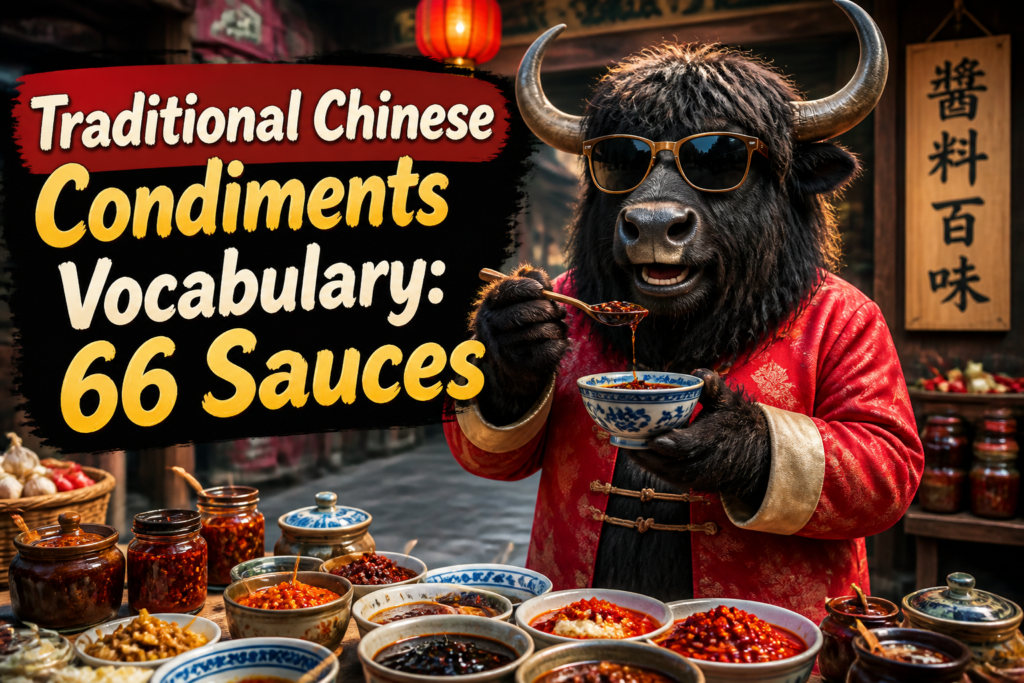
Traditional Chinese Condiments Vocabulary: 66 Sauces is one of those topics that quietly upgrades your whole Mandarin life. Because once you can name the sauce, you stop doing the awkward finger-pointing dance at the noodle shop. Tiny victory. Huge mood.
For the broader learning path, visit our parent guide.
This guide teaches Traditional Chinese condiment and sauce words with pinyin, English meanings, and real example sentences. The focus is Taiwan-friendly Mandarin, so you will see the everyday words people actually use in Taiwan kitchens, night markets, cafés, hot pot restaurants, and convenience stores. You will also find a few useful notes on regional usage, because Mandarin likes to keep learners humble.
For a broader food-learning path, you can also check the related guides on Traditional Chinese food vocabulary and kitchen vocabulary in Traditional Chinese. If you want a boring but reliable reference for vocabulary study levels, there is also the Traditional Chinese vocabulary test and the TOCFL placement test.
And yes, condiments matter. A plate of white rice with the wrong sauce can feel like a personality crisis.
Useful Sauce Words You Will Actually Hear
Here are the most useful condiments and sauce words first. These are the words that show up in real menus, supermarket labels, and casual conversation.
| Traditional Chinese | Pinyin | Meaning | Example (ZH) | Example (Pinyin) | Translation (EN) |
|---|---|---|---|---|---|
| 醬油 | jiàngyóu | soy sauce | 我吃水餃一定要加醬油。 | Wǒ chī shuǐjiǎo yīdìng yào jiā jiàngyóu. | I always need soy sauce with dumplings. |
| 醬料 | jiàngliào | sauce / dressing / condiment | 這家店的醬料很多。 | Zhè jiā diàn de jiàngliào hěn duō. | This shop has a lot of sauces. |
| 辣椒醬 | làjiāojiàng | chili sauce | 你要不要加一點辣椒醬? | Nǐ yào bu yào jiā yìdiǎn làjiāojiàng? | Do you want to add a little chili sauce? |
| 沙茶醬 | shāchájiàng | shacha sauce | 火鍋沾沙茶醬很好吃。 | Huǒguō zhān shāchájiàng hěn hǎochī. | Hot pot tastes great with shacha sauce. |
| 豆瓣醬 | dòubànjiàng | fermented bean paste / chili bean sauce | 炒菜放一點豆瓣醬很香。 | Chǎocài fàng yìdiǎn dòubànjiàng hěn xiāng. | A little doubanjiang makes stir-fried dishes very fragrant. |
| 甜辣醬 | tiánlàjiàng | sweet chili sauce | 炸物配甜辣醬很常見。 | Zhàwù pèi tiánlàjiàng hěn chángjiàn. | Fried snacks are often served with sweet chili sauce. |
| 醋 | cù | vinegar | 我喜歡加醋,不喜歡太油。 | Wǒ xǐhuan jiā cù, bù xǐhuan tài yóu. | I like adding vinegar; I do not like too much oil. |
| 烏醋 | wūcù | black vinegar | 麵線常常會加烏醋。 | Miànxiàn chángcháng huì jiā wūcù. | Oyster vermicelli often gets black vinegar. |
| 白醋 | báicù | white vinegar | 有些涼拌菜會用白醋。 | Yǒuxiē liángbàn cài huì yòng báicù. | Some cold dishes use white vinegar. |
| 美乃滋 | měinǎizī | mayonnaise | 這個三明治有美乃滋。 | Zhège sānmíngzhì yǒu měinǎizī. | This sandwich has mayonnaise. |
| 芥末 | jièmò | mustard / wasabi in some contexts | 生魚片旁邊通常有芥末。 | Shēngyúpiàn pángbiān tōngcháng yǒu jièmò. | Sashimi usually comes with mustard/wasabi. |
| 番茄醬 | fānqiéjiàng | ketchup | 薯條一定要配番茄醬。 | Shǔtiáo yídìng yào pèi fānqiéjiàng. | French fries need ketchup. |
| 蠔油 | háoyóu | oyster sauce | 炒青菜加蠔油很下飯。 | Chǎo qīngcài jiā háoyóu hěn xiàfàn. | Stir-fried greens with oyster sauce go great with rice. |
| 芝麻醬 | zhīmajiàng | sesame paste / sesame sauce | 涼麵的靈魂就是芝麻醬。 | Liángmiàn de línghún jiù shì zhīmajiàng. | The soul of cold noodles is sesame sauce. |
| 花生醬 | huāshēngjiàng | peanut butter / peanut sauce | 我早餐喜歡吐司加花生醬。 | Wǒ zǎocān xǐhuan tǔsī jiā huāshēngjiàng. | I like toast with peanut butter for breakfast. |
| 果醬 | guǒjiàng | jam | 麵包可以抹果醬。 | Miànbāo kěyǐ mǒ guǒjiàng. | You can spread jam on bread. |
More Sauces And Condiments
This next batch gives you the wider sauce universe: savory, spicy, sweet, and the slightly mysterious labels that show up in Asian grocery stores and condiment shelves with no explanation, as if everyone was born knowing them.
| Traditional Chinese | Pinyin | Meaning | Example (ZH) | Example (Pinyin) | Translation (EN) |
|---|---|---|---|---|---|
| 辣醬 | làjiàng | spicy sauce | 這個辣醬很夠味。 | Zhège làjiàng hěn gòuwèi. | This spicy sauce has a lot of flavor. |
| 蒜蓉醬 | suànróngjiàng | garlic sauce / minced garlic sauce | 烤肉加蒜蓉醬很香。 | Kǎoròu jiā suànróngjiàng hěn xiāng. | Grilled meat with garlic sauce smells amazing. |
| 蒜泥 | suànní | mashed garlic / garlic paste | 水餃可以沾蒜泥。 | Shuǐjiǎo kěyǐ zhān suànní. | Dumplings can be dipped in garlic paste. |
| 蒜蓉 | suànróng | minced garlic | 這道菜用了很多蒜蓉。 | Zhè dào cài yòngle hěn duō suànróng. | This dish uses a lot of minced garlic. |
| 沙拉醬 | shālājiàng | salad dressing | 我想要和風沙拉醬。 | Wǒ xiǎng yào héfēng shālājiàng. | I want Japanese-style salad dressing. |
| 和風醬 | héfēngjiàng | Japanese-style dressing / sauce | 這款和風醬很適合生菜。 | Zhè kuǎn héfēngjiàng hěn shìhé shēngcài. | This Japanese-style dressing is great for lettuce. |
| 千島醬 | qiāndǎojiàng | Thousand Island dressing | 我不太喜歡太甜的千島醬。 | Wǒ bú tài xǐhuan tài tián de qiāndǎojiàng. | I do not really like sweet Thousand Island dressing. |
| 塔塔醬 | tǎtǎjiàng | tartar sauce | 炸魚可以配塔塔醬。 | Zhà yú kěyǐ pèi tǎtǎjiàng. | Fried fish can be served with tartar sauce. |
| 黑胡椒醬 | hēihújiāojiàng | black pepper sauce | 我點牛排時常選黑胡椒醬。 | Wǒ diǎn niúpái shí cháng xuǎn hēihújiāojiàng. | When I order steak, I often choose black pepper sauce. |
| 咖哩醬 | gālǐjiàng | curry sauce | 咖哩醬拌飯很好吃。 | Gālǐjiàng bàn fàn hěn hǎochī. | Curry sauce mixed with rice is delicious. |
| 肉醬 | ròujiàng | meat sauce | 義大利麵有肉醬版本。 | Yìdàlìmiàn yǒu ròujiàng bǎnběn. | Spaghetti has a meat sauce version. |
| 番茄醬汁 | fānqié jiàngzhī | tomato sauce / gravy-like sauce | 這道義大利麵的番茄醬汁很濃。 | Zhè dào yìdàlìmiàn de fānqié jiàngzhī hěn nóng. | This spaghetti has a thick tomato sauce. |
| 甜麵醬 | tiánmiànjiàng | sweet bean sauce | 北京烤鴨常配甜麵醬。 | Běijīng kǎoyā cháng pèi tiánmiànjiàng. | Peking duck is often served with sweet bean sauce. |
| 豆豉醬 | dòuchǐjiàng | fermented black bean sauce | 豆豉醬很適合炒海鮮。 | Dòuchǐjiàng hěn shìhé chǎo hǎixiān. | Black bean sauce is great for stir-fried seafood. |
| XO醬 | XO jiàng | XO sauce | XO醬炒飯很受歡迎。 | XO jiàng chǎofàn hěn shòu huānyíng. | XO sauce fried rice is very popular. |
| 海鮮醬 | hǎixiānjiàng | seafood sauce | 烤鴨捲餅常用海鮮醬。 | Kǎoyā juǎnbǐng cháng yòng hǎixiānjiàng. | Duck pancakes often use seafood sauce. |
| 香菜醬 | xiāngcàijiàng | cilantro sauce | 如果你喜歡香菜,可以試香菜醬。 | Rúguǒ nǐ xǐhuan xiāngcài, kěyǐ shì xiāngcàijiàng. | If you like cilantro, you can try cilantro sauce. |
| 蔥油 | cōngyóu | scallion oil | 蔥油拌麵很簡單但很香。 | Cōngyóu bànmiàn hěn jiǎndān dàn hěn xiāng. | Noodles with scallion oil are simple but fragrant. |
| 麻油 | máyóu | sesame oil | 天冷時我喜歡喝麻油雞湯。 | Tiān lěng shí wǒ xǐhuan hē máyóu jītāng. | When it is cold, I like sesame oil chicken soup. |
| 香油 | xiāngyóu | sesame oil for seasoning | 麵線上面可以加一點香油。 | Miànxiàn shàngmiàn kěyǐ jiā yìdiǎn xiāngyóu. | You can add a little sesame oil on top of oyster vermicelli. |
Sweet, Sour, And Pickled Condiments
Condiments are not always savory. Some are sweet, some are tangy, and some are the sort of thing that makes people say, “Wow, that tastes more complicated than my schedule.”
| Traditional Chinese | Pinyin | Meaning | Example (ZH) | Example (Pinyin) | Translation (EN) |
|---|---|---|---|---|---|
| 糖醋醬 | tángcùjiàng | sweet and sour sauce | 糖醋醬很適合炸雞塊。 | Tángcùjiàng hěn shìhé zhà jīkuài. | Sweet and sour sauce goes well with fried chicken pieces. |
| 酸辣醬 | suānlàjiàng | hot and sour sauce | 酸辣湯裡常見酸辣醬的味道。 | Suānlàtāng lǐ chángjiàn suānlàjiàng de wèidào. | Hot and sour soup often has the taste of hot and sour sauce. |
| 梅子醬 | méizǐjiàng | plum sauce | 烤鴨和梅子醬也很搭。 | Kǎoyā hé méizǐjiàng yě hěn dā. | Roast duck also goes well with plum sauce. |
| 酸梅醬 | suānméijiàng | sour plum sauce | 炸地瓜球可以沾酸梅醬。 | Zhà dìguāqiú kěyǐ zhān suānméijiàng. | Fried sweet potato balls can be dipped in sour plum sauce. |
| 果醋 | guǒcù | fruit vinegar | 這瓶果醋有蘋果味。 | Zhè píng guǒcù yǒu píngguǒ wèi. | This bottle of fruit vinegar has an apple flavor. |
| 醃漬醬 | yānzìjiàng | pickling sauce / marinade | 這種醃漬醬很適合小黃瓜。 | Zhè zhǒng yānzìjiàng hěn shìhé xiǎohuángguā. | This pickling sauce is great for cucumbers. |
| 滷汁 | lǔzhī | braising sauce / braising liquid | 滷汁越煮越香。 | Lǔzhī yuè zhǔ yuè xiāng. | The braising liquid gets more fragrant the longer it cooks. |
| 醬汁 | jiàngzhī | sauce / gravy | 這個醬汁很濃郁。 | Zhège jiàngzhī hěn nóngyù. | This sauce is rich. |
| 拌醬 | bànjiàng | mixing sauce / dressing for mixing | 涼拌菜需要拌醬。 | Liángbàn cài xūyào bànjiàng. | Cold dishes need a mixing sauce. |
| 滷肉醬 | lǔròu jiàng | braised meat sauce | 滷肉醬可以淋在飯上。 | Lǔròu jiàng kěyǐ lín zài fàn shàng. | Braised meat sauce can be poured over rice. |
| 醬瓜 | jiàngguā | pickled cucumber / preserved gourd | 稀飯常配醬瓜。 | Xīfàn cháng pèi jiàngguā. | Congee is often served with pickled cucumber. |
| 醬菜 | jiàngcài | pickled vegetables | 我早餐喜歡配一些醬菜。 | Wǒ zǎocān xǐhuan pèi yìxiē jiàngcài. | I like some pickled vegetables with my breakfast. |
Kitchen-Style Flavor Words That Often Act Like Sauces
These words are not always “sauces” in a strict dictionary sense, but they behave like condiments in real life. Mandarin is practical like that. The label on the bottle matters less than whether you can eat the food without making a face.
| Traditional Chinese | Pinyin | Meaning | Example (ZH) | Example (Pinyin) | Translation (EN) |
|---|---|---|---|---|---|
| 醬油膏 | jiàngyóu gāo | thick soy sauce | 台灣很多小吃會用醬油膏。 | Táiwān hěn duō xiǎochī huì yòng jiàngyóu gāo. | Many Taiwanese street foods use thick soy sauce. |
| 膏 | gāo | paste / thick sauce | 這個是濃一點的醬膏。 | Zhège shì nóng yìdiǎn de jiànggāo. | This is a thicker sauce paste. |
| 辣油 | làyóu | chili oil | 我想加一匙辣油。 | Wǒ xiǎng jiā yì chí làyóu. | I want to add a spoonful of chili oil. |
| 紅油 | hóngyóu | chili oil / red oil | 紅油抄手很好吃。 | Hóngyóu chāoshǒu hěn hǎochī. | Wontons in chili oil are delicious. |
| 麻辣醬 | málàjiàng | numbing spicy sauce | 麻辣醬很適合配麵。 | Málàjiàng hěn shìhé pèi miàn. | Numbing spicy sauce is great with noodles. |
| 鹽水 | yánshuǐ | salt water / brine | 有些食材會先泡鹽水。 | Yǒuxiē shícái huì xiān pào yánshuǐ. | Some ingredients are soaked in brine first. |
| 滷包 | lǔbāo | braising spice packet | 媽媽滷肉時會加滷包。 | Māma lǔròu shí huì jiā lǔbāo. | Mom adds a braising spice packet when making braised meat. |
| 醬油膏加蒜泥 | jiàngyóu gāo jiā suànní | thick soy sauce with garlic paste | 這種沾醬很台灣。 | Zhè zhǒng zhānjiàng hěn Táiwān. | This kind of dipping sauce is very Taiwanese. |
Taiwan Usage Notes
In Taiwan, you will often hear 醬油膏 (jiàngyóu gāo) for thick soy sauce, especially with street food like 滷肉飯 (lǔròufàn) or dumplings. Plain 醬油 (jiàngyóu) is still common, of course, but the thick version is a very Taiwan-flavored detail worth remembering.
You may also notice that 沙茶醬 (shāchájiàng) appears a lot in Taiwan hot pot and stir-fry places. It is not exactly “the sauce” everywhere in the Chinese-speaking world, but in Taiwan it is one of the local heroes. Quietly iconic. Zero drama. Maximum flavor.
For pronunciation and standard definitions, a plain reference like Wikipedia’s soy sauce entry is useful as a starting point, even if the real-life menu version is much more fun.
Common Phrases For Ordering Food
These are the phrases that help when you want to ask for sauce, extra sauce, or no sauce. A miracle, really.
| Traditional Chinese | Pinyin | Meaning | Example (ZH) | Example (Pinyin) | Translation (EN) |
|---|---|---|---|---|---|
| 要加醬嗎? | yào jiā jiàng ma? | Do you want sauce? | 你要加醬嗎? | Nǐ yào jiā jiàng ma? | Do you want sauce? |
| 請多給一點醬 | qǐng duō gěi yìdiǎn jiàng | Please give me more sauce | 可以請你多給一點醬嗎? | Kěyǐ qǐng nǐ duō gěi yìdiǎn jiàng ma? | Could you please give me a little more sauce? |
| 不要醬 | bú yào jiàng | No sauce | 我這份不要醬。 | Wǒ zhè fèn bú yào jiàng. | I do not want sauce on this order. |
| 醬分開放 | jiàng fēnkāi fàng | put the sauce separately | 醬可以分開放嗎? | Jiàng kěyǐ fēnkāi fàng ma? | Can you put the sauce separately? |
| 加辣 | jiā là | add spice / make it spicy | 這碗麵可以加辣嗎? | Zhè wǎn miàn kěyǐ jiā là ma? | Can this bowl of noodles be made spicy? |
| 少一點醬 | shǎo yìdiǎn jiàng | less sauce | 我想要少一點醬。 | Wǒ xiǎng yào shǎo yìdiǎn jiàng. | I want less sauce. |
| 沾醬 | zhānjiàng | dipping sauce | 這個沾醬很特別。 | Zhège zhānjiàng hěn tèbié. | This dipping sauce is special. |
| 調味料 | tiáowèiliào | seasoning / condiment | 桌上有調味料嗎? | Zhuō shàng yǒu tiáowèiliào ma? | Are there seasonings on the table? |
| 佐料 | zuǒliào | condiment / garnish / accompaniment | 這道菜的佐料很多。 | Zhè dào cài de zuǒliào hěn duō. | This dish has a lot of accompaniments. |
| 拌一拌 | bàn yí bàn | mix it a little | 先把醬拌一拌再吃。 | Xiān bǎ jiàng bàn yí bàn zài chī. | Mix the sauce a little before eating. |
Useful Mini Phrases
If you want short, practical language, these are the little phrases that do a lot of work.
- 這個醬好香。 zhège jiàng hǎo xiāng. — This sauce smells so good.
- 有點太鹹。 yǒudiǎn tài xián. — A little too salty.
- 味道很夠。 wèidào hěn gòu. — The flavor is strong enough.
- 再加一點。 zài jiā yìdiǎn. — Add a little more.
- 這個很下飯。 zhège hěn xiàfàn. — This goes really well with rice.
- 沾這個最好吃。 zhān zhège zuì hǎochī. — It tastes best dipped in this.
- 不要太多。 bú yào tài duō. — Not too much.
- 我比較喜歡清淡一點。 wǒ bǐjiào xǐhuan qīndàn yìdiǎn. — I prefer it a bit lighter.
- 這是台灣味。 zhè shì Táiwān wèi. — This is Taiwanese-style flavor.
- 很有家常味。 hěn yǒu jiācháng wèi. — It has a homestyle flavor.
Quick Nuance Notes
醬 (jiàng) is a very flexible word. It can mean sauce, paste, dressing, or a condiment-like mixture, depending on context. So when you see words like 醬油 (jiàngyóu), 辣椒醬 (làjiāojiàng), or 沙茶醬 (shāchájiàng), the 醬 part tells you that it is something you add for flavor.
醬油 (jiàngyóu) is soy sauce, but 醬油膏 (jiàngyóu gāo) is thicker and sweeter, especially common in Taiwan. If you only remember one Taiwan-specific condiment word from this article, make it that one. It shows up everywhere.
醋 (cù) is vinegar. 烏醋 (wūcù) is black vinegar and 白醋 (báicù) is white vinegar. In Taiwan food, black vinegar is especially common in noodle dishes and dumplings. It has attitude. The good kind.
一 (yī) can change tone in real speech, but in these compound words you usually just read the full word naturally: 一點 (yìdiǎn), 一匙 (yì chí), 一拌 (yí bàn). Mandarin likes tone changes. A little hobby, apparently.
Common Mistakes And Fixes
| Common Mistake | Better Version | Why |
|---|---|---|
| 醬油 means “jam” | 果醬 means jam | 醬油 is soy sauce, not fruit spread for toast. |
| Using only 醬 for every sauce | Use the specific word when possible, like 辣椒醬 or 芝麻醬 | 醬 alone is vague in real conversation. |
| Mixing up 醋 and 醬油 | 醋 = vinegar, 醬油 = soy sauce | They look similar on a menu if you are tired and hungry. |
| Saying 我不要醬油膏 when you mean “no sauce” | 不要醬 or 醬分開放 | Be specific about what you want changed. |
| Forgetting that some sauces are regional | Use Taiwan-friendly words like 沙茶醬 and 醬油膏 | Some condiment words are especially common in Taiwan. |
Practice Section
Try these quick drills. Yes, actually say them out loud. Quietly if needed. Confidence is great, but pronunciation does not read minds.
- Translate: “I want soy sauce.” → 我要醬油。 wǒ yào jiàngyóu.
- Translate: “Please give me more chili sauce.” → 請多給我一點辣椒醬。 qǐng duō gěi wǒ yìdiǎn làjiāojiàng.
- Translate: “This black vinegar is good.” → 這個烏醋很好。 zhège wūcù hěn hǎo.
- Translate: “I like sesame sauce on cold noodles.” → 我喜歡涼麵加芝麻醬。 wǒ xǐhuan liángmiàn jiā zhīmajiàng.
- Translate: “No sauce, please.” → 請不要加醬。 qǐng bú yào jiā jiàng.
- Swap the word: change 醬油 to 辣椒醬 in the sentence 我吃水餃一定要加___。
- Swap the word: change 美乃滋 to 番茄醬 in the sentence 薯條要配___。
- Spot the difference: 醬油 = soy sauce, 醬油膏 = thick soy sauce.
Quick Reference Summary
| Category | Key Words |
|---|---|
| Savory basics | 醬油, 醬料, 醬汁, 蠔油, 芝麻醬 |
| Spicy condiments | 辣椒醬, 辣醬, 辣油, 紅油, 麻辣醬 |
| Taiwan favorites | 沙茶醬, 醬油膏, 烏醋, 香油 |
| Sweet and sour | 番茄醬, 糖醋醬, 梅子醬, 酸梅醬 |
| Other useful words | 美乃滋, 芥末, 果醬, 滷汁, 調味料 |
If you can order food, read a menu, and ask for the right sauce without panicking, you are already winning. Language learning does not always need grand philosophy. Sometimes it is just knowing whether the thing in the bowl is 醬油 (jiàngyóu) or 醬油膏 (jiàngyóu gāo). Small detail. Big difference. Classic Mandarin energy.
Yak Takeaway: sauces are tiny words with big power. Learn them well, and suddenly your meals, your ordering, and your Mandarin all get a lot tastier.