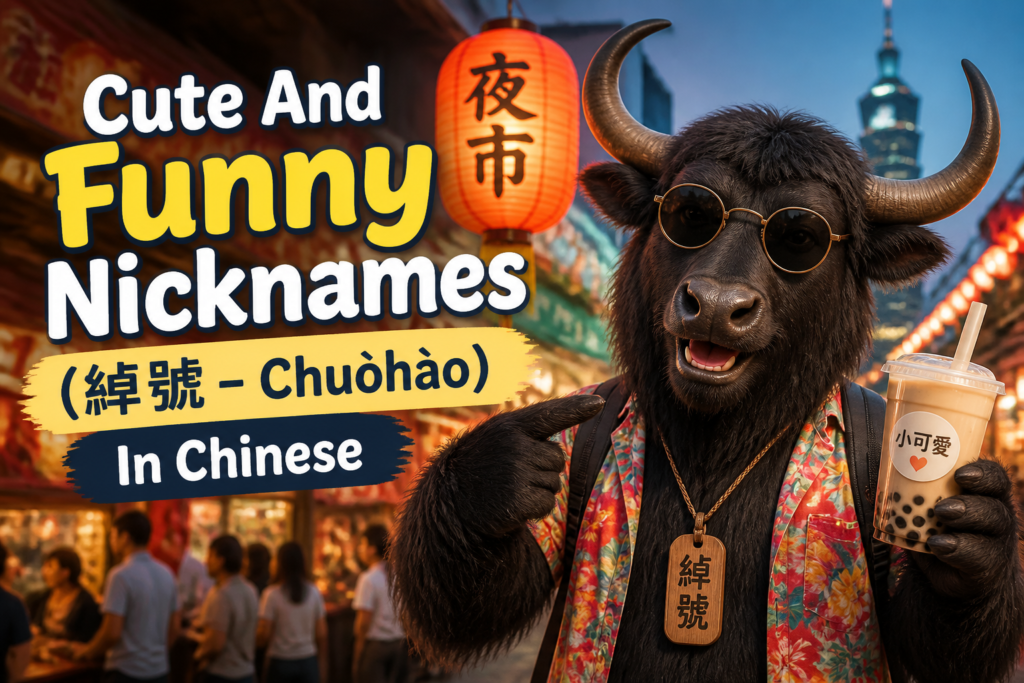
綽號,chuòhào,means “nickname” in Chinese. And yes, Chinese nicknames can be sweet, goofy, extra, and occasionally weird in a way that somehow still works. People might be called by a childhood name, a body-feature nickname, a food name, or a teasing label that sounds rude in English but is perfectly normal among friends.
For the broader learning path, visit our parent guide.
If you have ever heard someone say 小胖 (xiǎo pàng) or 阿明 (Ā Míng), you already know the game. Chinese nicknames are often short, personal, and full of context. Very efficient. Mildly nosy. Extremely human.
By the end of this guide, you will know cute and funny nickname styles in Traditional Chinese, how they are used in Taiwan, and how not to accidentally call someone something that sounds charming in your head and chaotic in real life.
What 綽號 Means
綽號 chuòhào = nickname, alias, or a casual name people use instead of a full name.
- 綽號,chuòhào,nickname, alias
- 外號,wàihào,nickname, byname
- 小名,xiǎomíng,childhood name, pet name
- 暱稱,nìchēng,nickname, screen name, affectionate name
In Taiwan, 綽號 and 外號 are both common. 小名 often sounds more like a childhood or family nickname. 暱稱 can also mean a username, especially online.
Core Nickname Styles
| Traditional Chinese | Pinyin | Meaning | Example (ZH) | Example (Pinyin) | Translation (EN) |
|---|---|---|---|---|---|
| 小+名字 | xiǎo + míngzi | “Little + name”; casual, cute nickname style | 大家都叫他小明。 | Dàjiā dōu jiào tā Xiǎo Míng. | Everyone calls him Xiao Ming. |
| 阿+名字 | Ā + míngzi | Friendly Taiwanese-style nickname prefix | 阿美今天沒上班。 | Ā Měi jīntiān méi shàngbān. | A-Mei is not at work today. |
| 老+名字 | lǎo + míngzi | Informal “old + name”; often for men, familiar tone | 老王很會講笑話。 | Lǎo Wáng hěn huì jiǎng xiàohuà. | Lao Wang is really good at telling jokes. |
| 胖哥 | pàng gē | “Chubby bro”; joking nickname for a guy | 胖哥又在吃了。 | Pàng Gē yòu zài chī le. | Chubby Bro is eating again. |
| 小胖 | xiǎo pàng | “Little chubby one”; playful nickname | 小胖跑得比我快。 | Xiǎo Pàng pǎo de bǐ wǒ kuài. | Little Chubby is faster than me. |
| 大頭 | dàtóu | “Big head”; joking nickname, often teasing | 大頭,你又忘記帶鑰匙了? | Dàtóu, nǐ yòu wàngjì dài yàoshi le? | Big Head, did you forget your keys again? |
| 美女 | měinǚ | Pretty girl; sometimes playful or sarcastic | 美女,這裡要排隊喔。 | Měinǚ, zhèlǐ yào páiduì o. | Miss, you need to queue here. |
| 帥哥 | shuàigē | Handsome guy; casual, friendly address | 帥哥,飲料要加冰嗎? | Shuàigē, yǐnliào yào jiā bīng ma? | Handsome guy, do you want ice in your drink? |
| 寶寶 | bǎobao | Baby; affectionate nickname for partners or close friends | 你今天也太累了,寶寶。 | Nǐ jīntiān yě tài lèi le, bǎobao. | You’re way too tired today, baby. |
| 老大 | lǎodà | Boss, big shot, leader; often teasing or respectful | 老大說了算。 | Lǎodà shuō le suàn. | The boss gets the final say. |
Notice how a nickname can be cute, teasing, or respectful depending on tone and relationship. Chinese nicknames are not just words. They are tiny social GPS signals.
Cute Nicknames You Will Hear A Lot
| Traditional Chinese | Pinyin | Meaning | Example (ZH) | Example (Pinyin) | Translation (EN) |
|---|---|---|---|---|---|
| 小可愛 | xiǎo kě’ài | Little cutie | 小可愛,今天怎麼這麼早到? | Xiǎo kě’ài, jīntiān zěnme zhème zǎo dào? | Cutie, why are you here so early today? |
| 寶貝 | bǎobèi | Baby, darling | 寶貝,記得吃早餐。 | Bǎobèi, jìde chī zǎocān. | Baby, remember to eat breakfast. |
| 小寶 | xiǎo bǎo | Little treasure | 小寶今天心情很好。 | Xiǎo Bǎo jīntiān xīnqíng hěn hǎo. | Little Treasure is in a good mood today. |
| 小天使 | xiǎo tiānshǐ | Little angel | 你真是我們家的小天使。 | Nǐ zhēn shì wǒmen jiā de xiǎo tiānshǐ. | You really are the little angel in our family. |
| 甜心 | tiánxīn | Sweetheart | 甜心,幫我看一下手機。 | Tiánxīn, bāng wǒ kàn yíxià shǒujī. | Sweetheart, help me look at my phone for a second. |
| 乖乖 | guāiguāi | Good boy/girl; sweet, obedient tone | 乖乖,先把藥吃了。 | Guāiguāi, xiān bǎ yào chī le. | Good one, take your medicine first. |
| 小甜甜 | xiǎo tiántián | Little sweetie; very affectionate | 小甜甜又在撒嬌了。 | Xiǎo Tiántián yòu zài sājiāo le. | Little Sweetie is acting cute again. |
| 米寶 | Mǐbǎo | Rice treasure; cutesy pet nickname | 米寶,回家前先買晚餐。 | Mǐbǎo, huíjiā qián xiān mǎi wǎncān. | Mi-Bao, buy dinner before going home. |
| 肉肉 | ròuròu | Meaty; often a cute nickname for a baby or pet | 肉肉今天睡得很香。 | Ròuròu jīntiān shuì de hěn xiāng. | Rourou slept very soundly today. |
| 圓圓 | yuányuán | Roundy; cute, soft-sounding nickname | 圓圓看起來超好抱。 | Yuányuán kàn qǐlái chāo hǎo bào. | Yuanyuan looks super huggable. |
小 is a huge helper in Chinese nicknames. It can make a name feel smaller, friendlier, or younger. Not always literally “small.” Language is lazy like that sometimes, but in a useful way.
Funny Nicknames That Sound Playful, Not Formal
| Traditional Chinese | Pinyin | Meaning | Example (ZH) | Example (Pinyin) | Translation (EN) |
|---|---|---|---|---|---|
| 吃貨 | chīhuò | Foodie; someone who loves eating | 他是標準吃貨,看到就想買。 | Tā shì biāozhǔn chīhuò, kàn dào jiù xiǎng mǎi. | He’s a textbook foodie and wants to buy everything he sees. |
| 懶蟲 | lǎnchóng | Lazybones | 你這個懶蟲,起床啦! | Nǐ zhège lǎnchóng, qǐchuáng la! | You lazybones, get up! |
| 睡神 | shuìshén | Sleep god; someone who sleeps a lot | 週末他根本是睡神。 | Zhōumò tā gēnběn shì shuìshén. | On weekends, he is basically the sleep god. |
| 電燈泡 | diàndēngpào | Light bulb; a third wheel | 我不想當電燈泡。 | Wǒ bù xiǎng dāng diàndēngpào. | I don’t want to be the third wheel. |
| 糊塗蛋 | hútúdàn | Forgetful silly person | 你這個糊塗蛋,又忘記帶錢包。 | Nǐ zhège hútúdàn, yòu wàngjì dài qiánbāo. | You forgetful goofball, you forgot your wallet again. |
| 小迷糊 | xiǎo míhu | Little absent-minded one | 小迷糊把手機放進冰箱了。 | Xiǎo Míhu bǎ shǒujī fàng jìn bīngxiāng le. | Little Spacey put the phone in the fridge. |
| 大胃王 | dà wèiwáng | Big eater; huge appetite | 他是我們班的大胃王。 | Tā shì wǒmen bān de dà wèiwáng. | He is the big eater in our class. |
| 烏龜 | wūguī | Turtle; slowpoke nickname | 不要再叫他烏龜了。 | Bù yào zài jiào tā wūguī le. | Don’t keep calling him Turtle. |
| 猴子 | hóuzi | Monkey; playful nickname for a hyper person | 你怎麼像猴子一樣停不下來? | Nǐ zěnme xiàng hóuzi yíyàng tíng bù xiàlái? | Why can’t you sit still like a monkey? |
| 小霸王 | xiǎo bàwáng | Little bully / little bossy one | 我弟在家是小霸王。 | Wǒ dì zài jiā shì xiǎo bàwáng. | My younger brother is the little boss at home. |
Funny nickname rule: If it sounds harsh in English, do not assume it is harsh in Chinese. Relationship matters more than the word alone. Still, do not casually call a stranger 胖子 (pàngzi, “fat person”) unless you enjoy social disaster.
Taiwan-Style Nickname Patterns
Taiwan Mandarin loves casual address forms. A lot of them feel warm, local, and very lived-in. Some are affectionate. Some are teasing. Some are both, which is classic human communication: slightly unclear, somehow effective.
| Pattern | Meaning | Example (ZH) | Pinyin | English |
|---|---|---|---|---|
| 阿+名字 | Friendly, familiar address | 阿玲來了嗎? | Ā Líng lái le ma? | Has A-Ling arrived? |
| 老+姓氏 | Casual “Lao + surname” style | 老陳今天請客。 | Lǎo Chén jīntiān qǐngkè. | Old Chen is treating us today. |
| 小+特徵 | Playful physical or personality nickname | 小高個子走很快。 | Xiǎo gāogèzi zǒu hěn kuài. | Tall Guy walks very fast. |
| 哥哥/姊姊 | Friendly, flattering, or teasing address | 姊姊,這個要多少錢? | Jiějiě, zhège yào duōshǎo qián? | Miss, how much is this? |
| 姐/哥 | Cool, casual, slightly swaggering tone | 哥今天很忙。 | Gē jīntiān hěn máng. | Bro is very busy today. |
| XX仔 | Regional casual form; sometimes playful or label-like | 這個阿仔很愛笑。 | Zhège āzǎi hěn ài xiào. | This kid really likes to laugh. |
| 綽號+哥/姐 | Nickname plus friendly suffix | 胖哥又遲到了。 | Pàng Gē yòu chídào le. | Chubby Bro is late again. |
| 寶+名詞 | Cute, exaggerated affectionate nickname | 車寶今天很乖。 | Chē bǎo jīntiān hěn guāi. | Car-baby is behaving today. |
阿+名字 is especially common in Taiwan. You may hear 阿明, 阿華, 阿珍, or 阿忠. It sounds very natural in everyday speech, even if it looks almost too simple on paper.
Nickname Types With Real-Life Meaning
- 外表型,wàibiǎo xíng,appearance-based nickname
- 性格型,xìnggé xíng,personality-based nickname
- 行為型,xíngwéi xíng,behavior-based nickname
- 食物型,shíwù xíng,food-based nickname
- 諧音型,xiéyīn xíng,sound-alike wordplay nickname
- 寵物型,chǒngwù xíng,pet-style nickname
| Traditional Chinese | Pinyin | Meaning | Example (ZH) | Example (Pinyin) | Translation (EN) |
|---|---|---|---|---|---|
| 高個子 | gāogèzi | Tall person | 高個子去拿最上面的東西。 | Gāogèzi qù ná zuì shàngmiàn de dōngxi. | The tall one gets the stuff on the top shelf. |
| 捲毛 | juǎnmáo | Curly hair | 捲毛今天又換髮型了。 | Juǎnmáo jīntiān yòu huàn fàxíng le. | Curly Hair changed hairstyles again today. |
| 愛哭鬼 | ài kū guǐ | Crybaby | 你這個愛哭鬼,別哭了。 | Nǐ zhège ài kū guǐ, bié kū le. | You crybaby, stop crying. |
| 慢吞吞 | màn tūntūn | Slowpoke, slow and sluggish | 他走路總是慢吞吞的。 | Tā zǒulù zǒngshì màn tūntūn de. | He always walks very slowly. |
| 大笑姑婆 | dà xiào gūpó | Big laughing lady; someone who laughs a lot | 她是班上的大笑姑婆。 | Tā shì bān shàng de dà xiào gūpó. | She is the class’s big laugher. |
| 飯桶 | fàntǒng | Rice bucket; slang for someone useless or a big eater, context matters | 別叫我飯桶,我只是餓了。 | Bié jiào wǒ fàntǒng, wǒ zhǐshì è le. | Don’t call me a rice bucket; I’m just hungry. |
| 臭屁 | chòupì | Smug, cocky, showing off | 他有時候真的有點臭屁。 | Tā yǒushíhòu zhēn de yǒudiǎn chòupì. | Sometimes he’s really a bit smug. |
| 白目 | báimù | Insensitive, clueless, tactless | 不要這麼白目,好嗎? | Bú yào zhème báimù, hǎo ma? | Could you not be so clueless? |
| 小鮮肉 | xiǎo xiānròu | Young handsome guy; often used for younger men | 那個新同事是小鮮肉。 | Nà ge xīn tóngshì shì xiǎo xiānròu. | That new coworker is a young cutie. |
| 老司機 | lǎo sījī | Literally “old driver”; slang for someone experienced, often with extra implied meaning | 這件事你問他,他是老司機。 | Zhè jiàn shì nǐ wèn tā, tā shì lǎo sījī. | Ask him about this; he’s an experienced hand. |
A few of these are affectionate, a few are teasing, and a few are “please use with caution unless you already know the person well.” 白目 and 飯桶 can be rude outside a friendly context, so do not freestyle those at a first meeting. Social courage is nice. Social survival is nicer.
How People Get Nicknames In Chinese
- From a name → add 小, 阿, or 老
- From appearance → 大頭, 高個子, 捲毛
- From personality → 小迷糊, 臭屁, 白目
- From habits → 吃貨, 睡神, 手機控
- From sound or wordplay → cute or silly sound-based nicknames
- From role in the group → 老大, 大姐, 軍師
| Traditional Chinese | Pinyin | Meaning | Example (ZH) | Example (Pinyin) | Translation (EN) |
|---|---|---|---|---|---|
| 手機控 | shǒujīkòng | Phone addict | 他根本是手機控。 | Tā gēnběn shì shǒujīkòng. | He’s basically a phone addict. |
| 咖啡控 | kāfēikòng | Coffee addict | 咖啡控早上一定先喝一杯。 | Kāfēikòng zǎoshang yídìng xiān hē yì bēi. | The coffee addict always drinks one cup first thing in the morning. |
| 運動咖 | yùndòng kā | Sports person, sporty type | 他是我們班的運動咖。 | Tā shì wǒmen bān de yùndòng kā. | He’s the sporty one in our class. |
| 冷面笑匠 | lěngmiàn xiàojiàng | Deadpan comedian | 他看起來很冷,但其實是冷面笑匠。 | Tā kàn qǐlái hěn lěng, dàn qíshí shì lěngmiàn xiàojiàng. | He looks very serious, but he’s actually a deadpan comedian. |
| 點子王 | diǎnzi wáng | Idea king | 有問題找點子王就對了。 | Yǒu wèntí zhǎo diǎnzi wáng jiù duì le. | If you need ideas, go to the idea king. |
| 社牛 | shèniú | Social beast; very outgoing person | 他超社牛,走到哪都能聊天。 | Tā chāo shèniú, zǒu dào nǎ dōu néng liáotiān. | He’s super outgoing and can chat anywhere. |
| 社恐 | shèkǒng | Social anxiety / socially shy | 我今天很社恐,不想講話。 | Wǒ jīntiān hěn shèkǒng, bù xiǎng jiǎnghuà. | I’m very socially awkward today and don’t want to talk. |
| 戲精 | xìjīng | Drama queen / drama king | 別演了,你這個戲精。 | Bié yǎn le, nǐ zhège xìjīng. | Stop acting, you drama queen. |
| 學霸 | xuébà | Top student | 她是班上的學霸。 | Tā shì bān shàng de xuébà. | She’s the top student in the class. |
| 學渣 | xuézhā | Poor student, joking self-deprecating term | 我不是學霸,我是學渣。 | Wǒ bú shì xuébà, wǒ shì xuézhā. | I’m not a top student; I’m a terrible student. |
Useful Phrases For Talking About Nicknames
| Traditional Chinese | Pinyin | English Meaning | Example Sentence |
|---|---|---|---|
| 你綽號是什麼? | Nǐ chuòhào shì shénme? | What is your nickname? | 你綽號是什麼? Nǐ chuòhào shì shénme? What is your nickname? |
| 大家都叫我…… | Dàjiā dōu jiào wǒ … | Everyone calls me … | 大家都叫我小胖。 Dàjiā dōu jiào wǒ Xiǎo Pàng. Everyone calls me Little Chubby. |
| 這是我的外號。 | Zhè shì wǒ de wàihào. | This is my nickname. | 這是我的外號。 Zhè shì wǒ de wàihào. This is my nickname. |
| 他們為什麼叫你這個名字? | Tāmen wèishénme jiào nǐ zhège míngzi? | Why do they call you this name? | 他們為什麼叫你這個名字? Tāmen wèishénme jiào nǐ zhège míngzi? Why do they call you this name? |
| 這個綽號很可愛。 | Zhège chuòhào hěn kě’ài. | This nickname is cute. | 這個綽號很可愛。 Zhège chuòhào hěn kě’ài. This nickname is cute. |
| 太好笑了。 | Tài hǎoxiào le. | That is so funny. | 你的綽號也太好笑了。 Nǐ de chuòhào yě tài hǎoxiào le. Your nickname is ridiculously funny. |
| 不要亂叫。 | Bú yào luàn jiào. | Don’t call me that carelessly. | 不要亂叫我的綽號。 Bú yào luàn jiào wǒ de chuòhào. Don’t call me by my nickname casually. |
| 那只是開玩笑。 | Nà zhǐshì kāi wánxiào. | That was just a joke. | 他說那只是開玩笑。 Tā shuō nà zhǐshì kāi wánxiào. He said that was just a joke. |
| 我比較喜歡大家叫我…… | Wǒ bǐjiào xǐhuān dàjiā jiào wǒ … | I prefer people call me … | 我比較喜歡大家叫我小安。 Wǒ bǐjiào xǐhuān dàjiā jiào wǒ Xiǎo Ān. I prefer people call me Xiao An. |
| 這名字有什麼意思? | Zhè míngzi yǒu shénme yìsi? | What does this name mean? | 這名字有什麼意思? Zhè míngzi yǒu shénme yìsi? What does this name mean? |
If you want more everyday Mandarin beyond nicknames, it helps to learn basic self-introduction and question patterns too. A good next stop is essential Traditional Chinese phrases, and if you want to ask where someone comes from, try Where Are You From in Traditional Chinese.
Small Nuance Notes Worth Knowing
- 小 often makes something feel cute, casual, or younger.
- 阿 is very natural in Taiwan for names and friendly address.
- 老 can mean old, but in nicknames it often means familiar or established, not actually old.
- Some teasing nicknames are friendly only inside the group. Outside the group, they can sound blunt or rude.
- 綽號 usually means a nickname given by others. 暱稱 can also be a chosen screen name.
- English “cute” sometimes maps to words like 可愛, 萌, or 甜, but not every cute nickname uses those words directly.
For official-ish wording and broader vocabulary, a boring but useful reference is the TOCFL Traditional Chinese placement test page, which can help you think about level-appropriate vocabulary. For an even more serious rabbit hole, you can also peek at dictionary-style resources such as the Taiwan Ministry of Education dictionary. Yes, dictionaries are thrilling in the way a good umbrella is thrilling.
Common Mistakes And Fixes
| Mistake | Better Choice | Why |
|---|---|---|
| Calling a stranger by a teasing nickname | Use a neutral address first | Teasing nicknames depend on relationship. |
| Thinking every “cute” nickname is sweet | Check tone and context | Some are affectionate; some are sarcastic. |
| Using Simplified forms by accident | Stick to Traditional Chinese | This article uses Traditional Chinese only. |
| Forgetting the pinyin tone marks | Write tones clearly | Tones matter in learning Mandarin. |
| Assuming 老 always means “old” | Read the social meaning | In nicknames, it often means familiar or experienced. |
| Using 胖子 casually | Use gentler playful words only with close friends | Body-based words can feel rude fast. |
If you want to test your overall Chinese vocabulary and level, the Traditional Chinese vocabulary test is a useful place to poke the bear. If you are also exploring which countries use Traditional Chinese, the page on Traditional Chinese speaking countries is handy too.
Practice: Match The Nickname To The Meaning
| Traditional Chinese | Pinyin | Meaning |
|---|---|---|
| 小胖 | Xiǎo Pàng | Little chubby one |
| 阿明 | Ā Míng | A-Ming; friendly Taiwan-style name |
| 吃貨 | chīhuò | Foodie |
| 電燈泡 | diàndēngpào | Third wheel |
| 小迷糊 | xiǎo míhu | Little absent-minded one |
| 社牛 | shèniú | Very outgoing person |
| 寶寶 | bǎobao | Baby, darling |
| 大頭 | dàtóu | Big head; teasing nickname |
- Say each nickname out loud once.
- Decide whether it sounds cute, funny, teasing, or careful-use-only.
- Then make one sentence with it.
Quick Transformation Drill
- 明 → 阿明,Ā Míng,make it friendlier
- 王先生 → 老王,Lǎo Wáng,make it more casual
- 李小姐 → 李姊姊,Lǐ jiějiě,make it warm and familiar
- 很愛吃的人 → 吃貨,chīhuò,turn it into a nickname
- 常常忘東西的人 → 小迷糊,xiǎo míhu,make it playful
Now try your own: take a real name, add 小 or 阿, and see how fast it becomes friendlier. This is probably the closest thing Mandarin has to a verbal magic trick.
Authoritative Reference
For a plain, reliable reference on the word 綽號, a dictionary-style source is best. A good starting point is the Wikipedia page on nicknames for the broad concept, and for Mandarin learning context, the official Taiwan Ministry of Education site is a solid boring place to begin. Not glamorous. Very useful. Like duct tape, but for language study.
Yak Takeaway
Chinese nicknames are not just cute labels. They show closeness, humor, social mood, and regional style. In Taiwan, forms like 阿明, 小胖, 寶寶, and 老王 can sound warm, playful, or teasing depending on who says them and how. So the real skill is not memorizing one funny nickname. It is learning when a nickname feels friendly and when it feels like you just walked into someone else’s inside joke wearing the wrong shoes.